
Housing Stability and the Future of Civic Engagement
How mass evictions threaten the foundations of our democratic participation.
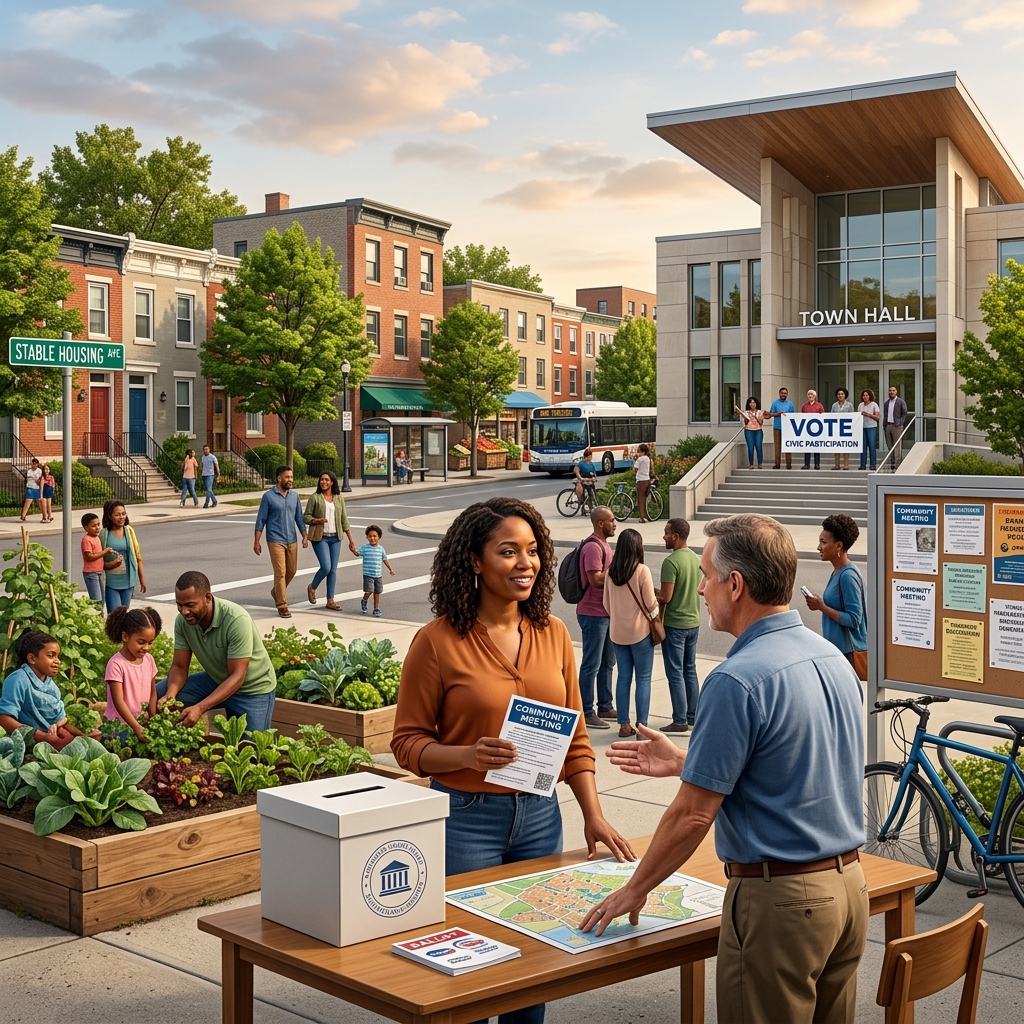
The Vital Intersection of Housing and Democracy
When we consider the fundamental pillars of a functioning democracy, we typically envision bustling polling stations, secure ballot boxes, and the legal right to cast a vote. However, one of the most critical and frequently overlooked foundations of civic engagement is housing stability. The ability to participate meaningfully in the democratic process is inextricably linked to having a safe, secure, and permanent residential address. When economic downturns, sweeping public health emergencies, or localized policy failures trigger waves of mass evictions, the resulting societal damage extends far beyond the financial ruin of individual households.
Forced displacement fractures community cohesion, severs vital administrative ties, and directly suppresses voter turnout. Ultimately, by stripping the most vulnerable populations of their voice, mass displacement erodes the democratic fabric of society. Recognizing housing as a prerequisite for democratic participation forces us to reevaluate how we protect our citizens during times of systemic crisis.
The Disproportionate Burden of Housing Insecurity
Evictions do not strike all populations evenly; rather, they exploit the fault lines of existing societal inequities. Decades of systemic inequalities, explicitly discriminatory housing policies, and persistent economic marginalization have engineered a landscape where housing insecurity is heavily concentrated in low-income communities of color. When sudden economic shocks occur—whether triggered by a global pandemic, a localized industry collapse, or rampant inflation—these pre-existing vulnerabilities are painfully laid bare. The consequences of such systemic frailty mean that specific demographics are continually pushed to the brink of homelessness, effectively stripping them of their political agency.
Research published by the Brookings Institution unequivocally underscores this grim reality, noting that eviction filings are significantly concentrated in Black-majority neighborhoods across the United States. Even when researchers control for varying income levels and educational backgrounds, a staggering percentage of evictions occur in these specific areas. This glaring racial disparity dictates that the cascading, long-term consequences of eviction—ranging from lost employment and disrupted education to deteriorating physical and mental health—are disproportionately borne by marginalized populations. Because these groups face higher rates of forced displacement, they concurrently experience a systemic reduction in their ability to engage with the political systems that govern their lives.
Renowned sociologist Matthew Desmond has provided compelling testimony before the United States Senate, emphasizing that eviction must not be viewed merely as a consequence of poverty, but as a profound and active cause of it. When families are forcibly removed from their homes, they immediately lose access to their established community networks, their proximity to reliable employment, and the baseline stability necessary to navigate daily survival. In the broader context of democracy, this forced, involuntary mobility acts as a potent de facto mechanism of disenfranchisement. Communities that suffer from high eviction rates concurrently exhibit demonstrably lower voter turnout and diminished civic participation. The physical removal of individuals from their communities effectively silences the voices of those who are in the greatest need of robust political representation, skewing electoral outcomes to favor wealthier, stably housed demographics.
The Mechanics of Disenfranchisement: How Displacement Disrupts Voting
The physical act of voting in the United States is deeply tethered to geography. A citizen’s residential address is the administrative linchpin that dictates their voting precinct, the specific local issues and candidates on their ballot, and their overarching eligibility to register in a given jurisdiction. Consequently, sudden housing displacement creates a formidable labyrinth of bureaucratic and logistical hurdles that can effortlessly prevent an otherwise eligible citizen from casting a ballot.
The Logistical Hurdles of Voter Registration
State voter registration systems inherently demand a current, valid residential address to assign a voter to the correct district. When a family is evicted, they often enter a prolonged period of severe transitional instability. They may be forced to stay temporarily with relatives, move into emergency homeless shelters, sleep in their vehicles, or relocate across county or state lines in search of affordable housing. Keeping a voter registration profile updated during this intensely chaotic and traumatic period is rarely a priority. Even when an individual attempts to update their information, the lack of a permanent, verifiable address can paralyze the registration process. By the time the next election cycle arrives, displaced individuals frequently discover that their registration is either flagged as inactive or securely tied to their previous address, rendering them legally ineligible to vote in their newly adopted district.
Mail-In Voting and Ballot Accessibility Challenges
In recent years, expanded access to mail-in and absentee voting has been widely heralded as a critical modernization of the democratic process, designed to increase participation among busy or homebound citizens. However, the true efficacy of mail-in voting is entirely contingent upon the voter possessing a reliable, secure mailing address. For individuals who have recently been evicted, essential mail is often lost in transit, returned to the sender by postal workers, or delivered to a residence they no longer occupy and cannot access. The very administrative systems designed to make voting more accessible and equitable inadvertently exclude those who have lost their homes. Displaced voters simply lack the stable residential infrastructure required to successfully receive, accurately complete, and securely return a mail-in ballot before strict election deadlines.
Polling Place Confusion and Administrative Purges
For citizens who prefer or are required to vote in person, sudden displacement often results in being reassigned to a new, unfamiliar polling location—if they manage to re-register at all. The logistical challenges of determining exactly where to vote on Election Day, combined with the lack of reliable transportation that frequently accompanies sudden poverty, act as a massive deterrent to participation. Furthermore, standard election administration rules in many local jurisdictions legally mandate the purging of voter rolls when official election-related mail is returned as undeliverable. This dynamic introduces several distinct barriers:
- Voter Roll Purging: Returned election mail automatically triggers removal from active voter lists in many jurisdictions, entirely without the voter’s direct knowledge.
- Precinct Reassignment: A forced move across town often necessitates an entirely new polling location, creating severe geographical confusion on Election Day.
- Transportation Barriers: Relocating to under-resourced areas with poor transit infrastructure makes reaching the ballot box physically and financially difficult.
- Information Deficits: Displaced individuals frequently miss local grassroots campaigns and mailers, heavily reducing their engagement with critical down-ballot issues.
Navigating the process to re-register entirely is an administrative hurdle that many exhausted, displaced citizens simply will not clear in time for the next major election.
Public Health Crises and the Compounding Effects on Civic Duty
When waves of mass evictions inevitably coincide with severe public health emergencies, the resulting threat to democratic stability is magnified exponentially. A pandemic or widespread regional health crisis already places unprecedented strain on community resources, local economies, and individual well-being. If millions of people are simultaneously facing the imminent loss of their homes while navigating a health emergency, basic physiological survival instincts take absolute precedence over all other civic responsibilities.
The intense, all-consuming stress of securing safe emergency shelter, protecting one’s family from highly contagious illnesses, and finding new sources of reliable income leaves absolutely no cognitive bandwidth for tracking political candidates, studying complex ballot measures, or navigating labyrinthine voting requirements. According to rigorous academic analyses published in peer-reviewed journals such as Politics and Society, neighborhood-level eviction rates share a direct, statistically significant causal relationship with substantial declines in voter turnout. The intense trauma of displacement forcibly unplugs citizens from their civic lives, isolating them from the political discourse precisely when they most desperately need aggressive government intervention.
Moreover, the physical displacement of individuals during a pandemic actively undermines critical public health directives. Forced evictions drive up community infection rates as displaced families are pushed into crowded homeless shelters, multi-generational living arrangements, or informal encampments where social distancing is a physical impossibility. This dynamic creates a brutal, vicious cycle where worsening health disparities and political disenfranchisement continuously reinforce one another. The system systematically excludes the most vulnerable, physically endangered populations from participating in the democratic processes that govern their societal recovery and public health resource allocation.
Policy Interventions: Protecting the Foundations of Democracy
To genuinely protect the integrity of our democratic systems, lawmakers and policy architects must begin to recognize housing stability as an absolutely core component of civic infrastructure. Treating evictions solely as private contractual disputes between property owners and tenants willfully ignores the profound, highly visible public consequences of mass displacement.
Eviction Moratoriums and Comprehensive Rent Relief
Temporary eviction moratoriums, when swiftly implemented during severe economic downturns or unprecedented health crises, act as vital emergency brakes for the economy and society. By forcefully halting the immediate legal threat of displacement, these measures allow vulnerable families to maintain their residential stability, keeping them seamlessly connected to their voting precincts, local schools, and community support networks. However, history and economic data overwhelmingly show that moratoriums must be inextricably paired with robust, easily accessible, and well-funded rental assistance programs. Without direct financial relief to clear accrued rental debt, moratoriums merely delay an inevitable, catastrophic wave of evictions. Merely pausing evictions pushes the crisis to a later date without permanently resolving the underlying threat to the tenants’ physical safety and their democratic participation.
Guaranteeing Legal Representation in Housing Courts
The structural power imbalance inherent in the modern housing court system is incredibly stark: the vast majority of landlords arrive heavily represented by specialized legal counsel, while the vast majority of low-income tenants are forced to navigate the complexities of the law completely unrepresented. Implementing a mandatory “Right to Counsel” for tenants facing eviction can dramatically, measurably reduce displacement rates across urban and rural jurisdictions alike. Professional legal representation ensures that tenants can adequately utilize complex housing laws, negotiate fair settlements, access emergency rental assistance, and avoid the devastating, permanent mark of an eviction filing on their public record. By utilizing the legal system to keep people securely in their homes, these interventions directly and effectively protect their fundamental ability to remain active, registered voters.
Conclusion
The true strength of a democracy is entirely dependent upon the diversity and volume of the voices it formally includes in its electoral processes. When millions of marginalized citizens are routinely and systematically silenced through the economic trauma of forced displacement, the political system ultimately fails to reflect the true will, struggles, and pressing needs of the broader populace. Recognizing the deep, inextricable link between long-term housing stability and voter turnout is the necessary first step toward enacting comprehensive, equitable systemic reform. Preventing mass evictions must no longer be viewed strictly as a matter of economic justice or localized public health management; it is an urgent, undeniable democratic imperative. Ensuring that every citizen has a safe, stable place to call home is absolutely essential to ensuring that every citizen has the power to cast a ballot and meaningfully participate in the ongoing governance of their community.
Frequently Asked Questions (FAQs)
How does housing displacement directly affect a person’s voter registration status?
When individuals are evicted or forced to move frequently due to economic instability, they must continually update their voter registration to accurately reflect their new residential address. The chaotic, highly stressful nature of displacement often causes significant administrative hurdles, resulting in voters being registered at outdated addresses, assigned to incorrect precincts, or being purged from voter rolls entirely when official election mail is returned as undeliverable.
Why are eviction rates widely considered a pressing civil rights issue?
Evictions disproportionately impact low-income communities and communities of color due to a long history of systemic economic disparities, generational wealth gaps, and discriminatory housing policies. Because forced eviction directly leads to decreased civic engagement and suppressed voter turnout, it effectively diminishes the collective political power of these already marginalized groups, making it a profound and ongoing civil rights concern.
Do government eviction moratoriums actually help preserve democratic participation?
Yes. By preventing immediate, widespread displacement during times of acute crisis, eviction moratoriums keep individuals securely in their homes and administratively connected to their established local voting precincts. This geographical stability allows them to reliably receive mail-in ballots, retain their active voter registration status, and maintain the cognitive bandwidth and physical capacity required to actively participate in local and national elections.
Can an official eviction record legally prevent someone from casting a ballot?
While an eviction record itself does not legally revoke a person’s constitutional right to vote, the resulting loss of a permanent physical address and the frequent, unstable moves that predictably follow create massive logistical and administrative barriers. These barriers practically and effectively prevent many displaced individuals from successfully navigating the electoral system, maintaining their registration, and successfully casting a ballot.
References
- Eviction and Voter Turnout: The Political Consequences of Housing Instability — Slee, J., & Desmond, M. (Politics and Society). 2023-03-15. https://journals.sagepub.com/doi/10.1177/00323292211050716
- Testimony by Matthew Desmond — United States Senate Committee on Banking, Housing, and Urban Affairs. 2022-08-02. https://www.banking.senate.gov/imo/media/doc/Desmond%20Testimony%208-2-22.pdf
- The coming eviction crisis will hit Black communities the hardest — Brookings Institution. 2021-08-02. https://www.brookings.edu/articles/the-coming-eviction-crisis-will-hit-black-communities-the-hardest/
- Why Housing Matters for Upward Mobility — Urban Institute. 2021-01-01. https://www.urban.org/research/publication/why-housing-matters-upward-mobility
Similar Articles








Read full bio of medha deb




