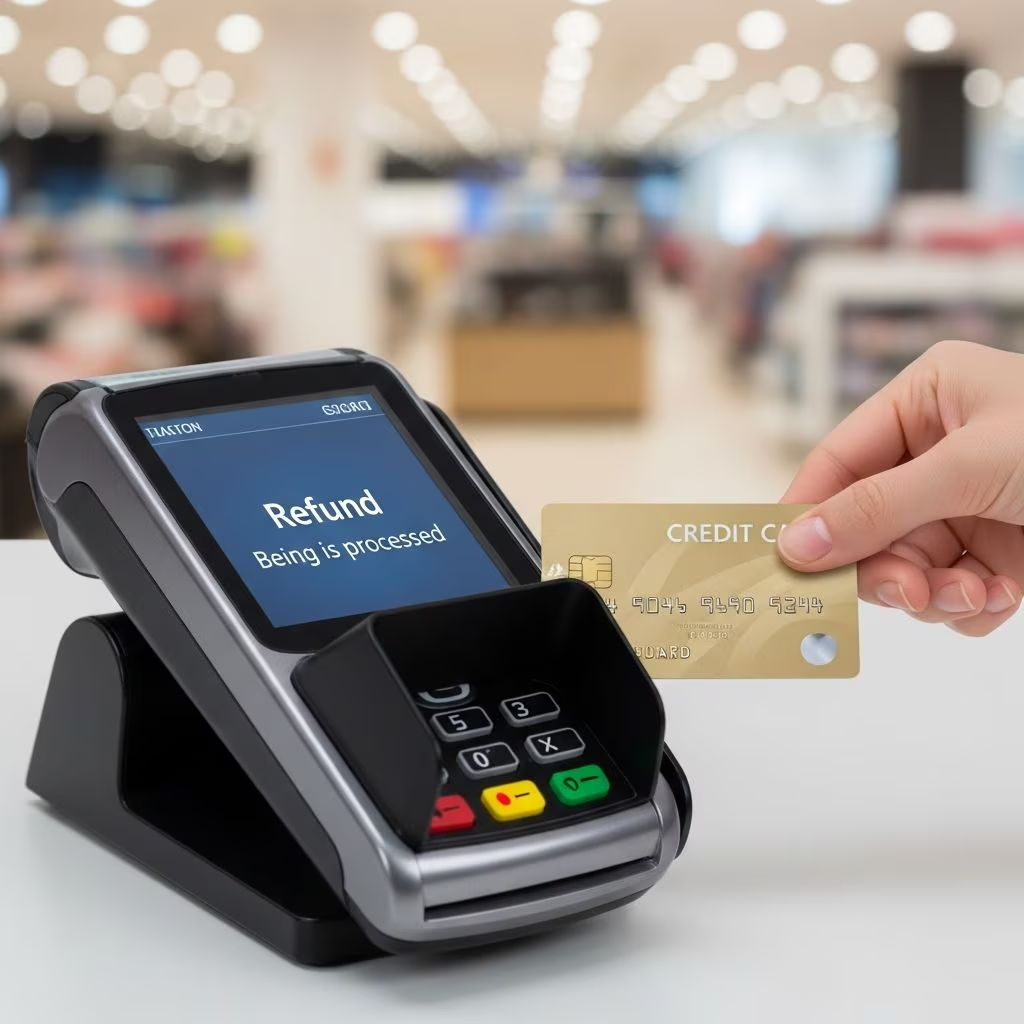
Paying with a credit card gives you important protections if something goes wrong with a purchase. When a product is defective, never arrives, or a service is not provided as promised, you may be able to get your money back through a refund or a dispute with your card issuer. Understanding your options and the steps to take can make the process faster and more successful.
Refunds vs. Disputes: Two Different Paths
When you want your money back for a credit card purchase, there are two main paths:
- Merchant refund – you work directly with the seller to reverse the transaction.
- Credit card dispute (chargeback) – you ask your card issuer to investigate and potentially reverse the charge under federal law or card network rules.
Most card issuers and regulators advise starting with the merchant, and only turning to a dispute when that fails or when there is clear fraud or a serious billing error.
How Credit Card Refunds Work Behind the Scenes
When a merchant approves a refund to your credit card, no cash is handed to you. Instead, an electronic credit moves through the payment system:
- The merchant sends a refund request through its bank (the acquiring bank).
- The card network (such as Visa, Mastercard, American Express, or Discover) routes the refund back to your card issuer.
- Your card issuer posts the refund as a credit on your account, reducing your outstanding balance.
This process often takes 5 to 14 business days, depending on the issuer, merchant, and whether you returned the item in person or by mail.
When You Can Ask the Merchant for a Refund
Merchants set their own return and refund policies, but many allow refunds in circumstances such as:
- The item arrives damaged, defective, or not as described.
- A service is not performed or is substantially different from what was promised.
- You were charged twice for the same transaction or billed the wrong amount.
- The order is never delivered, or is delivered extremely late and no longer useful.
For non-defective products, the store’s written return policy usually controls whether you can get a refund, store credit, or nothing at all. Online and distance sales may come with additional protections under federal or state law in some cases, such as cooling-off rules for certain door-to-door sales, but these are narrow and situation-specific.
Step-by-Step: Requesting a Refund from the Merchant
Follow these practical steps before involving your card issuer:
1. Review the Return and Cancellation Policy
Find the store’s policy on their website, receipt, app, or order confirmation. Look for:
- Deadlines for returns or cancellations.
- Conditions (original packaging, tags attached, unused, etc.).
- Whether refunds go back to the original payment method or as store credit only.
- Any restocking fees or non-refundable charges.
2. Gather Documentation
Have all information ready before you contact the seller:
- Receipt or order confirmation.
- Credit card statement showing the charge.
- Order number, account or customer ID.
- Photos or other evidence of damage or defects, if applicable.
3. Contact the Merchant Clearly and Promptly
Reach out using the method the business prefers (for example, customer service phone line, email, chat, or support portal). When you contact them:
- Explain what went wrong in simple terms.
- State that you paid by credit card and are requesting a refund to that same card.
- Ask for a written confirmation of the refund, such as an email or reference number.
4. Return or Cancel According to Instructions
If the merchant requires you to return an item:
- Follow their packaging and shipping instructions carefully.
- Use a trackable shipping method and save the tracking information.
- Keep copies of any return labels, emails, and screenshots.
If it is a service (such as a subscription or membership), ask the company to send written confirmation that it has been canceled and to state whether any future charges will be stopped.
5. Track the Refund to Your Account
After the business confirms the refund, watch your credit card account online or in the mobile app. Most refunds appear within a few days to two weeks, but some merchants or issuers may take longer.
Keep in mind:
- If the billing cycle ends before the refund posts, it may appear on your next monthly statement.
- You must still make at least the minimum payment by the due date; refunds do not count as payments.
What Happens If You Already Paid Your Bill?
If you paid your balance in full and then receive a refund, your account may show a negative balance, meaning the card issuer owes you money.
| Situation | What Usually Happens |
|---|---|
| Negative balance, you keep using the card | Future purchases draw down the credit until the balance returns to zero. |
| Negative balance, you stop using the card | You can typically request a refund via check, direct deposit, or transfer, especially for larger amounts. |
Check your issuer’s specific policy; some will automatically send you a refund if the negative balance remains for a certain period.
When to Involve Your Credit Card Issuer
If you cannot resolve the problem directly with the merchant, or if you see an unauthorized or incorrect charge, your credit card issuer may help through a billing dispute or chargeback process.
Common reasons to contact your issuer include:
- Unauthorized or fraudulent transactions you did not make.
- A charge for goods or services that were never delivered.
- Being billed the wrong amount.
- Being charged after you canceled a subscription or service and can document the cancellation.
- A merchant refuses a refund even though it did not provide what you paid for.
Key Dispute Time Limits
Under federal law in the U.S., you usually must send a written billing dispute to your card issuer within 60 days after the issuer sent the statement that contains the error. Many card issuers also allow you to upload a dispute online or through their mobile app.
How the Dispute Process Generally Works
- You submit a dispute – online, by phone, and often in writing, explaining the issue and providing documentation.
- The issuer reviews your claim – it may give you a temporary credit while it investigates.
- The issuer contacts the merchant’s bank – the merchant can respond with its own information and evidence.
- A decision is made – the charge may be reversed (a permanent credit) or reinstated if the issuer decides in the merchant’s favor.
Throughout the investigation, it is important to continue making at least the minimum payment on your credit card account to avoid late fees and negative credit reporting.
Tips to Improve Your Chances of a Successful Refund
- Act quickly – the sooner you contact the merchant or issuer, the more options you usually have.
- Put things in writing – confirm phone calls with emails or messages summarizing what was said.
- Stay organized – keep copies of receipts, order confirmations, shipping records, and correspondence.
- Be clear and factual – describe what went wrong without exaggeration.
- Know the policy – pointing to the merchant’s own terms often helps your case.
Special Situations: Subscriptions, Travel, and Preorders
Some types of transactions raise specific refund issues.
Subscription and Membership Charges
For subscriptions and memberships (such as streaming services, software, gyms, or clubs):
- Review the terms for cancellation notice and any minimum commitment period.
- Cancel using the method the company specifies (for example, in-app button, written notice, or phone call).
- Request written proof of cancellation and the effective date.
- If you are charged after cancellation, provide that proof when you ask for a refund or dispute the charge.
Travel Purchases
Airline tickets, hotels, car rentals, and vacation packages may have strict cancellation and refund rules. Before you book, check:
- Whether the fare or rate is refundable or nonrefundable.
- Fees or penalties for changes and cancellations.
- Whether travel insurance or your card’s travel protections provide extra coverage.
If a flight or trip is canceled by the provider, federal guidance may require airlines to refund you instead of offering a voucher, depending on the circumstances. If the company refuses a required refund, consider a dispute with your card issuer.
Preorders and Back-Ordered Items
For items that will be shipped later:
- Merchants should provide an expected ship date and updated notices if delays occur.
- If the delay is substantial, you may have the right to cancel and receive a refund under federal or state law in certain cases.
- Keep all notices and confirmations in case you need to dispute a charge.
Common Questions About Credit Card Refunds
Will a refund erase the interest I already paid?
A refund reduces your balance going forward, but it generally does not automatically refund interest that has already accrued. Some issuers may make adjustments in limited situations, but this is not guaranteed and depends on their policies.
What if a refund causes my account to have a credit balance?
If your refund is larger than your current balance, you will see a negative amount on your account (for example, -$50). You can usually:
- Use the card until the balance returns to zero, or
- Ask the issuer to send the credit to you by check, deposit, or transfer, especially for larger amounts.
Can I get a refund to a different card or in cash?
Most merchants will only refund to the original payment method to reduce fraud and money laundering. Some may allow store credit or gift cards instead of a refund to your card, but you generally cannot redirect a refund to a different credit card or receive cash unless the policy or law requires it.
What happens to my rewards when I get a refund?
If you earned cash back, points, or miles from the original purchase, your card issuer may claw back those rewards when the refund posts. Check your card’s rewards terms for details.
Can I dispute a charge if the merchant is out of business?
If a merchant closes or stops responding and you paid by credit card, you may still be able to file a dispute with your issuer, especially if you never received what you paid for. Provide any documentation you have (receipts, emails, advertisements) to help your case.
Protecting Yourself Before You Buy
You can reduce refund headaches by planning ahead:
- Read the return policy before checkout, especially for final-sale, custom, or digital items.
- Save receipts and order confirmations in a secure place.
- Use reputable merchants and be cautious with unfamiliar websites.
- Consider using a credit card (rather than a debit card or cash) for significant purchases, as credit cards typically offer stronger dispute and fraud protections.
References
- How Does a Refund on a Credit Card Work? — Capital One. 2023-03-10. https://www.capitalone.com/learn-grow/money-management/how-to-request-a-refund/
- How Does a Refund On a Credit Card Work? — American Express. 2023-06-20. https://www.americanexpress.com/en-us/credit-cards/credit-intel/how-do-credit-card-refunds-work/
- How Do Credit Card Refunds Work? — Experian. 2022-11-22. https://www.experian.com/blogs/ask-experian/how-do-credit-card-refunds-work/
- How Do Credit Card Refunds Work? — Citi. 2022-08-15. https://www.citi.com/credit-cards/understanding-credit-cards/how-do-credit-card-refunds-work
- What You Need To Know About Credit Card Refunds — Brex. 2021-09-30. https://www.brex.com/resources/credit-card-refund
- How Does a Credit Card Refund Work? — Discover. 2023-02-14. https://www.discover.com/credit-cards/card-smarts/what-is-a-credit-card-refund/