
Florida Timeshare Foreclosure & Cancellation Laws
Navigate Florida's timeshare foreclosure procedures and understand your consumer protection rights.
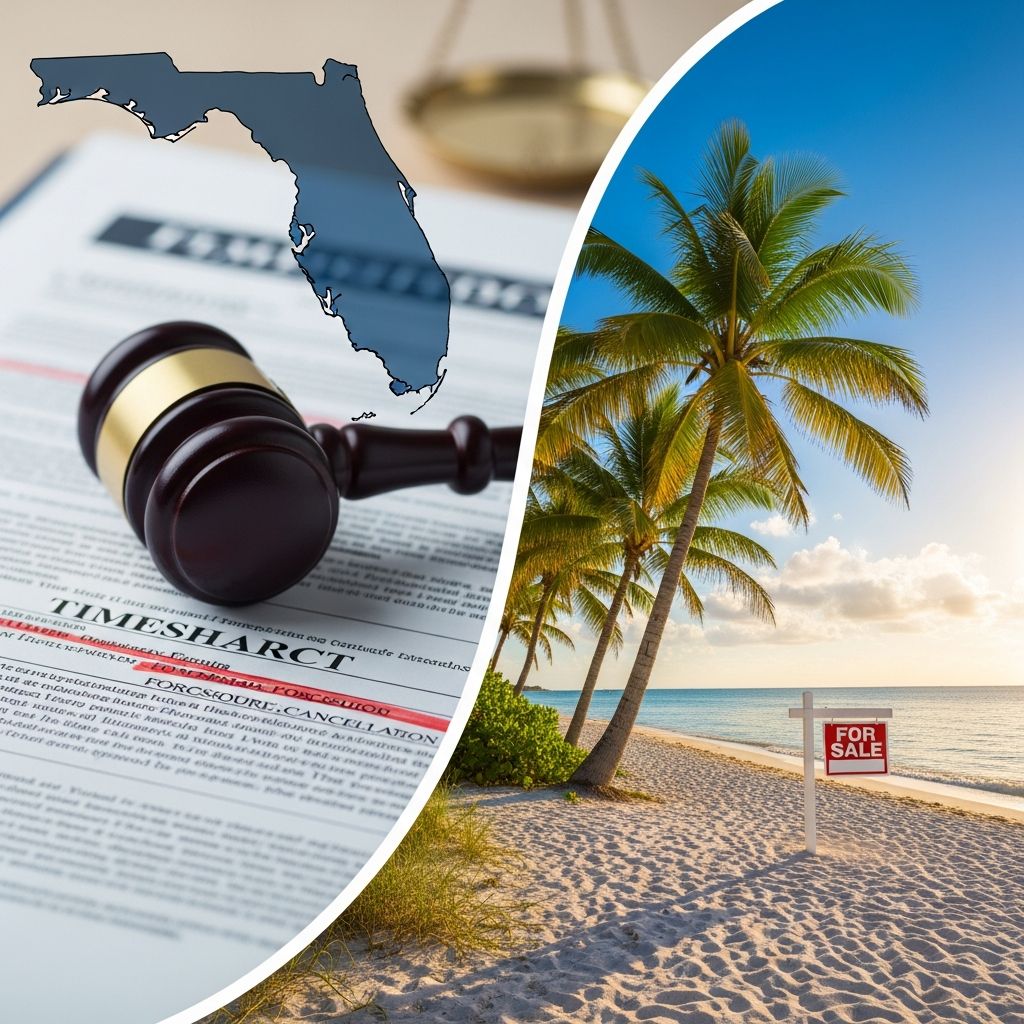
Understanding Timeshare Foreclosure in Florida
Timeshare properties in Florida are subject to distinct foreclosure laws that differ significantly from traditional residential real estate. When timeshare owners fall behind on payments—whether maintenance fees, property taxes, or special assessments—they may face foreclosure proceedings that could result in losing their ownership interest. Understanding these specialized laws is essential for protecting your investment and knowing your rights as a timeshare owner.
Florida’s approach to timeshare foreclosure is governed primarily by the Timeshare Lien Foreclosure Act, codified in Florida Statutes sections 721.80 and beyond. This statutory framework establishes procedures that are notably different from standard residential foreclosures, with provisions designed to streamline the process while theoretically protecting consumer interests. However, the laws favor the resort developer or managing entity significantly more than the timeshare owner, making it crucial to understand your options and rights before foreclosure proceedings begin.
The Two Pathways to Timeshare Foreclosure
Florida law permits managing entities to pursue foreclosure through two distinct mechanisms: judicial foreclosure and trustee (non-judicial) foreclosure. Each pathway has different implications for the timeshare owner and offers varying levels of legal protection.
Judicial Foreclosure Proceedings
A judicial foreclosure involves filing a formal lawsuit in circuit court against the timeshare owner. The managing entity names the owner or owners as defendants and serves them with official legal documents. This process follows traditional court procedures, providing timeshare owners with opportunities to challenge the foreclosure in a public forum. During judicial foreclosure, owners have the right to defend themselves, raise defenses, and present evidence to contest the managing entity’s claims. The court ultimately issues a judgment authorizing the sale of the timeshare interest if the foreclosure is granted.
The advantage of judicial foreclosure from a consumer perspective is that it occurs within the court system, providing greater procedural safeguards and opportunities for legal intervention. Owners can hire attorneys to represent their interests, challenge improper procedures, or negotiate settlements with the managing entity before the sale occurs.
Trustee Foreclosure (Non-Judicial Process)
The trustee foreclosure procedure operates outside the court system entirely. A designated trustee conducts the foreclosure process without court involvement, following statutory requirements but without judicial oversight. This streamlined approach was designed to reduce costs and expedite the foreclosure process for managing entities and lienholders.
The trustee foreclosure procedure applies specifically to mortgages executed after May 27, 2010, and to pre-existing mortgages where the borrower has consented to adding the specific disclosure language required by statute. This non-judicial method is significantly faster and less expensive than judicial foreclosure, making it the preferred option for many managing entities seeking to recover unpaid assessments or mortgage obligations.
Your Right to Object: Converting Non-Judicial to Judicial Foreclosure
Perhaps the most important consumer protection embedded in Florida’s timeshare foreclosure laws is the right to object to the trustee foreclosure procedure. This statutory right allows timeshare owners to prevent the managing entity from pursuing a non-judicial foreclosure and instead force them to file a judicial action in court.
When a managing entity initiates a trustee foreclosure, timeshare owners receive notice that explicitly informs them of their right to object. The notice typically includes an objection form that owners can sign and return to the trustee. If an owner exercises this right before the trustee issues a certificate of sale, the managing entity loses its ability to foreclose through the non-judicial trustee procedure and must instead pursue judicial foreclosure in circuit court.
This objection right is critical because it shifts the foreclosure from a process entirely controlled by the managing entity to one subject to court supervision and the full panoply of civil litigation protections. Owners who object gain the ability to:
- Hire an attorney to defend their interests in court
- Challenge the validity of the debt or the amount owed
- Raise affirmative defenses to the foreclosure
- Negotiate with the managing entity during litigation
- Present evidence before a judge
Grounds for Timeshare Foreclosure in Florida
Timeshare owners can face foreclosure for several reasons, all related to failing to meet their financial obligations under the timeshare agreement and governing documents.
Assessment Liens and Fee Delinquency
The most common basis for timeshare foreclosure involves unpaid common area maintenance fees and special assessments. All timeshare owners must pay periodic maintenance fees to the managing entity, regardless of whether they actually use their allotted time during any given year. These fees cover expenses such as property maintenance, security, landscaping, utilities, and administrative costs associated with operating the resort.
Beyond regular maintenance fees, managing entities can impose special assessments to cover major capital improvements or unexpected expenses not covered by routine assessments. Owners are typically obligated to pay these special assessments even if the improvements do not directly benefit their particular units or times of use. When owners fail to pay these obligations, the managing entity can record an assessment lien against the timeshare interest, which accumulates interest, penalties, and attorney fees.
Property Tax Delinquency
Many timeshare interests are subject to ad valorem property taxes because they constitute real property under Florida law. Owners who fail to pay their proportionate share of property taxes face foreclosure through the same mechanisms available for unpaid assessments. Property tax liens typically take precedence over other liens and are pursued aggressively by county tax authorities.
Mortgage Default
Owners who financed their timeshare purchase through mortgages may face foreclosure if they default on their mortgage obligations. These foreclosures are initiated by the mortgagee (typically the original developer or a third-party lender) and follow the procedures outlined in the security agreement and Florida law.
The Rescission Period: Your Initial Window to Cancel
Florida law provides timeshare purchasers with a critical consumer protection that operates independently of foreclosure laws: the right to rescind (cancel) a timeshare purchase within a statutorily defined rescission period. This right is separate from and earlier than any foreclosure protection.
Under Florida Statute 721.10, timeshare purchasers have 10 days from the date they execute the purchase contract to cancel their agreement without penalty or obligation. This rescission period commences the day after the purchase contract is executed. If owners exercise this right within the 10-day window, they are entitled to recover all monies paid to the developer without any deductions for services provided or administrative costs.
The rescission period may be extended if the developer failed to provide the required Public Offering Statement (also called the Public Disclosure Document) at the time of closing. If owners did not receive this mandatory disclosure document, they have up to the time they actually receive it plus an additional period to exercise rescission rights. This extension protects consumers who were denied critical information necessary to make informed purchase decisions.
After the rescission period expires, owners may still attempt to exit their timeshare obligations, but they no longer have the automatic right to cancel and recover all funds. Instead, they must negotiate with the developer, potentially pay exit fees, or explore other remedies such as refinancing, gift transfer, or legal challenges to the purchase agreement.
Deficiency Judgment Protections
One important protection for timeshare owners in Florida involves limitations on deficiency judgments following non-judicial trustee foreclosures. Under Florida Statute 721.856(8)(c), lienholders are prohibited from pursuing legal action against timeshare owners for deficiency amounts arising from the trustee’s sale of the foreclosed timeshare interest.
This means that when a trustee conducts a non-judicial foreclosure sale and the proceeds do not cover the full amount owed, the lienholder cannot pursue the owner personally for the shortfall. This protection does not extend to judicial foreclosures, where managing entities may potentially pursue deficiency judgments, though this remains a contested area of Florida law.
Requirements for Initiating Foreclosure
Although Florida law streamlines timeshare foreclosure procedures, managing entities must still comply with specific statutory requirements before initiating either judicial or trustee foreclosure. These procedural prerequisites provide some protection for owners by ensuring proper notice and opportunity to cure defaults.
Before foreclosing, the managing entity must provide written notice to the timeshare owner detailing the specific defaults, the amount owed, and the deadline for curing (correcting) the default. This notice must specify the timeframe within which the owner can pay the outstanding amount to stop the foreclosure process. State law typically requires a reasonable opportunity—often at least 30 days—for owners to cure their delinquency.
If the owner fails to cure the default within the specified period, the managing entity may then proceed with foreclosure. For trustee foreclosures, the managing entity must provide notice that explicitly includes the objection form and instructions for objecting to the non-judicial procedure. This notice requirement is critical because owners who are unaware of their objection right cannot effectively exercise it.
Timeline and Process for Trustee Foreclosure
When a trustee foreclosure proceeds without owner objection, the timeline is typically quite rapid compared to judicial foreclosures. The trustee must follow specific statutory procedures outlined in the applicable law, including providing notice to the owner and publishing notices of sale in compliance with state requirements.
The trustee foreclosure process culminates in the issuance of a trustee’s deed, which transfers the timeshare interest to the purchaser at the foreclosure sale. This deed is recorded with the county, and a recording fee (currently $50 in Florida) is charged. Once the trustee’s deed is recorded, the original owner’s legal rights to the timeshare terminate completely, and the new owner or the resort developer takes possession of the interest.
Consolidated Foreclosure Actions
Florida law permits managing entities to consolidate multiple timeshare foreclosures into a single judicial action under specific circumstances. A consolidated timeshare foreclosure action involves multiple defendants (timeshare owners) but is treated as a single action for purposes of filing fees and service charges.
For a foreclosure to be consolidated, it must involve foreclosures against a single timeshare property, be filed by a single plaintiff, involve defaults and remedies that are substantially the same across all defendants, and allege the same nature of defaults for each defendant. This consolidation mechanism streamlines the legal process for managing entities seeking to foreclose against multiple owners and reduce overall litigation costs, though it may make individual defenses more difficult for owners to present.
Legislative Intent and Consumer Protections
Florida’s statutory framework governing timeshare foreclosure explicitly recognizes that nearly all timeshare foreclosures are uncontested. The legislature designed the system to balance two competing interests: assisting managing entities and lienholders by simplifying foreclosure procedures, while simultaneously protecting consumers’ ability to choose judicial proceedings rather than allowing their interests to be sold through non-judicial procedures.
The statute specifically states that it aims to protect the ability of timeshare owners to elect judicial foreclosure proceedings for any reason and at any time before the trustee issues the final certificate of sale. This protection reflects recognition that trustee foreclosures, while efficient, may not always serve the owner’s interests fairly.
Steps to Take If Facing Foreclosure
Timeshare owners who receive notice of potential foreclosure should take immediate action to protect their interests. First, carefully review all notice documents to understand the specific defaults alleged and the amounts claimed. Second, determine whether the managing entity is pursuing trustee foreclosure or judicial foreclosure, as this dramatically affects your options.
If trustee foreclosure is being pursued, timeshare owners should strongly consider exercising their right to object. This converts the proceeding to a judicial action where owners can present defenses and potentially negotiate settlements. Third, consider consulting with an attorney experienced in timeshare law, as early legal intervention can sometimes result in loan modifications, payment plans, or other alternatives to foreclosure.
Fourth, never ignore foreclosure notices or legal documents. Failure to respond to judicial foreclosure complaints can result in default judgments against you. Finally, explore whether the timeshare can be transferred to another party, refinanced, or whether the developer will accept it back without foreclosure.
Frequently Asked Questions
Q: Can I stop a trustee foreclosure by objecting?
A: Yes. If you object to the trustee foreclosure procedure in writing before the trustee issues a certificate of sale, the managing entity must proceed by filing a judicial foreclosure action in court instead. This gives you the right to defend yourself in court proceedings.
Q: Is the 10-day rescission period my only way out of a timeshare?
A: The 10-day rescission period is your best option for exiting without financial penalties, as you recover all monies paid. After this period expires, other options include negotiating with the developer, transferring the timeshare to another party, or waiting for foreclosure to terminate your ownership.
Q: Will I be sued for the difference if the foreclosure sale price is less than what I owe?
A: In most trustee foreclosures in Florida, you cannot be sued for deficiency amounts. However, if the managing entity pursues judicial foreclosure, deficiency judgments may be possible, so the type of foreclosure matters significantly.
Q: What happens to my timeshare after foreclosure?
A: Once foreclosure is completed, your legal rights to the timeshare terminate entirely. You can no longer book vacations, use amenities, or claim ownership. The resort developer or managing entity takes back the interest and may resell it or retain it through a credit bid at auction.
Q: Can the managing entity foreclose for unpaid property taxes?
A: Yes. Timeshare interests that constitute real property are subject to ad valorem property taxes. Failure to pay taxes can result in foreclosure through the same mechanisms used for unpaid assessments, and tax liens typically take priority over other liens.
Q: How long does a trustee foreclosure typically take?
A: Trustee foreclosures are generally faster than judicial foreclosures because they bypass court proceedings. The timeline depends on proper notice procedures and the trustee’s schedule, but the process typically takes several months from initial notice to the issuance of the trustee’s deed.
References
- Florida Statutes § 721.855 – Foreclosure of Timeshare Interest — State of Florida Legislature. 2025. https://www.leg.state.fl.us/Statutes/index.cfm?App_mode=Display_Statute&URL=0700-0799%2F0721%2FSections%2F0721.855.html
- Florida Statutes § 721.81 – Timeshare Lien Foreclosure Act — State of Florida Legislature. 2025. https://www.leg.state.fl.us/Statutes/index.cfm?Search_String=&URL=0700-0799%2F0721%2FSections%2F0721.81.html
- Florida Statutes § 721.10 – Right to Cancel Purchase Agreement — State of Florida Legislature. 2025. https://www.leg.state.fl.us/Statutes/index.cfm
- Florida Statutes § 45.031 – Foreclosure Sale Procedures — State of Florida Legislature. 2026. https://www.leg.state.fl.us/Statutes/
- Timeshare Foreclosures and Legal Process Overview — Justia. 2026. https://www.justia.com/foreclosure/timeshare-foreclosures/
Similar Articles








Read full bio of Sneha Tete




