Seeing the same debt listed more than once on your credit report can be confusing and stressful. Duplicate entries may make your credit look worse than it really is, potentially leading to higher interest rates, denied applications, or extra scrutiny from lenders. Fortunately, federal law gives you clear rights to dispute and correct inaccurate or duplicate information on your credit reports.
This guide explains why debts sometimes appear multiple times, when that is allowed, and how to remove inaccurate duplicates step by step using your rights under the Fair Credit Reporting Act (FCRA) and related consumer protections.
Why Duplicate Debts Matter for Your Credit Health
Even a single negative account can significantly impact your credit, and when the same debt shows up multiple times, the effect can be amplified. While modern scoring models try to recognize some forms of duplication, multiple negative entries can still:
- Make your credit report look riskier than it is
- Lead to more rejections or higher pricing for loans, credit cards, and insurance
- Cause confusion for future lenders who cannot tell which entry is correct
- Extend the time you spend explaining your credit history to landlords or employers
Cleaning up duplicate or inaccurate entries is not just about your credit score; it is about ensuring your credit history accurately reflects your real obligations.
When Multiple Listings of the Same Debt Are Legal
More than one entry for a single debt is not always a mistake. There are situations where the appearance of multiple, related accounts is permitted under federal law.
| Scenario | What You May See on Your Report | Usually Allowed? |
|---|---|---|
| Original creditor and collection agency involved | One entry for the original creditor, one for the collection agency handling the same debt | Yes, as long as details are accurate and dates are correct |
| Debt sold to a new collection agency | Old collection account marked closed or transferred, new collection entry for the new collector | Yes, but the earlier collection should be updated to show transfer, not an active balance |
| Closed account and later charge-off | Original account with late history and a charge-off notation, sometimes a second trade line reflecting the final status | Often allowed if they accurately reflect the same timeline and do not double-count balances |
What is not allowed is reporting that is inaccurate, incomplete, or misleading. If multiple entries create the impression that you owe more than you do, that a paid debt is still unpaid, or that a very old debt is newer than it really is, you have the right to demand corrections.
How to Spot Truly Duplicate or Incorrect Debt Entries
The first step is to carefully review all of your credit reports. Federal law lets you obtain free reports from each of the three major credit bureaus — Equifax, Experian, and TransUnion — through a centralized service.
1. Get and Save Copies of Your Credit Reports
- Request your reports from all three nationwide bureaus (Equifax, Experian, TransUnion).
- Save copies, either printed or in PDF form, so you can highlight and refer back to them later.
- Consider pulling updated copies again after disputes are resolved to confirm corrections were made.
2. Compare Accounts and Look for Red Flags
Examine each negative entry one at a time. Signs that you may be dealing with a problematic duplicate include:
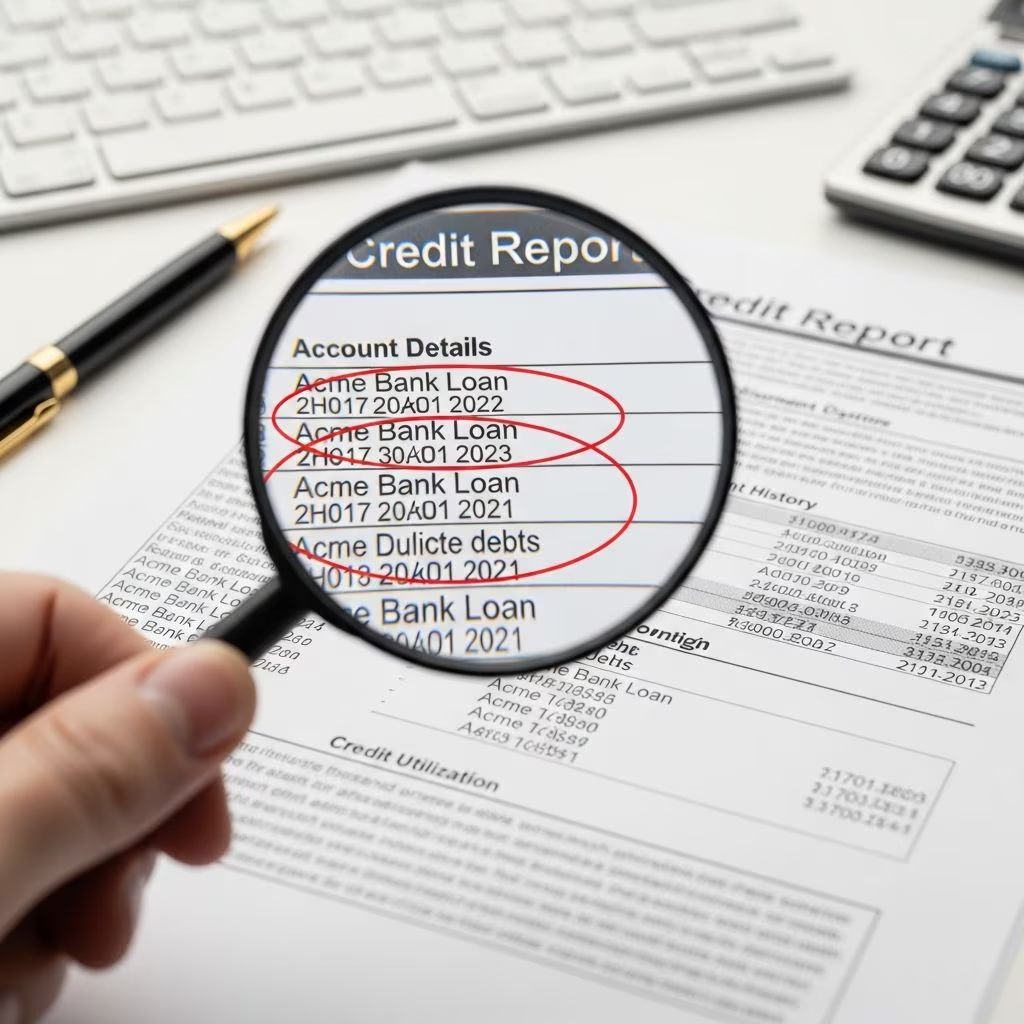
- Two (or more) entries with the same last four digits of an account number and the same balance
- Multiple collection accounts tied to the same original creditor showing overlapping balances
- A paid account still appearing as unpaid on another line
- Different “date of first delinquency” for what appears to be the same debt
- Old debts reported with very recent “opened” or “updated” dates without explanation
Pay special attention to the date of first delinquency — the first time you fell behind and never brought the account current. This date is critical because it determines how long the negative information can stay on your report, which is typically about seven years for most types of negative accounts.
3. Separate Legitimate Multiple Entries from Errors
After identifying similar-looking entries, decide whether they are:
- Legitimate related accounts (for example, original creditor plus a collection agency, clearly marked and not double-counting the balance)
- Outright duplicates where the same debt appears twice as if it were two separate obligations
- Partially incorrect records where one version of the account is accurate and another has the wrong balance, dates, or status
Only inaccurate, incomplete, or misleading entries can be removed or changed through the dispute process, but that often includes improper duplicates.
Your Legal Rights to Dispute Duplicate Debts
The Fair Credit Reporting Act requires credit bureaus to report information that is accurate and complete, and to investigate disputes that you submit. If they cannot verify the information with the source that provided it, they must delete or correct it, generally within about 30 days of receiving your dispute.
Other federal laws, such as the Fair Debt Collection Practices Act (FDCPA), restrict how debt collectors may contact you and require them to stop collection efforts until they verify a debt if you dispute it in writing.
Step-by-Step: How to Dispute Duplicate Debts on Your Credit Report
Once you have identified potential duplicate or inaccurate debt entries, use a systematic process to challenge them.
Step 1: Gather Documentation
Collect any records that help show the correct history of the debt, such as:
- Billing statements from the original creditor
- Letters or emails from debt collectors
- Proof of payments, settlement letters, or payoff confirmations
- Previous credit reports showing older information or dates
- Any court documents, if a lawsuit or judgment was involved
Organize these so you can quickly show why one entry is incorrect or why two entries represent the same underlying obligation.
Step 2: File a Dispute with Each Credit Bureau Reporting the Error
You must contact the credit bureaus that are actually reporting the questionable entry. If only one bureau shows the duplicate, you only need to dispute it there; if all three do, you should send disputes to all three. The Federal Trade Commission recommends including in your dispute:
- Your full name, address, and other identifying details
- Clear identification of each account you are disputing (for example, account number and creditor name)
- An explanation of why the entry is incorrect or duplicative
- Copies (not originals) of documents that support your position
You can typically submit disputes:
- Online, using each bureau’s dispute portal
- By mail, which allows you to send copies of documents and keep a certified-mail record
- By phone, though written disputes provide a clearer paper trail
Step 3: Consider Also Contacting the Furnisher
The business that supplied the information to the bureau (such as a lender or collection agency) is called the furnisher. You may also send a dispute directly to the furnisher explaining that the account is being reported inaccurately or more than once. If they agree, they must correct the information they send to the bureaus so your reports can be updated.
Step 4: Wait for the Investigation and Review the Results
After receiving your dispute, the credit bureau will typically:
- Forward the relevant information to the furnisher
- Ask the furnisher to investigate and respond
- Update or delete the entry if the furnisher cannot verify it or confirms it is wrong
Bureaus generally must complete investigations in about 30 days for most disputes, then send you written results and a free copy of your updated report if a change was made.
Step 5: Follow Up if the Duplicate Is Not Fixed
If the credit bureau decides not to change the information and you still believe it is wrong, you can:
- Submit a second, more detailed dispute with any additional documentation you did not provide the first time
- Ask the bureau to add a brief statement of your dispute to your credit file so future creditors see your side
- Consider filing a complaint with a federal regulator, such as the Consumer Financial Protection Bureau, if you believe your rights were not respected
- Consult with a consumer law attorney or legal aid organization if the inaccurate duplicates are causing serious harm
How Long Duplicate or Negative Debts Can Stay on Your Report
Most negative information related to consumer debts, including collections and charge-offs, generally cannot be reported for more than about seven years from the date of first delinquency on the original account. Even if the debt is sold from one collector to another, that time limit does not restart.
When you see multiple entries for the same old debt, check whether:
- Any entry is listed with a date that would extend the reporting period beyond the legal limit
- A newer collector has reported a more recent “opened” date that does not match the original default timeline
- The same delinquency is effectively being counted twice in a way that damages your report
If an outdated debt is still being reported past the legal time limit, you can dispute it with the bureau and request removal as outdated information.
Preventing Problems with Duplicate Debts Going Forward
Once you have cleaned up existing duplicates, there are steps you can take to reduce the chances that new errors will appear.
- Check your reports regularly. Reviewing your credit annually (or more often during major life events) can help you spot duplicates early.
- Save key documents. Keep payoff letters, settlement agreements, and correspondence from collectors in a safe place.
- Respond promptly to new collection letters. If you are contacted about a debt you do not recognize or that looks like a duplicate, request written validation and clarification.
- Watch for identity theft. If accounts appear that clearly are not yours, consider placing fraud alerts or credit freezes with the bureaus and filing appropriate identity theft reports.
Frequently Asked Questions About Duplicate Debts
Do I have to pay the same debt twice if two collectors are reporting it?
No. Even if the same debt appears with two different collectors, you only owe one underlying obligation. If more than one company is trying to collect, request written validation and documentation from each and confirm which company currently owns the debt before making any payments.
Can both the original creditor and a collector show up for the same debt?
Yes, this is common. The original creditor may show the account as charged off or sold, while a collection agency lists the active collection account. This is generally allowed as long as the entries are clearly labeled and not misleading. You can still dispute any part that is inaccurate or incomplete.
Will disputing duplicate debts hurt my credit score?
Using the dispute process itself does not directly hurt your score. In fact, successfully removing incorrect duplicate entries may help your credit over time by reducing negative information and clarifying your true obligations.
What if the credit bureau says the information was “verified,” but I still disagree?
You can send a follow-up dispute with more evidence, contact the furnisher directly, or file a complaint with a consumer protection agency if you believe the response was inadequate. You also have the option to add a brief statement of dispute to your file.
Should I work with a credit repair company to remove duplicates?
Most of the steps credit repair companies take are actions you can do yourself for free: checking reports, writing disputes, and following up. Before paying anyone, consider whether you can manage the process on your own and research any company thoroughly, as regulators have taken action against firms that made misleading promises about results.
References
- Disputing Errors on Your Credit Reports — Federal Trade Commission. 2023-06-01. https://consumer.ftc.gov/articles/disputing-errors-credit-reports
- How to Dispute Outdated Debt on Your Credit Report — Edelman, Combs, Latturner & Goodwin, LLC. 2023-03-15. https://www.consumerlawfirm.com/understanding-bad-debt-removal-how-to-dispute-outdated-debt-on-your-credit-report/
- How to Dispute Credit Report Information — Experian. 2024-02-05. https://www.experian.com/blogs/ask-experian/credit-education/faqs/how-to-dispute-credit-report-information/
- How to Dispute a Debt with Creditors, Collectors & Reporting Bureaus — InCharge Debt Solutions. 2022-09-20. https://www.incharge.org/debt-relief/credit-counseling/bad-credit/how-to-dispute-a-debt-with-creditors-collectors-reporting-bureaus/
- Can Written-Off Debt Be Removed from a Credit Report? — CBS News. 2024-01-17. https://www.cbsnews.com/news/can-written-off-debt-be-removed-from-a-credit-report/