
The Evolution of Fair Housing: From Redlining to Algorithmic Bias
Understanding the history of housing discrimination and modern challenges.
Introduction to Fair Housing and Systemic Equity
Housing is more than just a roof over one’s head; it is a fundamental human need and a cornerstone of economic stability, community connection, and generational wealth. However, the path to fair and equitable access to housing in the United States has been deeply flawed. For decades, the housing market was heavily marred by systemic racism and intentional, government-backed discrimination. Understanding housing rights requires looking back at this history, understanding current legislation like the Fair Housing Act, and recognizing the evolving challenges in the modern real estate landscape. This comprehensive guide explores the roots of housing discrimination, the critical protections afforded by federal law, and the modern battlegrounds where fair housing advocates continue to fight for equity.
The Deep Roots of Housing Discrimination
Before exploring modern legal protections, it is critical to understand the policies that necessitated them. Housing segregation in the United States did not happen by accident; it was heavily influenced by both private practices and government initiatives.
The Legacy of Redlining
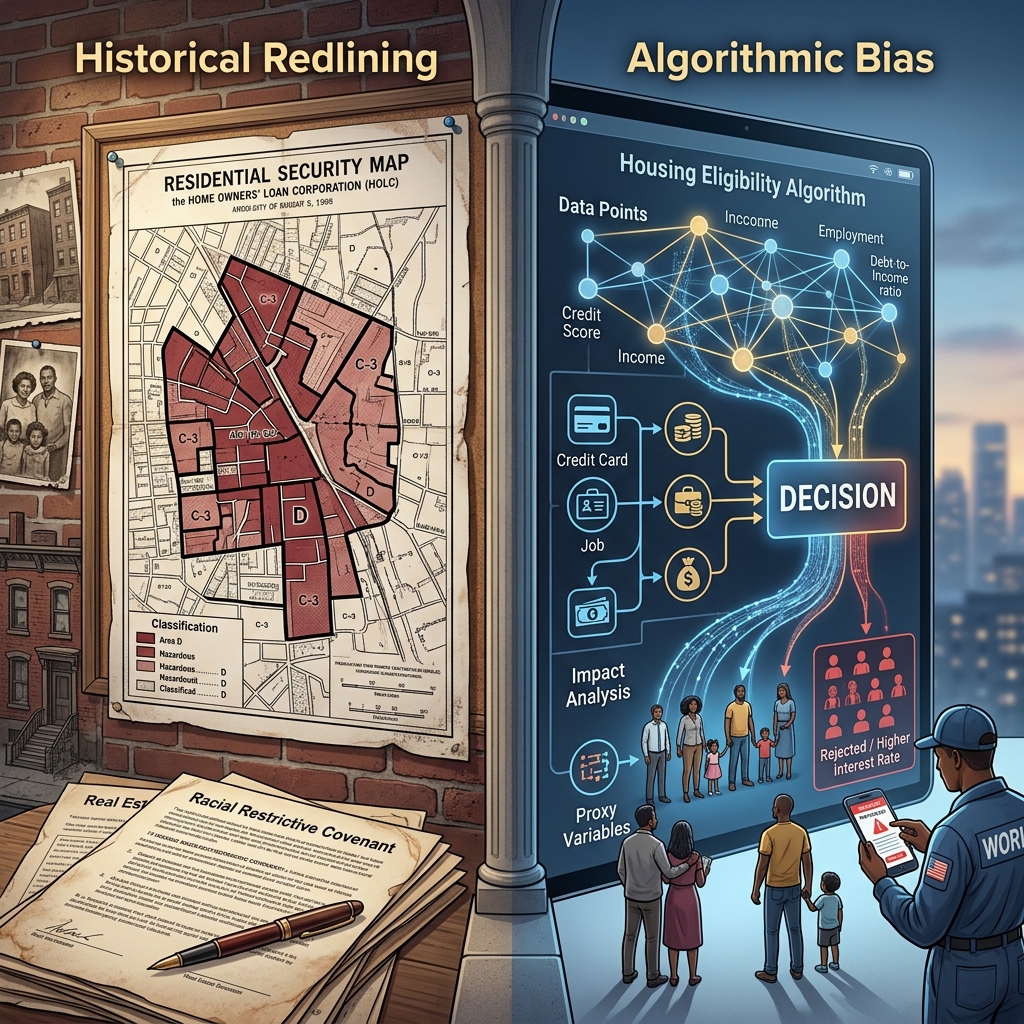
In the 1930s, the federal government fundamentally reshaped the American housing market through the creation of the Home Owners’ Loan Corporation (HOLC) and the Federal Housing Administration (FHA). While these entities democratized homeownership for many, they systematically excluded Black Americans and other marginalized groups through a practice known as “redlining”. Surveyors mapped cities and graded neighborhoods based on perceived lending risk. Neighborhoods with minority populations were frequently outlined in red ink—signifying them as “hazardous” or high-risk—and residents were summarily denied access to federally backed mortgages. This forced disinvestment meant that while white Americans were building generational wealth through home equity in the suburbs, Black communities were trapped in disinvested urban areas, denied the capital needed to purchase homes or improve their neighborhoods.
Restrictive Covenants and Urban Renewal
Beyond federal maps, private deeds often included racially restrictive covenants—clauses legally preventing the sale of a property to anyone of a specific race or religion. Though the Supreme Court deemed these unenforceable in 1948 in the landmark case Shelley v. Kraemer, the demographic scars remained deeply embedded in community layouts. Furthermore, mid-20th-century “urban renewal” projects frequently targeted minority neighborhoods, displacing thousands of residents under the guise of blight removal without offering adequate replacement housing for the displaced minority families.
The Fair Housing Act of 1968: A Legislative Turning Point
Following decades of grassroots activism, the Civil Rights Movement catalyzed major legislative reforms. The assassination of Dr. Martin Luther King Jr. in April 1968 accelerated the passage of Title VIII of the Civil Rights Act of 1968, commonly known as the Fair Housing Act.
Core Protections and Protected Classes
The Fair Housing Act made it explicitly illegal to discriminate in the sale, rental, and financing of dwellings based on specific protected characteristics. Initially, the law protected against discrimination based on race, color, religion, and national origin. Over the years, amendments expanded these protections significantly. In 1974, “sex” was added to the list of protected classes. In 1988, the Fair Housing Amendments Act brought sweeping changes, adding “familial status” (protecting families with children under 18 and pregnant women) and “disability” (requiring reasonable accommodations and accessible design in newer buildings). Recently, the U.S. Department of Housing and Urban Development (HUD) clarified that the prohibition against sex discrimination also encompasses sexual orientation and gender identity.
What Actions Are Considered Illegal?
Under the FHA, housing providers, lenders, and appraisers cannot engage in discriminatory behaviors. It is illegal to outright refuse to rent or sell to someone based on their protected class. It is also illegal to falsely claim a property is unavailable, provide different terms or conditions (like requiring a higher security deposit from certain tenants), or publish advertisements that indicate a preference or limitation based on a protected characteristic. In lending, banks cannot impose different interest rates, refuse to provide mortgage information, or utilize discriminatory appraisal practices based on a neighborhood’s racial makeup.
Modern Manifestations of Housing Discrimination
While “whites only” signs and explicit redlining maps belong to the past, housing discrimination has morphed into covert, systemic, and sometimes highly technical forms. Today’s battle for fair housing focuses heavily on statistical impacts and the tools of the digital age.
The Disparate Impact Standard
A critical doctrine in fair housing law is the concept of “disparate impact.” Under this standard, a policy or practice does not need to be intentionally discriminatory to violate the Fair Housing Act. If a seemingly neutral policy disproportionately harms a protected group and cannot be justified by a legitimate business necessity, it is considered unlawful. For example, a landlord’s blanket ban on any applicant with a prior arrest record—regardless of whether they were convicted or what the circumstances were—can have a disparate impact on Black and Hispanic communities, who face disproportionate arrest rates due to systemic policing biases. The disparate impact standard serves as a vital tool for civil rights advocates fighting systemic inequality.
Algorithmic Bias and Automated Tenant Screening
In the 21st century, algorithms often act as the gatekeepers to housing. Property managers increasingly rely on automated tenant screening software to evaluate applicants. These algorithms generate a “risk score” using a variety of data points, such as credit history, eviction records, and criminal background checks. However, civil rights groups and federal regulators like the Federal Trade Commission (FTC) have raised alarms about algorithmic bias. If the data feeding these algorithms reflects historical inequities—for instance, systemic disparities in policing or credit access—the resulting automated decisions will inevitably recreate and amplify those biases. The Department of Justice recently filed statements of interest in federal cases asserting that algorithmic tenant screening tools that produce a disparate impact against minority applicants are fully subject to the Fair Housing Act.
Recognizing the Signs of Housing Discrimination
Because modern discrimination is often subtle, it is crucial for individuals to recognize potential warning signs during their housing search. Some common red flags include:
- The “Bait and Switch”: An applicant is told over the phone that an apartment is available, but upon arriving in person, they are informed it was “just rented,” while the listing remains active online.
- Inconsistent Requirements: Being asked for extensive background checks, co-signers, or higher income-to-rent ratios than other applicants or what was initially advertised by the property management company.
- Steering: A real estate agent subtly or overtly guides a buyer away from or toward certain neighborhoods based on their race or national origin, rather than their stated budget and preferences.
- Unreasonable Denials for Accessibility: A landlord refusing to allow a tenant who uses a wheelchair to install a ramp at their own expense or denying a request to keep a service animal because of a strict “no pets” policy.
Taking Action: How to Report Violations
Enforcing fair housing laws requires active participation from consumers, advocates, and regulatory bodies. If you suspect you have been the victim of housing discrimination, there are concrete steps you can take to protect your rights. First, document everything, including dates, times, names of people you spoke with, and copies of any correspondence or advertisements.
Individuals can file a formal complaint with HUD’s Office of Fair Housing and Equal Opportunity (FHEO). Complaints can be filed online, via mail, or over the phone, and HUD will launch an investigation into the allegations. Additionally, state and local fair housing agencies, often funded through HUD’s Fair Housing Assistance Program (FHAP), can assist victims in navigating local laws. It is important to note that many state and local jurisdictions offer even broader protections than federal statutes, such as prohibiting discrimination based on source of income (like Section 8 vouchers), marital status, or age.
Frequently Asked Questions (FAQs)
What is the Fair Housing Act?
The Fair Housing Act is a federal civil rights law enacted in 1968 that prohibits discrimination in the purchase, sale, rental, or financing of housing. It protects individuals from discrimination based on race, color, national origin, religion, sex, familial status, and disability.
What exactly is redlining?
Redlining is a historical discriminatory practice where banks, insurance companies, and government agencies denied loans or services to people in specific geographic areas. These areas, primarily minority neighborhoods, were outlined in red on maps to denote them as “hazardous,” trapping generations in cycles of disinvestment.
Does the Fair Housing Act apply to private landlords?
Yes, the Fair Housing Act applies to the vast majority of housing providers, including private landlords, property managers, and real estate companies. There are a few narrow exceptions, such as owner-occupied buildings with four or fewer units, but discriminatory advertising is strictly prohibited universally.
How does algorithmic bias affect housing opportunities?
Algorithmic bias occurs when automated tenant screening or mortgage approval software relies on data that reflects historical inequalities. This can lead to the automated rejection of minority applicants at disproportionate rates, violating the disparate impact standard of the Fair Housing Act by perpetuating systemic exclusion.
Can a landlord refuse to rent to me because I have children?
No. Familial status is a protected class under the Fair Housing Act. Landlords cannot refuse to rent to families with children under the age of 18, nor can they legally restrict families to specific floors, buildings, or units within a complex.
Conclusion
Achieving true equity in the housing market is an ongoing, multifaceted journey. While the passage of the Fair Housing Act of 1968 dismantled the legal framework of explicit segregation, the enduring legacy of redlining and the emergence of modern challenges like algorithmic bias demonstrate that the fight for civil rights is far from over. By understanding historical contexts, recognizing modern discriminatory practices, and holding housing providers accountable under the disparate impact standard, society can move closer to the ideal of fair, accessible, and equitable housing for all. It requires constant vigilance from policymakers, advocates, and everyday citizens alike to ensure that a person’s background never dictates their ability to find a safe and secure place to call home.
References
- Redlining — Federal Reserve History. 2023-06-02. https://www.federalreservehistory.org/essays/redlining
- Housing Discrimination Under the Fair Housing Act — U.S. Department of Housing and Urban Development (HUD). https://www.hud.gov/program_offices/fair_housing_equal_opp/fair_housing_act_overview
- FACT SHEET: On the 54th Anniversary of the Fair Housing Act… — U.S. Department of Housing and Urban Development (HUD). 2022-04-11. https://archives.hud.gov/news/2022/pr22-064.cfm
- HUD Restores ‘Discriminatory Effects’ Rule — U.S. Department of Housing and Urban Development (HUD). 2023-03-17. https://www.hud.gov/press/press_releases_media_advisories/HUD_No_23_054
- Justice Department Files Statement of Interest in Fair Housing Act Case Alleging Unlawful Algorithm-Based Tenant Screening Practices — U.S. Department of Justice (DOJ). 2023-01-09. https://www.justice.gov/opa/pr/justice-department-files-statement-interest-fair-housing-act-case-alleging-unlawful
- Joint Statement on Enforcement Efforts Against Discrimination and Bias in Automated Systems — Federal Trade Commission (FTC). 2023-05-02. https://www.ftc.gov/news-events/news/press-releases/2023/04/ftc-chair-khan-officials-doj-cfpb-eeoc-release-joint-statement-ai
Similar Articles








Read full bio of medha deb




