
Credit Report Review Checklist: Step-By-Step Guide In 2025
Master your credit health: Learn to scrutinize every detail in your credit report for errors, fraud, and opportunities to boost your score.
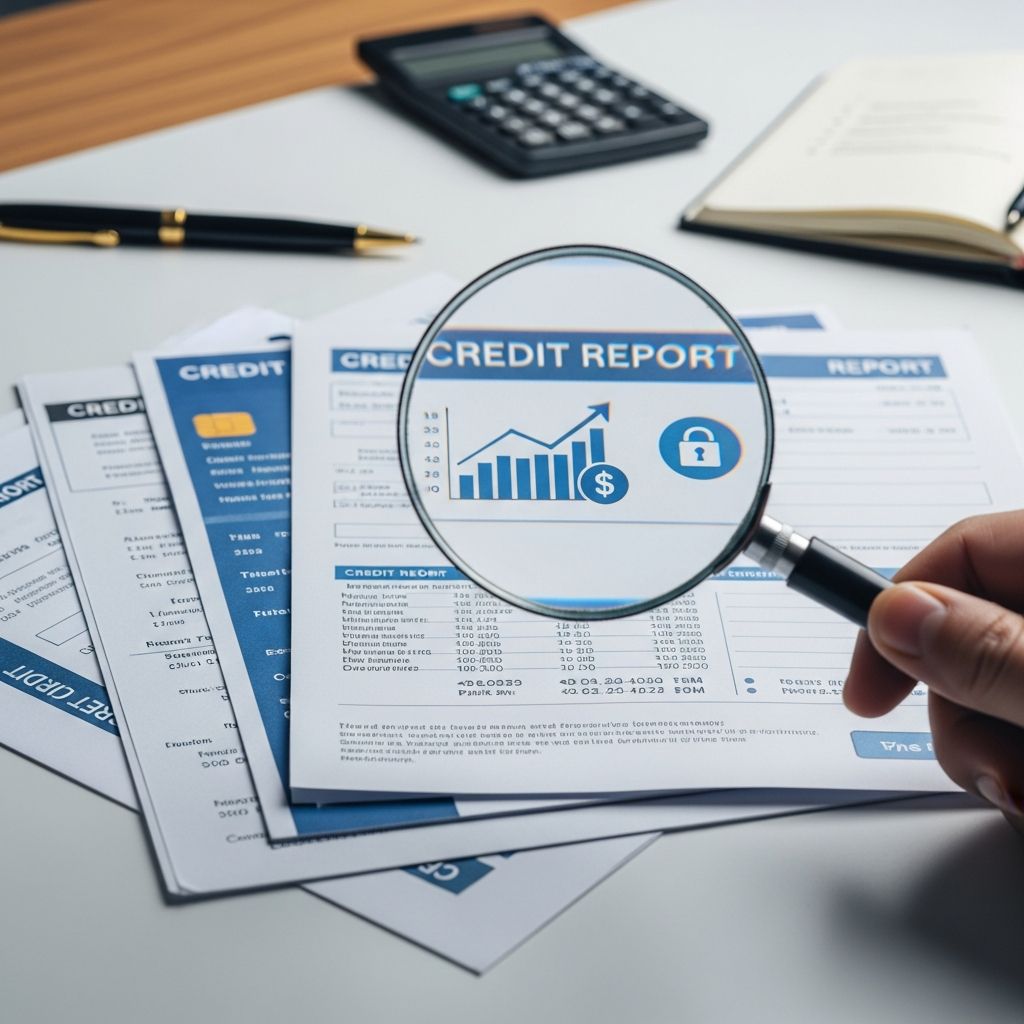
Your credit report is a vital financial document that influences loan approvals, interest rates, and even job opportunities. Regularly examining it helps detect errors, fraudulent activity, and areas for improvement. This guide provides a step-by-step checklist to thoroughly inspect every section, empowering you to maintain optimal credit health.
Understanding the Foundation of Your Credit Report
A credit report compiles data from lenders, public records, and other sources, maintained by major bureaus like Equifax, Experian, and TransUnion. It details your borrowing history, payment patterns, and debts, forming the basis for your credit score. Unlike a credit score, which is a numerical summary, the report offers granular insights into your financial behavior over the past 7-10 years.
Obtain free weekly reports from AnnualCreditReport.com, authorized by federal law. Review them annually or after major life events like address changes or credit applications to ensure accuracy.
Verifying Your Personal Identification Details
The opening section lists identifying information to confirm the report belongs to you. Errors here can lead to mixed files with unrelated individuals.
- Name variations: Check for correct spelling, including aliases, maiden names, or nicknames. Mismatches like “Stephen” vs. “Steve” can confuse matching algorithms.
- Current and past addresses: Verify all listed residences match your history. Outdated or incorrect entries may signal identity issues.
- Date of birth and Social Security number: Ensure precision; even minor digit transpositions invite fraud or errors.
- Employment history: Confirm listed jobs and employers are accurate, as this aids lenders in profile matching.
- Phone numbers: Scrutinize for unfamiliar contacts that might indicate unauthorized use.
Dispute inaccuracies immediately via the bureau’s online portal or mail. Accurate personal data prevents legitimate accounts from being overlooked.
Analyzing the Accounts Summary Overview
This snapshot provides a high-level view of your credit portfolio, including open/closed accounts, balances, limits, and inquiry counts. It’s ideal for quick scans spotting outliers.
| Element | What to Check | Red Flags |
|---|---|---|
| Total Open Accounts | Matches your known cards/loans | Unknown revolving or installment accounts |
| Total Balances | Aligns with statements | Unexpected high debt levels |
| Credit Limits | Reflects approved amounts | Missing or inflated limits |
| Payment History Summary | Shows on-time trends | Recent delinquencies |
| Inquiries Count | Correlates with applications | Excessive hard pulls |
Use this section as a roadmap; dive deeper if discrepancies appear. For instance, a surprise mortgage entry demands investigation.
Dissecting Detailed Account Histories
The core of your report, this lists every credit account with forensic-level details on payments, balances, and status.
- Account type and creditor: Confirm revolving (credit cards), installment (auto loans), or mortgage entries list correct lenders.
- Open/close dates: Verify timelines; closed accounts should note payoff reasons like “paid as agreed”.
- Payment history: Look for 12-month rolling updates showing on-time (“0x30”), late (“30 days past due”), or worse. Negative marks linger 7 years from delinquency date.
- Balances and limits: Current balance vs. high credit used; high utilization (over 30%) harms scores.
- Status codes: Decode abbreviations: “OK” (current), “I” (installment), “R” (revolving). Question negatives like collections.
Challenge unrecognized accounts or outdated negatives (over 7 years) promptly. Positive history, like consistent payments, bolsters your profile.
Investigating Credit Inquiries
Inquiries track access to your file, divided into hard (credit-seeking, visible to lenders, last 2 years) and soft (pre-approvals, visible only to you).
- Hard inquiries: Legitimate from your applications (e.g., auto loan). Multiple in shopping windows (14-45 days) count as one.
- Soft inquiries: Yours or promotional; ignore for scoring but flag unknowns.
- Dates and sources: Recent spikes without recall signal fraud.
Lenders view hard pulls as risk indicators; limit to necessities. Dispute unauthorized ones to protect your score.
Scrutinizing Public Records and Collections
Non-credit items like bankruptcies, liens, judgments, and collections appear here, severely impacting scores.
- Bankruptcies: Chapter 7 (10 years), Chapter 13 (7 years) from filing date.
- Civil judgments/liens: Tax liens (7-15 years, if reported); verify legitimacy.
- Collections: Debts over $0 sent to agencies; medical ones may be removable post-2023 rules.
- Child support arrears: Government-verified delinquencies.
Many states limit non-tax public records; dispute inaccuracies or aged items (7+ years).
Spotting Fraud and Identity Theft Indicators
New accounts, inquiries, or address changes you didn’t authorize scream fraud. Act fast: freeze credit, file FTC report at IdentityTheft.gov, and dispute with bureaus.
Monitor for synthetic identity fraud, where thieves blend real/fake data. Regular reviews catch it early.
Steps to Dispute Errors Effectively
- Gather evidence: statements, IDs.
- Submit online/mail to bureau and furnisher (creditor).
- Track via confirmation number; bureaus must investigate in 30 days.
- Escalate to CFPB if unresolved.
Frequently Asked Questions
How often should I check my credit report?
Weekly for free via AnnualCreditReport.com, or monthly if monitoring fraud.
Does checking my own report hurt my score?
No, self-inquiries are soft and invisible to lenders.
What if I find an error?
Dispute with documentation; expect resolution in 30 days.
Can old negatives be removed?
Items over 7 years (delinquencies/collections) or 10 (Chapter 7) auto-expire.
How does this affect my credit score?
Errors lower scores; fixes via payment history (35%), utilization (30%) boost it.
Leveraging Your Review for Financial Gains
Beyond fixes, analyze utilization (keep under 30%), diversify accounts, and build history. Strong reports secure better rates, saving thousands. Pair with score monitoring for full oversight.
References
- Understanding the Different Sections of Your Credit Report — Dummies.com. 2023-05-15. https://www.dummies.com/article/business-careers-money/personal-finance/loans-credit/credit-reports/understanding-the-different-sections-of-your-credit-report-153995/
- What is a credit report? — Consumer Financial Protection Bureau. 2024-10-01. https://www.consumerfinance.gov/ask-cfpb/what-is-a-credit-report-en-309/
- How To Read Your Credit Report — First Neighbor Bank. 2023-08-20. https://firstneighbor.com/download/Credit-Reports_How-to-Read-Your-Credit-Report.pdf
- Understanding Your Credit — Federal Trade Commission. 2025-01-10. https://consumer.ftc.gov/articles/understanding-your-credit
- A Guide to What’s in Your Credit Report — myFICO. 2024-11-05. https://www.myfico.com/credit-education/whats-in-my-credit-report
- Credit Report vs Credit Score — University of Wisconsin-Madison Extension. 2024-03-12. https://finances.extension.wisc.edu/articles/credit-report-vs-score/
Similar Articles








Read full bio of medha deb




