
When a Credit Card Charge Is Declined as Unauthorized
Learn what “charge not authorized” really means, why it happens, and how to protect your rights when a credit card payment is declined.
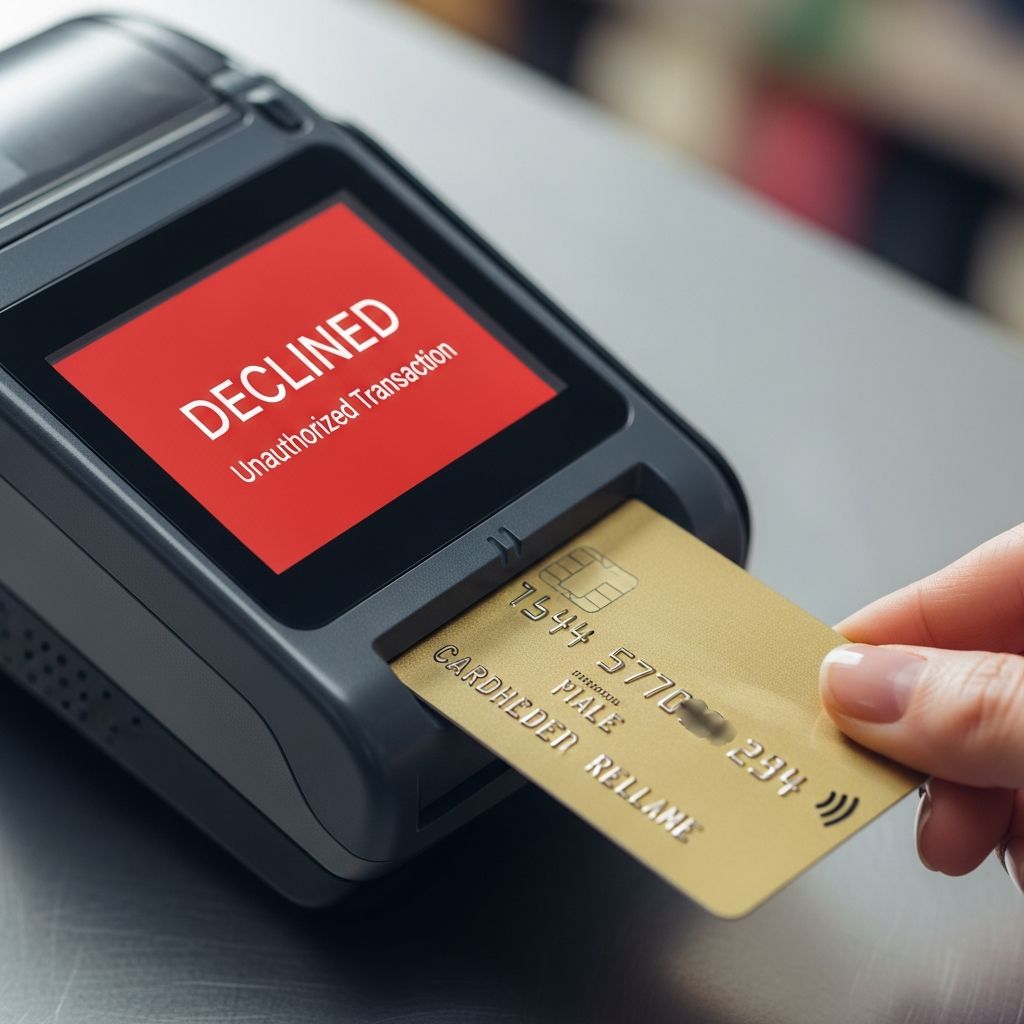
If you tried to pay with your credit card and the store said the charge was not authorized, it usually means your card issuer declined the transaction during the electronic authorization process. This can happen for many reasons, some harmless and some serious, and you have clear options to fix the problem and protect yourself.
How Credit Card Authorization Works Behind the Scenes
Every time you tap, swipe, insert your card, or enter your details online, the payment system runs a quick authorization check to confirm that the account is valid and the transaction can go through.
- You start the purchase by presenting your card or entering card details on a website or app.
- The merchant’s terminal or checkout sends an authorization request to its payment processor or acquiring bank.
- The card network (such as Visa, Mastercard, American Express, or Discover) routes the request to your card issuer.
- Your card issuer checks whether your card is active, has enough available credit, and passes security and fraud checks.
- The issuer responds with either an approval and authorization code, or a decline with an error code.
When the issuer declines the payment, the merchant may see a message like “not authorized,” “do not honor,” or a specific numeric code indicating why the transaction could not be completed.
What “Charge Not Authorized” Usually Means
“Charge not authorized” is not a legal judgment about whether you personally approved the purchase; it is a technical decision by your issuer that the transaction cannot proceed at that moment.
Common interpretations of a not authorized message include:
- The card account is over the credit limit or too close to it.
- The card is past due or temporarily blocked for non-payment.
- The issuer’s systems flagged the transaction as unusual or potentially fraudulent.
- The card is reported lost, stolen, or compromised.
- There are technical problems with the network, terminal, or data being sent.
From your perspective at the checkout counter, the merchant simply sees a decline, and the payment is not completed. No money should leave your account for that particular attempt.
Typical Reasons a Credit Card Charge Gets Declined
Issuers use risk models and a series of checks every time a payment request comes in. If something does not look right or violates the issuer’s rules, the transaction may be rejected.
| Type of Issue | What It Means | Examples |
|---|---|---|
| Insufficient credit | Your available credit is not enough to cover the purchase amount. | Large purchase near your credit limit; multiple pending transactions. |
| Account restrictions | Your account is temporarily blocked or restricted by the issuer. | Serious past-due balance; legal hold; internal review. |
| Fraud or security flags | The transaction does not fit your normal spending pattern or appears high-risk. | Foreign country purchase; unusually large online order; multiple rapid attempts. |
| Card status problems | The card is expired, reported lost or stolen, or otherwise invalid. | Expired card date; issuer replaced card due to data breach; card closed. |
| Data or technical errors | Information is missing or unreadable, or there is a system outage. | Damaged card chip; network downtime; incorrect CVV or billing address. |
In some cases, the decline has nothing to do with your behavior; it can stem from network outages or errors on the merchant’s end. Still, you should confirm with your card issuer to be sure there is no fraud or account problem.
First Steps to Take When a Charge Is Declined
If a store or website tells you that your credit card charge is not authorized, you can calmly work through a series of checks to clarify what is happening.
1. Confirm the Details at the Checkout
Small mistakes can trigger a decline, especially online. Before assuming something serious is wrong, double-check:
- The card number, expiration date, and security code (CVV/CVC)
- The billing address and ZIP or postal code match what your issuer has on file
- The purchase amount is correct and not duplicated
- That you are not accidentally trying to charge the same transaction twice
If everything looks correct, ask the merchant if they have received any specific error code from the payment processor. Some codes relate to card issues, while others point to system or terminal problems.
2. Try a Different Payment Method (If You Need the Purchase Now)
If you must complete the purchase immediately, consider:
- Using a different credit or debit card
- Paying with cash or a check if accepted
- Using a mobile wallet linked to another account
Switching payment methods does not fix any underlying issue with the declined card, but it can help you finish the transaction while you sort things out with your issuer.
3. Contact Your Card Issuer Right Away
The most important step is to call the customer service number on the back of your card (or use your issuer’s secure app or website). Ask the representative:
- Whether the declined transaction reached their systems
- Whether there are any holds, blocks, or fraud alerts on your account
- If your card has been flagged as lost, stolen, or compromised
- Whether your credit limit or account status caused the decline
Issuers often monitor transactions for fraud and may temporarily block activity if they see unusual behavior, especially in foreign countries or online. They may be able to lift the block after verifying your identity and confirming that the transaction is legitimate.
Understanding the Impact on Your Account
A declined transaction can affect your account in a few distinct ways, depending on what stage of processing it reached with your issuer.
- No approval, no hold: If the issuer declined the authorization, there should be no completed charge and no settled transaction on your statement. However, you may see a temporary pending notation that later falls off.
- Authorization hold only: In some cases, an amount can be authorized and placed on hold, but the merchant’s system later reverses or fails to complete the sale. The hold normally drops off automatically after several days.
- Completed charge: If the transaction was later processed successfully (for example, after a retry or manual override), you will see a posted charge. Federal protections then apply if the charge is incorrect or unauthorized in the legal sense.
Keep an eye on your online or mobile statement for several days following a serious decline, especially if your issuer mentioned potential fraud or a data compromise.
What If You Suspect Fraud or True Unauthorized Use?
A merchant’s “not authorized” message does not necessarily mean someone tried to fraudulently use your account. But if your issuer tells you they see suspicious or unfamiliar attempts, respond quickly to limit potential damage.
- Review recent activity line by line for charges you do not recognize.
- Report suspected fraud to your issuer immediately and ask whether they recommend closing the card and issuing a new number.
- Change online banking passwords and enable multi-factor authentication if available.
- Monitor statements and consider setting up alerts for new transactions.
Under U.S. federal law, your liability for unauthorized credit card use is limited, and many issuers offer zero-liability policies for fraudulent transactions, but you must report problems promptly to take full advantage of these protections.
How to Reduce the Chance of Future Declines
While you cannot control every authorization decision, you can take practical steps that make unnecessary declines less likely.
- Keep contact information up to date so your issuer can reach you quickly if they see unusual activity.
- Enroll in travel notifications or travel alerts before using your card abroad or making unusual large purchases.
- Enable transaction alerts by text, email, or app notification so you see authorizations and declines as they happen.
- Pay at least the minimum on time to avoid blocks related to delinquency.
- Protect your card data by avoiding insecure websites and shielding your card number and PIN from view.
These steps help your issuer distinguish between legitimate and suspicious activity and reduce the need for aggressive blocking.
Key Differences: Declined Authorization vs. Billing Error
It is helpful to separate two very different problems:
- A declined authorization happens at the moment of the attempted purchase. It means the transaction did not go through and should not appear as a completed charge.
- A billing error or disputed charge concerns a transaction that did go through but is wrong in amount, date, description, or legitimacy.
If you later see a charge you did not approve, or for the wrong amount, on your statement, you may have rights under federal law to dispute that transaction directly with your card issuer within set time limits.
Frequently Asked Questions (FAQs)
Why was my card declined even though I have available credit?
Even with available credit, an issuer may decline a transaction if it appears unusual for your account, involves a foreign location, comes from a new merchant, or follows a pattern that resembles known fraud scenarios. Contact your issuer to confirm and, if appropriate, ask them to clear the transaction or lift any block.
Can a merchant override a “not authorized” decline?
In general, a merchant cannot force a transaction through the network once your issuer has declined authorization. Some businesses may use alternative methods (such as manual entry or a different processor), but the safest approach is to resolve the issue with your issuer rather than insisting the merchant try multiple workarounds.
Will a declined authorization hurt my credit score?
Typical purchase declines do not show up on your credit report and do not directly affect your credit score. However, patterns that cause declines—such as consistently maxing out your card or missing payments—can lead to negative information on your credit reports over time.
Why do I see a pending amount if the merchant said the charge was declined?
Sometimes the initial authorization places a temporary hold on your available credit, even if the purchase ultimately fails. In most cases, that pending amount falls off automatically within a few business days when the merchant does not complete the transaction. If it persists, contact your card issuer to request a release of the hold.
What should I ask my issuer when I call about a declined charge?
When you reach customer service, ask them to identify any decline codes related to the transaction, explain whether the card is blocked or restricted, confirm whether there are any suspicious attempts or confirmed fraud, and tell you what steps you should take (such as replacing the card or verifying additional information).
References
- Card authorization explained: How does it work? — Stripe. 2023-03-21. https://stripe.com/resources/more/card-authorization-explained
- What is credit card authorization & how does it work? — Checkout.com. 2023-08-10. https://www.checkout.com/blog/card-authorization-explained
- Understanding Credit Card Authorizations: A Complete Overview — U.S. Chamber of Commerce. 2023-07-06. https://www.uschamber.com/co/run/finance/credit-card-authorization-breakdown
- What is Card Authorization: A Complete Guide — Razorpay. 2022-11-15. https://razorpay.com/learn/what-is-card-authorization/
- How Credit Card Authorization Works — BigCommerce. 2022-09-01. https://www.bigcommerce.com/glossary/credit-card-authorization/
- Credit Card Processing Explained: What It Is and How It Works — Financial Professionals. 2023-02-10. https://www.financialprofessionals.org/training-resources/resources/articles/Details/credit-card-processing-explained-what-it-is-and-how-it-works
- Understanding Credit Card Authorisation Process — Planet. 2023-06-19. https://www.weareplanet.com/blog/credit-authorisation-process
Similar Articles








Read full bio of Sneha Tete




