
Creating a Valid Will in Washington State
Master the essential steps and legal standards for drafting a binding will in Washington to secure your legacy effectively.
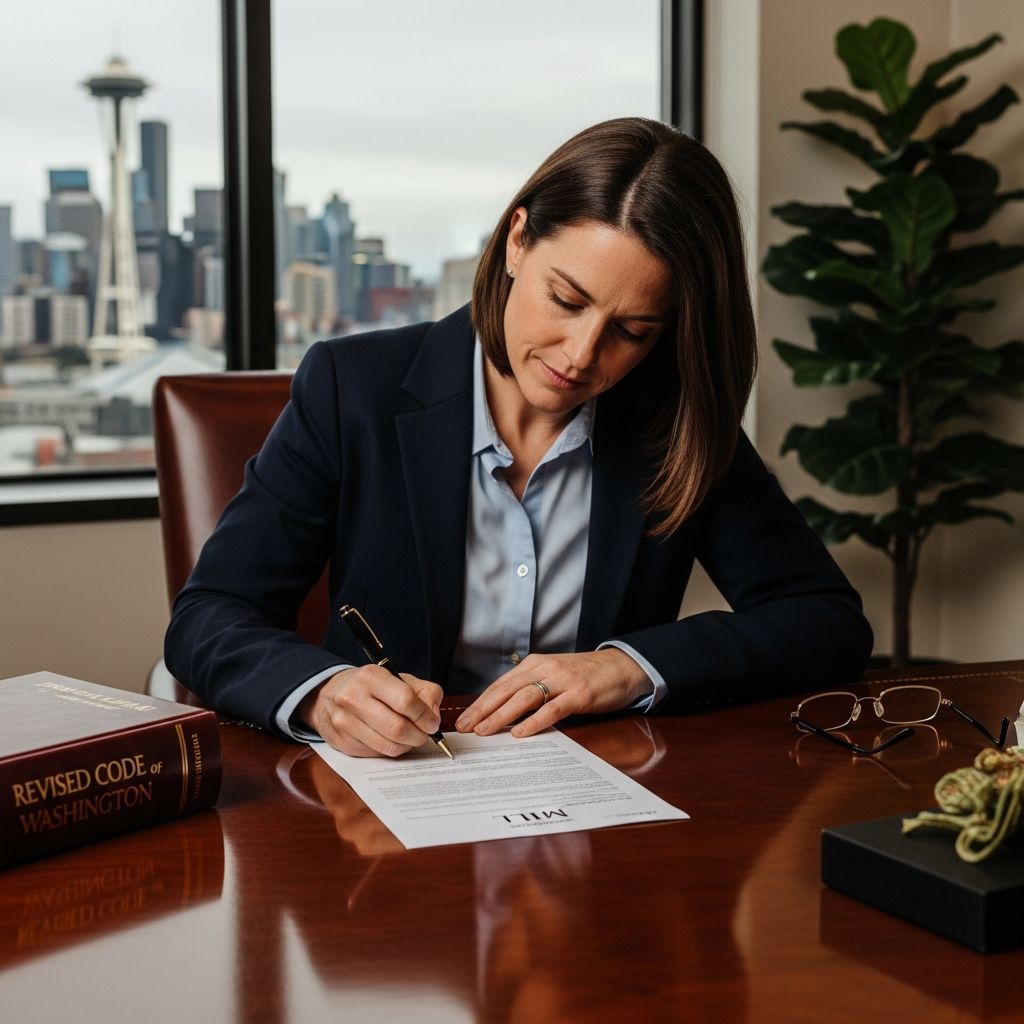
In Washington State, establishing a last will and testament ensures your assets are distributed according to your preferences after your passing. This process demands adherence to specific statutory rules to prevent disputes and guarantee enforceability. Key elements include the creator’s age and mental state, the document’s format, proper signing, and witness involvement. Understanding these prevents invalidation during probate.
Essential Eligibility Criteria for Will Makers
To draft a will in Washington, individuals must meet clear eligibility thresholds. Primarily, the person, known as the testator, must be at least 18 years old. This minimum age safeguards against immature decisions, aligning with state laws that protect minors from complex legal commitments.
Equally critical is
testamentary capacity
, or being of sound mind. This means the testator comprehends the nature and consequences of the will, recognizes the scope of their property, identifies natural heirs, and grasps how assets will be distributed. Courts assess this at the time of signing; temporary impairments like illness do not necessarily disqualify if capacity existed then. Factors such as dementia or intoxication could challenge validity if proven.- Age requirement: 18 years or older.
- Sound mind: Understand will’s purpose, assets, heirs, and distributions.
- No undue influence: Decisions must be voluntary, free from coercion.
Document Format and Writing Standards
Washington mandates that a will be in writing, encompassing both physical paper and certain electronic formats. Typed documents are preferable for clarity, but handwritten ones qualify if all other rules are followed. Audio, video, or purely oral declarations generally fail, except rare exceptions for military personnel.
**Holographic wills**, entirely in the testator’s handwriting without witnesses, are not recognized. A 2015 appeals court ruling in Estate of Burton v. Didricksen affirmed this, emphasizing witness necessity for validity. This contrasts with states permitting unwitnessed handwriting, prioritizing formality to deter fraud.
Signature Protocols for Authenticity
The testator must personally sign at the document’s end, affirming intent. If physically unable, another can sign under the testator’s direct supervision and presence, but this requires caution and documentation.
Including the signing date, while not mandatory, proves chronology if multiple wills exist, with the latest prevailing unless revoked. Self-proving affidavits, notarized by testator and witnesses, streamline probate by attesting execution facts under oath.
Witness Roles and Qualifications
Two competent witnesses are indispensable. They must be adults (18+), mentally sound, observe the testator sign or acknowledge the signature, then sign themselves. Presence can be physical or, for electronic wills, remote via audio-visual means.
Disinterested witnesses—those not benefiting from the will—are ideal. Interested witnesses do not void the will but may forfeit their inheritance unless two additional disinterested witnesses exist, per RCW 11.12.160.
| Aspect | Requirements | Consequences of Non-Compliance |
|---|---|---|
| Number | At least two | Invalid will |
| Age/Competence | 18+, sound mind | Potential challenge in court |
| Interest Status | Prefer disinterested | Forfeited bequest if insufficient others |
| Observation | Witness signing/acknowledgment | Probate disputes |
Electronic Wills: Modern Innovations
Washington embraces progress via the Uniform Electronic Wills Act. Electronic wills are valid if in a legible digital record, electronically signed by the testator, and attested by two witnesses post-signing. Witnesses may participate remotely using audio-visual technology, broadening accessibility.
Requirements mirror traditional wills: writing (digital), signature (electronic), and witnesses. This facilitates remote execution, vital for those in isolated areas or during crises, while upholding anti-fraud safeguards. Note: Some sources conflict on electronic signature acceptance for non-e-wills, but full e-wills comply.
Revocation and Amendment Procedures
Wills are not permanent. Revocation occurs by physical destruction (tearing, burning) with intent, a new will explicitly revoking prior ones, or a codicil altering specifics. Marriage, divorce, or child birth post-execution may partially revoke under community property rules, necessitating updates.
To amend, use a codicil—a supplemental document following same formalities—or draft a new will. Store originals safely, inform executor of location, and review every 3-5 years or after life events.
Probate Implications and Avoidance Strategies
A valid will guides probate, Washington’s court-supervised asset distribution. Small estates (<$100,000 personal property) may bypass formal probate via affidavit after 40 days. Wills prevent intestate succession, where state laws dictate distribution (e.g., spouse/children first).
Alternatives like revocable living trusts avoid probate entirely, transferring assets privately. Joint tenancy or beneficiary designations on accounts bypass wills. Combining tools offers comprehensive planning.
Common Pitfalls to Avoid
Errors undermine wills:
- Inadequate witnesses or improper observation.
- Lack of capacity evidence.
- Ambiguous asset descriptions.
- Ignoring community property (spouse’s half rights).
- Outdated documents post-life changes.
Consult attorneys for complex estates involving businesses, blended families, or special needs heirs.
Frequently Asked Questions
Can I make a will without a lawyer in Washington?
Yes, if formalities are met, but professionals minimize risks for intricate situations.
Does Washington allow oral wills?
Generally no; limited to military nuncupative exceptions.
What if my witness is a beneficiary?
The will stands, but their gift voids without two extra disinterested witnesses.
Is dating the will required?
Not strictly, but recommended for priority determination.
How do I store my will safely?
With your executor, attorney, or safe deposit box; avoid hiding it.
Next Steps for Secure Estate Planning
Inventory assets/liabilities, identify heirs, choose executor, draft per rules, execute properly, and review periodically. Washington offers robust framework; compliance ensures wishes prevail.
References
- Legal Requirements for a Valid Will in Washington — HelloPrenup. 2023. https://helloprenup.com/will/legal-requirements-for-a-valid-will-in-washington/
- Washington Requirements to Create a Valid Will — WG Law. 2024. https://www.willprobateattorneys.com/post/washington-requirements-to-create-a-valid-will
- What Are the Basic Requirements of a Valid Will in Washington? — Elder Law Group WA. 2023. https://elderlawgroupwa.com/blog/what-are-the-basic-requirements-of-a-valid-will-in-washington/
- Wills in Washington State — Pacific Northwest Family Law. 2024. https://pnwfamilylaw.com/estate-planning/wills-in-washington-state/
- What Are the Basic Requirements for a Valid Will in Washington? — Elevated Estate Planning. 2023. https://www.elevatedestateplanning.law/blog/what-are-the-basic-requirements-for-a-valid-will-in-washington/
- Minimum Requirements for a Valid Will — Washington Wills. 2024. https://wa-wills.com/legal-library/minimum-requirements-for-a-valid-will/
- How to Make a Will in Washington State — FreeWill. 2025. https://www.freewill.com/learn/how-to-make-a-will-in-washington-state
Similar Articles








Read full bio of Sneha Tete




