
Correcting Mistakes on Your Credit Reports
Learn how to spot credit report errors, dispute them effectively, and protect your credit history from lasting damage.
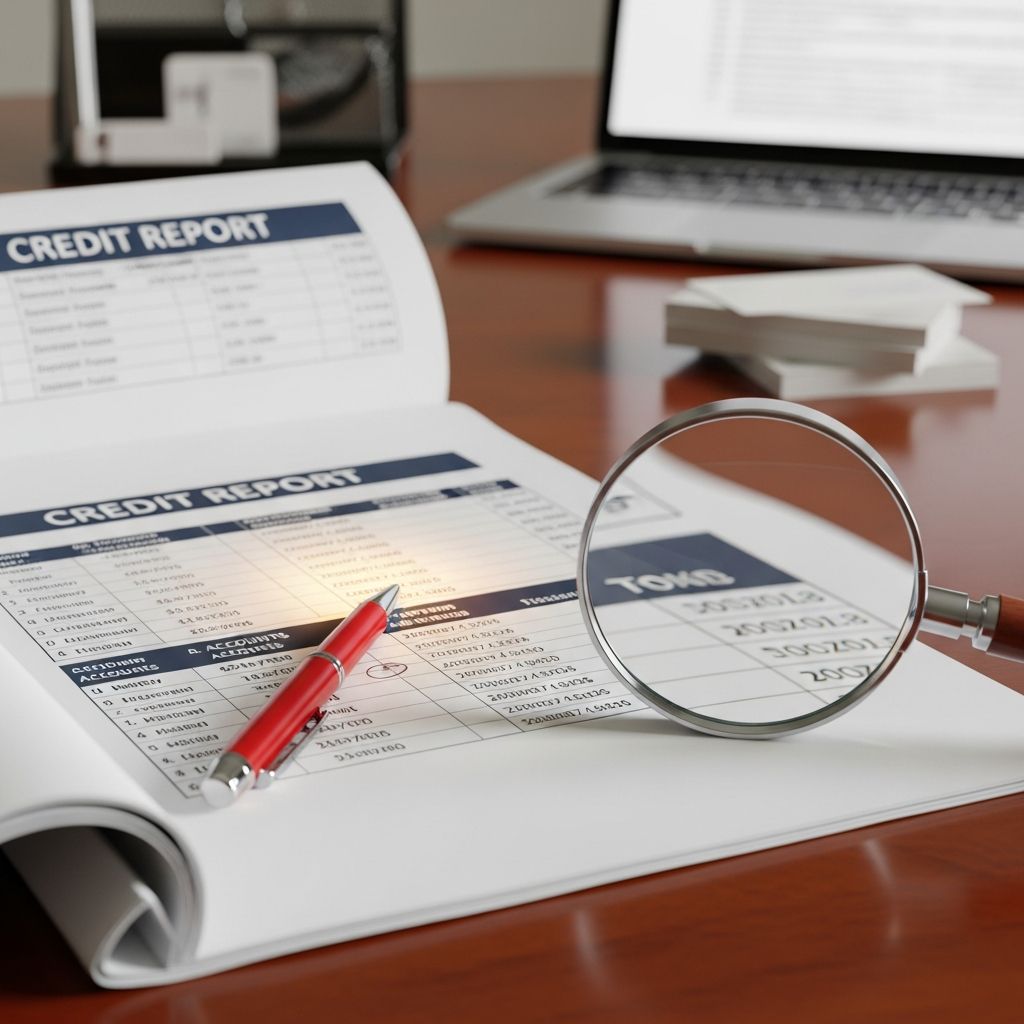
Your credit reports can influence whether you get a loan, rent an apartment, or even qualify for some jobs. When they contain errors, you might pay more for credit or be denied altogether. This guide explains how to find mistakes, dispute them, and follow through until your reports are corrected.
Why Credit Report Accuracy Matters
Credit reports summarize how you have used credit over time, including loans, credit cards, collections, and some public records. Lenders and others use this information to predict how likely you are to repay what you borrow. Incorrect negative information can:
- Lower your credit scores and make borrowing more expensive
- Cause credit card or loan applications to be denied
- Raise insurance premiums in states where insurers use credit data
- Complicate rental applications or utility deposits
Because of these consequences, consumer protection laws give you the right to dispute incomplete or inaccurate information and have it investigated, usually within about 30 days.
Common Types of Credit Report Errors
Not every issue on a credit report is a legal error. Some items simply reflect unfavorable but accurate information, like a late payment you did make. Errors usually fall into several categories:
- Identity mistakes – Wrong name, address, Social Security number, or mixed files with another person.
- Account ownership issues – Accounts that are not yours, or listed as joint when you are only an authorized user.
- Incorrect account details – Wrong balances, credit limits, payment histories, or account status (for example, showing open when closed).
- Duplicate entries – The same debt listed more than once, which can exaggerate what you owe.
- Outdated negative information – Old collection accounts or late payments that should have fallen off after the usual reporting period.
- Fraud and identity theft – New accounts or charges you did not authorize.
Spotting which items belong in each category will help you explain your dispute clearly to credit bureaus and businesses.
First Step: Get and Review Your Credit Reports
You cannot fix errors you have not seen. Start by getting your credit reports from the three nationwide credit bureaus: Equifax, Experian, and TransUnion. Federal law lets you get free reports through the official centralized service.
| Credit Bureau | What to Look For |
|---|---|
| Equifax | Personal information, open and closed accounts, collections, inquiries, and public records. |
| Experian | Names, addresses, accounts, payment history, and any potential fraud alerts or freezes. |
| TransUnion | Duplicate accounts, mixed information, and dates of first delinquency for negative items. |
Go line by line through each report and make a list of anything that appears wrong or incomplete. For each disputed item, note:
- The name of the creditor or business reporting it
- The account number or identifier used on the report
- Exactly what is wrong (for example, “never late” or “not my account”)
- Why you believe it is wrong, with any dates you know
Gathering Documents to Support Your Dispute
Credit reporting companies and businesses must investigate your dispute, but they rely on evidence you provide. The stronger your documentation, the more likely you are to get a quick correction.
Helpful documents can include:
- Copies of your credit reports with the disputed items highlighted
- Account statements showing correct balances or payment history
- Letters or emails from creditors acknowledging corrections or closures
- Proof of identity and address, like a driver’s license and utility bill
- Police reports or identity theft reports for fraudulent accounts
- Court documents if a judgment was vacated, dismissed, or satisfied
Always send copies, not originals. Keep a folder—paper or digital—with everything you submit, plus any responses you receive.
How to Dispute Errors with Credit Bureaus
You can dispute with credit bureaus online, by mail, or by phone. Many government agencies and consumer advocates recommend putting disputes in writing and including copies of documents.
Key elements to include in a written dispute
- Your full name, address, and contact details
- Any report confirmation or file number, if available
- Clear identification of each item you dispute, including account numbers
- A brief, factual explanation of why each item is wrong or incomplete
- A specific request for correction or deletion
- Copies of documents that support your position
Send your letter to the credit bureau at the address it provides for disputes, and consider using certified mail with a return receipt so you can prove when it arrived.
What the bureaus must do after you dispute
Under federal law, when you submit a non-frivolous dispute, the credit reporting company generally must:
- Review all relevant information you provided
- Forward your dispute and supporting documents to the business that furnished the data
- Ask that business to investigate and report back
- Complete the investigation, usually within about 30 days
- Provide you with the results in writing
- Give you a free updated copy of your report if a change is made
If the company deems your dispute frivolous or lacking enough detail—such as not specifying which item you challenge—it may decline to investigate. In that case, it must tell you promptly and explain why it made that decision.
Disputing Directly with the Business that Reported the Information
The business that supplied the data (sometimes called a “furnisher”) also plays a central role. You can and often should send disputes directly to that business, especially if it continues to report information you believe is wrong.
To dispute with a furnisher:
- Use the contact information on your credit report or most recent statement
- Write a detailed letter similar to your bureau dispute
- Attach copies of supporting records, such as billing statements or correspondence
- Keep proof of mailing and copies of everything you send
After receiving a dispute, the business must investigate, review the documents, and report its findings to the credit bureau. If it confirms the information was inaccurate or incomplete, it must tell the bureaus to update or delete that information.
What Happens After an Investigation
When the credit bureau finishes its investigation, it must send you the results in writing.
Depending on what the investigation shows, one of three things usually occurs:
- Information is corrected – The bureau updates your report. Negative items may change to on-time, balances may adjust, or personal information may be fixed.
- Information is removed – If the furnisher cannot verify the information, or agrees it is wrong and should not be reported, the item may be deleted entirely.
- Information is verified as accurate – The bureau and business decide the information is correct, and no change is made.
If your dispute leads to changes, the bureau typically must send notices of the correction to other bureaus that received the same data, and to some recent creditors or employers if you ask.
If You Still Disagree with the Outcome
Sometimes an investigation does not go your way even when you believe the information is wrong. You still have options:
- Submit a new dispute with more evidence – Provide additional documents or clarify your explanation. Repeating the same dispute without new information usually leads to the same result.
- Work directly with the furnisher – Contact the lender or business again, escalate the issue, and request written confirmation if they agree your account should be reported differently.
- Add a statement of dispute – You can ask the bureau to include a brief statement explaining that you dispute the item. Future users of the report will see your note.
- Consider filing complaints – If you believe your rights are not being honored, you can submit a complaint to federal or state consumer protection agencies.
- Seek legal advice – For serious or persistent issues, especially involving large sums or identity theft, consider talking with a qualified attorney.
Preventing Future Credit Report Problems
Disputing errors can be time-consuming. Good habits can reduce the chances of serious mistakes appearing on your reports again.
- Check reports regularly – Request your free credit reports at least once a year, and more often if you have recently been a victim of identity theft or noticed irregular billing.
- Monitor bills and statements – Review credit card and loan statements each month for charges or accounts you do not recognize.
- Update contact information with lenders – When you move or change your name, notify your creditors promptly so they report accurate information.
- Respond quickly to notices – If a lender sends a late notice or warns of a possible error, contact them quickly to resolve the issue before it reaches collections.
- Use fraud alerts or credit freezes when necessary – If your identity has been compromised, these tools can help limit new fraudulent accounts.
Simple Credit Dispute Checklist
Use this brief checklist to stay organized while you correct your reports:
- Request your credit reports from all three major bureaus
- Highlight or list each item you believe is wrong
- Gather statements, letters, and identification documents
- Prepare dispute letters for credit bureaus and businesses
- Send disputes with copies of supporting documents
- Mark calendar dates to track investigation deadlines
- Review investigation results and confirm corrections
- Consider adding a dispute statement if the issue remains
Frequently Asked Questions (FAQs)
Q: How long do credit bureaus have to investigate my dispute?
A: In many cases, credit reporting companies must investigate disputes within about 30 days after receiving them, and then send you the results soon after the investigation is completed.
Q: Does disputing an item hurt my credit score?
A: The act of disputing generally does not harm your credit score. If the investigation removes or corrects inaccurate negative information, your scores may improve. If the item is verified as accurate, your scores are unlikely to change solely because you filed a dispute.
Q: Should I contact the credit bureau, the business, or both?
A: You can dispute with either, but many consumer protection agencies recommend disputing with the credit bureau first and also contacting the business that reported the information, especially if the same inaccuracy appears with more than one bureau.
Q: What if the credit bureau says my dispute is frivolous?
A: If a bureau decides your dispute is frivolous or lacks enough detail, it may decline to investigate. It must send you a notice explaining this decision. You can usually submit a new, more detailed dispute that clearly identifies each item and includes supporting documents.
Q: How long do negative items stay on my credit report?
A: Many negative items, like late payments or collection accounts, typically stay on your reports for about seven years from the date of the first missed payment that led to the problem account. Certain bankruptcies can stay longer under federal law, while accurate positive information may remain for a longer period.
References
- Disputing Errors on Your Credit Reports — Federal Trade Commission. 2023-05-01. https://consumer.ftc.gov/articles/disputing-errors-your-credit-reports
- Filing a dispute — AnnualCreditReport.com (Central Source, LLC). 2023-02-10. https://www.annualcreditreport.com/filingADispute.action
- How do I dispute an error on my credit report? — Consumer Financial Protection Bureau. 2024-01-12. https://www.consumerfinance.gov/ask-cfpb/how-do-i-dispute-an-error-on-my-credit-report-en-314/
- Disputing errors on your credit reports tool — Consumer Financial Protection Bureau. 2018-11-01. https://files.consumerfinance.gov/f/documents/cfpb_your-money-your-goals_dispute-credit-report_handout_2018-11.pdf
- Dispute errors on your credit report — USA.gov. 2023-06-15. https://www.usa.gov/credit-report-errors
- Disputing Credit Errors — Texas State Law Library. 2022-09-20. https://guides.sll.texas.gov/credit-reports/disputing-credit-errors
Similar Articles








Read full bio of Sneha Tete




