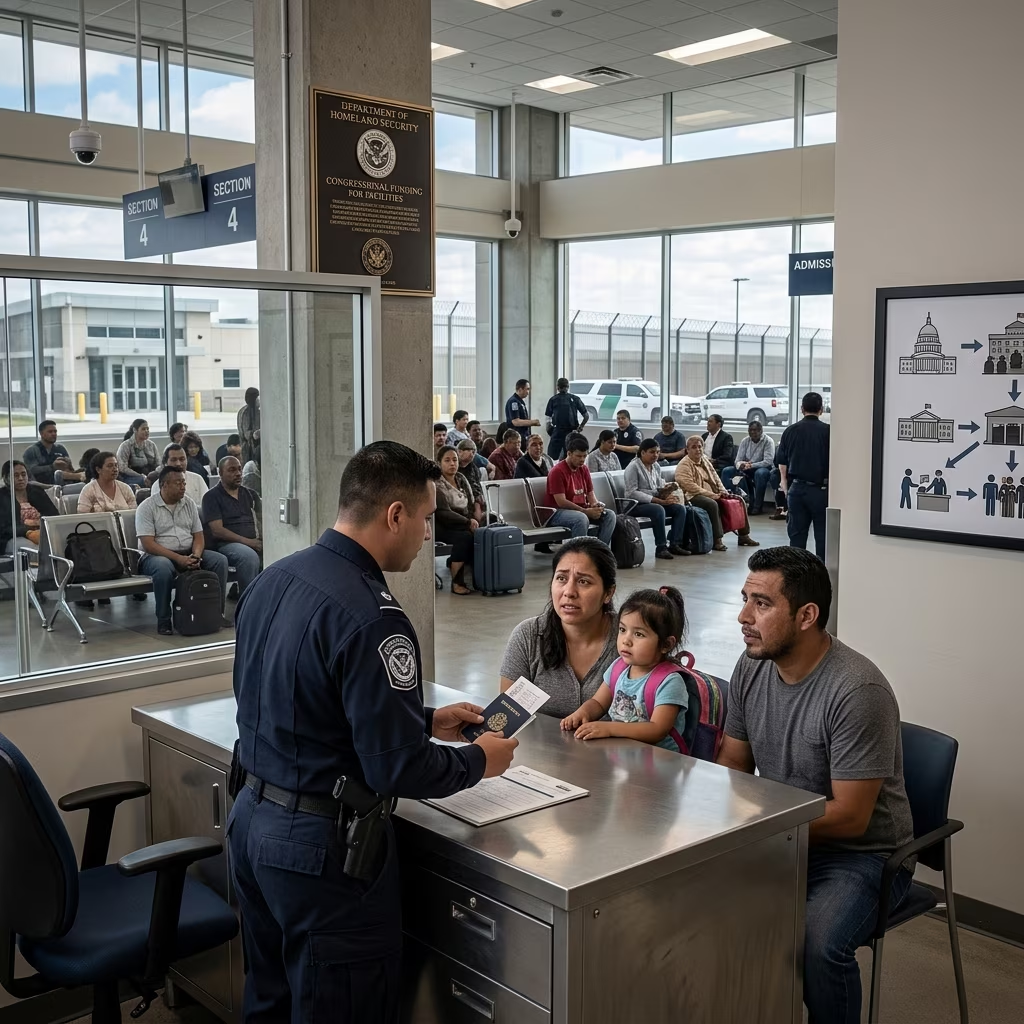
The federal budget is more than a simple accounting document; it is a profound declaration of national priorities. In the United States, the allocation of federal funds serves as the primary mechanism through which immigration policy is realized, constrained, or transformed. For decades, the financial blueprint for agencies like U.S. Immigration and Customs Enforcement (ICE) and U.S. Customs and Border Protection (CBP) reflected a steady trajectory toward increased enforcement, border barriers, and expanded detention capacity. However, the legislative landscape is increasingly characterized by intense debate over how these resources are deployed.
Lawmakers, influenced by shifting public opinion and sustained community advocacy, are leveraging their constitutional power of the purse to challenge historical funding patterns. This article explores the intricate relationship between congressional appropriations and immigration enforcement, examining how fiscal decisions drive policy shifts, the growing emphasis on alternatives to detention, and the broader human rights implications of border security financing.
The Financial Architecture of Border and Interior Enforcement
To understand how immigration policy operates on the ground, one must first examine the financial architecture of the Department of Homeland Security (DHS). With a total annual budget often exceeding $100 billion—tens of billions of which are allocated as net discretionary funding—DHS is one of the most heavily funded departments in the federal government. A significant portion of this discretionary funding is channeled directly into immigration enforcement apparatuses.
CBP is primarily tasked with border security, managing ports of entry, and maintaining physical barriers. ICE, conversely, focuses on interior enforcement, investigating transnational crime, and managing the nation’s sprawling immigration detention system. Historically, the budgets for these agencies have seen exponential growth, driven by political mandates to increase border militarization and maximize the number of individuals held in federal custody pending deportation proceedings.
The following table illustrates the general focus areas of the three primary immigration-related agencies within DHS and how their funding is typically utilized:
| Agency | Primary Focus | Common Funding Use Cases |
|---|---|---|
| Customs and Border Protection (CBP) | Border Security & Trade | Ports of entry operations, border surveillance technology, physical barriers, border patrol agents. |
| Immigration and Customs Enforcement (ICE) | Interior Enforcement & Detention | Detention facility contracts, transnational investigations, deportation flights, monitoring programs. |
| U.S. Citizenship and Immigration Services (USCIS) | Lawful Immigration & Citizenship | Asylum processing, visa adjudications, naturalization services, work authorization issuance. |
The Mechanics of Congressional Budget Allocations
The ability to shape immigration policy through funding rests largely within the House and Senate Appropriations Committees. When the Executive Branch submits a budget request, it serves merely as a blueprint. Congress holds the ultimate constitutional authority to authorize and appropriate federal funds, making the legislative branch the ultimate arbiter of agency capabilities.
In recent years, the appropriations process has become a critical battleground for immigration reform. Lawmakers who oppose hardline enforcement tactics frequently introduce amendments to DHS funding bills. These amendments might propose reallocating funds away from detention facility contracts and toward humanitarian relief, or they might seek to block funding for specific border barrier projects.
Furthermore, Congress utilizes legislative riders—provisions attached to appropriation bills that restrict an agency’s ability to spend money on certain activities. For example, a rider might explicitly prohibit ICE from using appropriated funds to conduct enforcement operations in sensitive locations like schools or hospitals. By attaching these strings to federal dollars, lawmakers can effectively halt controversial enforcement programs without needing to pass standalone immigration reform legislation. This legislative maneuvering ensures that even without broad consensus on immigration reform, incremental policy shifts can be achieved through the budgetary process.
Shifting Priorities: Divesting from Detention Systems
One of the most contentious elements of the DHS budget is the funding allocated for immigration detention. For years, congressional appropriations included a detention bed mandate, a statutory requirement that ICE maintain a specific number of detention beds on a daily basis. This policy functionally incentivized the mass incarceration of undocumented immigrants, asylum seekers, and even long-term residents awaiting administrative hearings, heavily relying on private prison contractors.
In response to growing scrutiny over the humanitarian and fiscal costs of mass detention, a notable shift has occurred in congressional budget negotiations. A coalition of reform-minded legislators has actively pushed to divest federal funds from the expansive network of private prisons and county jails contracted by ICE. The economic argument is straightforward: maintaining a single detention bed costs taxpayers hundreds of dollars per day, culminating in billions of dollars annually.
Proponents of divestment argue that this funding model is not only economically unsustainable but also fundamentally misaligned with modern justice principles. By reducing the budget for detention operations, Congress can force a reduction in the physical footprint of the detention system. This fiscal pressure compels immigration enforcement agencies to prioritize their resources, focusing primarily on individuals who pose a genuine risk to public safety rather than sweeping up non-violent undocumented residents. The ongoing legislative efforts to shrink the ICE detention budget represent a significant pivot from the aggressive enforcement paradigms of previous administrations toward a more measured, fiscally responsible approach to immigration management.
Alternatives to Detention (ATDs): A Shift in Strategy
As congressional pressure mounts to reduce reliance on physical detention centers, federal funding is increasingly being redirected toward Alternatives to Detention (ATD) programs. Managed by ICE, ATDs are designed to monitor individuals awaiting the resolution of their immigration court cases while allowing them to remain in their communities, maintaining ties to their families and legal counsel.
According to the U.S. Government Accountability Office (GAO), enrollment in ATD programs has surged dramatically. Between 2015 and 2020, program enrollments more than doubled, reaching well over 100,000 active participants. This shift is supported by massive federal contracts that provide various tiers of supervision. Monitoring technologies deployed under ATDs include Global Positioning System (GPS) ankle monitors, telephonic reporting, and facial recognition smartphone applications.
From a fiscal perspective, ATDs are highly attractive to lawmakers looking to optimize the DHS budget. While a traditional detention bed can cost over $150 per day, alternative monitoring often costs just a few dollars per day per participant. However, the expansion of ATDs is not without controversy. While they alleviate the immediate physical harms of incarceration, civil rights advocates caution against the creation of an expansive digital surveillance state. They argue that constant tracking still imposes severe psychological burdens and restricts individual liberties.
Furthermore, government oversight bodies have pointed out inefficiencies in the program. Comprehensive evaluations have highlighted that ICE needs to better assess the performance of its ATD programs and improve contractor oversight to ensure the billions of taxpayer dollars allocated to these alternatives are actually achieving high rates of court appearance and compliance. Despite these operational challenges, ATDs remain a central fixture in the modern strategy to financially restructure immigration enforcement.
The Impact of Grassroots Advocacy on Fiscal Policy
The shifting tides in congressional appropriations are not occurring in a political vacuum. They are heavily influenced by sustained, organized grassroots advocacy. Across the country, community organizers, civil rights organizations, and legal advocates have launched coordinated campaigns aimed directly at the federal budgeting process, demanding greater transparency and humanity in how tax dollars are spent.
These campaigns operate on the principle that national budgets reflect moral choices. By highlighting the human cost of heavily funded deportation forces, advocates have successfully translated local grievances into national fiscal debates. They organize town halls, publish detailed reports on conditions within detention centers, and engage in direct lobbying efforts on Capitol Hill. Their goal is to educate the public and lawmakers about where tax dollars are flowing and to demand accountability from those holding the purse strings.
A central tenet of this advocacy is the call to divest and invest. This strategy urges Congress to cut funding from punitive enforcement agencies and reallocate those resources into community-based services, legal representation for asylum seekers, and border infrastructure that prioritizes humanitarian processing. The impact of these campaigns is evident in the increasing number of lawmakers who now publicly refuse to support unfettered increases to DHS enforcement budgets, proving that organized civic action can directly alter the trajectory of federal fiscal policy.
Human Rights Implications and Community Investments
The financial decisions made in the halls of Congress have profound human rights implications on the ground. When federal budgets prioritize aggressive interior enforcement and expansive detention, the collateral damage is often felt by vulnerable communities. Reports of medical neglect, severe overcrowding, and prolonged isolation in immigration detention facilities are frequently cited by human rights observers as direct consequences of a system bloated by enforcement-heavy appropriations.
Conversely, restricting these funds acts as a necessary safeguard. When Congress cuts the budget for deportation operations, it inherently limits the capacity of agencies to conduct sweeping neighborhood raids or maintain substandard holding facilities. This fiscal restraint opens the door for a more humane, due-process-oriented approach to immigration.
By redirecting funds away from punitive measures, the federal government can invest in critical infrastructure. This includes funding immigration courts to reduce severe case backlogs, providing grants for community-based case management programs, and ensuring that newly arrived migrants have access to basic medical care and legal counsel. Ultimately, the federal budget is a powerful tool that can either perpetuate systemic harms or facilitate an immigration system rooted in dignity, fairness, and human rights.
Looking Ahead: The Future of Immigration Resource Allocation
As the United States continues to grapple with complex global migration patterns, the battle over immigration enforcement funding will undoubtedly persist. Future congressional appropriations will serve as the primary proving ground for emerging immigration policies. The trend toward shrinking physical detention spaces in favor of electronic monitoring and community support programs indicates a slow but significant paradigm shift within federal policy circles.
However, lasting change requires more than annual budget tweaks. While cutting funding for specific enforcement mechanisms can curb immediate excesses and redirect agency priorities, comprehensive immigration reform remains the ultimate necessity to address the root causes of systemic dysfunction. Until such sweeping legislative overhaul is achieved, the power of the purse will remain the most potent and accessible weapon in the ongoing struggle to define what a just, effective, and equitable U.S. immigration system looks like.
Frequently Asked Questions
How does the federal government fund immigration enforcement?
Immigration enforcement is funded through the annual federal budget process. The Department of Homeland Security (DHS) submits a budget request, but Congress has the final authority to appropriate funds to agencies like ICE and CBP through appropriations bills.
What is the “power of the purse” in the context of DHS?
The “power of the purse” refers to the constitutional authority granted to Congress to control government spending. Lawmakers use this power to influence DHS policy by increasing, decreasing, or placing strict conditions (riders) on how immigration enforcement funds can be used.
What are Alternatives to Detention (ATDs)?
Alternatives to Detention (ATDs) are programs used by ICE to monitor individuals awaiting immigration court proceedings without keeping them in physical custody. These programs utilize various methods, including GPS ankle monitors, phone check-ins, and facial recognition apps, and are generally more cost-effective than physical detention.
Why is funding for private detention centers controversial?
Funding for private detention centers is controversial because critics argue it creates a financial incentive for mass incarceration. Advocates point out that maintaining these beds costs taxpayers billions annually, while numerous reports have highlighted substandard living conditions and inadequate medical care within some privately operated facilities.
References
- DHS FY 2024 Budget in Brief — Department of Homeland Security. 2023-03-27. https://www.dhs.gov/sites/default/files/2023-03/DHS%20FY%2024%20BIB%20Final.pdf
- Alternatives to Detention: ICE Needs to Better Assess Program Performance and Improve Contract Oversight (GAO-22-104529) — U.S. Government Accountability Office. 2022-06-22. https://www.gao.gov/products/gao-22-104529
- Reporting on Agency Budget Execution: Processes and Case Study Illustration (R47333) — Congressional Research Service. 2022-12-14. https://crsreports.congress.gov/product/pdf/R/R47333