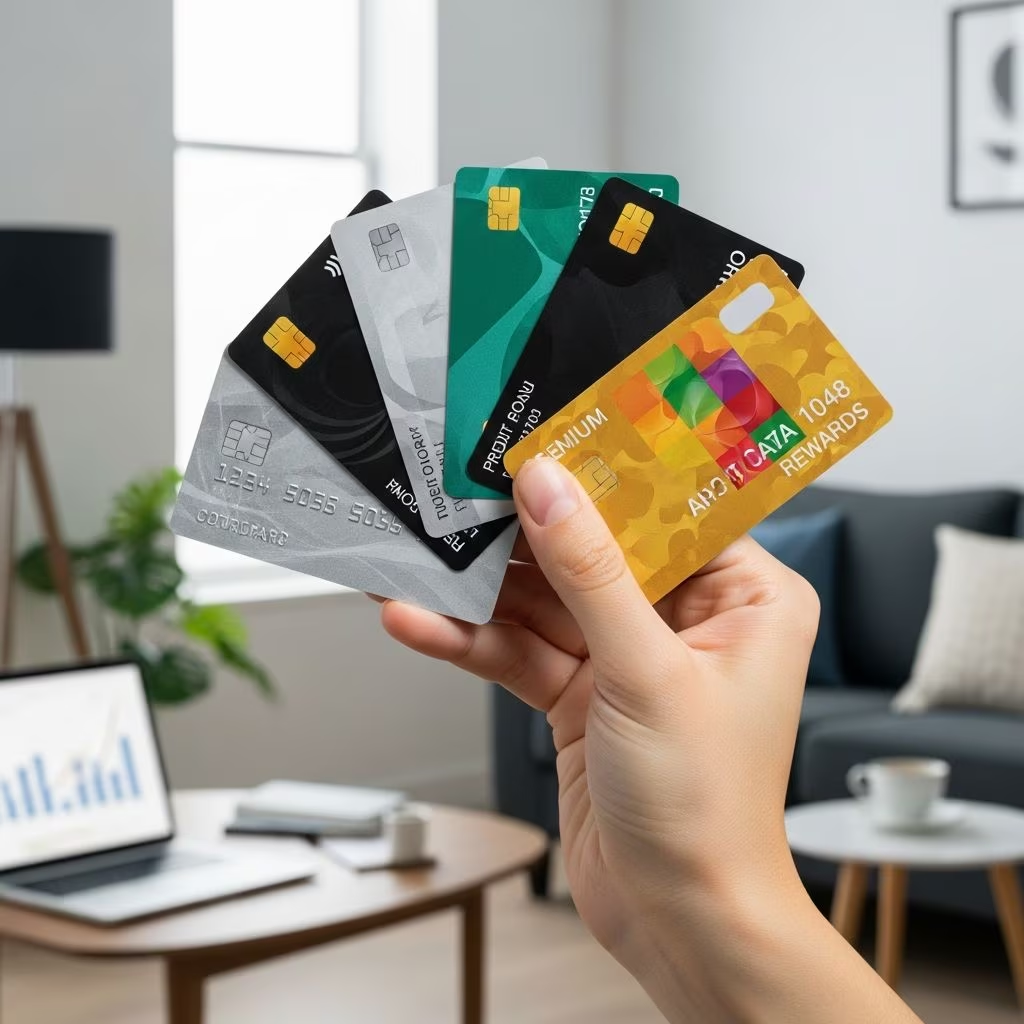
Picking a credit card is less about finding the “best” card on the market and more about finding the card that works best for your budget, habits, and goals. A card that is great for frequent travelers might be a poor fit if you rarely leave your hometown, while a top cash-back card could be risky if you regularly carry a balance and pay interest each month.
This guide walks you through the major types of credit cards, how to compare offers, which terms matter most, and how to match a card to your specific situation—whether you want to earn rewards, pay down debt, or build credit safely.
1. Start With Your Goal Before You Pick a Card
Before you look at card names, sign-up bonuses, or fancy perks, get clear on what you want the card to do for you. Most cards are designed to focus on one of three main goals.
- Earn rewards: You want cash back, points, or miles from everyday spending and will typically pay your bill in full each month.
- Save on interest: You plan to carry a balance temporarily or transfer an existing balance and need low-cost financing.
- Build or rebuild credit: You are establishing credit for the first time or recovering from past credit challenges and want to demonstrate responsible use.
Once you know your goal, it becomes easier to ignore eye-catching offers that do not actually help you.
2. Main Types of Credit Cards and Who They Are For
For most consumers, credit cards fall into three broad categories tied to those core goals.
| Card Type | Primary Purpose | Best For | Key Trade-offs |
|---|---|---|---|
| Rewards credit cards | Earn cash back, points, or miles on purchases | People who pay in full monthly and want perks or cash | May have higher APRs or annual fees; rewards are worthless if you carry expensive debt |
| Low-interest / 0% intro APR cards | Reduce interest cost on new purchases or balance transfers | Borrowers planning a large purchase or consolidating debt | Intro rates expire; balance transfer fees may apply; rewards may be limited |
| Credit-building cards (including secured) | Help you establish or rebuild credit history | People with limited or damaged credit | May require a security deposit or come with higher rates and fewer perks |
Alongside these, you might also encounter charge cards (where the balance is due in full each month) and store cards restricted to one retailer. These can be useful in narrow situations but are less flexible than general-purpose credit cards.
3. Key Terms You Must Understand Before Comparing Cards
Credit card advertisements often highlight the attractive features—rewards, bonuses, or 0% APR—but the serious costs appear in the fine print. Understanding these terms helps you compare offers on equal footing.
3.1 Annual Percentage Rate (APR)
APR is the yearly cost of borrowing on the card, expressed as a percentage. Most credit cards use a variable APR that can change when benchmark interest rates change.
- Purchase APR: The interest rate on everyday purchases when you carry a balance.
- Balance transfer APR: The rate charged on amounts you move from another card; sometimes includes a temporary 0% intro rate.
- Cash advance APR: Usually higher than purchase APR and often starts accruing interest immediately.
If you pay your statement balance in full by the due date each month, you generally avoid paying purchase interest thanks to a grace period.
3.2 Fees
Fees can turn a seemingly good offer into an expensive one. Common fees include:
- Annual fee: Charged once a year simply for holding the card; more common on premium rewards or travel cards.
- Balance transfer fee: Often a percentage of the amount moved, such as 3–5%.
- Cash advance fee: Charged when you withdraw cash using your card, plus high interest.
- Late payment fee: Applied if you miss the due date. Consistent late payments can also damage your credit score.
- Foreign transaction fee: A percentage surcharge on purchases made in another currency or processed outside your home country.
3.3 Credit Limit
Your credit limit is the maximum amount you can borrow on the card. Using too much of your limit at once can negatively affect your credit score because of a factor called credit utilization—the portion of available credit you are using. Keeping this ratio relatively low (often recommended under about one-third of your limit) supports stronger credit over time.
3.4 Rewards Structure
Rewards programs vary widely, even among similar-looking cards.
- Flat-rate cash back: Earn the same percentage back on every purchase (e.g., 1.5% on all spending).
- Tiered rewards: Higher rewards in certain categories such as groceries or gas, lower rewards on other purchases.
- Rotating categories: Bonus rewards on certain purchases that change every quarter, often requiring activation.
- Travel points or miles: Rewards that can be redeemed for flights, hotels, or other travel, sometimes with partner loyalty programs.
Always balance rewards value against any annual fee and your real-world spending habits.
4. Legal Protections and How Credit Cards Differ From Other Cards
Credit cards are not the only plastic in your wallet. You may also have a debit card, a prepaid card, or even a secured credit card. Each works differently and offers different protections.
4.1 Credit Cards vs. Debit Cards
A credit card allows you to borrow up to your credit limit and pay the issuer back later, with the option to carry a balance and pay interest. A debit card generally pulls money directly from your checking account, so you are spending your own funds rather than borrowing.
Under U.S. federal law, credit cards and debit cards are covered by different consumer protection rules, including how unauthorized transactions and certain errors are handled. For example:
- Credit cards typically limit your liability for unauthorized use and give you clearer rights to dispute certain billing errors.
- Debit cards can offer protections for unauthorized transactions, but your ability to recover funds and dispute problems is often more limited, especially if you delay reporting.
4.2 Prepaid Cards
Prepaid cards let you spend only the money you load onto the card. They generally do not involve borrowing and usually do not report to credit bureaus, so they do not help you build a credit history in most cases.
4.3 Secured Credit Cards
Secured credit cards are designed for people building or rebuilding credit. You put down a refundable security deposit (for example, $200 or more), which typically becomes your credit limit. Importantly, secured credit cards:
- Function like regular credit cards for purchases.
- Usually report to major credit bureaus when issued by mainstream financial institutions.
- Offer the same core legal protections as other credit cards, such as limits on liability for unauthorized use and rights to dispute errors.
With consistent, on-time payments and responsible use, some secured cardholders may later qualify for an unsecured card and get their deposit back.
5. How to Systematically Compare Credit Card Offers
When you line up several credit card offers, it helps to evaluate them using the same checklist. Online comparison tools can be useful, but you should still understand how to read the terms yourself.
5.1 Build a Shortlist Based on Card Type
- Narrow cards to the category that matches your goal: rewards, low-interest/0% APR, or credit-building.
- Avoid mixing completely different purposes in one comparison—comparing a premium travel card to a basic low-interest card is less helpful.
5.2 Compare the Numbers That Matter Most
For each card on your shortlist, write down:
- Annual fee (and if it is waived in the first year).
- APR ranges for purchases, balance transfers, and cash advances.
- Introductory APR terms—rate amount, which transactions qualify, and how long it lasts.
- Key fees: balance transfer fee, foreign transaction fee, late fees.
- Rewards rate and categories, plus sign-up bonus details and any spending requirements.
5.3 Evaluate Non-Numerical Features
- Redemption options: Can you redeem rewards as statement credits, direct deposits, travel bookings, or gift cards?
- Ease of use: Are reward programs simple flat cash back or complex points systems?
- Additional benefits: Travel insurance, purchase protections, extended warranties, or access to lounges and events.
- Customer service reputation: Consider whether the issuer is known for responsive support and clear communication.
6. Matching a Credit Card to Common Life Situations
The right card depends not just on broad goals but also on where you are financially. Here are some examples of how you might align a card with your current situation.
6.1 New to Credit
- Look for starter cards or secured credit cards from reputable banks or credit unions that report to all major credit bureaus.
- Focus on cards with transparent fees and moderate credit limits to prevent overspending.
- Use the card for small, manageable purchases and pay in full each month to begin building a positive history.
6.2 Paying Down Existing Credit Card Debt
- Consider a card with a 0% introductory APR on balance transfers if you can pay off most or all of the balance before the promotional period ends.
- Compare balance transfer fees, which can offset interest savings on smaller debts.
- Commit to not adding new purchases to the old or new card while you are paying down debt.
6.3 Maximizing Everyday Rewards
- If you always pay in full, a cash-back card with no or low annual fee can effectively lower the cost of everyday purchases.
- Match reward categories to your largest expenses—groceries, gas, transit, or online shopping, for example.
- If you travel frequently, a travel rewards card with higher rewards on flights and hotels and reduced foreign transaction fees might offer better value.
6.4 Rebuilding After Credit Problems
- A secured credit card is often safer than high-fee subprime cards that target people with damaged credit.
- Confirm that the issuer reports to all three major credit bureaus.
- Keep your balance low relative to your limit and make every payment on time to gradually improve your credit profile.
7. Responsible Credit Card Use: Protecting Your Finances
Even the most carefully chosen card can hurt you financially if misused. Good habits are as important as picking the right product.
- Pay on time, every time: Set automatic payments for at least the minimum due, and aim to pay in full whenever possible.
- Monitor your statements: Review transactions monthly to spot errors or unauthorized charges early.
- Use alerts: Many issuers let you set text or email alerts for large purchases, nearing your credit limit, or upcoming due dates.
- Avoid cash advances: They often trigger higher APRs and fees immediately.
- Keep utilization modest: Using a smaller portion of your limit can support better credit scores over time.
8. Frequently Asked Questions (FAQs)
Q1: Does carrying a small balance help my credit score?
No. Paying your statement balance in full and on time is generally better for your credit health and helps you avoid interest. Your score benefits from on-time payments and lower utilization, not from paying interest unnecessarily.
Q2: Is a secured credit card safe to use?
Yes. Properly issued secured credit cards offer the same core legal protections as other credit cards, including limits on liability for unauthorized use and rights to dispute certain billing errors. Your security deposit is held as collateral and should be returned if you close the account in good standing or upgrade.
Q3: Should I choose a card with an annual fee?
An annual fee can be worthwhile if the value of rewards and benefits you realistically use exceeds the cost of the fee. If you spend modestly or rarely travel, a no-annual-fee cash-back card may be a better fit.
Q4: Will a prepaid card help me build credit?
In most cases, no. Prepaid cards generally do not involve borrowing and usually are not reported to credit bureaus, so they do not help establish credit history. If building credit is your aim, consider a secured credit card instead.
Q5: How many credit cards should I have?
There is no single “right” number. Many people do well with one main card that fits their goals and perhaps a second card for backup or specific rewards. It is more important to manage the accounts you have responsibly than to reach a particular number.
References
- Comparing Credit, Charge, Secured Credit, Debit, or Prepaid Cards — Federal Trade Commission. 2023-02-01. https://consumer.ftc.gov/node/78357
- Comparison Chart of Types of Cards to Use for Purchases — National Disability Institute. 2022-11-01. https://www.nationaldisabilityinstitute.org/wp-content/uploads/2022/11/ndi-comparison-guide-debit-credit-prepaid-2022.pdf
- Side by Side Credit Card Comparison — NerdWallet. 2024-05-10. https://www.nerdwallet.com/credit-cards/compare
- Comparing Credit Card, Charge Card, Debit Card and ATM Card Protections — Consumer Financial Protection Bureau. 2022-08-18. https://www.consumerfinance.gov/ask-cfpb/what-is-the-difference-between-a-credit-card-and-a-debit-card-en-14/
- Best Credit Card Buying Guide — Consumer Reports. 2024-01-15. https://www.consumerreports.org/money/credit-cards/buying-guide/
- Credit cards: What you need to know — Consumer Financial Protection Bureau. 2023-06-30. https://www.consumerfinance.gov/consumer-tools/credit-cards/