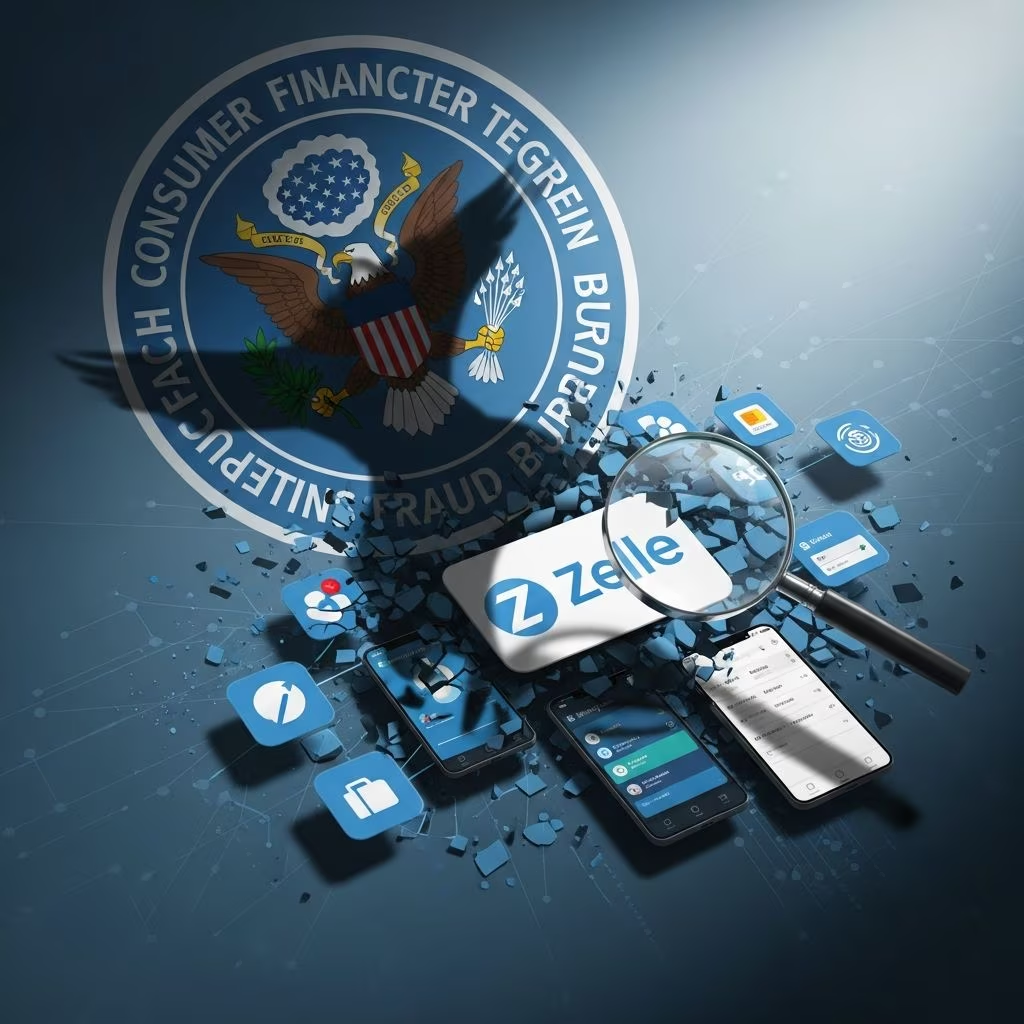
Peer-to-peer payment apps have transformed how people send money, but they have also created powerful new channels for fraud. The Consumer Financial Protection Bureau (CFPB) filed a high-profile lawsuit against the operator of Zelle and three of its largest owner banks—JPMorgan Chase, Bank of America, and Wells Fargo—alleging that they allowed fraud to flourish on the platform and failed to protect consumers as required under federal law.
This article explains what Zelle is, why the CFPB took action, the main allegations in the case, and how it fits into the broader debate about fraud in digital payments and banks’ legal responsibilities.
How Zelle Became a Dominant Payment Network
Zelle is a peer-to-peer (P2P) payment network used by hundreds of financial institutions to enable near-instant transfers between bank accounts. Early Warning Services (EWS), a company owned by a group of large banks including Bank of America, JPMorgan Chase, and Wells Fargo, operates the network.
According to public statements and industry data, Zelle has grown rapidly and processes:
- Billions of transactions annually, representing hundreds of billions to over a trillion dollars in transfers.
- Payments initiated primarily using a recipient’s email address or U.S. mobile phone number, often called a “token.”
The CFPB’s enforcement filings emphasize that the network was rolled out quickly in 2017 to compete with other P2P services such as Venmo and Cash App, leveraging the banks’ existing customer bases and online banking apps.
Key Features of Zelle That Raised Fraud Concerns
The CFPB alleges that several design choices and risk-management gaps at Zelle and its owner banks made the system especially attractive to fraudsters.
- Token-based transfers: Users send money to an email address or phone number, which can be linked to different accounts over time, creating opportunities for misdirection of funds if tokens are hijacked or re-linked.
- Near-instant settlement: Transfers move quickly between accounts, leaving limited time for banks to detect, block, or reverse suspicious payments once they are initiated.
- Multiple tokens and reassignment: Consumers can maintain multiple tokens across banks and reassign them between institutions, which the CFPB argues made it easier for bad actors to divert payments intended for victims’ accounts.
In its lawsuit, the CFPB contends that Zelle’s operators and its largest bank owners knew or should have known that these characteristics required robust fraud controls and coordinated monitoring across the network.
Scale of Alleged Consumer Harm
The CFPB and consumer advocates describe the scope of alleged losses as substantial:
- The Bureau alleges that customers at Bank of America, JPMorgan Chase, and Wells Fargo collectively lost more than $870 million to fraud on Zelle over roughly seven years.
- Hundreds of thousands of consumers reportedly filed fraud or error complaints with the banks related to Zelle transfers, according to the CFPB’s filings.
Advocacy organizations have characterized the enforcement action as a necessary response to a pattern of unauthorized or fraudulent transfers that left many consumers without reimbursement.
Core Allegations by the CFPB
The CFPB’s complaint centers on how Zelle and the three banks allegedly managed fraud risk and handled customer disputes. The agency asserts that the defendants violated the Consumer Financial Protection Act’s prohibition on unfair acts or practices and failed to comply with duties under the Electronic Fund Transfer Act (EFTA) and Regulation E.
1. Inadequate Fraud Prevention and Detection
The Bureau argues that the defendants failed to deploy timely and effective controls to prevent and mitigate fraud on the network.
- Weak identity verification: Limited identity checks allegedly allowed scammers to create or access Zelle profiles and quickly begin targeting victims.
- Token hijacking schemes: Fraudsters could allegedly re-link a victim’s email or phone number token to the fraudster’s bank account, causing incoming payments to be redirected.
- Slow controls on known fraudsters: The complaint asserts that banks and EWS were too slow to close or restrict accounts tied to repeated fraudulent activity.
2. Failure to Share Critical Fraud Information
Because Zelle is a network of many institutions, effective oversight depends on sharing information about suspicious behavior across participants. The CFPB claims that:
- Banks did not consistently share fraud data with one another or with EWS in a way that would allow early detection of repeat offenders.
- Fraudsters allegedly exploited this fragmentation by opening or using accounts at multiple institutions to continue their schemes undetected.
- Internal network rules requiring timely reporting of fraud incidents were not followed or enforced, undermining the network’s own safeguards.
3. Ignoring Warning Signs from Consumer Complaints
Another central allegation is that banks received extensive fraud complaints but did not use this information effectively to prevent further harm.
- The CFPB cites large volumes of complaints as evidence that banks were on notice about recurring scams and weaknesses in Zelle’s design.
- Despite this, the Bureau alleges that systemic improvements to fraud prevention, monitoring, and customer warning practices were delayed or insufficient.
4. Mishandling Disputes and Denying Reimbursement
Under EFTA and Regulation E, banks have obligations to investigate certain unauthorized electronic fund transfers and to reimburse consumers where the law requires. The CFPB contends that the defendant banks:
- Did not conduct reasonable investigations of many Zelle-related fraud and error claims.
- Frequently denied relief even where consumers reported unauthorized or incorrect transfers that should have triggered protections under federal law.
- In some cases allegedly directed consumers to resolve the issue with the fraudster directly, despite the practical impossibility of doing so.
Consumer advocates have similarly reported that many victims of P2P payment fraud struggle to obtain reimbursement from their banks, even when they believe the transactions were unauthorized or fraudulent.
What the CFPB Sought in Court
In its enforcement action, the CFPB asked the court to impose significant remedies.
- Injunctive relief: A court order to stop the alleged unlawful conduct and require reforms to Zelle’s fraud controls, monitoring, and complaint-handling practices.
- Redress for consumers: Compensation for affected customers who lost money because of the alleged failures.
- Civil penalties: Monetary penalties for violations of the Consumer Financial Protection Act and related rules.
- Other relief: Any additional measures the court deemed appropriate to deter similar conduct in the future.
How the Banks and Zelle’s Operator Responded
Public statements from the banks and EWS have disputed the CFPB’s claims and framed Zelle as a broadly safe and widely used service.
| Party | General Position |
|---|---|
| Early Warning Services (Zelle operator) | Called the lawsuit legally and factually flawed and stated that Zelle is a trusted service used by tens of millions of consumer and small business accounts. |
| Bank trade groups | Argued that banks follow existing law and that broader fraud trends are not unique to Zelle, emphasizing the need for cross-sector cooperation on scams. |
Industry representatives have also stressed that fraud and scams are increasing across multiple channels, including phone calls, text messages, and other online platforms, and have urged policymakers to address what they describe as a systemic, national-level threat.
Context: Rising Fraud and Regulatory Scrutiny of P2P Apps
The Zelle case is part of a larger policy debate about how far consumer protections and liability rules should extend in the era of instant payments.
- Growth of scams on P2P apps: Federal and state officials have documented growing reports of scams involving P2P platforms, including imposter scams, account takeovers, and social engineering schemes.
- State enforcement: After the CFPB later dismissed its case, the New York Attorney General brought a similar lawsuit against EWS, alleging that the company knew about Zelle’s vulnerability to fraud yet failed to implement basic safeguards.
- Ongoing federal oversight: Separately from any single case, regulators continue to evaluate whether existing rules such as EFTA, Regulation E, and network operating agreements adequately protect consumers using P2P services.
Advocacy groups have criticized any retreat from enforcement as leaving victims of payment fraud with limited avenues for recovery and called for clearer rules that put more responsibility on banks and payment operators when their systems are exploited by criminals.
What Consumers Can Learn From the Zelle Fraud Dispute
Even as the legal issues continue to play out, the case highlights important lessons for anyone using P2P payment services.
Know When You Are Protected
Under EFTA and Regulation E, consumers generally have stronger rights when:
- An electronic transfer is made without their authorization—for example, when a fraudster initiates a transaction without their consent.
- They report unauthorized activity promptly to their financial institution.
Protections are more limited when a consumer is induced by a scammer to send money voluntarily (even under false pretenses). In those scenarios, many banks treat the payment as authorized, and reimbursement is often denied unless specific bank or network policies provide broader coverage.
Practical Steps to Reduce Risk
While no action can eliminate risk entirely, consumers can take several precautions when using instant payment apps:
- Send money only to people and businesses you know and trust.
- Double-check the recipient’s email or mobile number before confirming a transfer.
- Be highly skeptical of urgent money requests received via text, email, or phone—especially if they claim to be from a bank, government agency, or utility.
- Enable strong authentication methods offered by your bank, such as multifactor authentication, and monitor account alerts.
- Report any suspicious transactions to your bank as quickly as possible and document your communications.
Policy Questions Raised by the Case
Beyond individual precautions, the CFPB’s action against the Zelle network raises broader questions about how digital payment systems should be regulated.
- Network liability: To what extent should a network operator like EWS be directly responsible for fraud prevention and consumer redress, versus the individual banks that connect to the network?
- Standardization of fraud rules: Should all participating institutions be required to adopt uniform investigation and reimbursement standards for P2P fraud, enforced by regulators?
- Data sharing and analytics: How aggressively should networks use shared data to identify and shut down repeat fraudsters across institutions?
- Balance between speed and safety: Instant payments provide real value to consumers and businesses, but they reduce the window for intervention. Regulators and industry must decide how to balance convenience with safeguards.
Congress, federal regulators, and state attorneys general continue to examine these issues as complaints involving P2P platforms remain high and as new payment technologies, including real-time rails and digital wallets, expand.
Frequently Asked Questions (FAQs)
Q: What is the CFPB’s main criticism of Zelle and the big banks?
The CFPB alleges that Zelle’s operator and three major owner banks failed to build and enforce adequate anti-fraud safeguards, did not share critical fraud information effectively across the network, and mishandled many consumer complaints and reimbursement obligations under federal law.
Q: Did the CFPB claim that all Zelle transactions are unsafe?
No. The Bureau focused on systemic weaknesses that allegedly allowed fraud to grow and left many victims without help, not on every transaction. Zelle processes large volumes of legitimate payments, but the CFPB argues that the scale of fraud and the banks’ responses required stronger protections.
Q: Are consumers always entitled to a refund if they are scammed on a payment app?
Not always. Federal law generally protects consumers when transfers are unauthorized, but protections are more limited when a consumer is tricked into sending money themselves. In such cases, reimbursement often depends on bank policies, network rules, and how regulators interpret existing law.
Q: What should I do if I think I was a victim of Zelle fraud?
You should contact your bank immediately, report the transaction as unauthorized or fraudulent, and request a written record of your claim. Provide any supporting documentation you have, such as texts or emails from the scammer. You can also submit a complaint to the CFPB or your state attorney general if you believe your bank is not handling your case appropriately.
Q: Could this lawsuit change how banks handle payment app fraud in the future?
Yes. Even beyond this specific case, regulatory and enforcement pressure is pushing banks and network operators to reassess fraud detection, data sharing, consumer disclosures, and reimbursement policies for instant payment systems. Changes may come through litigation outcomes, new rules, or industry commitments.
References
- CFPB Sues JPMorgan Chase, Bank of America, and Wells Fargo for Allowing Fraud to Fester on Zelle — Consumer Financial Protection Bureau. 2024-12-XX. https://www.consumerfinance.gov/about-us/newsroom/cfpb-sues-jpmorgan-chase-bank-of-america-and-wells-fargo-for-allowing-fraud-to-fester-on-zelle/
- CFPB drops fraud suit against Zelle’s operator, big banks — Payments Dive. 2025-03-XX. https://www.paymentsdive.com/news/cfpb-drops-fraud-suit-against-zelle-jpmorgan-wells-bank-of-america/741546/
- CFPB Sues Zelle and Three Major Banks for Enabling Payment Fraud — National Consumer Law Center. 2024-12-XX. https://www.nclc.org/cfpb-sues-zelle-and-three-major-banks-for-enabling-payment-fraud/
- Letter to Capital One re: Zelle Fraud and Consumer Protection — U.S. House Committee on Financial Services (Democrats). 2025-07-01. https://democrats-financialservices.house.gov/uploadedfiles/07.02.2025_cmwew_ltr_capone_re_zelle.pdf
- Attorney General James Sues Company Behind Zelle for Enabling Widespread Fraud — New York Attorney General. 2025-08-13. https://ag.ny.gov/press-release/2025/attorney-general-james-sues-company-behind-zelle-enabling-widespread-fraud
- Early Warning Services, LLC; Bank of America, N.A.; JPMorgan Chase Bank, N.A.; Wells Fargo Bank, N.A. — Consumer Financial Protection Bureau (Enforcement Actions). 2024-12-23. https://www.consumerfinance.gov/enforcement/actions/early-warning-services-llc-bank-of-america-na-jpmorgan-chase-bank-na-wells-fargo-bank-na/
- CFPB drops lawsuit against big bank operators of Zelle payment app for failing to protect consumers from fraud — Consumer Reports. 2025-03-04. https://advocacy.consumerreports.org/press_release/cfpb-drops-lawsuit-against-big-bank-operators-of-zelle-payment-app-for-failing-to-protect-consumers-from-fraud/