
CFPB Action Against First National Bank of Omaha Explained
How deceptive credit card add-on products led to $32.25 million in refunds and penalties for First National Bank of Omaha.
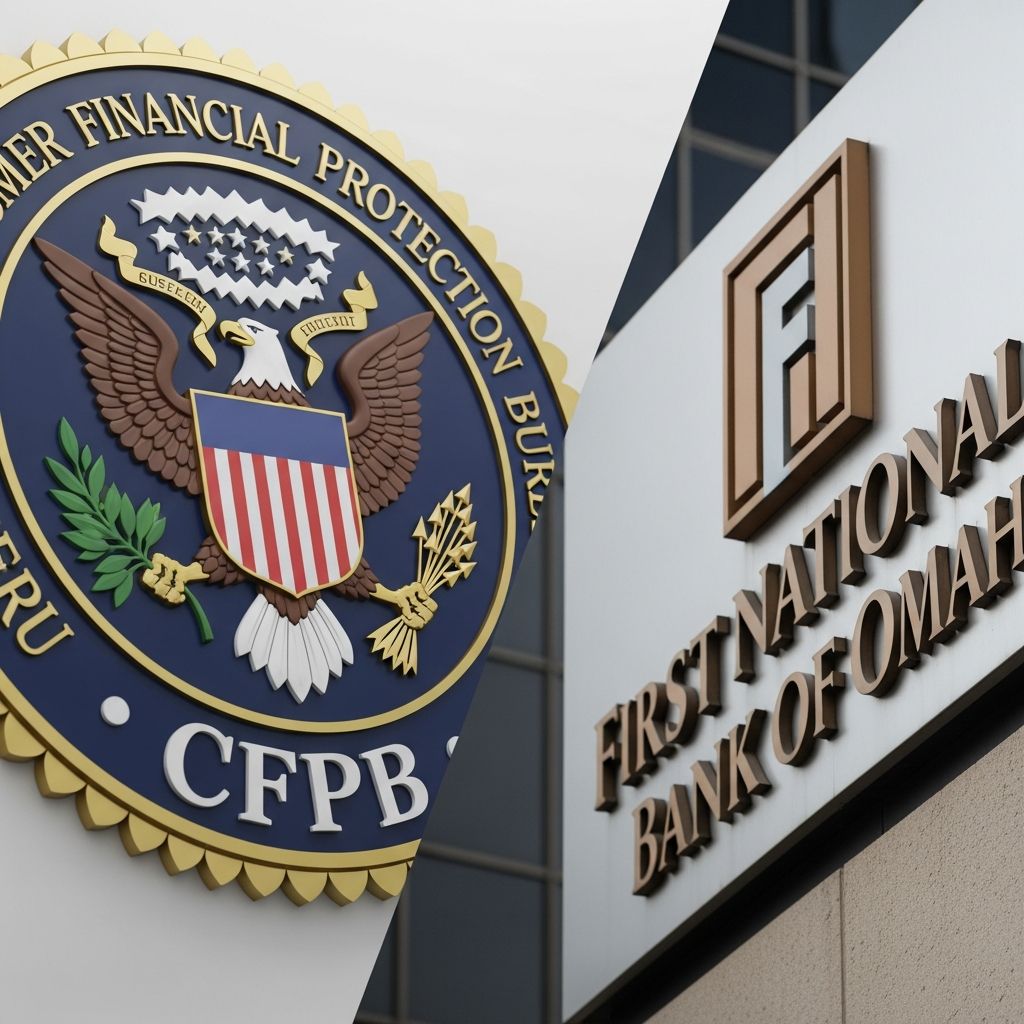
The Consumer Financial Protection Bureau (CFPB) ordered First National Bank of Omaha to provide tens of millions of dollars in refunds and civil penalties after finding that the bank engaged in illegal credit card add-on practices that harmed hundreds of thousands of customers.
This article explains what happened, how consumers were affected, what the bank must do going forward, and what lessons every cardholder can take from the case.
Background: Who Are the Key Players?
To understand the enforcement action, it helps to know the roles of the agencies and the bank involved.
- First National Bank of Omaha (FNBO): A large national bank based in Nebraska that issues credit cards across the United States.
- Consumer Financial Protection Bureau (CFPB): A federal agency created under the Dodd–Frank Act to protect consumers in the financial marketplace and to address unfair, deceptive, or abusive acts or practices (UDAAP).
- Office of the Comptroller of the Currency (OCC): The primary federal regulator for national banks; it examined FNBO’s billing practices for certain credit card add-on products and issued a parallel enforcement order.
The CFPB and OCC coordinated their actions, which is part of a broader regulatory effort to address illegal conduct involving credit card add-on products across the banking industry.
The Products at the Center of the Case
The enforcement action focused on two main categories of add-on products that were sold in connection with FNBO credit cards.
Debt Cancellation Products
These products were marketed as a way for cardholders to have their credit card payments cancelled or reduced if they experienced specific hardships, such as:
- Involuntary unemployment
- Hospitalization
- Disability
- Other qualifying life events
The bank charged monthly fees for these products, which were added to consumers’ credit card bills.
Credit Monitoring and Identity Protection Products
FNBO also marketed credit monitoring or identity theft protection products, often under brand names like Privacy Guard or similar services, which were supposed to provide:
- Regular access to credit reports or credit scores
- Alerts about potential identity theft or suspicious activity
- Monitoring of credit files at major credit reporting agencies
Again, consumers were charged recurring fees on their credit card accounts for these services.
What the CFPB and OCC Found
According to the CFPB’s consent order and related regulatory findings, FNBO’s conduct violated federal consumer protection laws in several ways.
1. Deceptive Marketing of Add-On Products
Regulators concluded that the bank’s marketing practices for debt cancellation products were misleading. Examples of deceptive conduct included:
- Misleading card activation calls: Representatives allegedly implied that customers had to stay on the phone and listen to sales pitches in order to activate their credit cards.
- Confusing or incomplete explanations: Sales scripts did not clearly explain important eligibility limits, exclusions, or conditions that could prevent a customer from receiving benefits.
- Suggesting products were free or low-cost: Some consumers were left with the impression that products were free trials or low-cost services, when in fact they involved ongoing monthly fees.
2. Hindering Consumers from Using Promised Benefits
Even when customers enrolled, the bank’s administration of the debt cancellation programs made it difficult for consumers to access benefits.
- Imposing strict and complex eligibility criteria (such as employment-hour thresholds or definitions of pre-existing conditions).
- Requiring extensive documentation that deterred or delayed benefit approvals.
- Denying claims based on restrictive interpretations of program rules.
Regulators concluded that these practices were unfair or deceptive because consumers did not receive the value they reasonably expected from the products.
3. Billing for Credit Monitoring Services Not Provided
For credit monitoring and identity theft products, the OCC and CFPB found that many customers were billed even though full services were never activated or delivered.
- Missing authorizations: In numerous cases, the bank did not obtain the consumer authorizations needed for credit reporting agencies to release credit data.
- Match failures: When consumer information could not be matched by credit bureaus, monitoring never started—but monthly charges continued.
- Ongoing billing without service: Customers paid fees over extended periods without receiving the promised monitoring, alerts, or reports.
The OCC determined that this conduct violated Section 5 of the Federal Trade Commission Act, which prohibits unfair or deceptive acts or practices.
Monetary Relief and Penalties
The enforcement action resulted in significant financial consequences for FNBO, including consumer restitution and civil penalties.
| Component | Amount | Purpose |
|---|---|---|
| Consumer restitution | Approximately $27.75 million | Refund fees and related charges paid by about 257,000 affected consumers. |
| CFPB civil money penalty | $4.5 million | Federal penalty paid to the CFPB’s Civil Penalty Fund. |
| OCC civil money penalty | $3 million | Separate penalty assessed by the OCC for unfair billing practices. |
Restitution covers not only the cost of the add-on products themselves but also associated fees and finance charges, such as late fees or over-limit fees, that were linked to the products.
Key Non-Monetary Requirements for the Bank
Beyond paying money, FNBO must overhaul how it designs, markets, and administers any similar products in the future.
Ban on Selling Certain Add-On Products Without Approval
The consent order prohibits the bank from marketing new debt cancellation or credit monitoring/identity theft products until it develops and submits a comprehensive Add-on Compliance Plan to the CFPB and receives no objection.
Stronger Compliance and Risk Management
The bank must implement an enhanced compliance framework, which includes:
- A written, enterprise-wide program to identify and manage risks of unfair, deceptive, or abusive acts or practices for any consumer financial products.
- Policies and procedures to ensure accurate, non-misleading marketing and disclosures.
- Independent monitoring and auditing of add-on products and related vendors.
Improved Oversight of Third-Party Vendors
Like many banks, FNBO relied on third-party service providers to help market and administer add-on products. Regulators emphasized that banks remain responsible for vendor conduct.
- FNBO must adopt a detailed vendor-management policy for consumer financial products and services.
- The policy must cover due diligence, contract requirements, performance monitoring, and corrective actions.
This requirement aligns with broader OCC guidance that banks must manage third-party relationships to ensure compliance with law and to protect consumers.
What This Means for Consumers
The case highlights risks that consumers face when enrolling in optional credit card add-on products, particularly those sold during phone calls or through pre-checked boxes.
How Affected Customers Receive Relief
Under the consent orders, FNBO must identify affected customers and provide automatic restitution, rather than requiring individuals to file claims.
- Refunds are typically credited directly to open accounts or sent as checks for closed accounts.
- Eligible consumers receive compensation for product fees and certain related finance charges.
- Consumers do not have to waive other rights to receive restitution under the orders.
Practical Tips for Cardholders
Regardless of which bank issues their card, consumers can reduce the risk of harm by following some basic steps:
- Review every statement: Carefully check monthly statements for unfamiliar fees or add-on product charges.
- Request clear written terms: For any optional product, ask for full written terms, including eligibility, exclusions, and cancellation rules.
- Be cautious during activation calls: Understand that you typically can activate cards without agreeing to extra services; do not feel pressured to enroll immediately.
- Cancel promptly if unsure: If you see a charge you do not recognize, contact the issuer at once and request cancellation and a refund.
- File complaints when necessary: Consumers can submit complaints to the CFPB or their bank regulator if they believe they were misled or improperly billed.
Why Regulators Target Credit Card Add-On Products
The FNBO case is one of a series of federal enforcement actions involving credit card add-on products. According to CFPB and OCC public statements, regulators see recurring problems in this area.
- Complex products sold quickly during telemarketing or activation calls.
- Consumers often do not fully understand eligibility limitations or costs.
- Reliance on third-party vendors with aggressive sales strategies.
- Historical patterns of billing for services not rendered, especially in credit monitoring.
By bringing coordinated actions, agencies aim to deter similar conduct across the market and to set expectations for stronger compliance and oversight.
Legal Framework: UDAAP and Section 5 of the FTC Act
The enforcement action rests on two key legal frameworks:
- Consumer Financial Protection Act (Title X of Dodd–Frank): Gives the CFPB authority to take action against unfair, deceptive, or abusive acts or practices involving consumer financial products or services.
- Section 5 of the FTC Act: Prohibits unfair or deceptive acts or practices in or affecting commerce; for national banks, the OCC enforces this provision.
In this case, regulators concluded that FNBO’s conduct met these standards for unfairness or deception because consumers were misled or harmed in ways they could not reasonably avoid, and the practices did not provide countervailing benefits.
Frequently Asked Questions (FAQs)
Q1: How do I know if I was affected by FNBO’s illegal add-on practices?
If you were an FNBO credit card customer during the years when the bank sold debt cancellation or credit monitoring products and you were enrolled in such a product, you may be included. Under the consent orders, the bank is required to identify and compensate affected consumers automatically, based on its records.
Q2: Do I need to file a claim to receive a refund?
No. The enforcement orders require the bank to provide restitution without requiring consumers to submit claims. Refunds are typically issued as credits to active accounts or as checks to former customers.
Q3: Are these add-on products always a bad idea?
Not necessarily. Some consumers may find value in payment protection or identity theft services. The concern raised by regulators is not the existence of such products but the way they were marketed, billed, and administered in this case. Consumers should evaluate costs, benefits, and eligibility criteria carefully before enrolling.
Q4: What should I do if I think I am still being charged for a product I never agreed to?
Immediately contact your card issuer using the number on the back of your card, ask for an explanation of the charge, request cancellation, and dispute past charges if you did not authorize them. You can also submit a complaint to the CFPB if you believe you were misled or improperly billed.
Q5: How does this case affect other banks?
The FNBO action, along with similar enforcement cases, sends a signal to the broader banking industry that regulators expect robust oversight of add-on products, transparent marketing, accurate billing, and strong vendor management. Other banks have faced comparable orders and have been required to strengthen their compliance programs.
References
- CFPB Orders First National Bank of Omaha to Pay $32.25 Million for Illegal Credit Card Practices — Consumer Financial Protection Bureau. 2016-08-25. https://www.consumerfinance.gov/enforcement/actions/first-national-bank-omaha/
- CFPB Orders First National Bank of Omaha to Pay $32 Million for Credit Card Add-On Products — Consumer Financial Services Law Monitor (Ballard Spahr). 2016-09-01. https://www.consumerfinancialserviceslawmonitor.com/2016/09/cfpb-orders-first-national-bank-of-omaha-to-pay-32-million-for-credit-card-add-on-products/
- CFPB and OCC Settle Claims of Alleged Unlawful Practices for Credit Card Add-On Products — Consumer Finance Monitor. 2016-08-29. https://www.consumerfinancemonitor.com/2016/08/29/cfpb-and-occ-settles-claims-of-alleged-unlawful-practices-for-credit-card-add-on-products/
- OCC Assesses Penalty Against First National Bank of Omaha; Orders Restitution for Unfair Billing Practices — Office of the Comptroller of the Currency. 2016-08-25. https://www.occ.gov/news-issuances/news-releases/2016/nr-occ-2016-98.html
- Marquette Nat. Bank v. First of Omaha Service Corp., 439 U.S. 299 (1978) — Supreme Court of the United States. 1978-12-18. https://supreme.justia.com/cases/federal/us/439/299/
Similar Articles








Read full bio of medha deb




