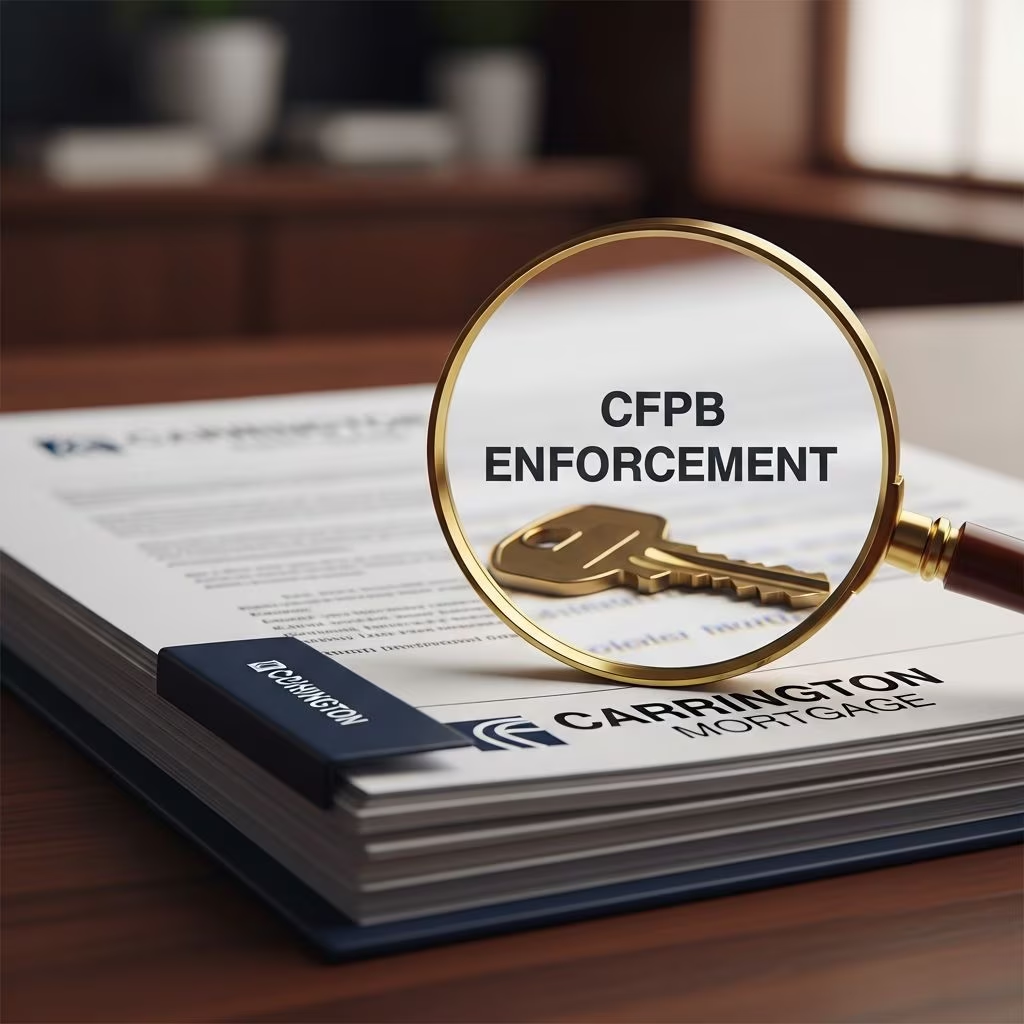
The Consumer Financial Protection Bureau (CFPB) regularly investigates mortgage servicers and, when it finds violations of federal law, issues public enforcement actions detailing what went wrong and how harmed consumers will be compensated. In one such case, the CFPB took action against Carrington Mortgage Services, LLC, a nonbank mortgage servicer, for alleged unlawful practices that affected homeowners across the country. This article uses that enforcement as a case study to explain how mortgage servicing can go wrong and what protections borrowers have.
Background: Who Regulates Mortgage Servicers and Why It Matters
Mortgage servicers handle day-to-day loan administration. They collect payments, manage escrow accounts, handle loss mitigation requests, and, when things go badly, oversee the foreclosure process. Because a single servicing error can lead to wrongful fees, credit damage, or even loss of a home, federal regulators closely supervise this industry.
The CFPB is the primary federal agency that enforces consumer financial protection laws for nonbank mortgage servicers. Among other laws, it oversees compliance with:
- Real Estate Settlement Procedures Act (RESPA) and Regulation X – rules governing error resolution, loss mitigation, and foreclosure timelines.
- Consumer Financial Protection Act – prohibits unfair, deceptive, or abusive acts or practices (UDAAP).
- Other federal mortgage-related protections calibrated after the 2008 financial crisis and the COVID-19 pandemic.
When the CFPB identifies patterns of violations, it can order companies to compensate harmed borrowers, change their practices, and pay civil penalties.
Carrington Mortgage Services: Overview of the Enforcement Case
The CFPB’s public enforcement materials describe Carrington Mortgage Services as a nonbank mortgage servicer involved in the collection and servicing of mortgage loans. Based on those materials and similar mortgage servicing enforcement actions, the case generally involved allegations that the company:
- Failed to follow key loss mitigation and foreclosure protection requirements.
- Assessed improper fees contrary to loan terms or federal law.
- Provided inaccurate information or failed to effectively communicate with borrowers.
The CFPB typically responds to such conduct with a consent order, which is a legally binding agreement requiring the servicer to change its practices, provide redress, and pay penalties.
Key Alleged Servicing Failures Highlighted by the CFPB
The Carrington matter fits a broader pattern of problems that the CFPB has documented across the mortgage servicing industry. The following categories summarize the types of failures that frequently appear in enforcement actions and supervisory reports, and that the Carrington order illustrates.
1. Mishandling Loss Mitigation and Foreclosure Protections
Federal mortgage servicing rules require servicers to timely evaluate complete loss mitigation applications and to hold off on foreclosure while an application is pending. When servicers ignore these rules, borrowers may face avoidable foreclosures or missed opportunities to save their homes.
Common violations identified by the CFPB and other legal commentators include:
- Starting or continuing foreclosure while a borrower is actively seeking assistance or has submitted a complete loss mitigation package.
- Failing to evaluate a complete application and issue a written determination within the required 30-day window.
- Not informing borrowers of all available options, such as loan modifications, repayment plans, or forbearance.
These issues are not unique to Carrington. The CFPB has repeatedly found that servicers nationwide failed to properly review applications or honor foreclosure protections, particularly during times of economic stress.
2. Charging Unlawful or Excessive Fees
Servicers must follow the fee provisions in loan agreements and are prohibited from charging unauthorized or inflated fees. Yet CFPB supervision has uncovered widespread problems such as:
- Late fees above contractual limits or assessed during protected periods, such as certain COVID-19 forbearances.
- Improper default-related fees, including inspection or broker price opinion charges that were not permitted by the mortgage documents.
- Failing to timely terminate private mortgage insurance (PMI), leading to unnecessary extra payments by borrowers.
These fee abuses can quietly drain a borrower’s finances and compound delinquency, increasing the chance of foreclosure.
3. Poor Communication and Incomplete Responses to Borrowers
Regulation X gives borrowers the right to send notices of error or information requests that servicers must acknowledge and address on specific timelines. The CFPB has increasingly treated ineffective loan servicing—such as failing to respond to borrower inquiries or correct errors—as potentially abusive under federal law.
Problematic practices include:
- Ignoring or significantly delaying responses to written error notices and requests for information.
- Failing to engage in meaningful, two-way communication with borrowers about their options.
- Providing inaccurate or misleading transaction histories in online accounts.
These breakdowns make it difficult for consumers to protect their interests, especially because they cannot choose who services their loan.
4. Mishandling Payments and Escrow
Even seemingly small operational errors can have severe consequences. Servicers must promptly credit payments, handle partial payments in specified ways, and administer escrow accounts correctly.
Across the industry, examiners have found issues such as:
- Placing partial payments in escrow or other accounts instead of applying them correctly or returning them.
- Failing to credit payments on the date received, leading to wrongful late fees and negative credit reporting.
- Errors in escrow calculations that result in unexpected shortages or surpluses for homeowners.
When multiplied across thousands of loans, these errors can cause systemic harm, triggering enforcement attention.
Penalties and Corrective Measures in CFPB Actions
Enforcement actions like the one involving Carrington typically require three main forms of relief: consumer redress, civil money penalties, and business practice changes.
| Type of Relief | Purpose | Typical Requirements |
|---|---|---|
| Consumer redress | Compensate affected borrowers | Refund illegal fees, credit accounts, pay restitution to harmed homeowners. |
| Civil money penalties | Deter future violations | Company pays a fine, often deposited into the CFPB’s victims relief fund. |
| Conduct remedies | Fix underlying problems | Strengthen compliance systems, update technology, revise policies, staff training. |
In recent actions against other servicers, the CFPB has ordered:
- Millions of dollars in restitution for overcharged fees and improper foreclosure practices.
- Investments in upgraded compliance and servicing technology.
- Ongoing reporting and monitoring to ensure future compliance.
The Carrington consent order follows this same general framework, tailored to the company’s specific violations.
What This Means for Homeowners
Enforcement actions do more than penalize companies; they clarify the standards by which servicers are judged and highlight warning signs for borrowers. Homeowners can use these cases to better understand their rights and to recognize when something may be wrong.
Recognizing Potential Servicing Misconduct
If your loan is serviced by Carrington or any other company, you may be experiencing unlawful servicing if you notice patterns like:
- Repeated unexplained fees or charges that do not match your mortgage documents.
- Foreclosure activity, including notices or legal filings, while a loss mitigation application is under review.
- Delayed or no response to written requests for information or correction of obvious errors.
- Online account histories that do not match your records or payment receipts.
- Private mortgage insurance that continues long after your principal balance has fallen below required termination levels.
Steps Borrowers Can Take if They Suspect Problems
Borrowers have multiple tools and avenues for relief when they encounter suspected servicing abuses:
- Document everything – Keep copies of monthly statements, payment confirmations, letters, and any notices you receive.
- Send a written notice of error or information request – Under Regulation X, you can formally dispute errors or request information, and the servicer must respond within defined timeframes.
- Check your credit reports – Payment reporting errors can damage your credit; dispute any inaccurate entries promptly.
- File complaints with regulators – You can submit complaints to the CFPB, the Federal Trade Commission, or your state consumer protection office.
- Consult a housing counselor or attorney – HUD-approved counselors and consumer law attorneys can help you understand your options and rights.
Complaints and Enforcement: Where They Go and How They Help
Consumer complaints are often the first signal that a servicer’s practices may be unlawful. Federal and state agencies share information and coordinate responses.
- CFPB Complaint Portal: Centralized platform where consumers can submit mortgage servicing complaints. The Bureau forwards complaints to companies and tracks responses.
- FTC: Enforces laws against deceptive mortgage practices by certain lenders and can act on misrepresentations or unfair collection tactics.
- State regulators: Many states, such as California under its Consumer Financial Protection Law, can investigate unfair, deceptive, or abusive financial practices and take independent enforcement actions.
Patterns of complaints can lead to broader supervisory reviews or formal enforcement, as was the case with Carrington and other mortgage servicers.
Lessons for the Mortgage Servicing Industry
The Carrington enforcement and similar actions send a clear message to servicers: ineffective or careless servicing is not just poor customer service; it can be illegal. Regulators expect companies to:
- Maintain robust compliance management systems capable of tracking regulatory requirements and implementing them in daily operations.
- Invest in technology and staffing sufficient to handle borrower inquiries, loss mitigation, and payment processing accurately and on time.
- Embed clear procedures for complying with Regulation X duties to respond to error notices and information requests.
- Proactively monitor for and correct systemic errors in fees, escrow, or foreclosure handling.
Failure to meet these expectations can result in substantial penalties, reputational harm, and ongoing oversight obligations.
Frequently Asked Questions (FAQs)
Q1: If I was serviced by Carrington, will I automatically receive compensation?
Not necessarily. In most CFPB consent orders, only borrowers who fit specific criteria—such as having paid certain illegal fees or experienced defined harms—receive redress. The company or a settlement administrator typically identifies eligible consumers using loan records, so you may be contacted directly if you qualify.
Q2: How do I know whether a fee on my mortgage statement is legal?
Compare each fee to your promissory note, mortgage or deed of trust, and servicing disclosures. Fees should be authorized in your contract and consistent with federal and state law. If a fee seems unfamiliar or excessive, you can send a written information request or error notice under Regulation X and ask the servicer to explain and document the charge.
Q3: What should I do if my servicer starts foreclosure while I’m seeking a modification?
You should immediately contact the servicer in writing, referencing any pending loss mitigation application, and keep proof of delivery. Consider consulting a housing counselor or attorney right away, because federal rules limit when a servicer may start or move forward with foreclosure while a complete application is being reviewed. You can also file a complaint with the CFPB or state regulators.
Q4: Can I switch mortgage servicers if I’m unhappy with the current one?
Borrowers generally cannot choose or easily change their servicer; the right to service a loan is often transferred between companies without the borrower’s consent. This lack of choice is one reason the CFPB has labeled certain ineffective servicing practices as potentially abusive: consumers cannot protect themselves by simply moving to a different provider.
Q5: Where can I file a complaint about my mortgage company?
You can submit a complaint online to the CFPB, which will forward it to your company and request a response. You may also report deceptive mortgage practices to the Federal Trade Commission and your state consumer protection or financial regulator. Include documentation and a clear description of the problem to help regulators evaluate your case.
References
- CFPB Enforcement Actions — Consumer Financial Protection Bureau. 2024-11-01. https://www.consumerfinance.gov/enforcement/actions/
- Seven examples of unfair practices and other violations by mortgage servicers — Consumer Financial Protection Bureau. 2021-04-19. https://www.consumerfinance.gov/about-us/blog/seven-examples-unfair-practices-and-other-violations-mortgage-servicers-cfpb-supervision-activities-uncover-red-flags/
- CFPB: Ineffective Loan Servicing Is an Abusive Act or Practice — Bradley Arant Boult Cummings LLP. 2024-07-09. https://www.financialservicesperspectives.com/2024/07/cfpb-ineffective-loan-servicing-is-an-abusive-act-or-practice/
- Mortgage Servicers’ Duties Under Regulation X to Respond to Borrower Notices of Error and Requests for Information — Federal Reserve Bank of Philadelphia / Consumer Compliance Outlook. 2021-10-01. https://www.consumercomplianceoutlook.org/2021/third-issue/mortgage-servicers-duties-under-regulation-x/
- Errors and Abuses by Mortgage Servicers — Justia. 2023-05-01. https://www.justia.com/foreclosure/mortgage-servicers/
- Where to file a complaint about a mortgage company — USAGov. 2023-08-21. https://www.usa.gov/mortgage-company-complaints
- California Consumer Financial Protection Law — California Department of Financial Protection and Innovation. 2023-02-10. https://dfpi.ca.gov/rules-enforcement/laws-and-regulations/california-consumer-financial-protection-law/