
CFPB Action Against Works & Lentz: Lessons for Debt Collectors
A detailed look at the CFPB’s enforcement case against Works & Lentz and what it means for debt collectors and consumers.
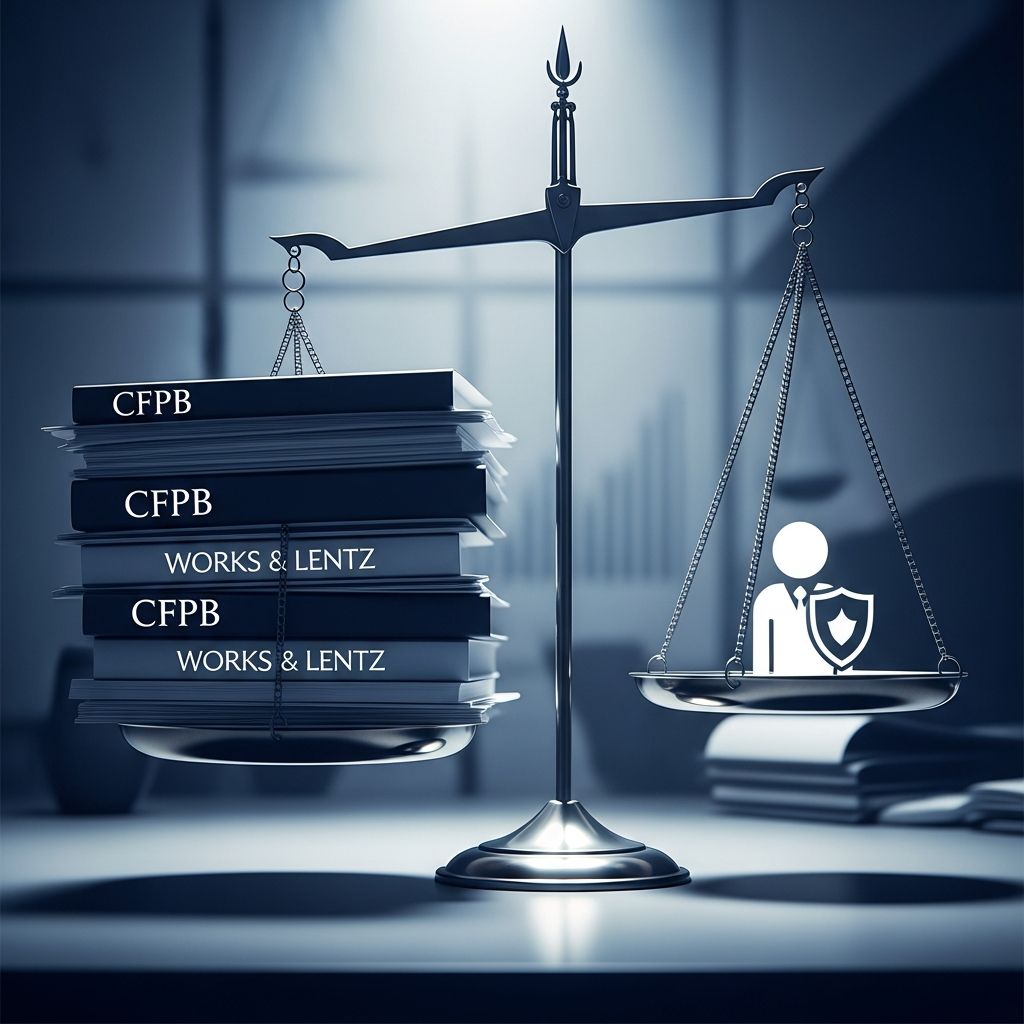
The Consumer Financial Protection Bureau (CFPB) brought an enforcement action against Works & Lentz, Inc. and related entities over their medical debt collection practices. The case highlights how federal consumer protection laws apply to law firms and collection agencies that pursue unpaid medical bills on behalf of hospitals and other healthcare providers.
This article explains the background of the case, the main legal violations, the penalties imposed, and the broader implications for debt collectors, healthcare providers, and consumers.
Background: The CFPB’s Role in Policing Debt Collection
The CFPB is a federal agency created after the 2008 financial crisis to enforce federal consumer financial laws and protect people from unfair, deceptive, or abusive practices in the financial marketplace.
Among its powers, the CFPB can:
- Investigate suspected violations of federal consumer financial laws
- Bring enforcement actions in court or through administrative proceedings
- Seek restitution, civil penalties, and injunctive relief
- Oversee compliance with consent orders and settlements
Debt collection is a major focus area for the CFPB. The agency enforces both the Fair Debt Collection Practices Act (FDCPA) and the Consumer Financial Protection Act, which prohibit deceptive and unfair collection tactics.
Who Is Works & Lentz and What Did They Do?
Works & Lentz is a law firm and affiliated collection operation that handled large volumes of medical debt on behalf of hospitals and healthcare systems. According to the CFPB’s public enforcement materials, the firm’s activities included sending collection letters, filing lawsuits, and seeking judgments for unpaid medical accounts.
The CFPB alleged that the firm’s practices violated federal consumer financial laws in several ways related to:
- Accuracy of lawsuit filings and court documents
- Representations about attorney involvement
- Collection of fees and costs not permitted under law or contract
- Insufficient documentation and record-keeping
Although the specific factual allegations are unique to this case, the themes mirror many of the CFPB’s recurring concerns about debt collectors and collection law firms, such as mass lawsuits filed with little or no meaningful review by attorneys.
Key Legal Framework: Laws Applied in the Case
The Works & Lentz action sits at the intersection of several federal statutes and regulations that govern debt collection and consumer financial protection.
Fair Debt Collection Practices Act (FDCPA)
The FDCPA is the primary federal law regulating third-party debt collectors. It prohibits, among other things:
- Using false, deceptive, or misleading representations to collect a debt
- Misrepresenting the character, amount, or legal status of a debt
- Threatening actions that cannot legally be taken
- Collecting amounts not expressly permitted by law or the contract that created the debt
Consumer Financial Protection Act (CFPA)
The CFPA gives the CFPB broad authority to prevent providers of consumer financial products and services from engaging in unfair, deceptive, or abusive acts or practices (UDAAP). This includes many activities of debt collectors, even when they are also covered by the FDCPA.
Other Relevant Rules and Guidance
While the enforcement action focuses on the FDCPA and CFPA, CFPB rules and policy statements on debt collection practices and medical debt reporting provide important context. For example, the CFPB has publicly emphasized the need for accurate documentation and meaningful attorney review when law firms file lawsuits to collect debts.
Alleged Misconduct by Works & Lentz
Based on the publicly available enforcement documents and typical patterns in similar cases, the CFPB’s allegations against Works & Lentz fall into several broad categories.
1. Misleading Use of Attorney Involvement
One recurring issue in CFPB actions against collection law firms is whether attorneys perform a meaningful review of accounts before sending demand letters or filing lawsuits. When law firms automate filings without real attorney analysis, consumers may be misled into believing a lawyer has evaluated the claim.
In the Works & Lentz case, the CFPB alleged that the firm:
- Filed large volumes of lawsuits with inadequate attorney review of account-level evidence
- Used law firm letterhead and signatures that implied attorney involvement where little or none existed
- Created the impression that each claim was individually vetted for accuracy and legal sufficiency
If proven, these practices can be deceptive under both the FDCPA and CFPA because consumers may weigh legal demands differently when they appear to come from a lawyer rather than a standard collection agency.
2. Inaccurate or Unsupported Lawsuit Filings
The CFPB also expressed concerns about the accuracy and substantiation of medical debt lawsuits, including whether the amounts sued for could be fully supported by underlying records. Common problems in similar cases include:
- Suing for incorrect amounts due to fees, interest, or billing errors
- Using outdated or incomplete account information provided by the original creditor
- Inability to produce documentation to prove the debt when challenged in court
Federal consumer protection law requires that representations in court documents not be misleading and that companies have reasonable policies to ensure the accuracy of the information they present when attempting to collect debts.
3. Improper Fees, Costs, or Add-On Charges
Another alleged issue concerned the assessment and collection of fees and costs. Under the FDCPA, collectors may not collect any amount unless it is expressly authorized by the agreement creating the debt or permitted by law.
CFPB enforcement actions against medical debt collectors have frequently focused on:
- Collecting unauthorized court costs or attorney’s fees
- Adding collection charges not provided for in the patient’s admission or treatment agreement
- Applying interest contrary to state law or contractual terms
In the Works & Lentz matter, the CFPB alleged that some of the firm’s fee practices violated these restrictions and resulted in consumers paying more than they were legally obligated to pay.
4. Weak Compliance and Record-Keeping Systems
The Bureau also examined the firm’s internal compliance infrastructure. According to the CFPB’s general enforcement guidance, companies that handle consumer financial data at scale must maintain systems reasonably designed to prevent, detect, and correct violations of law.
Issues identified in the Works & Lentz action included:
- Insufficient policies and procedures for verifying account information before suit
- Limited training for staff on FDCPA and UDAAP requirements
- Inadequate audit or quality-control processes over litigation and collection activities
Penalties and Relief Ordered
In a typical CFPB enforcement order, remedies fall into three broad categories: monetary relief, civil penalties, and conduct restrictions or injunctive provisions.
| Type of Remedy | Purpose | How It Applies in Debt Collection Cases |
|---|---|---|
| Consumer Redress | Compensate harmed consumers | Refunds of improper fees, adjustments of balances, or cancellation of judgments |
| Civil Money Penalty | Punish and deter violations | Lump-sum payment to the CFPB’s Civil Penalty Fund |
| Injunctive Relief | Change future conduct | Requirements for policy revisions, training, and restrictions on litigation practices |
In the Works & Lentz case, the final order required the firm and related entities to:
- Provide monetary relief to consumers for certain unlawful charges or practices
- Pay a civil penalty to the CFPB’s Civil Penalty Fund
- Implement robust compliance reforms, including documentation and review requirements
- Cease specific deceptive or unfair practices related to attorney involvement and fee collection
The combination of financial and non-financial remedies is consistent with the CFPB’s broader enforcement approach in recent years, which emphasizes not only redress but also structural changes in companies’ operations.
Compliance Lessons for Debt Collectors and Law Firms
The Works & Lentz action offers several compliance lessons for organizations that collect consumer debts, especially medical debts.
Ensure Meaningful Attorney Review
Law firms involved in debt collection must ensure that attorneys conduct a meaningful review before their name or signature is used in communications or lawsuits. That typically means:
- Reviewing account-level documentation, not just summary data
- Evaluating the legal sufficiency of claims and applicable statutes of limitation
- Confirming that all amounts sought are permitted by law and contract
Failing to do so can lead to allegations that the firm is misrepresenting the level of attorney involvement, which can be deceptive under federal law.
Validate Debts and Amounts Owed
Collectors should have systems in place to verify:
- The identity of the consumer
- The nature of the underlying service (such as medical treatment)
- The principal, interest, and fees claimed
- Any contractual provisions authorizing add-on costs
Robust validation processes reduce the risk of filing suits on inaccurate information and help ensure compliance with both the FDCPA and CFPA.
Align Fee and Interest Practices with Law and Contract
Companies must closely review:
- Patient registration and admission forms
- State law on interest and collection charges
- Court rules concerning recoverable costs
Any fee or cost charged to a consumer should be clearly traceable to a lawful source. Ambiguous or boilerplate provisions are not a safe basis for significant add-on charges.
Build a Culture of Compliance
CFPB guidance emphasizes the importance of compliance management systems that identify and manage legal risks throughout the life cycle of debt collection, from account placement to post-judgment activity.
Key elements include:
- Written policies and procedures covering litigation, communications, and documentation
- Ongoing training for attorneys, collectors, and support staff
- Regular monitoring and audits of a sample of lawsuits and accounts
- Clear escalation channels for potential legal violations or consumer complaints
Implications for Hospitals and Medical Providers
The Works & Lentz case also underscores risks for hospitals and healthcare systems that outsource their collections to law firms or agencies. While the enforcement action focuses on the collector, regulators and courts increasingly expect healthcare providers to oversee third-party vendors.
Hospitals should:
- Conduct due diligence on collection partners’ compliance programs
- Review scripts, letters, and lawsuit templates used in their name
- Monitor complaint trends related to billing and collections
- Ensure policies align with nonprofit or charity care obligations where applicable
Failure to manage these relationships can damage a provider’s reputation and invite regulatory scrutiny, especially as policymakers pay close attention to medical debt practices nationwide.
What Consumers Can Learn from the Case
For consumers, the Works & Lentz enforcement action is a reminder that federal law offers significant protections against abusive or deceptive debt collection.
Know Your Rights in Debt Collection
Under federal law, consumers typically have the right to:
- Receive written notice of the amount of the debt and the name of the creditor
- Dispute the debt and request verification
- Be free from false threats, harassment, or misrepresentations
- Seek legal help and, in some cases, statutory damages for violations
Steps to Take if You Are Sued for Medical Debt
If a consumer receives a lawsuit related to medical bills, it is important to act promptly:
- Do not ignore the lawsuit. Failing to respond may result in a default judgment.
- Request documentation. Ask for itemized bills, contracts, and proof you received the services.
- Verify amounts. Check whether fees and interest align with what you were originally told.
- Consider legal assistance. Many legal aid organizations help consumers with debt collection matters.
Frequently Asked Questions (FAQs)
Q1. What is a CFPB enforcement action?
A CFPB enforcement action is a formal case—either in court or through an administrative process—brought by the Bureau when it believes an entity has violated federal consumer financial laws. These cases can result in monetary penalties, consumer restitution, and requirements that companies change their practices.
Q2. Does the CFPB only target large national companies?
No. While the CFPB often brings cases against large banks and national firms, it also enforces the law against regional and local entities, including smaller debt collectors and law firms, if their practices harm consumers.
Q3. How does the CFPB decide which cases to bring?
The Bureau considers factors such as the magnitude of consumer harm, the strength of the evidence, whether the conduct is ongoing, and how the case aligns with the agency’s strategic priorities. It draws on consumer complaints, supervisory examinations, whistleblower tips, and referrals from other agencies.
Q4. Can consumers get money back from CFPB enforcement actions?
Yes. When the CFPB secures monetary relief, it may distribute funds directly to harmed consumers or through court-approved processes. The agency also uses its Civil Penalty Fund to provide compensation in some cases where direct redress is not feasible.
Q5. What should a law firm do after a CFPB consent order?
A law firm subject to a CFPB order must comply with all its terms, which may include revising policies, improving documentation, submitting reports, and cooperating with monitoring. Establishing a dedicated compliance function and engaging external counsel or consultants is often critical to meeting these obligations.
References
- The CFPB’s enforcement work in 2023 and what lies ahead — Consumer Financial Protection Bureau. 2024-01-22. https://www.consumerfinance.gov/about-us/blog/the-cfpbs-enforcement-work-in-2023-and-what-lies-ahead/
- Enforcement — Consumer Financial Protection Bureau. 2024-06-18. https://www.consumerfinance.gov/enforcement/
- Life Cycle of an Enforcement Action — Consumer Financial Protection Bureau. 2023-11-15. https://www.consumerfinance.gov/enforcement/life-cycle-of-enforcement-action/
- Enforcement Actions — Consumer Financial Protection Bureau. 2025-08-21. https://www.consumerfinance.gov/enforcement/actions/
- The CFPB’s 2021-2025 Enforcement Legacy — Consumer Federation of America. 2024-07-09. https://consumerfed.org/the-cfpbs-2021-2025-enforcement-legacy/
Similar Articles








Read full bio of Sneha Tete




