
CFPB Action Against STRATFS: Lessons for Debt Relief Firms
How the CFPB’s case against STRATFS and related entities reshapes expectations for debt relief and credit repair businesses.
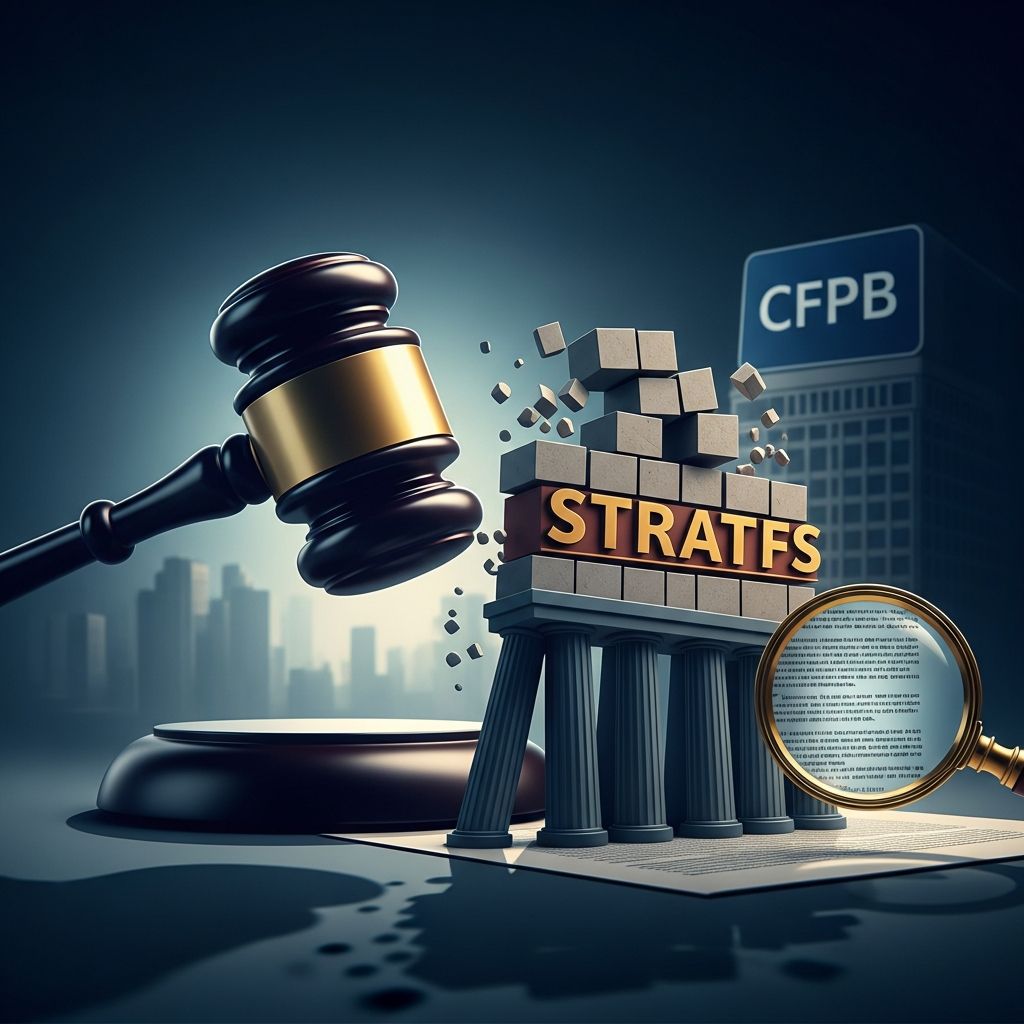
The Consumer Financial Protection Bureau (CFPB) brought an enforcement action against STRATFS LLC (formerly Strategic Financial Solutions LLC) and related entities for engaging in an unlawful debt relief and credit repair scheme. This case illustrates how federal consumer protection laws apply to fee-based financial services and what both businesses and consumers should learn from the outcome.
This article explains the background of the case, the legal violations alleged by the CFPB, the remedies imposed, and the broader implications for the debt relief, credit repair, and financial services industries.
Background: Who Is the CFPB and What Authority Does It Have?
The CFPB is a federal agency created after the 2008 financial crisis to enforce federal consumer financial laws and protect people from unfair, deceptive, or abusive practices in the financial marketplace. It can investigate companies, bring administrative or court actions, and seek remedies such as restitution, disgorgement, and civil money penalties.
Congress granted the CFPB four primary tools:
- Rulemaking – Issuing regulations that implement consumer financial laws.
- Supervision – Examining certain banks and nonbanks for compliance.
- Enforcement – Taking public action when the law is violated.
- Education – Helping consumers understand their rights and options.
Enforcement cases like the one against STRATFS typically follow an investigative phase in which the CFPB collects documents, interviews witnesses, and evaluates whether federal consumer financial laws have been violated.
The STRATFS Case: Core Themes and Allegations
According to the CFPB’s public enforcement materials, the action against STRATFS and affiliated businesses fits into a broader pattern of cracking down on unlawful debt relief and credit repair business models. While the specific allegations in this case are fact-intensive, several core themes emerge that match recent bureau priorities:
- Use of misleading marketing that misrepresented the nature or benefits of services.
- Collection of illegal advance fees for debt relief or credit repair services before any results were achieved.
- Failure to clearly disclose material terms, risks, and limitations of the offered programs.
- Structuring operations to evade applicable consumer financial protection laws and regulations.
These themes are consistent with other CFPB actions, including a major settlement with large credit repair brands where federal courts found violations of restrictions on advance fees for telemarketed credit repair services.
Key Laws and Rules Implicated
The STRATFS matter centers on several important legal frameworks that govern debt relief and credit repair services.
Consumer Financial Protection Act (CFPA)
The CFPA prohibits covered entities from engaging in unfair, deceptive, or abusive acts or practices in connection with consumer financial products or services. The CFPB frequently uses this authority when it finds that companies mislead or exploit consumers, especially those in financial distress.
Telemarketing and Credit Repair Restrictions
Federal law and associated rules, including the Telemarketing Sales Rule (TSR), restrict when companies can charge fees for credit repair and certain debt relief services. In particular, firms generally may not charge advance fees for telemarketed credit repair services until:
- They have provided the promised services, and
- A certain amount of time has passed after proof of the results is given to the consumer.
The CFPB and the Federal Trade Commission (FTC) have used these provisions to challenge business models that depend on upfront payments before any demonstrable improvement to a consumer’s credit or debt situation.
Unlawful Advance Fees in Debt Relief
In the broader enforcement landscape, the CFPB has characterized the collection of advance fees in certain debt relief and credit repair contexts as a major consumer harm. A 2023 settlement involving some of the largest credit repair brands in the country resulted in a multibillion-dollar judgment and a decade-long ban on telemarketing credit repair services, emphasizing how seriously regulators treat these violations.
The STRATFS case similarly addresses advance fee practices, reinforcing that companies must carefully structure billing and enrollment models to comply with these requirements.
How the Scheme Worked: Typical Conduct in These Cases
While each enforcement action is fact-specific, the STRATFS matter appears to involve a pattern of conduct resembling other problematic debt relief and credit repair schemes identified by the CFPB and FTC. Common elements include:
- Heavy marketing promising debt reduction, improved credit scores, or financial “fresh starts.”
- Complex contracts that obscure when and how fees will be charged.
- Reliance on automatic payments drafted from consumer bank accounts or debit cards.
- Limited or illusory results, such as minor or temporary improvements that do not justify the costs.
- Poor communication with consumers once they are enrolled, particularly regarding progress, risks, and alternatives.
In enforcement actions against similar entities, the CFPB has alleged that consumers were often worse off: their debts remained unresolved, credit scores did not meaningfully improve, and they had paid substantial fees for little or no benefit.
CFPB’s Findings: Violations and Harm to Consumers
Based on publicly available enforcement documents and the CFPB’s narrative of the case, the bureau concluded that STRATFS and related entities violated federal consumer financial law in several ways. While the specific counts differ by entity and role, the most significant categories of misconduct include:
1. Deceptive Marketing and Misrepresentations
The CFPB found that the companies used advertising and sales pitches that gave consumers a misleading impression of:
- The likelihood that debts would be reduced or resolved.
- The magnitude and speed of expected credit score improvements.
- The total cost of the program and the timing of fees.
- The level of personalized negotiation or advocacy they would receive.
Deceptive acts under the CFPA include any representation that is likely to mislead a reasonable consumer and is material to their decision-making. Promises about debt reduction or credit improvement are typically considered material because they influence whether a financially stressed consumer enrolls in a program.
2. Illegal Advance Fees for Debt Relief and Credit Repair
The bureau determined that the businesses collected fees before providing the promised results, in violation of legal restrictions on advance fees for certain debt relief and credit repair services. Similar to prior enforcement actions against large credit repair brands, the case against STRATFS underscores that companies must:
- Provide documented results before charging many types of fees.
- Refrain from charging for outcomes that have not yet occurred.
- Avoid structuring payment schedules that effectively front-load charges before meaningful services are delivered.
3. Unfair Practices That Exploit Financial Distress
Unfair practices under federal law occur when:
- They cause or are likely to cause substantial injury to consumers,
- The injury is not reasonably avoidable by consumers, and
- The injury is not outweighed by countervailing benefits to consumers or competition.
In the STRATFS matter, these criteria were met when financially vulnerable consumers:
- Paid significant fees without achieving promised debt relief.
- Were not given clear, comprehensible information about risks and realistic outcomes.
- Had limited ability to understand or negotiate complex contracts and fee structures.
Penalties, Consumer Redress, and Injunctive Relief
Enforcement actions often conclude with a consent order or judgment specifying the remedies that the respondents must provide. In cases like STRATFS, typical orders include:
- Redress to harmed consumers – Refunds or credits for illegal or unearned fees.
- Civil money penalties – Fines payable to the CFPB’s Civil Penalty Fund, which can be used to compensate consumers in other cases.
- Injunctive relief – Requirements to change business practices, such as:
- Prohibitions on charging advance fees for certain services.
- Enhanced disclosure obligations for future marketing.
- Limits or bans on telemarketing or specific product offerings.
- Mandated compliance programs, training, and independent audits.
Across its enforcement program, the CFPB’s orders have required companies to pay billions in consumer redress and civil penalties, highlighting the financial consequences of noncompliance.
How the STRATFS Case Fits into Broader CFPB Enforcement Trends
The STRATFS action reflects several broader priorities that have defined the CFPB’s enforcement legacy from 2021–2025:
| Enforcement Priority | How STRATFS Fits |
|---|---|
| Targeting repeat or systemic misconduct | Demonstrates scrutiny of business models that rely on ongoing unlawful fee practices. |
| Unlawful junk fees | Highlights illegal advance fees and charges disconnected from real value, similar to other “junk fee” cases. |
| Protection of financially vulnerable consumers | Focuses on people already in debt or credit distress who are at heightened risk of exploitation. |
| Transparency and truthful marketing | Reinforces that financial products must be marketed with clear, accurate information. |
Compliance Lessons for Debt Relief and Credit Repair Firms
The STRATFS enforcement action sends a strong signal to any business that markets debt relief, credit repair, or similar services. To comply with federal consumer financial law, firms should prioritize the following areas.
1. Eliminate Unlawful Advance Fees
- Do not charge consumers before you have delivered the promised results where law prohibits such charges.
- Align billing practices with the TSR and related provisions that control when and how fees can be assessed.
- Periodically audit payment flows and fee triggers to identify and correct non-compliant practices.
2. Make Marketing Clear, Accurate, and Substantiated
- Avoid absolute or guaranteed claims about debt reduction, credit score increases, or approval odds.
- Substantiate all material claims with reliable data or documented historical outcomes.
- Disclose risks, limitations, and potential negative consequences (for example, that stopping payments may lead to collections or lawsuits).
3. Protect Consumers in Financial Distress
- Design programs that leave consumers reasonably better off after fees and risks are considered.
- Offer clear exit options, including plain-language cancellation policies and contact information.
- Train staff to avoid high-pressure tactics that leverage fear or misinformation.
4. Build Strong Compliance Infrastructure
- Implement written policies and procedures addressing applicable CFPB, FTC, and state law requirements.
- Conduct regular compliance training for all staff involved in marketing, sales, and customer service.
- Establish monitoring and testing programs to detect policy violations early.
Practical Advice for Consumers Considering Debt Relief or Credit Repair
Consumers can use lessons from the STRATFS case to better protect themselves when seeking help with debt or credit issues.
Warning Signs to Watch For
- Demands for large upfront payments before any services are performed.
- Promises of specific or guaranteed credit score increases.
- Pressure to stop paying existing creditors without a clear explanation of consequences.
- Refusal to provide key terms in writing before enrollment.
- Assurances that the program is “government approved” or “official” when it is not.
Safer Steps to Take
- Check whether the provider has been the subject of CFPB, FTC, state attorney general, or other regulatory actions by searching publicly available enforcement databases.
- Compare costs and services with nonprofit credit counseling agencies, which may offer low-cost or free budgeting and debt management assistance.
- Obtain and review your credit reports directly from major credit bureaus; in many cases, you can dispute inaccurate information yourself at no cost.
- Ask for all terms and disclosures in writing and review them carefully before signing or authorizing payments.
How the CFPB’s Enforcement Process Protects Consumers
The STRATFS action also illustrates how the enforcement life cycle works at the CFPB:
- Investigation – The CFPB gathers facts through civil investigative demands, interviews, and data analysis to determine whether violations occurred.
- Decision to Act – If evidence suggests violations, the bureau may pursue an administrative proceeding or file a lawsuit in federal court.
- Litigation or Negotiation – Respondents may contest the allegations or enter into negotiations that lead to a consent order.
- Order and Remedies – A final order specifies required consumer redress, penalties, and conduct restrictions.
- Monitoring and Compliance – The CFPB monitors adherence to the order, sometimes for many years, and may bring further actions if violations continue.
For consumers, this process means that even when individual claims are small, collective enforcement can yield substantial relief and help deter similar practices across the market.
Frequently Asked Questions (FAQs)
Q1: What did the CFPB allege STRATFS and related entities did wrong?
The CFPB alleged that STRATFS and affiliated businesses engaged in deceptive and unfair practices related to debt relief and credit repair services, including misrepresenting benefits and charging unlawful advance fees before achieving promised results.
Q2: Why are advance fees for credit repair and some debt relief services illegal?
Federal law, including the Telemarketing Sales Rule, restricts when companies can collect fees for credit repair and certain debt relief services. These rules are designed to prevent firms from taking money from financially distressed consumers without first delivering verifiable results.
Q3: How does this case relate to the CFPB’s broader work on “junk fees”?
The STRATFS action is part of a larger enforcement push against fees that are hidden, excessive, or disconnected from real value, similar to cases against large banks and credit repair firms where the CFPB required billions in refunds and penalties.
Q4: What remedies did the CFPB typically seek in this type of case?
In cases like STRATFS, the CFPB usually seeks consumer redress, civil money penalties, and injunctive relief requiring companies to stop illegal conduct, modify their products, and adopt stronger compliance programs.
Q5: Where can I check if a company has been subject to a CFPB enforcement action?
The CFPB maintains an online enforcement actions database where you can search by company name to see if the bureau has taken public action against that entity.
References
- The CFPB’s enforcement work in 2023 and what lies ahead — Consumer Financial Protection Bureau. 2024-01-26. https://www.consumerfinance.gov/about-us/blog/the-cfpbs-enforcement-work-in-2023-and-what-lies-ahead/
- The CFPB’s 2021–2025 Enforcement Legacy — Consumer Federation of America. 2025-02-11. https://consumerfed.org/the-cfpbs-2021-2025-enforcement-legacy/
- Enforcement — Consumer Financial Protection Bureau. 2024-11-12 (last updated). https://www.consumerfinance.gov/enforcement/
- Life cycle of an enforcement action — Consumer Financial Protection Bureau. 2023-06-15. https://www.consumerfinance.gov/enforcement/life-cycle-of-enforcement-action/
- Enforcement Actions — Consumer Financial Protection Bureau. 2025-08-21 (database entry dates vary). https://www.consumerfinance.gov/enforcement/actions/
- Payments to harmed consumers by case — Consumer Financial Protection Bureau. 2024-09-30. https://www.consumerfinance.gov/enforcement/payments-harmed-consumers/payments-by-case/
Similar Articles








Read full bio of Sneha Tete




