
Business Tax Deductions: Operating vs. Investment Expenses
Master the critical distinction between daily operating costs and long-term business investments for accurate tax filing.
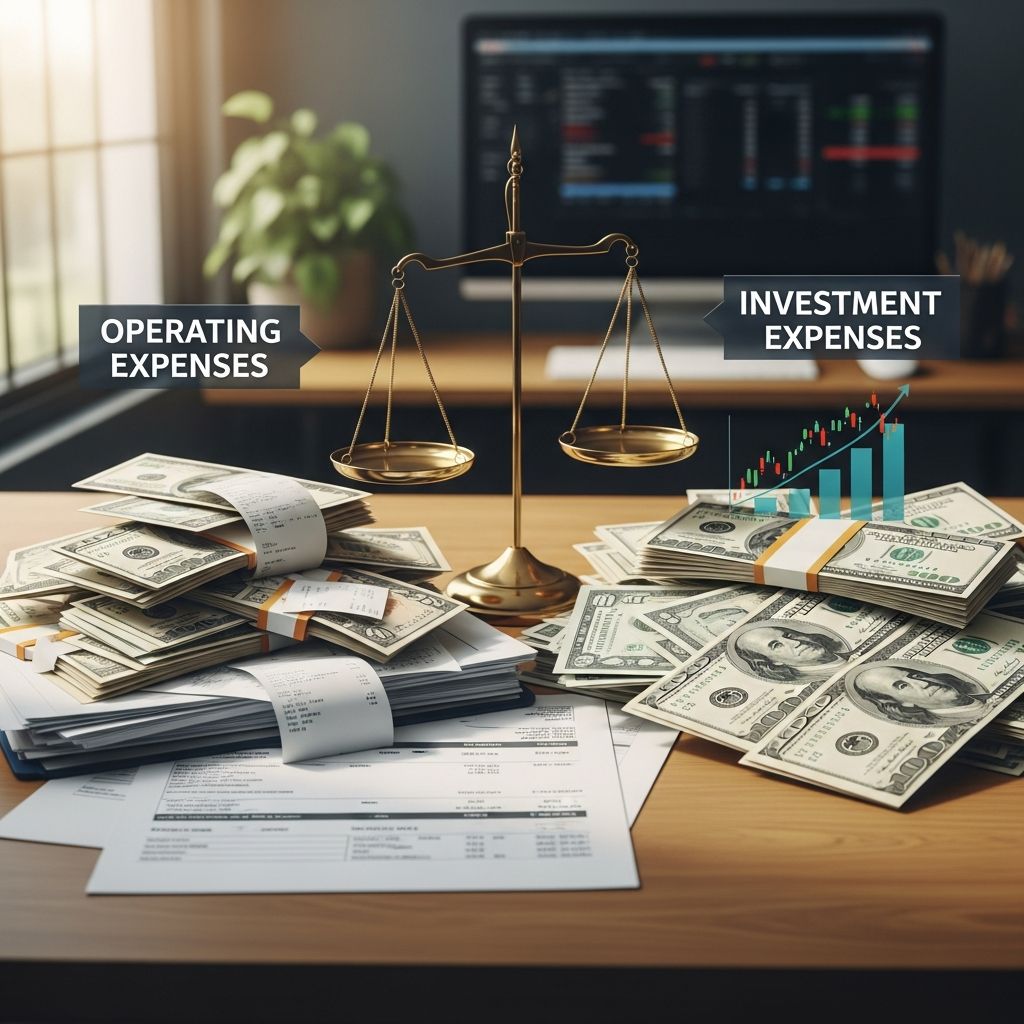
Understanding Business Expense Classification for Tax Purposes
One of the most challenging aspects of managing business finances is determining how different expenditures should be treated for tax purposes. The Internal Revenue Service and tax authorities in various jurisdictions make a fundamental distinction between two categories of business expenses: those that qualify for immediate deduction in the current tax year and those that must be spread across multiple years through a depreciation or amortization process. This classification has significant implications for your business’s bottom line and overall tax strategy.
The distinction between these two types of expenses is not always straightforward, and many business owners struggle with proper categorization. Understanding the rules that govern this classification can help you avoid costly mistakes and ensure compliance with tax regulations.
The Foundation: What Distinguishes Operating Costs from Investment Expenditures
At their core, operating expenses represent the day-to-day costs necessary to maintain your business’s current operations. These are expenditures that you incur regularly or periodically to keep your business functioning. They typically serve short-term purposes and do not create lasting value that extends beyond the current fiscal year.
In contrast, investment expenditures represent purchases or improvements that provide ongoing benefits to your business beyond a single tax year. These acquisitions create assets that will generate income, improve efficiency, or otherwise benefit your organization for an extended period. Because of their long-term nature, the tax treatment differs substantially from ordinary operating expenses.
Key Characteristics of Operating Expenses
- Recurring costs incurred during normal business operations
- Short-term benefits that dissipate within one year
- Fully deductible in the year the expense is incurred
- Examples include utilities, rental payments, salaries, and office supplies
- Directly reduce your taxable income in the year paid
Key Characteristics of Investment Expenditures
- Provide measurable benefits extending beyond one year
- Create or improve assets with lasting value
- Must be deducted over multiple years through depreciation
- Examples include equipment, vehicles, building improvements, and real estate
- Deductions spread across the asset’s useful life
Common Business Expenses: Examples and Classifications
Understanding how typical business expenditures are classified can help you categorize your own costs accurately. Consider these frequently encountered expenses and how they are typically treated under tax law.
Ordinary Operating Expenses That Qualify for Immediate Deduction
Many business costs are clearly deductible as operating expenses. These include:
- Rent or lease payments for office space or equipment
- Utility bills including electricity, water, and gas
- Employee wages and benefits
- Office supplies and materials consumed in operations
- Professional services such as accounting and legal fees
- Insurance premiums for business liability and property coverage
- Routine maintenance and minor repairs to keep property functioning
- Marketing and advertising expenses
- Travel costs for business purposes
Investment Expenditures Requiring Depreciation Treatment
These purchases create assets that provide long-term benefits and cannot be immediately deducted in full:
- Purchase of machinery and manufacturing equipment
- Vehicles and transportation equipment
- Building construction or structural improvements
- Computer systems and technology infrastructure
- Furniture and fixtures with lasting utility
- Land acquisition for business use
- Major renovations that improve property condition beyond original state
The Gray Area: Repairs Versus Improvements
One of the most confusing areas of tax classification involves determining whether a particular expenditure constitutes ordinary maintenance or a capital improvement. This distinction can significantly affect your tax deductions, and many disputes between taxpayers and tax authorities arise in this category.
When Repairs Are Deductible Operating Expenses
Repair expenditures that restore property to its original working condition are generally treated as operating expenses. The key principle is that the repair simply returns the asset to the condition it was in before damage or deterioration occurred. For example, if you own a rental property and need to replace broken windows, repair the plumbing, or fix a damaged door, these costs typically qualify as current operating expenses deductible in the year incurred. Similarly, replacing a spark plug in a vehicle, repainting the exterior of a wooden building, or rewiring a section of electrical system that has failed would normally be classified as repairs.
When Improvements Become Capital Expenditures
Improvements that enhance property beyond its original condition must be capitalized. Consider the example of exterior treatments: painting a wooden house exterior is a repair (the expense returns the exterior to its previous condition) and is deductible as a current expense. However, replacing wooden siding with vinyl or upgrading wooden steps to concrete stairs represents an improvement that goes beyond restoration, adding value and durability beyond the original condition. These improvements must be capitalized and depreciated over their useful lives.
The Separate Asset Principle
Another critical consideration is whether the expenditure addresses an integral part of a larger asset or represents a separate, distinct asset. When you replace a component that is integral to the larger property—such as rewiring a building’s electrical system—the expense may be treated as current maintenance. However, when you purchase a separate asset such as a refrigerator for a rental unit or a new piece of equipment for your factory, that expenditure is typically capitalized because it represents a distinct asset with its own useful life and value.
Applying the Enduring Benefit Test
Tax authorities often apply the concept of “enduring benefit” when evaluating whether an expenditure should be capitalized. An expenditure is considered to produce an enduring benefit if it results in a lasting advantage that extends substantially beyond the current tax year. This test helps distinguish between ordinary operating costs and capital investments.
The duration of benefit is a key factor: if an expenditure’s benefits last only a short period or recur frequently as a normal part of operations, it is likely an operating expense. If the benefits extend considerably into the future, the expenditure should be capitalized. In some cases, the relative value of the expenditure compared to the overall asset must also be considered. A small replacement part might be treated as a repair despite technically improving the asset, while a major replacement or enhancement would be capitalized.
The Depreciation Process for Capital Expenditures
Once you have correctly identified an expenditure as a capital expense, you must understand how to deduct its cost over time. Rather than deducting the entire expense in the year incurred, you must spread the deduction across multiple years in a process called depreciation.
How Depreciation Works
Depreciation allocates the cost of an asset across its estimated useful life. The useful life varies depending on the type of asset. For example, equipment might have a useful life of five to seven years, while building improvements might be depreciated over 15 to 39 years depending on the improvement type. Each year, you deduct a portion of the asset’s cost as a depreciation expense, reducing your taxable income gradually over the asset’s lifetime.
Calculating Annual Deductions
The annual depreciation amount depends on the depreciation method you select. The most common method for business property is the Modified Accelerated Cost Recovery System (MACRS), which allows for accelerated deductions in the early years of an asset’s useful life. Alternatively, some businesses use the straight-line method, which deducts an equal amount each year.
The Long-Term Tax Benefit
Although you cannot deduct the entire capital expenditure immediately, the depreciation deductions across the asset’s useful life still provide significant tax benefits. For example, if your business purchases machinery for $100,000 with a five-year useful life, you would deduct approximately $20,000 annually (using straight-line depreciation), providing tax relief over five years rather than one year.
Special Situations and Exception Cases
Tax law includes several special situations that modify the standard rules for expense classification.
Repairs to Acquired Property
When you acquire used property and must make repairs to put it in suitable condition for business use, these repair costs are often treated as capital expenses even though they might be considered ordinary maintenance if you were repairing property you had owned for years. This rule recognizes that getting acquired property into working condition is part of the capital investment, not routine maintenance.
Relative Value Considerations
In some cases, the relative size of the expenditure compared to the overall asset value matters. Replacing a single spark plug in a large piece of equipment would typically be a current expense due to its minimal value relative to the whole asset. Replacing the entire engine, however, would be capitalized because its value relative to the asset is substantial.
Common Classification Mistakes to Avoid
Business owners frequently make errors when classifying expenses. Understanding these common mistakes can help you avoid costly miscalculations:
- Overlooking improvement versus repair distinctions: Failing to recognize when repairs cross into improvement territory, resulting in incorrect deduction claims
- Misclassifying labor costs: Generally, labor costs for performing services are treated as operating expenses deductible in the year incurred, not capitalized
- Ignoring separate asset status: Treating replacements of distinct assets as integral parts or vice versa
- Forgetting to track useful life: Applying operating expense treatment to assets that clearly have multi-year useful lives
- Assuming all recurring expenses are current: A recurring expense might still be capitalized if each instance provides enduring benefits
Documentation and Record-Keeping for Tax Compliance
Proper documentation becomes critical when you must justify your expense classifications to tax authorities. For each significant expenditure, maintain detailed records including:
- Invoices and receipts showing the exact nature of the expense
- Descriptions of what was purchased or repaired and why
- Before and after documentation for repairs and improvements
- Professional appraisals or engineer assessments for major expenditures
- Your classification rationale and the tax treatment applied
- Depreciation schedules for capitalized assets
Frequently Asked Questions
Q: Is the cost of maintaining a vehicle owned by my business a current or capital expense?
A: Routine maintenance such as oil changes, tire repairs, and brake service are current operating expenses deductible in the year incurred. However, major replacements such as a new engine or transmission would be capitalized and depreciated over the vehicle’s remaining useful life.
Q: Can I immediately deduct the purchase of office furniture?
A: No, office furniture is typically considered a capital asset with a useful life exceeding one year. You must capitalize the cost and depreciate it over its useful life, typically seven years for most business furniture.
Q: How do I handle repairs made to newly acquired business property?
A: Repairs made to used property you acquire to put it in suitable condition for business use are generally treated as capital expenses, even if similar repairs to long-owned property would be treated as current expenses. These acquisition-related repairs are considered part of your capital investment.
Q: What is the threshold for capitalizing an expenditure?
A: Tax law does not establish a specific dollar threshold. Instead, the classification depends on whether the expenditure creates an asset with a useful life exceeding one year. However, tax authorities sometimes apply materiality principles, treating very small expenditures as current expenses regardless of their technical classification.
Q: Should I consult a tax professional about classifying my business expenses?
A: For significant expenditures or when facing difficult classification decisions, consulting a tax professional is strongly recommended. Incorrect classifications can result in audit adjustments, penalties, and interest charges that far exceed the cost of professional guidance.
Strategic Considerations for Business Expense Planning
Understanding expense classification is not merely about compliance—it is also about optimizing your tax strategy. While you cannot arbitrarily classify expenses to reduce your current year’s taxes, knowing the rules allows you to plan expenditures strategically. For example, timing major capital purchases or repairs, considering the available depreciation methods, and understanding how different assets are classified can all play roles in your overall tax planning approach. Working with a qualified tax advisor can help you structure expenditures in ways that align with legitimate tax planning objectives while maintaining full compliance with applicable regulations.
References
- Capital vs Current Expenditures — Thomson Reuters Canada. Accessed January 2026. https://www.thomsonreuters.ca/en/dtprofessionalsuite/blog/capital-vs-current-expenditures.html
- Current and Capital Expenses Under Business Tax Law — Justia. Accessed January 2026. https://www.justia.com/tax/corporate-tax/current-and-capital-expenses/
- Current expenses or capital expenses — Government of Canada, Canada Revenue Agency. Accessed January 2026. https://www.canada.ca/en/revenue-agency/services/tax/businesses/topics/rental-income/current-expenses-capital-expenses.html
- What is a capital expense? — Justia. Accessed January 2026. https://www.justia.com/tax/docs/current-capital-expenses/
- Capital Expenditure vs. Expense Overview & Examples — Study.com. Accessed January 2026. https://study.com/academy/lesson/current-business-expense-vs-capital-expenditure.html
Similar Articles








Read full bio of medha deb




