
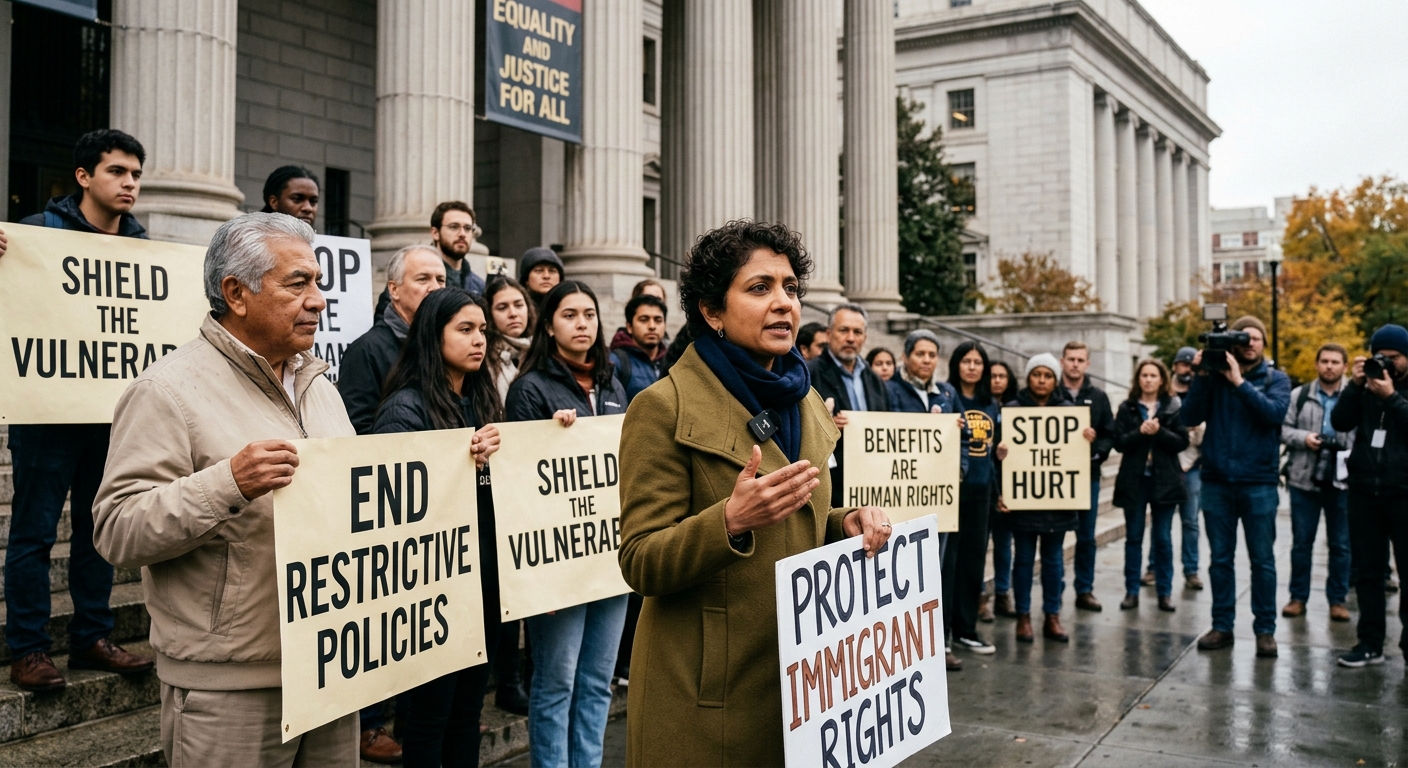
Shielding the Vulnerable: Why Advocates Demand an End to Restrictive Immigrant Benefit Policies
Restricting immigrant access to essential public safety net programs places millions of vulnerable children at severe risk.
The Intersection of Immigration Policy and Child Welfare
In the intricate landscape of United States domestic policy, the realms of immigration enforcement and child welfare are deeply and inextricably linked. When the federal administration enacts restrictive policies aimed at limiting the rights and resources of immigrants, the most immediate and devastating collateral damage often falls upon children. Across the country, nearly one in four children lives in an immigrant family, and the overwhelming majority of these children are native-born U.S. citizens. Yet, despite their citizenship status, these youths find their health, nutrition, and overall stability threatened by overarching administrative policies that target their parents. Recently, leading human rights and child advocacy coalitions have sounded a blaring alarm, formally urging federal entities like the Department of Health and Human Services (HHS) to withdraw harmful regulations that restrict immigrant access to vital public programs. These advocates argue that weaponizing basic human needs as a tool for immigration deterrence is not only morally reprehensible but also economically and socially destructive.
The core philosophy driving these child rights organizations is straightforward: no child should be punished for the geographical origins or legal status of their parents. Access to basic necessities—such as preventative pediatric care, nutritional support, and stable housing—is foundational to a child’s cognitive and physical development. When policies force families to choose between securing legal residency and feeding their children, the entire framework of the social safety net begins to unravel. Advocates are stepping forward to demand a clear separation between public health administration and immigration enforcement.
The Historical Context of the “Public Charge” Test
To understand the current crisis, one must delve into the historical roots of the “public charge” concept. Embedded in U.S. immigration law since the late 19th century, the public charge test was originally designed to identify individuals who were likely to become primarily dependent on the government for subsistence. For decades, this was narrowly interpreted to mean reliance on direct cash assistance programs, such as Temporary Assistance for Needy Families (TANF), or long-term institutionalized care funded by the state. Under this traditional interpretation, immigrant families could safely access supplemental health and nutritional programs without fearing retribution during their green card or visa application processes.
However, recent administrative shifts have frequently attempted to aggressively broaden this definition. Controversial policy changes have sought to include the use of non-cash supplemental benefits—such as Medicaid, housing vouchers, and food stamps—as negative marks against an immigrant’s legal residency application. Although specific regulations often undergo a whiplash of implementation and reversal depending on the political party in power, the mere introduction of these restrictive rules creates a lasting atmosphere of paranoia. Child rights advocates emphasize that continually threatening to penalize families for using essential services fundamentally contradicts the core mission of federal health agencies, which are tasked with enhancing the health and well-being of all individuals residing within the nation.
Unpacking the “Chilling Effect” on Vulnerable Households
One of the most insidious outcomes of restrictive immigrant benefit policies is a sociological phenomenon widely documented by public health experts as the “chilling effect.” This occurs when immigrant families, gripped by the fear of deportation or the denial of lawful permanent status, voluntarily disenroll from or refuse to apply for public benefits for which they or their citizen children are fully eligible. The chilling effect operates on misinformation, rumors, and generalized anxiety, spreading rapidly through communities and causing widespread avoidance of government services.
Research indicates that during periods when public charge rules are expanded or heavily debated in the media, participation in health and nutrition programs drops precipitously among noncitizens and their U.S.-born children. This avoidance extends far beyond undocumented individuals; it strikes fear into lawful permanent residents, asylum seekers, and naturalized citizens who worry about the implications for their mixed-status relatives. Parents will skip taking a sick child to a community health clinic, pregnant mothers will forgo vital prenatal care, and families will endure severe food insecurity rather than risk having their information shared with immigration enforcement agencies. Advocates urgently point out that withdrawing these restrictive policies is the only way to begin rebuilding the immense loss of trust between immigrant communities and public health institutions.
Essential Safety Net Programs at Risk
The safety net programs targeted by these restrictive policies are not mere supplementary perks; they are critical lifelines that determine the developmental trajectory of millions of children. Advocacy groups stress that blocking access to these resources directly undermines efforts to keep families intact and healthy.
| Program Name | Primary Function | Impact on Child Development & Well-being |
|---|---|---|
| Medicaid / CHIP | Comprehensive pediatric and maternal healthcare. | Ensures timely immunizations, early detection of developmental delays, and proper management of chronic illnesses like asthma and diabetes. |
| SNAP (Food Stamps) | Nutritional assistance for low-income households. | Prevents childhood malnutrition, which is heavily linked to poor cognitive function, behavioral issues, and stunted physical growth. |
| Housing Subsidies (Section 8) | Financial support for safe, stable living arrangements. | Reduces transient living and homelessness, minimizing a child’s exposure to environmental hazards and severe psychological stress. |
| Head Start Programs | Early childhood education and family support. | Boosts early literacy, socialization skills, and overall school readiness, leveling the educational playing field for disadvantaged youths. |
When an administration attempts to gatekeep these specific programs based on immigration status, it systematically dismantles the preventative structures designed to catch children before they fall into deeper crises. For instance, without access to community behavioral health clinics, children experiencing trauma or acute mental health crises are left entirely without support, dramatically increasing the likelihood of future interaction with the foster care or juvenile justice systems.
The Broad Ripple Effects on Public Health and Education
The consequences of restricting immigrant access to vital public programs extend far beyond individual households, creating devastating ripple effects that impact entire communities and the broader national infrastructure. From a public health perspective, denying preventative healthcare to a massive demographic segment is profoundly counterproductive. When immigrant families avoid primary care physicians due to fear, minor health issues inevitably escalate into major medical emergencies. Unmanaged asthma, untreated infections, and delayed prenatal care ultimately force families to seek care in hospital emergency rooms. This shifts a massive financial burden onto local healthcare systems and taxpayers, increasing uncompensated care costs and straining emergency medical resources.
The educational system also bears a significant brunt of these restrictive policies. Teachers and school administrators are frequently the first professionals to notice the physical manifestations of the chilling effect. Children who are deprived of proper nutrition due to their family’s avoidance of SNAP cannot concentrate in class, leading to lower academic performance and higher rates of absenteeism. Schools often find themselves acting as the de facto safety net, forcing educators to divert already limited educational resources toward managing health and hunger crises that federal programs were originally established to handle. Ultimately, advocates argue that stunting the development of a large block of children threatens the long-term economic competitiveness and social cohesion of the entire country.
Policy Recommendations from Advocacy Coalitions
Child rights advocates are not merely identifying the problem; they are presenting clear, actionable policy recommendations to the administration to reverse this detrimental trend and protect vulnerable children.
- Immediate Policy Withdrawal: The foremost demand is the immediate and permanent withdrawal of any proposed or existing administrative rules that penalize the use of non-cash health, housing, and nutritional benefits in immigration proceedings.
- Establishing Information Firewalls: Advocates call for strict, codified data privacy firewalls between social service agencies and the Department of Homeland Security (DHS). Immigrants must have an ironclad guarantee that applying for children’s health insurance will not trigger a deportation proceeding.
- Funding Culturally Competent Outreach: To actively combat the chilling effect, the government must invest heavily in community-based, multilingual outreach campaigns. It is not enough to simply change the rule; agencies must proactively work with trusted community leaders to dispel pervasive myths and encourage eligible families to re-enroll in life-saving programs.
- Legislative Action: Ultimately, advocates are urging Congress to pass definitive legislation that removes the ambiguity of the public charge rule altogether, ensuring that the health and safety of immigrant children are no longer subject to the ideological whims of alternating presidential administrations.
Frequently Asked Questions (FAQs)
What is the “public charge” rule?
The public charge rule is a longstanding provision in U.S. immigration law that allows the government to deny an individual admission to the country or lawful permanent resident status (a green card) if they are deemed likely to become primarily dependent on the government for subsistence. Historically, this only applied to those needing cash assistance, but recent political efforts have attempted to expand it to include health and food benefits.
How does the chilling effect harm U.S. citizen children?
Even when children are U.S. citizens and fully eligible for safety net programs, their undocumented or legally vulnerable parents often avoid applying for these benefits on their behalf. The parents fear that interacting with government agencies will expose their family to immigration enforcement, resulting in citizen children suffering from preventable diseases, malnutrition, and housing instability.
Are all immigrants subject to public charge determinations?
No. Humanitarian immigrants, including refugees, asylum seekers, and survivors of human trafficking or domestic violence, are generally exempt from the public charge test under federal law. However, the widespread confusion surrounding the policy often causes even exempt populations to avoid seeking necessary assistance.
Why are health providers opposed to these restrictions?
Healthcare professionals and public health organizations oppose these restrictions because they violate the core tenets of medical ethics and public health management. Deterring people from seeking preventative care leads to the unchecked spread of communicable diseases, worse individual health outcomes, and a highly burdened emergency medical system.
Conclusion
Protecting immigrant access to public safety net programs transcends the bounds of standard immigration debate; it is a fundamental issue of human rights and child welfare. The persistent attempts to restrict these programs inflict incalculable psychological, physical, and developmental harm on millions of children across the nation. By heeding the urgent calls of advocacy groups to withdraw harmful policies, the administration has an opportunity to reaffirm a commitment to equity, compassion, and public health. A society is ultimately judged by how it treats its most vulnerable populations, and guaranteeing that no child goes hungry or untreated due to their parents’ immigration status is a moral imperative that cannot be ignored.
References
- Potential “Chilling Effects” of Public Charge and Other Immigration Policies on Medicaid and CHIP Enrollment — KFF. 2025-12-02. https://www.kff.org/medicaid/issue-brief/potential-chilling-effects-of-public-charge-and-other-immigration-policies-on-medicaid-and-chip-enrollment/
- Anticipated “Chilling Effects” of the Public-Charge Rule Are Real: Census Data Reflect Steep Decline in Benefits Use by Immigrant Families — Migration Policy Institute. 2020-12-21. https://www.migrationpolicy.org/news/anticipated-chilling-effects-public-charge-rule-are-real
- Public Charge Rule and Its Impact on Child Health: A Call to Action — Pediatrics (American Academy of Pediatrics). 2020-12-01. https://publications.aap.org/pediatrics/article/147/1/e2020027788/77134/Public-Charge-Rule-and-Its-Impact-on-Child-Health
Similar Articles








Read full bio of medha deb




