
ACE Cash Express and the High Cost of Payday Debt
How enforcement actions against ACE Cash Express highlight the risks of payday loans and deceptive debt-collection tactics.
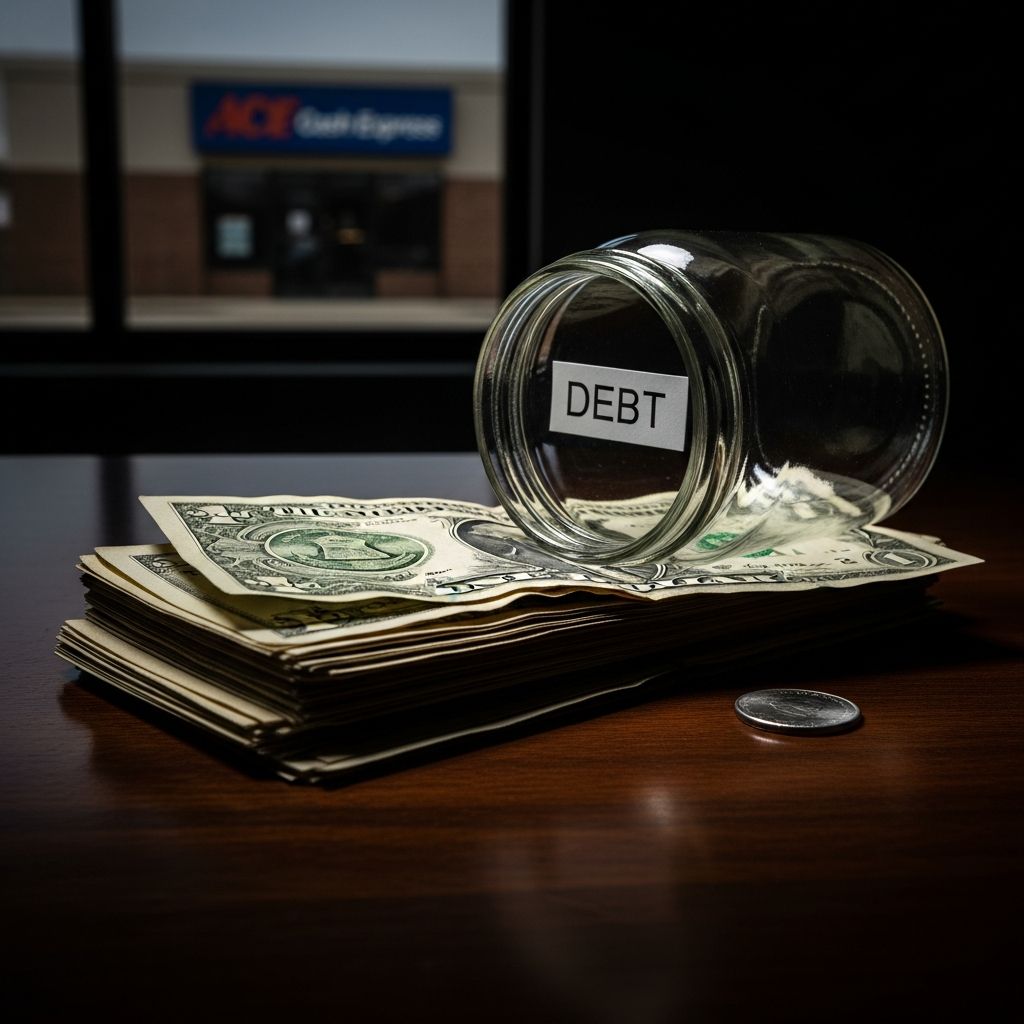
ACE Cash Express is one of the largest payday lenders in the United States, offering short-term, high-cost loans and other financial services to consumers who often have limited access to traditional credit. In recent years, it has also become a prominent example of how aggressive lending and collection practices can land a company in serious legal trouble with federal regulators.
This article explains what regulators alleged ACE Cash Express did wrong, how enforcement actions unfolded, and what those actions reveal about the broader risks of payday loans and abusive debt-collection tactics.
Background: Who Is ACE Cash Express?
ACE Cash Express, operated by Populus Financial Group, runs hundreds of storefronts across the country and markets itself as a convenient source of fast cash and financial services to people who may lack savings or access to mainstream bank credit.
- Core products: payday loans, installment and title loans, check cashing, bill payment, money orders, and prepaid debit cards.
- Target customers: consumers who are underbanked, have poor credit, or need short-term funds for urgent expenses.
- Business model: small-dollar loans with high fees and triple-digit annual percentage rates (APRs), designed to be repaid on the borrower’s next payday.
While such loans are marketed as short-term solutions, research by the Consumer Financial Protection Bureau (CFPB) has shown that many borrowers reborrow repeatedly, paying far more in fees than the original amount borrowed.
The Regulatory Spotlight on Payday Lending
The CFPB is a federal agency created after the 2008 financial crisis to enforce federal consumer financial laws and protect consumers from unfair, deceptive, or abusive acts and practices in the financial marketplace. Payday lenders are a frequent focus of the Bureau’s work because:
- Loans often carry very high costs relative to the loan amount.
- Borrowers are commonly in financial distress at the time they seek these loans.
- Some lenders use hardball collection tactics that can exacerbate financial hardship.
ACE Cash Express has been the subject of more than one significant enforcement action by the CFPB, including a major case in 2014 and subsequent litigation announced in 2022.
The 2014 Enforcement Action: Pushing Borrowers Into a Cycle of Debt
In 2014, the CFPB took enforcement action against ACE Cash Express, finding that the company’s collection practices illegally pushed borrowers into taking out new loans to cover old ones.
Key Allegations in 2014
According to the Bureau’s findings, ACE Cash Express used a range of tactics that went beyond lawful collection efforts and crossed into illegal pressure and deception:
- Harassing collection calls: Repeated and aggressive phone calls to borrowers who were behind on payments.
- False threats of legal action: Suggesting or implying that borrowers could face lawsuits or even criminal prosecution when such actions were not actually planned or legally appropriate.
- Steering into repeat loans: Encouraging overdue borrowers to quickly pay off existing loans, often with great difficulty, and then take out new loans almost immediately.
The CFPB concluded that these tactics were designed to create a sense of fear and urgency, making borrowers feel that their only realistic option was to reborrow from ACE to avoid severe consequences. Each new loan generated new fees, trapping many consumers in an expensive cycle of debt.
Financial Consequences for ACE
As a result of the 2014 action, ACE Cash Express agreed to provide monetary relief and pay a civil penalty:
- $5 million in refunds to harmed borrowers.
- $5 million in civil money penalties to the CFPB’s Civil Penalty Fund.
In addition, the company became subject to a consent order—a legally binding agreement requiring changes to its business practices and ongoing oversight to prevent similar violations in the future.
The 2022 Lawsuit: Concealed Repayment Plans and Unauthorized Withdrawals
Despite the earlier enforcement action, the CFPB later alleged that ACE Cash Express continued to engage in unlawful practices, this time involving repayment plans and electronic withdrawals.
Concealing No-Cost Repayment Plans
In many states where payday lending is permitted, lenders must offer borrowers a no-cost extended payment plan, allowing them to pay off an outstanding loan over multiple pay periods without additional fees or interest. The CFPB’s 2022 lawsuit alleged that ACE misled borrowers about this option:
- Telling struggling borrowers that their only choices were a short grace period or fee-based refinancing.
- Using sales scripts and language that guided consumers toward refinancing rather than repayment plans.
- Failing to clearly inform consumers that a free repayment plan existed and could eliminate additional finance charges.
According to the Bureau, as a result of these practices, hundreds of thousands of borrowers who were eligible for a free repayment plan kept reborrowing and paying high reborrowing fees instead.
Improper Debits From Bank Accounts
The lawsuit also claims that ACE withdrew more money from borrowers’ bank accounts than their contracts allowed. In many states, ACE’s contracts permitted the lender to make up to three debit attempts to collect a loan payment. The CFPB alleges that:
- ACE, in numerous instances, made a fourth withdrawal attempt, contrary to contract terms.
- These unauthorized withdrawals removed funds from borrowers’ accounts, sometimes leaving insufficient money for other obligations and fees charged by the borrowers’ banks.
The Bureau asserts that since 2016, at least 3,000 borrowers experienced such unauthorized debits, leading to over $1.3 million withdrawn improperly.
Scope of Alleged Harm and Relief Sought
The CFPB’s complaint describes the financial impact of these practices as substantial:
- More than $240 million in fees collected from borrowers who were eligible for free repayment plans.
- Thousands of unauthorized bank account debits from borrowers across multiple states.
Under the Consumer Financial Protection Act, the CFPB asked the court for several remedies:
- Monetary relief or refunds to affected consumers.
- Disgorgement of unjust gains.
- Injunctive relief to stop the unlawful practices.
- Civil money penalties for the violations.
As with any complaint, the filing does not represent a final decision; the allegations must be resolved through settlement or court judgment.
ACE’s Response and Ongoing Litigation
Populus Financial Group, the operator of ACE Cash Express, publicly disputed the CFPB’s 2022 allegations, calling the lawsuit “baseless” and asserting that the company had disclosed its payment plan options to customers.
| Issue | CFPB’s Position | ACE’s Position |
|---|---|---|
| Repayment plan disclosure | ACE concealed free repayment plans and steered borrowers into costly refinancing. | ACE states repayment plans were disclosed in loan agreements, on its website, and in other communications. |
| Unauthorized debits | ACE made more withdrawal attempts than contracts allowed, causing unauthorized debits from accounts. | ACE claims the issue affected about 0.028% of transactions and that it revised language and self-reported once identified. |
| Overall characterization | ACE is a repeat offender that used deception and misdirection to generate hundreds of millions in fees. | ACE contends the Bureau misinterpreted its practices and refused reasonable settlement efforts. |
As of 2025, court filings indicate that the parties have at times agreed to stays while litigation and related legal questions proceed, including challenges to the CFPB’s funding structure in other cases.
What the ACE Case Reveals About Payday Loans
The enforcement actions involving ACE Cash Express highlight several structural risks consumers face when using payday loans and similar high-cost products.
1. The Cycle of Debt
Payday loans are typically due in full on the borrower’s next payday, even though many borrowers have limited capacity to cover both living expenses and repayment at the same time. The CFPB has found that:
- Many borrowers roll over or reborrow shortly after paying off a loan.
- Fees can quickly accumulate to more than the original loan principal.
When a lender’s business model or practices encourage frequent reborrowing, consumers are more likely to become trapped in a costly cycle of short-term debt.
2. Power Imbalances in Collections
Borrowers already under financial strain may be especially vulnerable to threatening or misleading collection communications. Threats of lawsuits, wage garnishment, or even criminal prosecution can create intense pressure, even when those outcomes are unlikely or unlawful for a particular debt.
Regulators view such tactics as unfair or deceptive because they exploit a borrower’s fear rather than providing truthful information about legitimate collection options.
3. Complexity of Rights and Options
In some states, borrowers have the right to no-cost repayment plans or other protections, but they may not be aware of these options or may not understand them when presented in dense legal language. When lenders fail to clearly explain such rights—or steer borrowers toward more expensive choices—consumers can pay far more than necessary.
How Consumers Can Protect Themselves
While payday loans are legally available in many states, consumers can take practical steps to reduce the risk of harm.
Before Taking Out a Payday Loan
- Calculate the true cost: Look beyond the fee to the implied annual percentage rate (APR). Payday APRs commonly exceed 300 percent, making them among the most expensive forms of credit.
- Explore alternatives: Consider payment extensions with existing creditors, negotiating medical or utility bills, or seeking assistance from reputable nonprofit credit counselors.
- Check state protections: Many states cap fees or require extended repayment plans. State attorney general or financial regulator websites often summarize these rules.
When You Already Have a Payday Loan
- Ask about repayment plans: If you are struggling to pay, inquire specifically about any no-cost or low-cost repayment plans available under state law or the lender’s policies.
- Monitor your bank account: Track automatic debits closely. If a lender makes more withdrawal attempts than your contract allows, contact your bank promptly and keep written records.
- Document communications: Save letters, emails, and texts, and write down details of calls, including dates, times, and statements made.
Filing Complaints and Seeking Help
Consumers who believe a lender has treated them unfairly or violated the law have several avenues for help:
- CFPB complaint portal: The CFPB accepts consumer complaints related to payday loans and other financial products and forwards them to companies for response.
- State regulators: State banking or financial services departments and state attorneys general can investigate potential violations of state law.
- Legal aid organizations: Low-income consumers may qualify for free legal services to challenge abusive collection tactics or contest debts in court.
Frequently Asked Questions (FAQs)
Q1: What did regulators find wrong with ACE Cash Express in 2014?
The CFPB found that ACE used illegal debt-collection tactics, including harassment and false threats of lawsuits or criminal prosecution, to pressure overdue borrowers into taking out new loans they could not afford, thereby pushing them into a cycle of debt.
Q2: How much money did ACE have to pay after the 2014 action?
ACE Cash Express agreed to provide $5 million in refunds to harmed consumers and pay a $5 million civil penalty, for a total of $10 million in monetary relief and penalties.
Q3: What is the main issue in the 2022 lawsuit against ACE?
The CFPB alleges that ACE concealed no-cost repayment plans from eligible borrowers—steering them into costly reborrowing—and made more debit attempts on borrowers’ bank accounts than allowed under their contracts, leading to unauthorized withdrawals.
Q4: Did ACE Cash Express admit to the CFPB’s 2022 allegations?
No. Populus Financial Group, ACE’s parent company, has publicly denied the allegations, arguing that payment plan options were disclosed and that any contract language issues affected a very small percentage of transactions and were corrected promptly.
Q5: Where can I file a complaint if I have a problem with a payday lender?
You can submit a complaint to the Consumer Financial Protection Bureau, typically online or by phone, and you may also contact your state’s financial regulator or attorney general’s office for assistance with potential state law violations.
References
- CFPB Sues ACE Cash Express for Concealing No-Cost Repayment Plans and Improperly Withdrawing Consumers’ Funds — Consumer Financial Protection Bureau. 2022-07-12. https://www.consumerfinance.gov/about-us/newsroom/cfpb-sues-ace-cash-express-for-concealing-no-cost-repayment-plans-and-improperly-withdrawing-consumers-funds/
- CFPB Sues ACE Cash Express for Deception and Misdirection — Compliance Cohort. 2022-07-18. https://www.compliancecohort.com/blog/cfpb-sues-ace-cash-express-for-deception-and-misdirection
- ACE Cash Express, Inc. — Consumer Financial Protection Bureau (Enforcement Action Summary). 2014-07-10. https://www.consumerfinance.gov/enforcement/actions/ace-cash-express/
- Populus Financial Group and ACE Cash Express Respond to Baseless Litigation Filed by the Consumer Financial Protection Bureau — Populus Financial Group. 2022-07-12. https://www.acecashexpress.com/about/press-releases/news/populus-financial-group-and-ace-cash-express-respond-to-baseless-litigation-filed-by-the-consumer-financial-protection-bureau/
- CFPB Takes Action Against ACE Cash Express for Pushing Payday Borrowers Into Cycle of Debt — Consumer Financial Protection Bureau (Press Release, PDF). 2014-07-10. https://www.dwt.com/files/paymentlawadvisor/2014/10/Ace-Cash-Express-Press-Release-2014.07.10.pdf
- Populus Files Motion to Dismiss CFPB Enforcement Action Based on Fact That CFPB Has Been Unlawfully Funded by Fed When It Had No Earnings — Consumer Finance Monitor. 2024-08-06. https://www.consumerfinancemonitor.com/2024/08/06/populus-files-motion-to-dismiss-cfpb-enforcement-action-based-on-fact-that-cfpb-has-been-unlawfully-funded-by-fed-when-it-had-no-earnings/
- Payday Lenders Aim to Evade Federal Probes as Borrowers Plead for Help — Kansas Legal Services. 2022-11-14. https://www.kansaslegalservices.org/page/2637/payday-lenders-aim-evade-federal-probes-borrowers-plead-help
Similar Articles








Read full bio of Sneha Tete




