
2026 Quarterly Estimated Tax Deadlines Guide
Master 2026 estimated tax deadlines: dates, rules, calculations, and strategies to avoid penalties for self-employed and investors.
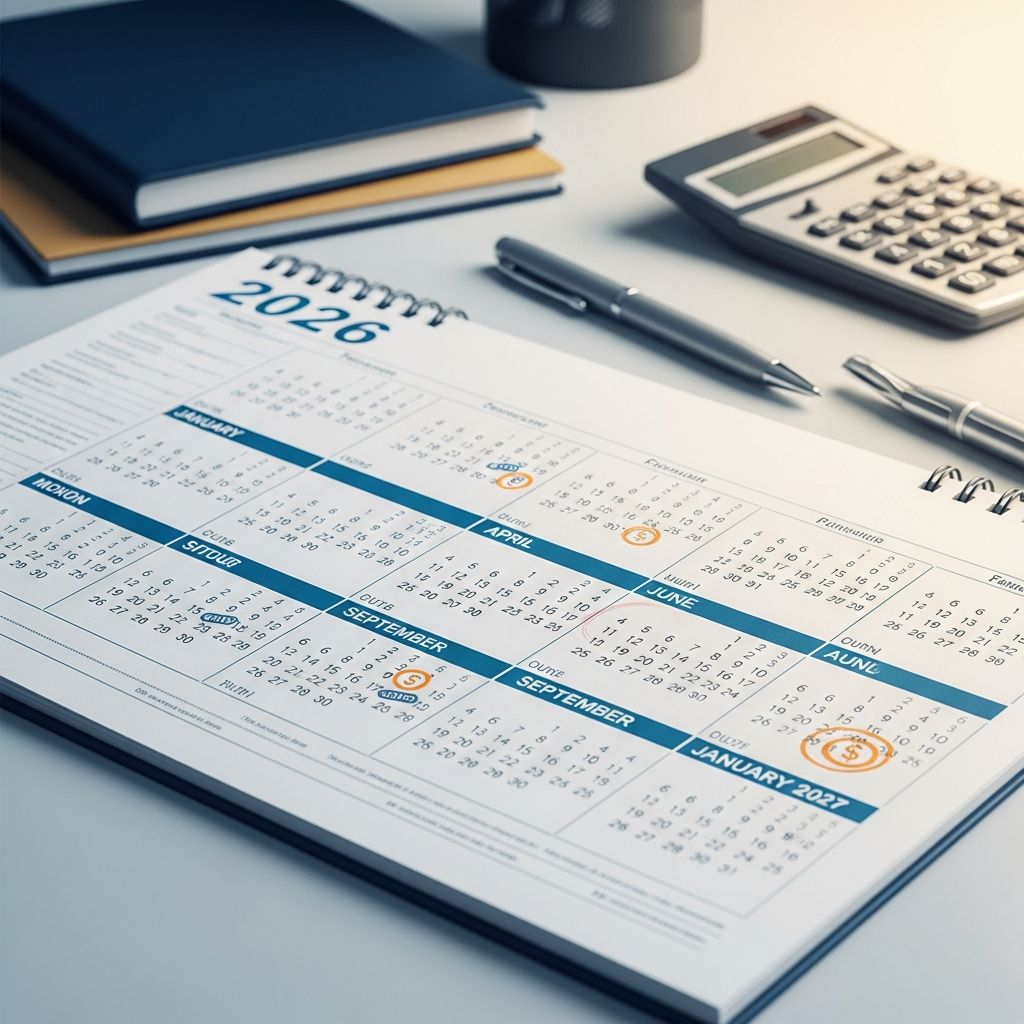
Quarterly estimated tax payments represent a cornerstone of the U.S. tax system, ensuring that income earned throughout the year is taxed progressively rather than in a single lump sum. This pay-as-you-go approach primarily affects self-employed individuals, freelancers, investors, and others whose income lacks automatic withholding. For tax year 2026, understanding these deadlines is crucial to sidestep underpayment penalties and maintain compliance with IRS regulations.
Understanding the Pay-As-You-Go Tax Framework
The Internal Revenue Service (IRS) mandates a pay-as-you-go system where taxes on income are settled as earnings accrue. Traditional employees meet this via employer withholding from paychecks, pensions, or Social Security benefits. However, for those with non-wage income—such as gig workers, independent contractors, rental property owners, or stock traders—quarterly estimated payments fill the gap.
This system prevents revenue shortfalls at year-end and promotes steady cash flow for federal operations. Failure to adhere can trigger penalties calculated on underpaid amounts, accruing from each missed deadline until resolved.
Who Must File Quarterly Estimated Taxes in 2026?
Not everyone needs to make these payments. The IRS outlines clear thresholds:
- Individuals anticipating a tax liability of $1,000 or more after credits and withholding must pay estimates if withholding covers less than 90% of current-year tax or 100% of prior-year tax (110% for higher earners).
- Corporations expecting $500 or more in tax owe estimates.
- Self-employed filers receiving Form 1099 series (e.g., 1099-NEC, 1099-K for payment apps) often qualify, as this income bypasses withholding.
- High-income retirees or those with significant investment gains may also need to contribute.
Exception: Farmers, fishermen, and certain higher-income taxpayers have alternative safe harbors. Always review IRS Publication 505 for personalized applicability.
Key Deadlines for 2026 Estimated Tax Payments
Unlike calendar quarters, IRS periods align with income accrual phases, with payments due mid-month following each. Deadlines shift to the next business day if falling on weekends or holidays. For 2026:
| Income Period | Payment Due Date |
|---|---|
| January 1 – March 31, 2026 | April 15, 2026 |
| April 1 – May 31, 2026 | June 15, 2026 |
| June 1 – August 31, 2026 | September 15, 2026 |
| September 1 – December 31, 2026 | January 15, 2027 |
These align with IRS standards, confirmed across official guidance. Note: The final payment coincides with early-year tax filing, offering flexibility to settle via return if filed timely.
How to Accurately Calculate Your Estimated Payments
Computing the right amount prevents over- or underpayment. Use IRS Form 1040-ES worksheets or online tools for precision.
- Project Annual Income: Forecast total 2026 earnings from all sources, subtracting deductions and credits.
- Apply Safe Harbor Rules: Pay 90% of 2026 tax or 100% of 2025 tax (110% if AGI exceeded $150,000) divided by four. This shields against penalties regardless of actual liability.
- Factor Self-Employment Tax: Add 15.3% for Social Security/Medicare on net earnings, though half is deductible.
- Adjust Quarterly: Uneven income? Allocate based on actuals per period, but safe harbor applies cumulatively.
Example: If 2025 tax was $10,000 (AGI under $150K), pay $2,500 quarterly. Tools like the IRS Tax Withholding Estimator refine this.
Secure and Convenient Payment Methods
The IRS prioritizes electronic payments for speed and record-keeping. Options include:
- IRS Direct Pay or Online Account: Free from bank account; instant confirmation.
- EFTPS: Scheduled payments for individuals and mandatory for corporations.
- Credit/Debit Cards or Digital Wallets: Convenient but fee-based (around 2%).
- Check/Money Order: Mail to designated IRS address; slowest, use certified mail for proof.
Corporations must use electronic funds transfer exclusively. Track payments via confirmation numbers to avoid disputes.
Navigating Holidays and Deadline Adjustments
Deadlines like June 15 or September 15 move if on Saturdays, Sundays, or federal holidays (e.g., June 19). For instance, past years saw June 17 or September 16 extensions. Monitor IRS announcements near dates, as 2026 specifics (e.g., Emancipation Day in D.C.) may apply.
Consequences of Late or Insufficient Payments
Underpayment penalties accrue at the federal short-term rate plus 3%, calculated per quarter. Even refunds don’t offset if estimates lag. Waivers possible for first-timers, disasters, or reasonable cause. Catch up by increasing later payments or amending via return.
State-Level Estimated Tax Requirements
Many states mirror federal rules but with variances. California, New York, and others demand quarterly payments if expecting $500+ state liability. Check state revenue departments for unique dates, rates, and forms—deadlines often match but not always.
Advanced Strategies for Uneven Income
Annualized Income Installment Method (Form 2210, Schedule AI) suits seasonal businesses (e.g., holiday retailers). It bases payments on income actually earned per period, reducing penalties. Freelancers with Q1 spikes can front-load safely.
Tools and Resources for Compliance
- IRS.gov: Free Form 1040-ES, Publication 505, withholding estimator.
- Tax Software: TurboTax, H&R Block automate calculations.
- Professional Help: CPAs for complex scenarios like multi-state income.
Frequently Asked Questions
Do I need estimated payments if my employer withholds taxes?
Generally no, unless withholding falls short of safe harbor (90%/100% rules). Gig side hustles often tip the scale.
Can I skip the fourth payment if filing early?
Yes, pay balance with your 2026 return by January 31, 2027, or March 1 with extension, but only if it covers the quarter.
What if income changes mid-year?
Recalculate and adjust subsequent payments. Safe harbor based on prior year protects retroactively.
Are penalties avoidable for new self-employed?
Yes, via reasonable cause or first-year exception; document efforts.
How do 1099-K recipients handle estimates?
Treat as gross income; combine with expenses for net. Platforms like Venmo report third-party transactions.
Planning Ahead for Long-Term Success
Integrate estimates into cash flow: Set reminders, automate payments, and review quarterly. For growing businesses, build buffers for rate hikes or surprises. Consult pros annually to refine projections. Proactive management turns obligations into predictable routines, freeing focus for revenue generation.
Staying ahead ensures penalties-free filing and potential refunds. With digital tools, compliance is simpler than ever for 2026 and beyond.
References
- Reminder: 2024 Second Quarter Estimated Tax Payment Deadline is June 17 — IRS via Thomson Reuters. 2024-06-10. https://tax.thomsonreuters.com/news/reminder-2024-second-quarter-estimated-tax-payment-deadline-is-june-17/
- Estimated Tax Payments: 2025-2026 Rules & Deadlines — NerdWallet. Recent update. https://www.nerdwallet.com/taxes/learn/estimated-quarterly-taxes
- Estimated Tax Due Dates for Small Businesses — Block Advisors. Recent. https://www.blockadvisors.com/resource-center/small-business-tax-prep/estimated-tax-payments/
- Federal Quarterly Estimated Tax Payments — Yale University. Ongoing. https://your.yale.edu/financial-resources/internal-controls-compliance/tax-information/graduate-professional-school-3
- A Guide to Paying Quarterly Taxes — TurboTax Intuit. 2025 update. https://turbotax.intuit.com/tax-tips/self-employment-taxes/a-guide-to-paying-quarterly-taxes/L6p8C53xQ
- Missed an Estimated Tax Payment—Now What? — Bradford Tax Institute. Recent. https://bradfordtaxinstitute.com/Content/Missed-an-Estimated-Tax-Payment-Now-What.aspx
- When to Pay Estimated Tax — Internal Revenue Service. Ongoing. https://www.irs.gov/faqs/estimated-tax/individuals/individuals-2
Similar Articles








Read full bio of Sneha Tete




