
The Fight for Youth Rights at Angola Penitentiary
How advocates halted the transfer of youth to an adult prison.
The Crisis of Youth Incarceration at Angola
The juvenile justice system in the United States was fundamentally designed to prioritize rehabilitation over punishment, recognizing the distinct cognitive and emotional differences between developing adolescents and fully matured adults. However, a highly controversial policy decision by the state of Louisiana recently tested the strict limits of this foundational philosophy. State officials initiated an unprecedented transfer of dozens of juvenile offenders to the Louisiana State Penitentiary, a notorious maximum-security adult facility widely known as Angola. This action ignited a firestorm of legal and ethical debates, raising profound questions about the constitutional rights of children, the stringent application of the Eighth Amendment, and the enduring psychological impacts of traumatic confinement.
As public outrage mounted rapidly, legal advocates and civil rights organizations mobilized to challenge the state’s actions. At the very center of this legal pushback were influential amicus briefs, joined by prominent child advocacy organizations, which systematically detailed the physiological and psychological damage inflicted on young people held in adult penal environments. This article explores the deep complexities of the legal battles surrounding the incarceration of youth at Angola, the severe environmental conditions they faced, the disproportionate impact on marginalized communities, and the broader implications for the future of juvenile justice reform across the nation.
The Shadow of Angola Penitentiary
To grasp the true gravity of relocating children to the Louisiana State Penitentiary, one must first understand the chilling historical context of the institution itself. Located on the sprawling grounds of a former slave plantation, Angola is the largest maximum-security prison in the United States. For over a century, the facility has been marred by persistent allegations of systemic human rights abuses, pervasive violence, and deeply entrenched racial disparities. Its vast agricultural fields were historically worked by predominantly Black men through the exploitative post-Civil War convict leasing system, casting a dark, inescapable shadow over its modern day-to-day operations.
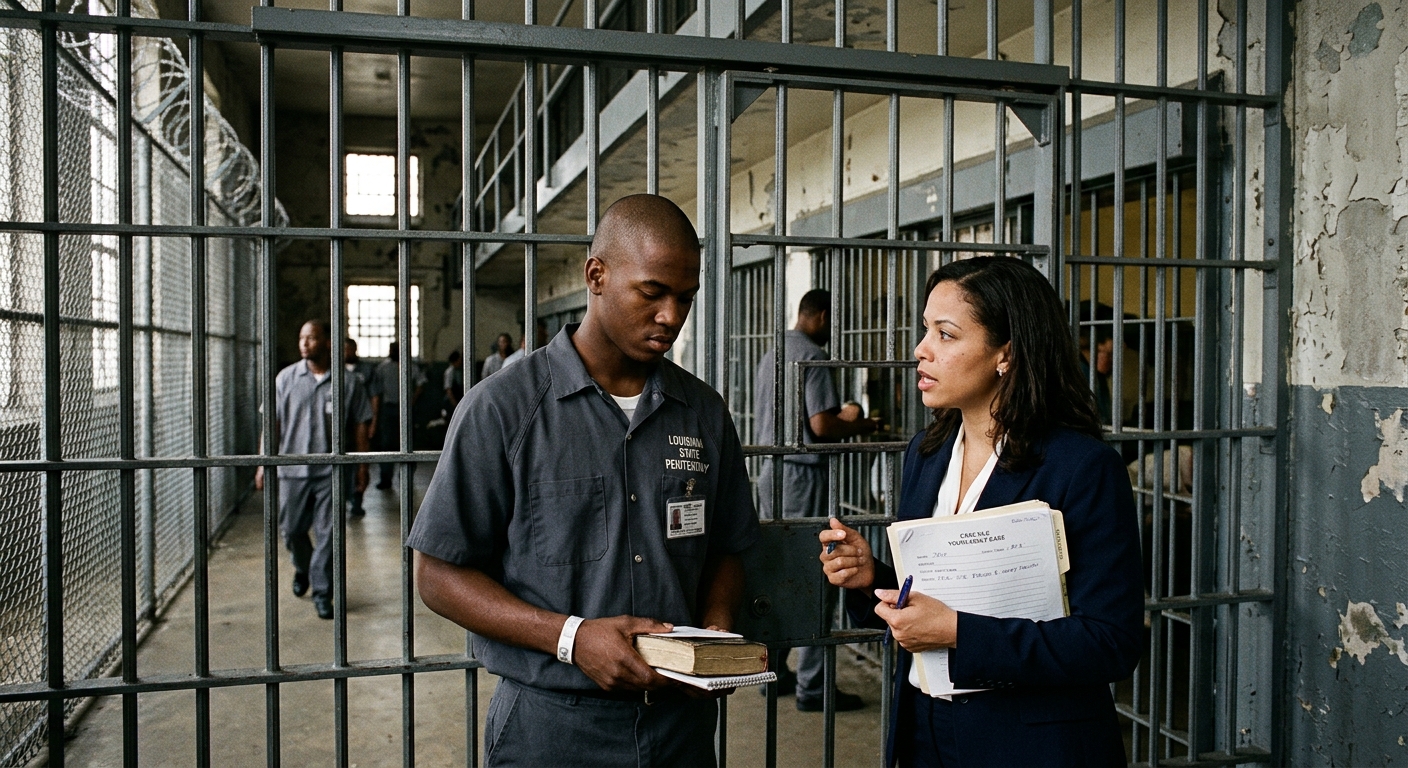
When the state announced its firm intention to temporarily house juvenile offenders at this specific facility, the decision sent massive shockwaves through the national human rights community. The youth, some as young as fourteen years old, were placed in a facility specifically designed for adults convicted of the state’s most serious and violent crimes. More alarmingly, these young individuals were quartered in a former death row block, an area originally constructed to securely hold individuals awaiting execution. This stark juxtaposition—children whose brains are still actively developing being locked inside the ultimate symbol of state-sanctioned mortality—highlighted a severe deviation from rehabilitative mandates. Critics fiercely argued that the sheer environment of Angola, steeped heavily in an atmosphere of perpetual punishment, fundamentally undermined any realistic potential for youth rehabilitation.
Unmasking the Conditions on Death Row
The daily realities for the youth transferred to Angola’s former death row wing were exceptionally stark and harrowing. Court filings and sworn testimonies from legal advocates revealed an environment utterly devoid of the specialized care, educational enrichment, and targeted behavioral therapy required for adolescents. Instead, the children were allegedly subjected to deeply punitive measures strongly reminiscent of the harshest adult maximum-security protocols.
Disturbing reports surfaced indicating that young detainees experienced prolonged periods of extreme solitary confinement, sometimes lasting for several consecutive days without relief. Under the administrative guise of “cell restriction,” youths were kept in small, isolated concrete cells for up to 23 hours a day. They were reportedly only allowed out briefly to shower, and even then, they frequently remained bound by heavy handcuffs and metal shackles. The aggressive use of mechanical restraints and chemical agents, such as pepper spray, became routine methods of behavioral control rather than strict emergency interventions reserved for immediate physical threats.
Furthermore, the physical conditions of the cells posed immediate threats to the children’s physiological well-being. During the sweltering Louisiana summer, when the state publicly declared extreme heat emergencies, the youths were confined in older units severely lacking adequate air conditioning or functional ventilation. Temperatures within the cells reportedly soared to dangerous, life-threatening levels. Concurrently, the state failed to provide the federally mandated educational curricula and specialized mental health services absolutely necessary for adolescent development. The complete deprivation of normalized social interaction, family contact, and cognitive stimulation created an environment that medical professionals and child advocates accurately described as a human rights catastrophe.
The Legal Pushback: Defending Constitutional Rights
The transfer of youth to Angola catalyzed swift legal action, culminating in a federal class-action lawsuit formally known as Alex A. v. Edwards. Spearheaded by civil rights organizations including the American Civil Liberties Union (ACLU), the Southern Poverty Law Center (SPLC), and the Fair Fight Initiative, the comprehensive lawsuit sought an immediate judicial injunction to entirely halt the transfers and forcibly remove the children from the adult facility.
The plaintiffs asserted that housing adolescents in an adult maximum-security prison under extraordinarily harsh conditions constituted cruel and unusual punishment, directly violating the Eighth Amendment. They also thoroughly outlined numerous violations of the Fourteenth Amendment, heavily emphasizing the state’s egregious failure to provide adequate due process, vital rehabilitative services, and proper educational programming. During multi-day emergency hearings in federal court, top legal teams presented compelling, data-driven evidence of the trauma inflicted upon the youth, detailing systemic administrative programming failures and an overarching, intensely oppressive punitive atmosphere.
The judiciary’s response was definitive. A federal district court judge delivered a scathing ruling, declaring unequivocally that the conditions of confinement at Angola were entirely untenable for children. The court determined that the state had broken virtually every promise it made regarding the care, continuing education, and physical safety of the transferred youth. The landmark ruling reinforced the core constitutional principle that the state holds an unyielding, mandatory obligation to protect the vulnerable wards in its custody, leading to a judicial mandate ordering the immediate removal of all youth from the Angola premises.
The Power of the Amicus Brief
In complex, high-stakes legal battles that carry profound societal and legislative implications, an amicus curiae—or “friend of the court”—brief serves as a pivotal instrument of systemic advocacy. These comprehensive documents are legally filed by entities who are not direct parties to a specific lawsuit but possess specialized expertise or a heavily vested interest in the legal outcome. In the direct context of the Angola controversy, a powerful amicus brief was submitted by a massive coalition of national child rights organizations, prominent legal scholars, and grassroots advocacy groups.
By joining the brief, these dedicated organizations aimed to provide the federal court with incontrovertible scientific, psychological, and sociological data explicitly demonstrating the irremediable harm caused by adult incarceration on early adolescent development. The brief efficiently synthesized decades of peer-reviewed scientific research spanning pediatric neurology, child psychology, and modern criminology. It meticulously outlined exactly how the punitive methods utilized at Angola fundamentally disrupt healthy neurodevelopment.
The central thesis of the amicus brief was completely unambiguous: adolescents are uniquely vulnerable to the traumas of harsh confinement precisely because their brains are still actively developing. Unlike fully matured adults, youths are highly susceptible to long-lasting psychological scarring when forcibly exposed to extreme daily stress, strict social isolation, and severe sensory deprivation. The organizations argued that placing children in a hyper-masculinized, highly dangerous adult prison environment completely forecloses any realistic possibility of rehabilitation, virtually guaranteeing future criminal recidivism and lifelong trauma.
Mental Health and the Risks of Adult Confinement
Perhaps the most alarming clinical evidence strongly presented by child advocates involved the staggering risk of severe mental health crises and self-harm associated directly with incarcerating youth in adult facilities. According to DOJ research, juveniles housed in adult facilities are significantly more likely to die by suicide compared to those securely placed in dedicated juvenile detention centers. This grim statistical reality underscored the absolute life-or-death urgency of the advocates’ legal demands.
A highly significant percentage of the children initially transferred to Angola already possessed documented, acute mental health needs prior to their arrival. The juvenile justice system frequently serves as the unfortunate default repository for marginalized youth who have completely fallen through the rapidly widening cracks of community public health infrastructures. Instead of receiving the crucial trauma-informed psychological care required to adequately address their underlying behavioral challenges, these children were thrust into an environment strictly characterized by pervasive fear, intimidation, and constant physical restraint.
Solitary confinement, a controversial practice strictly condemned by international human rights bodies when applied to minors, rapidly exacerbates anxiety, severe depression, and debilitating psychotic symptoms. For a rapidly developing adolescent mind, even a few short days of total physical isolation can trigger permanent neurological alterations. Advocates fiercely stressed that the state was not merely enforcing discipline; it was actively participating in the rapid destruction of the children’s core psychological foundations.
Systemic Inequities and the Impact on Black Youth
The Angola controversy cannot be analyzed without addressing the deep-seated racial inequities that permeate the American legal system. Statistical data consistently and overwhelmingly demonstrates that youth of color, particularly Black boys, are disproportionately targeted for the absolute harshest punitive measures available within both the juvenile and adult judicial frameworks. In Louisiana, this systemic disparity was remarkably and tragically pronounced.
Of the children transferred to the Angola death row unit, the overwhelming majority were Black youths. This stark demographic reality directly mirrors broader, troubling national trends where Black children are significantly more likely to be aggressively arrested, tried as adults, and subjected to extreme penal measures like solitary confinement compared to their white counterparts who commit similar baseline offenses. The complex intersection of race, extreme youth vulnerability, and the deeply painful historical legacy of the Angola site added a profound layer of systemic injustice to the unfolding statewide crisis.
Prominent civil rights leaders quickly pointed out the devastating irony of placing Black children in cages on the very same grounds where their direct ancestors were historically enslaved and subjected to brutal forced agricultural labor. The highly visible historical parallels drew fierce, widespread condemnation, ultimately framing the controversial youth transfers not just as a contemporary legal violation, but as a direct, highly visible continuation of historical systemic racial subjugation.
Frequently Asked Questions (FAQs)
What exactly is an amicus brief, and why is it important in juvenile justice cases?
An amicus brief, literally meaning “friend of the court,” is a formal legal document submitted by individuals or organizations not directly involved in a lawsuit but who possess relevant, highly specialized expertise. In juvenile justice cases, advocacy groups utilize these critical briefs to legally supply judges with vital scientific research regarding adolescent brain development and the severe psychological impacts of harsh incarceration, fundamentally shaping informed, humane legal rulings.
Why were children relocated to the Louisiana State Penitentiary (Angola) initially?
Louisiana state officials officially cited acute security concerns, including highly publicized violent incidents and sudden escapes at existing juvenile detention facilities, as the primary justification for the rapid transfer. The state publicly argued that relocating youths to Angola’s former death row unit was a strictly necessary, temporary measure to successfully ensure overall public safety, despite the adult facility entirely lacking the legally appropriate infrastructure for adolescent care.
How does solitary confinement affect developing adolescents differently than adult inmates?
Adolescent brains are still actively and rapidly developing, making them uniquely hyper-sensitive to severe social isolation and environmental deprivation. Solitary confinement can directly cause severe, long-lasting psychological damage in youths, exponentially increasing the distinct risks of severe anxiety, deep clinical depression, auditory hallucinations, and suicide at rates significantly higher than generally observed in adult prison populations.
Did the federal court ultimately rule in favor of the children?
Yes. A federal district court judge determined that the unusually harsh conditions at Angola definitively constituted cruel and unusual punishment. The federal court ruled that the state had egregiously failed to provide essential, constitutionally mandated educational and mental health services, directly leading to a strict judicial mandate that successfully ordered the immediate removal of all youth from the adult facility.
Conclusion
The highly controversial attempt to quickly incarcerate children within the bleak, concrete walls of Angola’s former death row unit represents a profoundly dark chapter in the modern history of American juvenile justice. It serves as a glaring, deeply troubling illustration of the catastrophic outcomes that inevitably arise when systemic administrative priorities heavily overshadow fundamental constitutional rights and rehabilitative duties. However, the robust, highly coordinated response from dedicated legal defense teams, significantly bolstered by comprehensive amicus briefs from prominent child rights organizations, provided a powerful, highly effective blueprint for legal accountability. By successfully securing the long-awaited removal of these vulnerable youths from an intolerably cruel environment, civil rights advocates have sent an unequivocal, resounding message nationwide. The fundamental humanity and constitutional protections of children remain strictly non-negotiable, and the collective, ongoing fight to comprehensively reform the juvenile justice system must persist with unyielding determination and focused resilience.
References
- ALEX A. v. EDWARDS — Southern Poverty Law Center. 2022-08-19. https://www.splcenter.org/seeking-justice/case-docket/alex-v-edwards
- Statement of Interest of the United States of America — U.S. Department of Justice. 2023-07-28. https://www.justice.gov/crt/case-document/file/1594921/download
- Judge Orders Louisiana to Remove Children from Angola Prison by September 15 — American Civil Liberties Union. 2023-09-08. https://www.aclu.org/press-releases/judge-orders-louisiana-to-remove-children-from-angola-prison-by-september-15
- Juveniles in Adult Prisons and Jails: A National Assessment — U.S. Department of Justice, Bureau of Justice Assistance. 2000-10-01. https://www.ojp.gov/pdffiles1/bja/182503.pdf (Justification: This is the authoritative, foundational government baseline establishing the exponentially higher suicide risk for youth housed in adult facilities).
Similar Articles








Read full bio of Sneha Tete


