
How Ballot Measures Secure Reproductive Rights
Voters in conservative states use direct democracy to protect bodily autonomy.
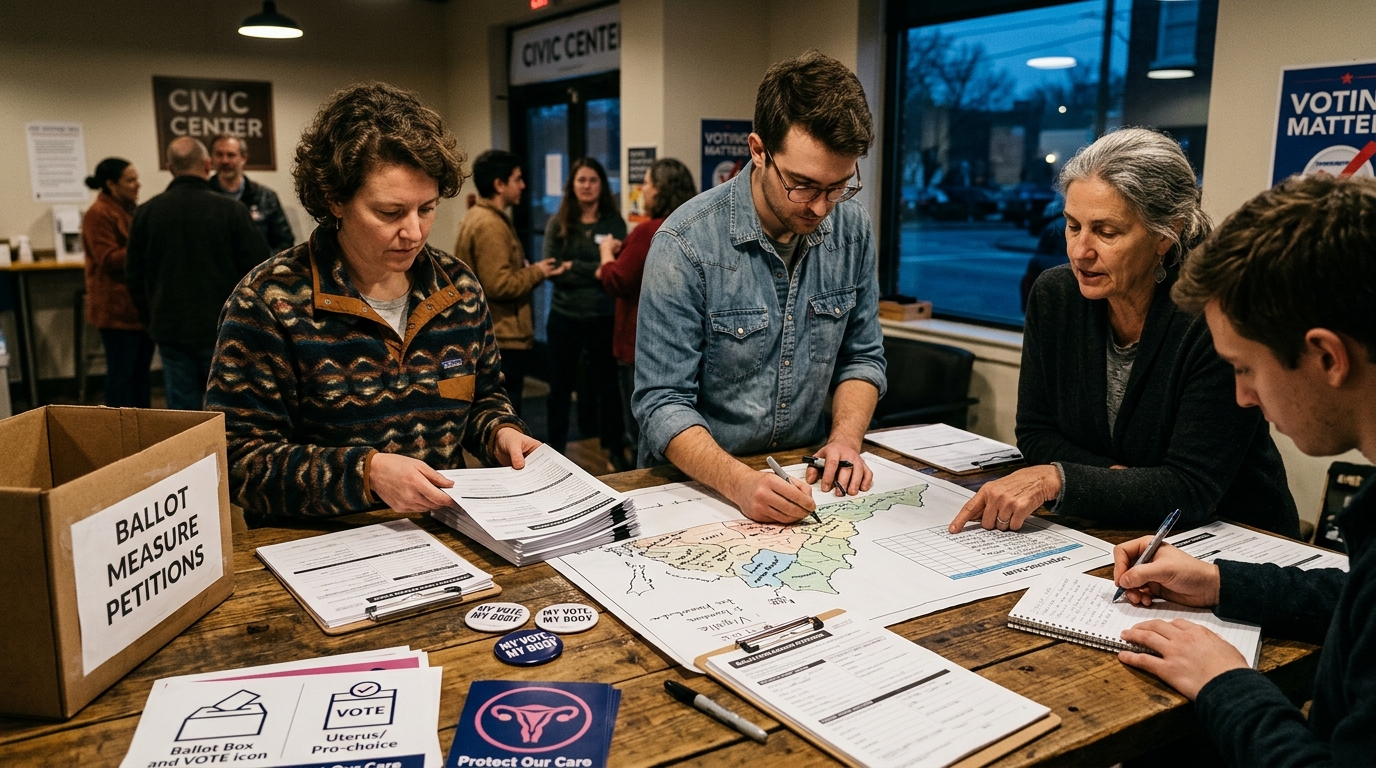
In the modern era of American politics, few issues have highlighted the stark divide between state legislatures and the general electorate quite like the battle over reproductive freedom. Following the monumental shift in federal constitutional law in 2022, the United States was fractured into a patchwork of competing healthcare regulations. In jurisdictions traditionally dominated by conservative politics, lawmakers moved swiftly to enact strict prohibitions on bodily autonomy. However, an unexpected counter-movement quickly emerged, fundamentally altering the political landscape. Rather than relying on traditional partisan elections or federal interventions, advocates and everyday voters turned to one of the most potent tools in the civic arsenal: the citizen-initiated ballot measure. By taking the question of reproductive rights directly to the voting public, coalitions in historically right-leaning states have successfully bypassed gridlocked and gerrymandered legislatures, enshrining healthcare protections directly into their state constitutions.
The Post-Dobbs Legislative Vacuum and the Rush to Restrict
To understand the sudden reliance on direct democracy, one must first examine the legal vacuum created in the summer of 2022. In June of that year, the United States Supreme Court delivered its ruling in Dobbs v. Jackson Women’s Health Organization, a decision that dismantled the nearly fifty-year-old federal protections for abortion access. The majority opinion explicitly overturned the landmark precedents of Roe v. Wade and Planned Parenthood v. Casey, concluding that the right to an abortion was not deeply rooted in the nation’s history or essential to its scheme of ordered liberty. This historic ruling immediately eliminated federal standards, meaning that the authority to regulate, limit, or outright ban the medical procedure was transferred entirely to individual state governments.
The immediate fallout was both swift and severe. Almost overnight, large swaths of the American South and Midwest became regions devoid of accessible reproductive healthcare. State legislatures with conservative supermajorities activated pre-existing trigger laws or convened special legislative sessions to pass near-total bans on the procedure. In many of these states, exceptions for the health of the pregnant individual were either incredibly narrow or non-existent. This rapid legislative crackdown created profound logistical hurdles, forcing patients to either travel hundreds of miles out of state to access clinics or attempt to secure medication abortion through complex, out-of-state telehealth networks. Furthermore, the restrictive climate led to widespread reports of clinicians leaving affected states due to the fear of criminalization, exacerbating an already dire shortage of healthcare providers in rural and marginalized communities.
The Mechanics of the Direct Democracy Strategy
Confronted by legislative bodies that were hostile to reproductive freedoms, advocates realized that traditional lobbying and candidate-based campaigning would not yield immediate results in heavily gerrymandered districts. Instead, they pivoted to the citizen-initiated ballot measure, a mechanism of direct democracy that allows citizens to propose new laws or constitutional amendments directly to the electorate, bypassing the legislature entirely.
The ballot measure strategy is incredibly demanding. It requires drafting precise legal language, navigating complex approval processes set by state attorneys general, and funding massive grassroots operations to collect hundreds of thousands of verified physical signatures from registered voters. However, the strategic benefits of this grueling process are unparalleled. When successful, these campaigns achieve several critical objectives:
- Bypassing Partisan Gridlock: Ballot measures isolate the single issue of reproductive access from broader party platforms, allowing voters who may identify as conservative or independent to vote in favor of bodily autonomy without having to vote for a Democratic candidate.
- Constitutional Permanence: Most of these initiatives aim to amend the state constitution rather than pass a statutory law. A constitutional amendment creates a durable legal safeguard that cannot be easily repealed or overridden by a simple legislative majority.
- Judicial Enforcement: Once enshrined in a state constitution, the amendment provides the legal foundation for civil rights organizations and healthcare providers to sue the state and force the judicial branch to strike down existing statutory bans.
Early Indicators: The Heartland Speaks Out
The initial evidence that partisan strategists had severely misjudged the popularity of reproductive rights emerged from some of the most conservative strongholds in the nation. In the immediate aftermath of the Dobbs decision, voters in Kansas overwhelmingly rejected a constitutional amendment that would have explicitly stated that the Kansas Constitution does not protect the right to an abortion. This victory in a deeply red state sent shockwaves through the political establishment, signaling that the desire for bodily autonomy transcended traditional partisan lines.
This early success was not an anomaly. Similar victories followed in states like Kentucky and Ohio. In Ohio, the battle over direct democracy was particularly contentious. Fearing that voters would approve a reproductive rights amendment in late 2023, Ohio lawmakers attempted to change the rules of the game mid-cycle. They placed a measure on a special August ballot that would have raised the threshold for passing future constitutional amendments from a simple majority to a 60 percent supermajority, while simultaneously increasing the geographic signature requirements. Ohio voters decisively rejected this attempt to dilute their democratic power, and subsequently passed the constitutional amendment protecting reproductive freedom by a comfortable margin just months later.
The 2024 Election Cycle: Victories, Defeats, and Supermajority Obstacles
The momentum generated by these early victories culminated in an unprecedented wave of direct democracy during the 2024 election cycle, where abortion access was on the ballot in ten different states. The results from this cycle highlighted both the undeniable power of the citizen initiative and the complex procedural hurdles that state governments can deploy to maintain the status quo.
Reversing Total Bans in the Midwest
One of the most striking victories occurred in Missouri, a state that had previously enacted a near-total ban on abortion, allowing exceptions only to avert the death of the pregnant person or to prevent a serious risk of substantial and irreversible physical impairment. In November 2024, Missouri voters approved Amendment 3, the Right to Reproductive Freedom Amendment. This measure successfully amended the state constitution to guarantee the right to an abortion up until fetal viability. The passage of Amendment 3 in a heavily conservative state served as a profound rebuke of the state legislature’s extreme restrictions and immediately paved the way for local healthcare providers, such as Planned Parenthood, to file lawsuits challenging the state’s total ban under the newly established constitutional protections.
The Florida Paradox and the 60 Percent Threshold
Despite widespread popular support, the direct democracy strategy is not invincible, primarily due to structural barriers built into certain state constitutions. The 2024 results in Florida perfectly illustrate this democratic paradox. Floridians voted on a constitutional amendment to protect reproductive rights, and the initiative received an impressive 57 percent approval rating from the voting public. In almost any other election, securing 57 percent of the vote would be considered a landslide victory. However, under Florida state law, a 60 percent supermajority is required to approve any constitutional amendment. Because the measure fell just three percentage points short of this steep threshold, it failed, and the state’s severe legislative restrictions remained in place.
The failure of the measure in Florida, along with similar defeats in South Dakota and Nebraska (where voters instead approved a competing measure to ban abortion after the first trimester), demonstrates that while direct democracy is a powerful tool, it is constrained by the very systems it seeks to bypass. The Florida outcome, in particular, has sparked ongoing debates about the fairness of supermajority requirements, as a clear majority of the electorate expressed a desire for reproductive freedom but was ultimately denied by procedural technicalities.
The Bipartisan Consensus on Bodily Autonomy
The success of these ballot measures in historically red states is not the result of a sudden ideological shift toward the political left, but rather an indication that reproductive rights enjoy a broad, bipartisan consensus that defies neat political categorization. Extensive public polling consistently reflects this reality. Two years after the Supreme Court’s decision to overturn the federal protections, surveys demonstrated that a vast majority of Americans believe reproductive healthcare should remain accessible. According to nationwide polling, 85 percent of Democrats and Democratic-leaning independents strongly believe abortion should be legal in all or most cases. More notably, a significant portion of Republican voters also share this sentiment; roughly 41 percent of Republicans and Republican-leaning independents support legal access to the procedure.
This cross-party appeal is the engine driving the success of state ballot initiatives. When the issue of bodily autonomy is decoupled from partisan candidates and presented directly to the electorate, conservative-leaning individuals who favor limited government intervention frequently vote to keep medical decisions between patients and their healthcare providers. As researchers and analysts noted during the 2024 elections, small but crucial shares of voters who cast their ballots for conservative presidential candidates simultaneously voted in favor of ballot measures protecting abortion access. This dynamic highlights a profound ideological separation between everyday voters, who prioritize personal liberty and medical privacy, and the elected officials who draft strict partisan legislation.
The Road Ahead: Implementation and Endless Legal Battles
While passing a constitutional amendment is a monumental achievement, it is rarely the final chapter in the fight for reproductive autonomy. The implementation phase often triggers a fresh wave of legal and political battles. Because citizen-initiated amendments rarely rewrite the entire state code automatically, existing statutory bans remain on the books until they are formally challenged and struck down by state courts. Consequently, state attorneys general and conservative legislative majorities frequently engage in protracted litigation to delay or limit the scope of the new constitutional protections.
Furthermore, the battle over the ballot box itself is ongoing. Anti-abortion groups and state lawmakers continue to strategize ways to reverse these democratic outcomes. For example, following the passage of the reproductive rights amendment in Missouri in 2024, political operatives immediately began organizing efforts to place a new, repealing measure on the 2026 ballot, forcing advocates to continually defend their hard-won constitutional victories. Similarly, in states where amendments failed by narrow margins, such as Florida, grassroots coalitions are actively assessing their organizational strategies, contemplating future campaigns to finally breach the supermajority thresholds required by law.
Frequently Asked Questions
What is a citizen-initiated ballot measure?
A citizen-initiated ballot measure is a process of direct democracy that allows citizens to draft a law or constitutional amendment, gather a legally required number of voter signatures, and place the proposal directly on the election ballot for the public to decide, entirely bypassing the state legislature.
Why did the Dobbs decision spark this wave of state ballot measures?
In 2022, the Supreme Court’s Dobbs decision eliminated the federal constitutional right to an abortion, transferring the power to regulate the procedure back to individual states. Because many state legislatures immediately passed strict bans, advocates turned to state constitutional amendments to overrule lawmakers and permanently secure healthcare access.
How can an amendment fail if a majority of voters support it?
While a simple majority is enough to pass laws in many jurisdictions, several states, including Florida, require a supermajority (such as 60 percent) to amend their state constitutions. Thus, an initiative can receive 57 percent of the popular vote and still legally fail.
Do conservative voters support these reproductive rights measures?
Yes, polling and election results indicate strong cross-party appeal. A significant percentage of voters who identify as Republican or independent frequently support these initiatives, viewing bodily autonomy and medical privacy as matters of personal liberty rather than strict partisan politics.
Conclusion
The post-Roe landscape has fundamentally redefined how citizens interact with their state constitutions. In the face of intense legislative pushback, the strategic use of direct democracy has proven to be a vital defense mechanism for reproductive rights, allowing voters to assert their political will and correct legislative overreach. While significant obstacles remain, including supermajority requirements and ongoing legal challenges, the repeated success of these citizen-led initiatives in historically conservative states underscores a powerful democratic reality: when given the direct choice, a diverse, bipartisan majority of the American public consistently votes to protect personal liberty, medical privacy, and bodily autonomy.
References
- What are the Implications of the Dobbs Ruling for Racial Disparities? — KFF. 2024-04-24. https://www.kff.org/racial-equity-and-health-policy/issue-brief/what-are-the-implications-of-the-dobbs-ruling-for-racial-disparities/
- 19-1392 Dobbs v. Jackson Women’s Health Organization (06/24/2022) — Supreme Court of the United States. 2022-06-24. https://www.supremecourt.gov/opinions/21pdf/19-1392_6j37.pdf
- Broad Public Support for Legal Abortion Persists 2 Years After Dobbs — Pew Research Center. 2024-05-13. https://www.pewresearch.org/religion/2024/05/13/broad-public-support-for-legal-abortion-persists-2-years-after-dobbs/
- The Role Health Care Issues Played in the 2024 Election: An Analysis of AP VoteCast — KFF. 2024-11-25. https://www.kff.org/politics-and-health-policy/issue-brief/the-role-health-care-issues-played-in-the-2024-election-an-analysis-of-ap-votecast/
- Abortion on the 2026 Ballot: The Evolving Landscape of State Abortion Initiatives — KFF. 2026-03-17. https://www.kff.org/womens-health-policy/issue-brief/abortion-on-the-2026-ballot-the-evolving-landscape-of-state-abortion-initiatives/
- The Opportunities and Realities of Citizen-Initiated State Ballot Abortion Measures — KFF. 2024-10-16. https://www.kff.org/womens-health-policy/issue-brief/the-opportunities-and-realities-of-citizen-initiated-state-ballot-abortion-measures/
Similar Articles








Read full bio of medha deb


