
The Hidden Struggles of Mixed-Status Families in the US
Exploring the legal and emotional hurdles of mixed-status families.
Introduction: A Fractured Dream
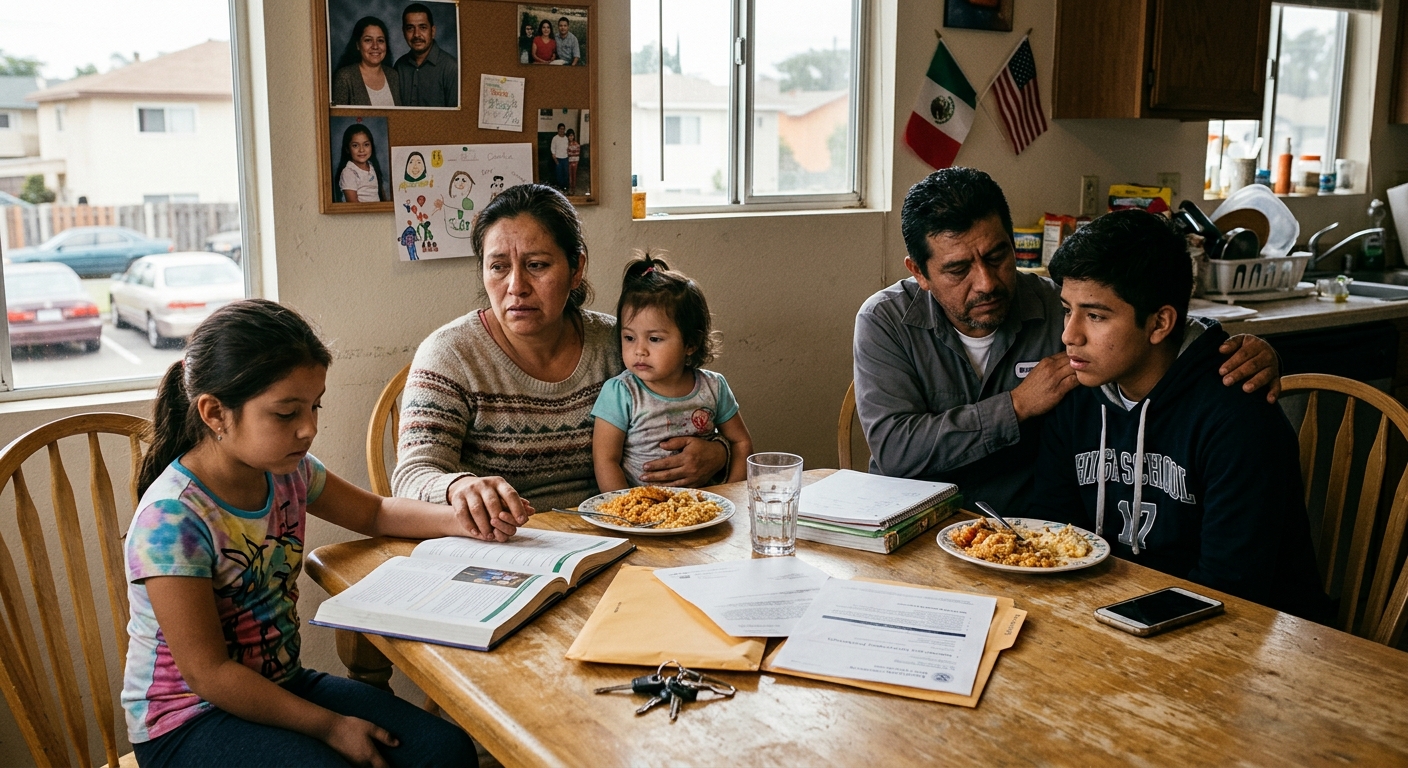
The traditional concept of the American Dream often evokes images of homeownership, raising a family in safety, and the liberty to pursue happiness without undue governmental interference. However, for a substantial and growing segment of the population, this foundational dream is persistently overshadowed by the looming threat of family separation. In the United States today, millions of families navigate a complex and highly precarious reality known as a “mixed-status” household. In these homes, some family members are U.S. citizens or lawful permanent residents, while others remain undocumented. The emotional, legal, and economic burdens placed upon these families expose the profound contradictions within the current U.S. immigration system.
Despite possessing deeply rooted lives, strong community ties, and an unwavering commitment to the nation they call home, these households are frequently subjected to a state of perpetual limbo. The struggles they endure illuminate the urgent need for a more humane and pragmatic approach to immigration policy—one that prioritizes family unity and recognizes the intrinsic value of every individual’s contribution to society. When families are forced to live in the shadows, the collateral damage extends far beyond the individuals directly involved; it impacts the social fabric and economic vitality of communities nationwide.
Understanding the Complexities of Mixed-Status Households
A mixed-status family is broadly defined as a household in which members hold different citizenship or immigration statuses. Most commonly, this involves a U.S. citizen married to an undocumented immigrant, often raising children who are U.S. citizens by birthright. According to data and research compiled by the Migration Policy Institute, millions of individuals in the United States reside in such households, weaving an intricate tapestry of legal and social vulnerabilities . The stark disparity in legal standing within the exact same family unit creates a chaotic dynamic where fundamental rights and protections apply unevenly.
The citizen spouse theoretically enjoys the full spectrum of constitutional protections, while the undocumented spouse remains entirely vulnerable to sudden detention, removal proceedings, and deportation. This glaring contrast breeds an environment of constant vigilance and fear, effectively rendering the citizen spouse a collateral victim of an inflexible legal framework. The presumption that U.S. citizenship provides an impenetrable shield for one’s immediate family is a fallacy that many discover only when they are deeply entangled in a legal labyrinth. The systemic instability that mixed-status families face is not a private, isolated issue but a widespread societal challenge that affects neighborhoods, schools, and local economies across the nation.
The Historical Context of Current Immigration Laws
To truly understand the predicament of mixed-status families, one must examine the historical origins of the laws that currently govern them. The stringent penalties that plague undocumented spouses today—specifically the mandatory 3- and 10-year bars to reentry—were born out of the Illegal Immigration Reform and Immigrant Responsibility Act (IIRIRA) passed in 1996. Enacted during an era characterized by intense political rhetoric surrounding border security, IIRIRA fundamentally altered the landscape of American immigration enforcement.
Prior to its passage, immigration judges possessed broader discretionary power to halt deportations and grant legal status to undocumented individuals who could demonstrate strong ties to the United States and good moral character. The 1996 legislation stripped away much of this judicial discretion, implementing rigid, one-size-fits-all punishments that failed to account for the nuanced realities of human lives. By mandating prolonged exile for those who had lived in the U.S. without authorization, policymakers sought to deter illegal immigration. However, decades of data and human experience have demonstrated that these punitive measures do not successfully deter migration; rather, they trap millions of deeply embedded community members in a permanent underclass. The enduring legacy of IIRIRA is a bureaucratic machine that penalizes U.S. citizens just as heavily as it does undocumented immigrants, tearing apart families that have spent decades contributing to the social and economic fabric of the country.
The Pervasive Myth of the “Marriage Fix”
One of the most enduring misconceptions in the public discourse surrounding immigration is the belief that simply marrying a U.S. citizen automatically grants an undocumented individual legal status and a clear pathway to citizenship. This “marriage fix” myth is fundamentally flawed and ignores the draconian penalties embedded in the Immigration and Nationality Act. Under current law, an undocumented immigrant who entered the United States without inspection (for example, by crossing the border undetected) cannot simply adjust their status to a lawful permanent resident from within the country, even if they marry a native-born citizen.
Instead, they are legally required to leave the United States and apply for an immigrant visa at a U.S. consulate in their country of origin. However, leaving the country triggers the aforementioned reentry bars. According to U.S. Citizenship and Immigration Services (USCIS), individuals who have accrued more than 180 days but less than one year of unlawful presence are barred from re-entering the U.S. for three years, while those who have accrued a year or more face an unforgiving ten-year ban . To overcome this devastating penalty, the immigrant must apply for an I-601A Provisional Unlawful Presence Waiver before departing. This waiver requires the applicant to prove that their U.S. citizen spouse or parent would suffer “extreme hardship” if the waiver were not granted.
Demonstrating extreme hardship is an extraordinarily high legal hurdle that goes well beyond the standard emotional and financial difficulties inherently associated with family separation. Even if the waiver is miraculously approved, the immigrant must still depart the U.S. for their consular interview, running the terrifying risk that a consulate officer might uncover another ground of inadmissibility, effectively stranding them abroad indefinitely. Consequently, many undocumented spouses and their citizen partners choose to remain in the shadows rather than gamble their family’s entire future on a precarious and protracted legal process.
The Unseen Psychological Trauma on Citizens and Immigrants
The psychological toll of living under the constant threat of deportation is nearly immeasurable. For the undocumented spouse, every routine activity—driving to work, dropping children off at school, or interacting with local authorities—carries the immediate risk of an encounter with immigration enforcement. This chronic hyper-vigilance leads to elevated levels of anxiety, clinical depression, and toxic stress. The trauma, however, is not confined exclusively to the undocumented individual; it heavily impacts the U.S. citizen spouse and children as well, eroding their mental health and daily well-being.
Citizen spouses often describe their lives as being lived “on the edge of a cliff.” The fundamental American right to the pursuit of happiness is severely compromised when one is forced to live in constant dread of losing their life partner to sudden governmental removal. Telephone calls that go unanswered for a few minutes can trigger severe panic attacks, as the immediate assumption is often the worst-case scenario. For the children growing up in these households, the developmental impacts are profound and lasting. The chronic fear of coming home from school to find a parent missing fundamentally alters a child’s sense of security and trust in societal institutions. This pervasive anxiety can manifest in serious behavioral issues, declining academic performance, and long-term mental health challenges, effectively penalizing an entire generation of American children for the unresolved legal status of their parents.
Economic Ripple Effects and the Cost of Exclusion
Beyond the emotional and legal struggles, the precarious situation of mixed-status families has significant, far-reaching economic implications. Undocumented immigrants are deeply and inextricably embedded in the American workforce, contributing substantially to vital industries, including agriculture, construction, hospitality, and manufacturing. According to extensive research from the American Immigration Council, undocumented immigrants collectively contribute billions of dollars in federal, state, and local taxes annually, while holding massive spending power that stimulates local economies . To facilitate this, the Internal Revenue Service (IRS) issues Individual Taxpayer Identification Numbers (ITINs) specifically so that individuals without Social Security numbers can comply with U.S. tax laws and pay their taxes responsibly .
When an undocumented spouse is deported or forced entirely into the shadows, the economic stability of the entire household collapses. The U.S. citizen spouse often faces an abrupt and unmanageable transition to a single-income household, which can lead directly to housing instability, reliance on public assistance, and overwhelming debt. Furthermore, many mixed-status couples operate as small business owners. The removal of a key partner not only devastates the family’s livelihood but also results in immediate job losses for their employees and a sharp reduction in local economic activity.
Moreover, the systemic exclusion of undocumented spouses from legal employment channels forces many into the informal economy, where they are uniquely vulnerable to exploitation and wage theft. When workers cannot assert their basic labor rights without the paralyzing fear of deportation, it depresses wages and working conditions for everyone, including U.S. citizens in those same industries. Conversely, providing a stable, recognized pathway to legal status would allow these individuals to fully participate in the formal economy. They could pursue higher education, obtain professional licenses, and start businesses that hire American workers. The economic potential that is currently squandered by punitive immigration laws is staggering.
Contingency Plans: The Hard Choices of Exile
Driven by the terrifying prospect of sudden, involuntary separation, many mixed-status families are forced to make agonizing contingency plans. The realization that their own government provides no reliable mechanism to keep their family together compels some U.S. citizens to prepare for the unthinkable: leaving the United States entirely. Some families painstakingly invest their limited savings in building homes or securing livelihoods in the undocumented spouse’s country of origin, creating a painful safety net in case deportation becomes a sudden reality.
This phenomenon effectively results in the “de facto” exile of U.S. citizens. To honor their marriage vows and keep their families intact, American citizens are forced to abandon their homeland, their extended families, their carefully built careers, and the communities they have helped cultivate. The heartbreaking irony of this situation highlights a severe contradiction in national values: a country that prides itself on family values and constitutional rights simultaneously enacts policies that force its own citizens into exile simply for loving someone born across a geopolitical border. Relocating to a foreign country often involves navigating significant safety concerns, profound language barriers, and a drastically lower standard of living. Yet, families willingly shoulder these massive burdens rather than endure permanent, forced separation.
The Call for Legislative Reform and Community Organizing
In response to these systemic injustices, mixed-status families and their diverse allies are increasingly turning to grassroots organizing and vocal advocacy. The refusal to passively accept a fractured legal system has birthed a resilient, nationwide movement demanding comprehensive immigration reform. Advocates strongly emphasize that the United States cannot continue to rely on punitive immigration policies that were drafted decades ago and utterly fail to reflect the modern realities of globalization, economic interdependence, and demographic integration.
The ongoing fight for reform centers on creating accessible, humane, and pragmatic pathways to legal status and citizenship for individuals who have clearly demonstrated a long-term commitment to the United States. Proposed legislative solutions often include eliminating or significantly modifying the draconian 3- and 10-year bars, expanding eligibility for humanitarian visas, and ensuring that a legitimate marriage to a U.S. citizen provides a direct, secure route to legal residency without the prohibitive requirement of perilous international travel. True justice requires aligning immigration laws with the nation’s purported commitment to family unity, human dignity, and civil rights. Until such meaningful reforms are realized, mixed-status families will continue to organize, lobby lawmakers, and bravely share their stories—refusing to abandon the country they love or the families they have painstakingly built together.
Frequently Asked Questions (FAQs)
- What exactly is a mixed-status family?
A mixed-status family is a household where family members hold different citizenship or immigration statuses. For example, it frequently includes parents who are undocumented immigrants and children who are U.S. citizens by birth, or a U.S. citizen who is legally married to an undocumented partner. - Why can’t an undocumented immigrant just get a green card if they marry a U.S. citizen?
If an individual entered the United States without inspection (e.g., crossing the border without an authorized visa), current immigration law typically requires them to leave the U.S. and apply for a visa at a consulate abroad. However, leaving the U.S. after living there unlawfully for more than six months triggers an automatic 3- or 10-year bar from returning, creating a massive risk of prolonged or permanent family separation. - What is an I-601A Provisional Waiver?
The I-601A Provisional Unlawful Presence Waiver is an official application submitted to USCIS that allows certain undocumented relatives of U.S. citizens to request a waiver for their unlawful presence before they depart the U.S. for their necessary consular interview. To be approved, the applicant must definitively prove that their U.S. citizen relative would suffer “extreme hardship” if they were not allowed to return. - How does the fear of deportation affect U.S. citizen children?
The constant, looming threat of a parent’s sudden deportation can cause severe psychological distress in developing children, leading directly to anxiety, depression, behavioral issues, and academic struggles. The fear of family separation fundamentally undermines a child’s foundational sense of safety and security. - Do undocumented immigrants pay taxes?
Yes. Undocumented immigrants contribute billions of dollars annually to federal, state, and local taxes. Many meticulously pay their taxes using an Individual Taxpayer Identification Number (ITIN) issued by the IRS specifically for those who do not qualify for a Social Security Number.
References
- Changing Origins, Rising Numbers: Unauthorized Immigrants in the United States — Migration Policy Institute. 2024. https://www.migrationpolicy.org/research/changing-origins-unauthorized-immigrants
- Provisional Unlawful Presence Waivers — U.S. Citizenship and Immigration Services (USCIS). 2024-04-01. https://www.uscis.gov/family/family-of-us-citizens/provisional-unlawful-presence-waivers
- How Undocumented Immigrants Contribute to the Economy by Country of Origin — American Immigration Council. 2021-03-08. https://www.americanimmigrationcouncil.org/research/how-undocumented-immigrants-contribute-economy-country-origin
- Individual Taxpayer Identification Number — Internal Revenue Service (IRS). 2024. https://www.irs.gov/individuals/individual-taxpayer-identification-number
Similar Articles








Read full bio of Sneha Tete


