
Turning Lemons Into Legislation: Youth Philanthropy
Grassroots youth fundraising fuels systemic change for vulnerable children.
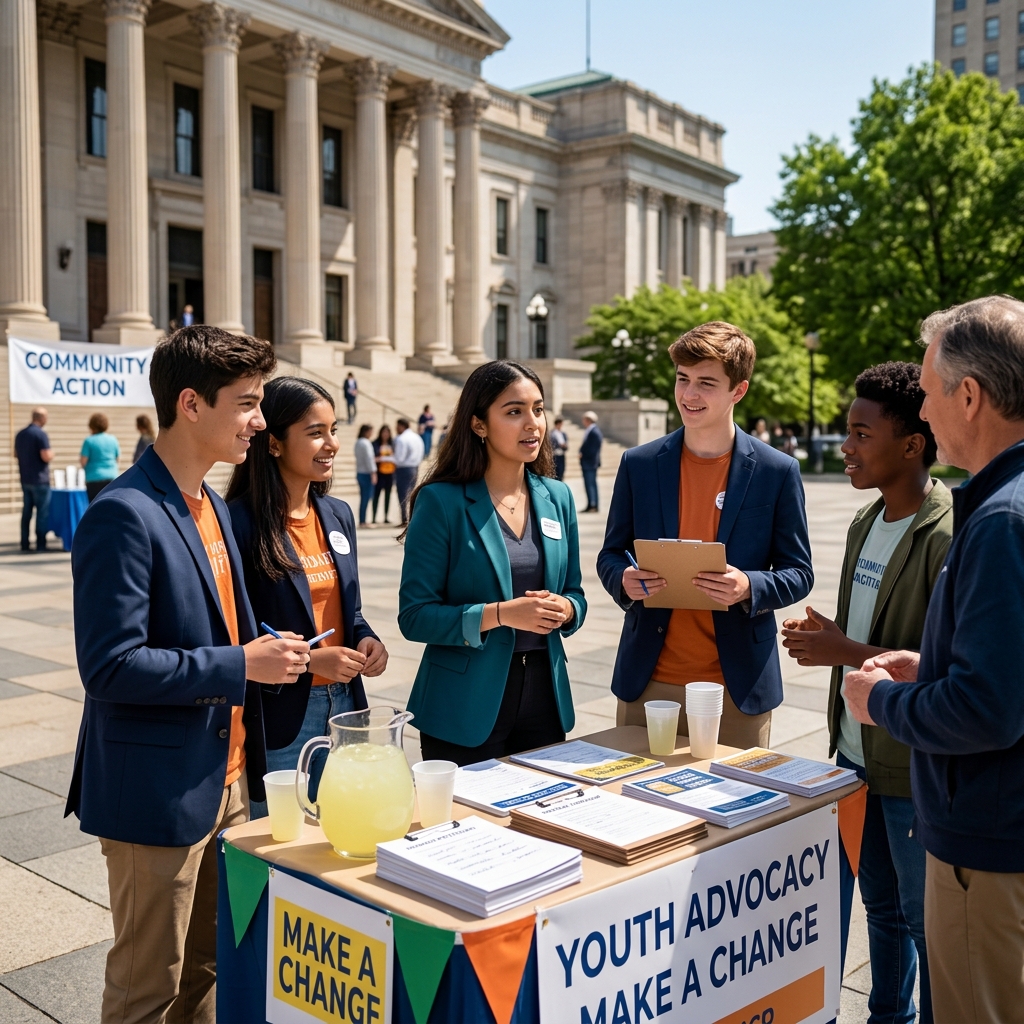
The Humble Lemonade Stand as a Catalyst for Change
The classic neighborhood lemonade stand is a hallmark of childhood. For generations, mixing water, sugar, and lemon juice has served as a young person’s first foray into business, teaching basic mathematics, responsibility, and customer service. However, in recent years, this simple sidewalk staple has evolved into something far more profound: a powerful catalyst for grassroots fundraising and youth philanthropy. When children dedicate their earnings to benefit organizations that fight for children’s rights, they transform a charming summer activity into a formidable engine for social justice.
This article explores the deep, lasting impact of youth-led fundraising efforts on child welfare advocacy. By examining how small-scale, community-based initiatives generate both essential funding and vital awareness, we can better understand the critical intersection of early civic engagement and systemic change. When young people take action for vulnerable peers, they do more than pour drinks; they build a foundation of lifelong empathy, support crucial legal and policy reforms, and demonstrate that no one is too young to make a meaningful difference in the lives of others.
The Growing Wave of Youth Philanthropy
Youth philanthropy represents a paradigm shift in how we approach charitable giving. Rather than viewing children merely as future donors, modern philanthropic models recognize them as active, capable participants in today’s social causes. This evolution is backed by developmental psychology and real-world data, highlighting the immense benefits of engaging youth in community service, activism, and grantmaking.
According to research by the Sillerman Center for the Advancement of Philanthropy at Brandeis University, youth grantmaking and philanthropic programs are essential for making the broader field of charitable giving more inclusive. When young people are given the agency to raise and direct funds, they develop robust leadership skills, critical thinking abilities, and a profound sense of belonging within their communities . Furthermore, longitudinal data from the Indiana University Lilly Family School of Philanthropy suggests that youth exposed to philanthropic activities during their formative years are significantly more likely to continue volunteering and donating at above-average rates well into adulthood .
It is easy to underestimate the financial weight of these youth initiatives, but collectively, they represent a substantial contribution to the nonprofit sector. A purpose-driven lemonade stand serves as a perfect microcosm of this larger trend. It requires planning, marketing, and the articulation of a mission. As children explain their cause to neighbors stopping for a cup of lemonade, they are actively participating in peer-to-peer education, breaking down complex social issues into relatable, community-focused dialogues.
Understanding Child Welfare and the Need for Advocacy
To fully grasp the importance of these grassroots efforts, one must understand the sheer scale of the challenges facing the child welfare system. Organizations dedicated to children’s rights work tirelessly to protect vulnerable youth from abuse, neglect, and systemic failures. These entities rely heavily on both major institutional grants and grassroots donations to fund their legal battles, policy advocacy, and direct support services.
The statistics surrounding youth in need are sobering. The U.S. Department of Health and Human Services’ Administration for Children and Families reports that there are over 365,000 children and youth in the foster care system at any given time. Alarmingly, approximately 18,500 of these young people emancipate—or “age out”—of the system each year without finding a permanent, supportive family structure . These youths face exponentially higher risks of homelessness, unemployment, and lack of access to higher education or mental health care.
Child advocacy organizations step into this massive breach. They hold governmental bodies accountable, push for necessary legislative reforms in child protective services, and fight for the constitutional rights of institutionalized youth. However, systemic legal action and policy reform are notoriously expensive and protracted endeavors. Government funding is often restricted or tied to specific operational parameters, meaning that nonprofits require flexible, unrestricted funding from private donors and grassroots campaigns to remain nimble. Every dollar raised on a suburban sidewalk contributes to the critical unrestricted revenue pools that allow these advocacy groups to function independently, aggressively, and effectively on behalf of society’s most vulnerable members.
The Tangible Impact of Micro-Donations and Grassroots Campaigns
In the realm of institutional philanthropy, a fifty-dollar donation from a neighborhood fundraiser might seem statistically insignificant to a multi-million-dollar charity. Yet, grassroots fundraising operates on a different, equally vital frequency. The impact of micro-donations extends far beyond the immediate financial transaction, creating a ripple effect of community awareness and sustained organizational resilience.
First and foremost, grassroots campaigns diversify a nonprofit’s donor base. Relying exclusively on large corporate grants or a handful of major benefactors can leave organizations incredibly vulnerable to shifting economic tides. A broad, decentralized network of small-dollar donors provides a stable, resilient financial foundation that weathers economic downturns more effectively.
Moreover, the awareness generated by localized fundraising is an invaluable asset that money cannot buy. When a child sets up a stand with a brightly colored sign reading, “Proceeds Support Foster Youth,” they are introducing the topic of child welfare to neighbors who may have never considered the issue. This localized visibility destigmatizes conversations around foster care and systemic inequality. The neighbor who stops for a one-dollar glass of lemonade today might become an advocacy volunteer, a foster parent, or a recurring monthly donor tomorrow, inspired entirely by a child’s dedication. In this way, grassroots campaigns serve as primary lead-generators for broader community involvement, transforming passive bystanders into active participants in the fight for children’s rights.
Turning a Neighborhood Activity into a Purpose-Driven Campaign
For parents, guardians, and educators looking to channel a child’s entrepreneurial spirit into social good, organizing an advocacy-driven fundraiser requires intentionality. Transitioning from a standard lemonade stand to a meaningful philanthropic event involves several key steps that prioritize education and community impact alongside the fun of the activity itself.
- Connecting to the Cause: Before the first lemon is squeezed or the ice is poured, sit down with the child to discuss the chosen organization. Use age-appropriate language to explain what the nonprofit does. For example, instead of delving into complex legal statutes, explain that the organization “helps kids who need safe homes find the support and care they deserve.”
- Digital Integration: In an increasingly cashless society, relying solely on a jar of quarters is inefficient. Parents can help by setting up a dedicated online fundraising page or providing a printed QR code at the stand that links directly to the charity’s donation portal. This also allows for larger digital donations from neighbors who don’t carry physical cash.
- Corporate Matching: Many modern employers offer matching gift programs. Parents can pledge to match the child’s earnings and submit the total to their corporate matching program, effectively doubling or tripling the grassroots impact with a few clicks.
- Creating Educational Signage: Encourage children to design posters that not only advertise the lemonade but also share one or two simple, readable facts about the cause. This empowers the child to act as a frontline ambassador for the organization.
To illustrate the shift in approach and execution, consider the following comparison between standard activities and advocacy-oriented efforts:
| Feature | Traditional Stand | Advocacy-Driven Stand |
|---|---|---|
| Primary Goal | Personal pocket money or entertainment. | Raising funds and awareness for a specific cause. |
| Signage | “Ice Cold Lemonade 50¢” | “Lemonade for Children’s Rights: Help Kids in Need!” |
| Customer Interaction | Basic transaction (payment for a drink). | Educational exchange (child explains why they are raising money). |
| Payment Methods | Cash only in a jar. | Cash, scannable QR codes, and links to direct donation pages. |
Fostering a Lifelong Commitment to Social Justice
The true success of a youth-led fundraising event is not measured by the final tally in the donation jar, but by the lasting impression left on the young organizers. The experience of working hard, articulating a message, and contributing to a larger movement instills a deep, unshakable sense of civic responsibility.
To foster a lifelong commitment to social justice, caregivers must ensure that the conversation does not end when the lemonade stand is dismantled and packed away. Celebrate the achievement, but also continue to engage the child in age-appropriate discussions about equity, privilege, and ongoing community needs. Follow up with the chosen charity together; many organizations are thrilled to send a thank-you note, a personalized email, or a small certificate of appreciation to young fundraisers. Seeing the tangible acknowledgment of their hard work reinforces the child’s belief that their actions matter on a larger scale.
Ultimately, by supporting children in these grassroots endeavors, we are raising a generation of empathetic leaders. We are teaching them that while systemic problems like child welfare disparities are vast and complex, the solutions can begin with actions as simple, accessible, and community-oriented as pouring a cup of lemonade on a sunny afternoon.
Frequently Asked Questions (FAQs)
At what age should I introduce my child to philanthropy?
Children as young as three or four can begin to grasp basic concepts of sharing and helping others. By ages six to eight, they can actively participate in organizing small community fundraisers like a lemonade stand, bake sale, or car wash, provided the cause is explained in simple, relatable terms.
How do we choose the right charity or advocacy group to support?
Involve the child directly in the selection process to ensure their buy-in. Provide them with two or three vetted, highly-rated organizations that focus on issues they naturally care about (such as children in foster care, animal rescue, or local food banks). Ensure the organization is transparent about how funds are used and has a history of meaningful, measurable impact.
Are there legal regulations for charity lemonade stands?
Regulations vary significantly by municipality. Some areas have recently passed legislation explicitly protecting the rights of children to operate small, temporary stands without a health or business permit. However, it is always best to quickly check your local city or county ordinances regarding temporary food sales, especially when operating in public parks or outside of private residential property.
Can grassroots fundraisers effectively raise money for legal advocacy organizations?
Absolutely. While many people associate charity with direct tangible services (like buying food or clothing), donating to legal advocacy groups is incredibly impactful. These organizations use unrestricted funds to fight for systemic, legislative changes that can improve the lives of thousands of children simultaneously.
References
- Why Youth Philanthropy Matters — The Sillerman Center for the Advancement of Philanthropy, Brandeis University. 2021. https://sillermancenter.brandeis.edu/
- Indiana Philanthropy Alliance: Youth Council Alumni Survey — Indiana University Lilly Family School of Philanthropy. 2021. https://scholarworks.iupui.edu/
- National Foster Care Month Statistics — Child Welfare Information Gateway, U.S. Department of Health and Human Services. 2024. https://www.childwelfare.gov/
Similar Articles








Read full bio of medha deb


