
Youth Activism: Passing the Ultimate Civic Test
How today's youth are radically transforming civic engagement and rights.
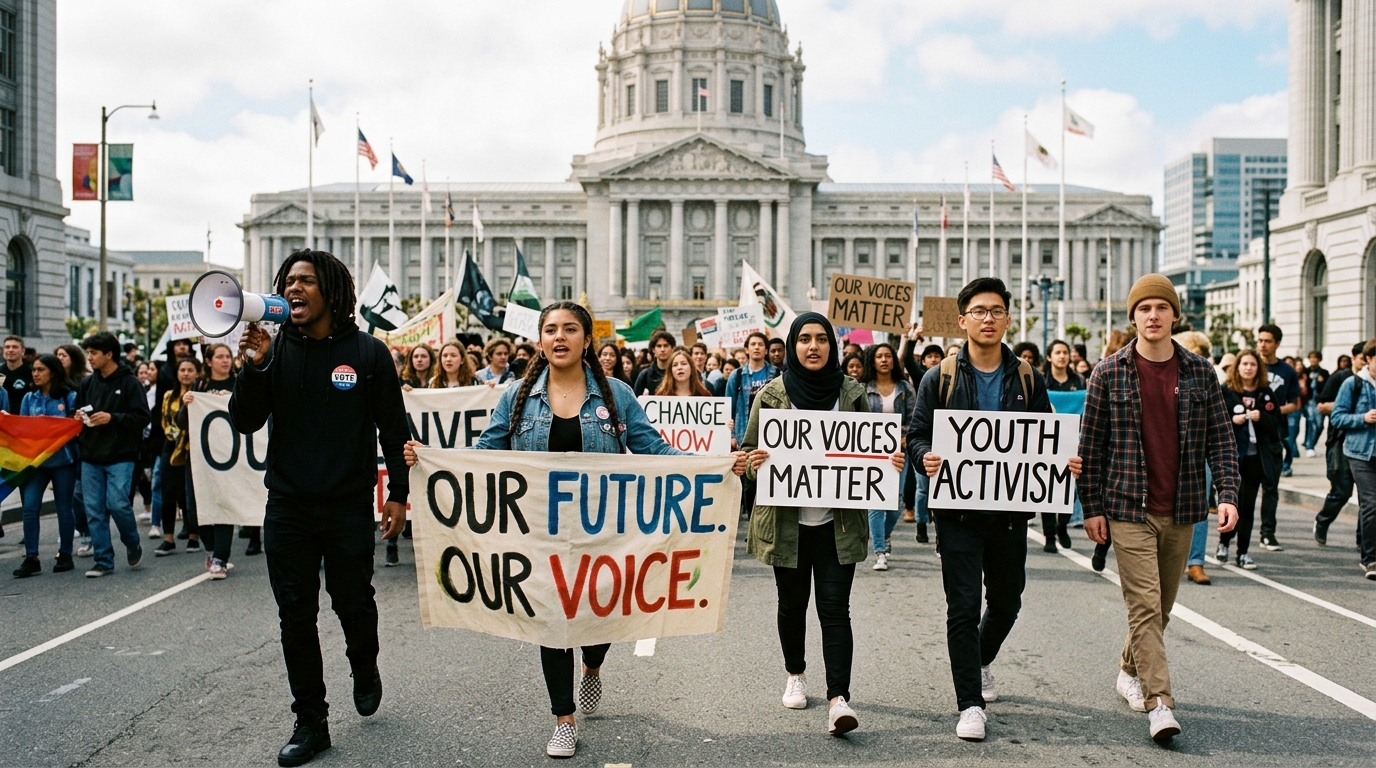
The Myth of Political Apathy
For generations, a persistent myth has circulated suggesting that the young are profoundly disconnected from the political and legal realities of their time. Society has frequently looked at adolescents and young adults through a lens of skepticism, assuming that the nuanced complexities of constitutional law, systemic equality, and human rights were concepts far beyond their immediate concern. However, the reality unfolding across the nation today paints a radically different, highly encouraging picture. If society were to suddenly administer a comprehensive examination on fundamental human rights and democratic responsibilities, today’s young advocates would undoubtedly set the highest curve.
We are witnessing a transformative era where civil liberties have evolved past being mere abstract legal theories debated exclusively within the walls of appellate courts. For the modern youth demographic, these foundational rights are lived, daily realities. They are deeply intertwined with their personal identities, their local communities, and their visions for a sustainable future. Young people are proactively stepping up to the challenge, deliberately equipping themselves with the robust knowledge and the relentless audacity required to navigate and conquer the civil liberties battles of both today and tomorrow. By rejecting the comforts of apathy, they are demonstrating that their energy and youth are their most formidable assets in the perpetual struggle for equitable human rights.
This ongoing “quiz” on societal freedom is not a fictional or hypothetical scenario. It is an urgent, daily test administered by shifting judicial landscapes, rapid legislative changes, and intense cultural debates. Whether the topic is climate justice, digital privacy, bodily autonomy, or anti-discrimination protections, young advocates display an exceptional, granular grasp of the world they inherit. They possess an inherent, sharply honed understanding that liberty is never a static, guaranteed inheritance. Instead, it is a fragile ecosystem requiring constant vigilance, fierce protection, and a willingness to question authority at every turn.
The Modern Civic Landscape: Beyond the Classroom
To accurately comprehend why today’s youth are uniquely adept at navigating the treacherous waters of civil liberties, one must examine the specific environment that shaped their worldview. This is the first generation to mature entirely within a digital, hyper-connected era where information—both empowering and deeply alarming—is universally accessible. Unlike previous cohorts whose civic perspectives might have been constrained by localized news cycles or geographical boundaries, Generation Z and younger Millennials have grown up with a front-row seat to global human rights struggles. They are exposed to international social justice movements, diverse cultural narratives, and real-time policy impacts long before they ever set foot in a voting booth.
This unparalleled exposure translates directly into tangible, organized action. According to the 2024 Youth Poll conducted by the Center for Information and Research on Civic Learning and Engagement (CIRCLE) at Tufts University, young people are not merely passive observers of political discourse; they are highly motivated to participate democratically . They are prioritizing pressing societal concerns, including economic disparities, gun violence prevention, and environmental sustainability, and they are voting in numbers that continually disrupt historical trends. Furthermore, they excel at recognizing the intersectionality of these issues. A campaign for economic justice is simultaneously understood as a fight for racial equity, just as advocating for environmental protections is viewed as an essential battle for community health.
Moreover, the modern civic landscape is defined by a rapid transition from passive news consumption to active movement creation. Today’s young leaders are no longer waiting for traditional gatekeepers—such as veteran politicians, legacy media conglomerates, or established non-profit organizations—to dictate the pace or terms of the debate. Utilizing digital networking platforms, they launch sophisticated grassroots campaigns, educate their peers through easily digestible multimedia, and organize massive, peaceful demonstrations. They ask piercing, critical questions that directly challenge the status quo, steadfastly refusing to accept “tradition” as an excuse for systemic inequality.
Core Pillars of Tomorrow’s Civil Liberties
When analyzing the specific ideological battles this generation prioritizes, a clear and decisive framework of tomorrow’s civil liberties begins to take shape. Their approach is characterized by a demand for systemic overhaul rather than incremental appeasement. The core pillars driving their civic engagement include:
- Authentic Inclusion and Identity: Young activists demand a profound commitment to authentic inclusion. They actively dismantle outdated prejudices, viewing the diverse spectrum of sexual orientations and gender identities as fundamental human truths to be celebrated, rather than mere differences to be tolerated. They recognize that pride in one’s identity is an inalienable right, and they fiercely defend their peers against discriminatory legislation.
- Digital Privacy and Technological Freedom: As digital natives, this cohort acutely understands the insidious threats posed by algorithmic manipulation, data harvesting, and unchecked online surveillance. They view digital privacy as a fundamental modern civil liberty, advocating for transparent technological practices and fighting against both corporate exploitation and government overreach in the digital sphere.
- Intersectionality as a Baseline: They operate on the foundational belief that human rights cannot be segmented. Educational equity, environmental justice, and economic mobility are fundamentally linked. This holistic perspective ensures that their advocacy does not leave marginalized subgroups behind, fostering a highly collaborative approach to social justice.
This generational shift is heavily influenced and accelerated by global culture, art, and media. Music, literature, and digital artistry serve as the resonant soundtrack to their revolution. Cultural touchstones have always operated as potent educational tools, opening minds and fostering deep empathy in ways that conventional educational curricula often struggle to match. By consuming art that challenges oppressive narratives, youth are consistently inspired to translate their emotional responses into coordinated civic action.
Re-evaluating Patriotism: A New Definition
Perhaps one of the most striking philosophical transformations driven by modern youth activism is the fundamental redefinition of patriotism. For many decades, patriotism in the United States was heavily associated with symbolic, traditional gestures—unwavering deference to national symbols and an uncritical acceptance of historical narratives. While these traditions continue to hold personal value for many citizens, the younger demographic is actively demanding a much more substantive, action-oriented interpretation of what it genuinely means to love and serve one’s country.
To this generation, the ultimate patriotic act is to shield and protect the liberties of vulnerable communities, especially when doing so conflicts with popular public opinion or requires standing against state-sponsored oppression. True patriotism, in their eyes, is not defined by blind allegiance to governmental authority. Instead, it is defined by the rigorous effort to hold the state accountable to its highest, most equitable ideals. It involves acting in unwavering solidarity with marginalized populations, organizing to overturn unjust legal precedents, and laboring tirelessly to ensure that constitutional promises apply equally to all people, irrespective of socioeconomic status or background.
Intriguingly, this deeply empathetic approach to civic duty is intrinsically connected to the psychological well-being of the youth themselves. A comprehensive 2024 scoping review published in the National Library of Medicine highlights the vital connection between youth civic engagement and mental health . The analysis demonstrates that active participation in community leadership and social justice initiatives acts as a powerful protective factor against psychological distress. When youth are empowered to engage in meaningful civic programs, they report reduced feelings of isolation, enhanced personal resilience, and a significantly stronger sense of community belonging. In the very act of fighting to secure the rights of others, they actively heal and fortify themselves.
Preparing for the “Quiz”: Why Civic Education Matters
While the natural inclination of this emerging generation undeniably leans toward robust activism and hyper-awareness, society cannot afford to take their civic preparedness for granted. The underlying structural foundation that nurtures and directs this engagement—our civic education system—must rapidly evolve to address the complexities of the modern era. Relying on rote memorization of constitutional amendments or simplistic overviews of the three branches of government is no longer adequate preparation for democratic participation. To properly prepare students for the relentless “quiz” on their freedom, educational frameworks must aggressively pivot toward experiential, action-oriented civics.
A comprehensive 2025 report housed within the U.S. Department of Education’s ERIC database on the “State of Young People” firmly underscores this reality. The research emphasizes a critical, urgent need for project-based civic education that tackles contemporary, high-stakes challenges, ranging from mitigating intense social divisiveness to navigating the ethical implications of artificial intelligence . Action civics systematically moves the learning process out of isolated textbooks and embeds it directly into the real world. It empowers students to identify systemic issues within their own immediate communities, collaboratively research viable policy solutions, engage in dialogue with local elected officials, and confidently execute strategic advocacy campaigns.
When educational institutions invest heavily in this type of hands-on learning, they actively validate the perspectives of young people. This investment sends a definitive message that youth voices are not just tolerated, but are deemed absolutely essential to the health and functionality of the democratic process. Furthermore, expanding access to rigorous civic education is the most effective strategy for closing the persistent “civic empowerment gap.” Historically, marginalized youth have suffered from disproportionately lower access to high-quality civic learning opportunities. By democratizing access to action civics, society ensures that every young person is handed the critical tools necessary to fiercely defend their civil liberties, leveling the playing field for future generations.
Passing the Torch: The Future of the Movement
As society gazes toward the horizon, it is abundantly clear that the ongoing defense of civil liberties rests in highly capable, determined hands. The young activists currently organizing community walkouts, lobbying local school boards, and registering voters at unprecedented rates possess an entire lifetime of freedom fighting ahead of them. They are deliberately refusing to wait for traditional avenues to open up or for “their turn” to be granted by older generations; they are assuming the mantle of leadership right now.
For veteran advocates who have spent countless decades in the trenches of human rights work—battling against systemic racism, fighting to abolish capital punishment, and striving to protect free expression—this generational changing of the guard serves as an immense source of inspiration. Today’s youth are brilliant, deeply resilient, and unapologetically bold in their demands. They offer fresh perspectives that invigorate stagnant debates and continually push the boundaries of what is considered politically possible.
In the coming decades, these passionate students will inevitably transition from grassroots organizers into the roles of influential policymakers, sharp legal scholars, federal judges, and visionary elected officials. They will systematically become the directors of our most vital institutions. When they finally take full control of the helm, the policies and laws they enact will be indelibly shaped by the inclusive, highly empathetic, and relentlessly questioning ethos that defines their youth. The daily quiz on our freedom remains challenging, and the overarching grading curve of history is notoriously unforgiving. However, if the current generation’s actions are any indication of the future, our fundamental civil liberties have never had fiercer or more competent defenders.
Frequently Asked Questions
Why is youth civic engagement crucial for the future of civil liberties?
Youth civic engagement ensures that the voices and modern perspectives of the next generation are actively included in policy-making. Young people often drive progressive change by challenging outdated norms and demanding systemic equality, ensuring that civil liberties evolve to protect everyone in a changing society.
How does modern civic education differ from traditional methods?
Traditional civic education heavily relied on rote memorization of historical dates and governmental structures. Modern “action civics” focuses on project-based, experiential learning where students actively identify community issues, research policies, and engage directly with local government to enact real-world solutions.
What role does digital media play in Gen Z activism?
Digital media serves as a rapid communication infrastructure for Gen Z, allowing them to bypass traditional gatekeepers. It facilitates global awareness, rapid grassroots organizing, the democratization of legal and political knowledge, and immediate mobilization for protests and mutual aid.
Is there a link between civic participation and youth mental health?
Yes. Recent academic research indicates that youth who participate in civic engagement and social justice initiatives often experience improved mental health. Such participation provides a strong sense of purpose, builds community belonging, and acts as a protective factor against anxiety and isolation.
References
- 2024 Youth Poll — Tufts CIRCLE. 2024-05-01. https://circle.tufts.edu/2024-youth-poll
- Interventions to Promote Civic Engagement Among Youth and Its Outcomes on Mental Health: A Scoping Review — National Library of Medicine (PubMed Central). 2024-04-10. https://www.ncbi.nlm.nih.gov/pmc/articles/PMC11013735/
- State of Young People: Youth Perspectives on Social Divisiveness, Civics, Artificial Intelligence, and Mental Health in 2024 — U.S. Department of Education (ERIC). 2025-01-01. https://eric.ed.gov/?id=ED677971
Similar Articles








Read full bio of Sneha Tete


