
Creating a Valid Will in Wisconsin: Legal Requirements
Master Wisconsin's will requirements: understand signing, witnesses, and validity rules.
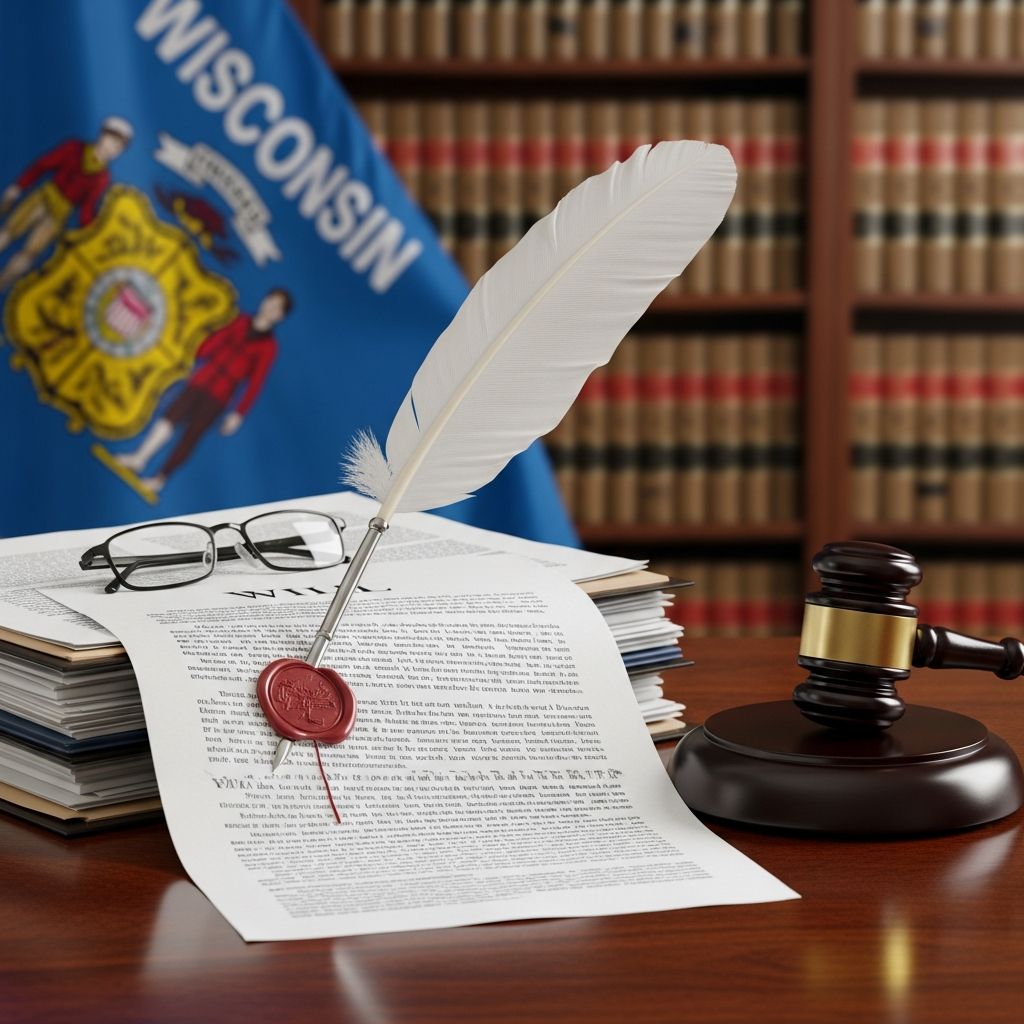
Understanding the Foundations of Will Creation in Wisconsin
A will serves as one of the most powerful legal instruments available to individuals who wish to control how their assets and property transfer after death. In Wisconsin, the creation of a valid will is governed by specific statutory requirements designed to ensure that a person’s final wishes are documented accurately and legally upheld. Without a properly executed will, Wisconsin’s intestacy laws determine asset distribution, which may not align with your personal preferences or family circumstances.
The Wisconsin Statutes, specifically Chapter 853 Wills, establish the precise framework that must be followed for will execution and validation. Understanding these requirements is essential for anyone seeking to protect their legacy and provide clear direction to their heirs and personal representatives.
Essential Eligibility Criteria for Will Creators
Before you can create a binding will in Wisconsin, you must meet certain fundamental eligibility requirements. These prerequisites ensure that only individuals with the legal capacity and mental competency to make binding decisions can execute estate planning documents.
The testator, meaning the person creating the will, must be at least eighteen years of age. This age requirement aligns with Wisconsin’s general standard for legal adulthood and the ability to enter into binding contracts and agreements. Additionally, the testator must possess what the law refers to as a “sound mind,” which typically means you have not been formally deemed incompetent by a court in a prior legal proceeding. This mental capacity standard does not require perfect memory or complete understanding of every asset you own; rather, it ensures you understand the general nature and extent of your property and recognize the natural objects of your bounty, meaning family members and close relationships.
Mandatory Documentation and Writing Requirements
Wisconsin law requires that all wills be in written form. The will cannot be oral or communicated verbally, regardless of the clarity or specificity of your intentions. The document must be either typed, printed, or handwritten. While Wisconsin permits handwritten wills, known as holographic wills in some states, the written requirement ensures there is a permanent, verifiable record of your testamentary intent.
The physical format of the document is flexible—whether created on standard white paper, printed from a computer, or handwritten by the testator—provided it clearly conveys the testator’s wishes regarding asset distribution and other estate matters. This requirement exists to prevent disputes about whether an individual actually intended certain provisions and to create evidence that can be examined if the will’s validity is ever challenged.
Signature Requirements and Personal Authority
A critical component of will validity in Wisconsin involves the testator’s signature. The document must be signed by the person creating the will. The signature serves as verification that you acknowledge the document and intend it to represent your final wishes. In situations where physical limitations prevent you from signing your own name, Wisconsin law permits an alternative approach: another person may sign the will on your behalf, but only with your express direction and in your presence. This authorized third party cannot be one of the required witnesses to the will.
If someone signs the will for you due to physical inability, that individual should not simultaneously serve as a witness, as this could create questions about their motives or the legitimacy of the signature. The key requirement is that you explicitly authorize the person to sign on your behalf—the authorization must be clear and direct, not merely implicit or assumed.
Witness Requirements and Their Critical Role
Wisconsin requires that at least two witnesses sign the will. These witnesses serve as evidence that the testator properly executed the document with appropriate intent and understanding. The witnesses must sign within a reasonable time after any of the following events: the testator’s initial signing of the will, the testator’s acknowledgement of their own signature on the document, or the testator’s acknowledgement of the will itself.
The requirement of “conscious presence” is central to Wisconsin’s witness standard. The witnesses must be present when the testator signs or acknowledges the will, meaning they have the opportunity to observe these actions. However, the two witnesses do not need to observe the testator’s signing or acknowledgement at the same time. One witness may observe the signing at one moment, and another witness may observe it at a different time, provided both occurrences happen within a reasonable timeframe.
Witness Qualifications and Interested Parties
Wisconsin law permits any person competent to testify as a witness in court to also serve as a witness to a will. This broad standard includes most adults without disqualifying factors such as criminal convictions affecting credibility or legal competency findings.
Although not strictly required by law, it is strongly recommended that witnesses be “disinterested,” meaning they are not beneficiaries named in the will and are not heirs under Wisconsin’s intestacy laws. When an interested witness—someone who stands to inherit under the will—signs the document, the will itself remains valid, but the gift to that interested witness may be void unless the will also contains signatures from at least two completely disinterested witnesses. There is an important exception: if the interested witness is an heir under Wisconsin intestacy law, they may still receive a gift up to the amount they would have inherited if you died without a will, provided the two-disinterested-witness requirement is satisfied.
Self-Proving Wills and Simplified Probate
Wisconsin law offers a mechanism to streamline the probate process through self-proving wills. A self-proved will includes an affidavit signed by the testator and witnesses before a notary public, in which all parties swear to the authenticity and proper execution of the will. This affidavit should be part of the will itself or attached to it as a permanent component.
When a will has been properly self-proved and its authenticity is unchallenged, it may proceed through probate using a simplified procedure. The significant advantage is that witnesses are not required to testify in court to verify the will’s authenticity. The court automatically accepts a self-proved will as genuine based on the notarized affidavit, eliminating delays and potential costs associated with locating witnesses years or decades after the will was signed and obtaining their courtroom testimony.
Asset Protection Through Will Execution
Creating a properly executed will protects your estate in several ways. First, it allows you to designate a personal representative—also called an executor—to manage and distribute your estate according to your wishes rather than allowing the court to appoint someone. You can even stipulate in your will that your personal representative need not post a surety bond if they are a Wisconsin resident, potentially saving your estate significant money in administration costs.
Second, a will enables you to name a guardian for minor children, ensuring they are raised by someone you trust rather than someone chosen by the state. Third, a will allows you to distribute specific items to particular individuals, whether those are family heirlooms, financial gifts, or business interests. Without a will, Wisconsin’s default intestacy rules mechanically distribute assets based on statutory formulas that may not reflect your intentions.
Common Misconceptions About Wisconsin Wills
A frequent misunderstanding is that a will alone avoids probate. In reality, even a properly executed will must go through the probate process in Wisconsin. The will directs how assets are distributed, but probate—the court-supervised process of validating the will and transferring assets—still occurs. To truly bypass probate, assets must be placed in a living trust or structured through proper beneficiary designations on bank accounts, retirement plans, and insurance policies. These alternative mechanisms transfer assets directly to designated beneficiaries outside the probate system.
Another misconception involves the assumption that only substantial estates require wills. Even individuals with modest assets benefit from having a will, particularly if they have minor children requiring guardianship designation or specific wishes about how particular items should be distributed.
Updating Your Will and Making Modifications
Life circumstances change, and your will may require updates to remain effective and aligned with your wishes. Wisconsin law provides two methods for modifying an existing will: you can create an entirely new will, which automatically supersedes the previous version, or you can execute a supplement called a codicil.
A codicil is a separate document that amends or clarifies specific provisions in your existing will without requiring you to rewrite the entire document. For a codicil to be valid and enforceable, it must satisfy all the same legal requirements as those required for the original will itself, including writing, signature by the testator, and signatures by two witnesses present at the execution.
Safeguarding Your Will Document
Once you have created and executed a valid will, proper storage protects it from theft, fire, and other damage. Common options include keeping it in a home safe or safety deposit box. However, be aware that personal representatives may face delays accessing safe-deposit boxes after your death due to banking procedures and potential legal holds. Alternatively, you can deposit your will with the register in probate for your county, which ensures it is safely maintained in an official repository that your personal representative can readily access when needed.
Recognition of Out-of-State Wills
If you created a will in another state and later move to Wisconsin, your will remains valid provided it complies with Wisconsin law or the law of the state where you signed it or where you resided at the time of signing. Most states reciprocally recognize each other’s validly executed wills. However, Wisconsin has unique marital property laws that may affect how assets pass to a spouse. If your out-of-state will was executed in a jurisdiction without similar marital property laws, you should have an attorney review the document to ensure it still achieves your intended results in Wisconsin.
Probate Alternatives and Estate Planning Strategies
Beyond traditional wills, Wisconsin recognizes other estate planning tools that can complement or substitute for will-based planning. Living trusts allow you to transfer property during your lifetime into a trust that continues after your death, avoiding probate for trust-held assets. Powers of attorney enable you to designate someone to manage financial affairs if you become incapacitated. Living wills and healthcare powers of attorney address medical decisions if you cannot communicate your wishes.
For smaller estates valued under $50,000, Wisconsin provides a simplified small estate affidavit process that allows heirs to claim assets without full probate administration, though this process still requires compliance with specific statutory procedures.
When Professional Legal Guidance is Essential
While Wisconsin law permits individuals to create their own wills, consultation with an attorney is advisable whenever your situation involves complexity, ambiguity, or significant assets. If your will is incomplete or poorly drafted, unintended consequences can occur after your death, potentially causing family disputes and increasing probate administration costs. An attorney can ensure all conditions for transferring assets are properly spelled out, help you avoid tax inefficiencies, and address any special circumstances such as blended families, minor beneficiaries, or business interests.
Key Considerations for Wisconsin Residents
Before executing your will, consider these important factors:
- Age and capacity verification: Confirm you are at least 18 and of sound mind
- Witness selection: Choose disinterested witnesses not named as beneficiaries
- Document preservation: Decide on secure storage location for your signed will
- Personal representative selection: Identify who will manage your estate administration
- Guardianship designation: If you have minor children, name preferred guardians
- Self-proving affidavit: Consider having your will notarized for easier probate later
- Periodic review: Update your will after major life events such as marriage, divorce, births, or significant property acquisitions
Frequently Asked Questions About Wisconsin Wills
Q: Can I handwrite my will in Wisconsin?
A: Yes. Wisconsin permits handwritten wills provided they meet all other requirements including testator signature, two witness signatures, and compliance with execution formalities. However, handwritten wills can sometimes face more scrutiny regarding authenticity, so clear handwriting and proper witness documentation are important.
Q: Do witnesses need to know what is in my will?
A: No. Witnesses do not need to read or know the contents of your will. They only need to observe you signing or acknowledging the document and then sign as witnesses to that action. Their role is to verify the execution formalities, not to approve the distribution provisions.
Q: What happens if I die without a will in Wisconsin?
A: Wisconsin’s intestacy laws determine distribution. Generally, assets pass to spouses, children, parents, or other relatives in a statutory order. The court appoints a personal representative, which may not be someone you would have chosen. No guardians are designated for minor children, leaving that decision to the court.
Q: Can I change my will after signing it?
A: Yes. You may create a new will that supersedes your previous one, or you may execute a codicil amending specific provisions. Both options require the same legal formalities as your original will.
Q: Is a will enough to avoid all probate?
A: No. A will does not avoid probate; it directs how your probate estate is distributed. To bypass probate, use living trusts or beneficiary designations. Many estates use a combination of wills and probate-avoidance strategies.
Q: Can an interested witness invalidate my will?
A: An interested witness does not invalidate your will, but their gift may be void unless two completely disinterested witnesses also signed. An interested heir may still receive their intestate share regardless of interested witness status.
Q: How long does a Wisconsin will remain valid?
A: A properly executed will remains valid indefinitely and is enforceable after your death. However, you should periodically review it to ensure it reflects your current wishes and life circumstances.
References
- Wisconsin Statutes Chapter 853 – Wills — Wisconsin Legislative Reference Bureau. 2024. https://docs.legis.wisconsin.gov/statutes/statutes/853
- Basic Requirements for a Last Will and Testament in Wisconsin — LawInfo. 2024. https://www.lawinfo.com/resources/wills/wisconsin/
- Wills and Estate Planning – I Need Information — State Bar of Wisconsin. 2024. https://www.wisbar.org/forPublic/INeedInformation/pages/wills-estate-planning.aspx
- Estate Laws in Wisconsin for 2026 — Horn & Johnsen SC. 2025-01-15. https://hornjohnsen.com/wisconsin-estate-laws-updates-2026/
- Wisconsin Probate Laws Explained: When Can You Skip the Process? — Estate Planning People. 2024. https://www.estateplanningpeople.com/blog/wisconsin-probate-laws-explained-when-can-you-skip-the-process/
- DOR Estates, Trusts, and Fiduciaries — Wisconsin Department of Revenue. 2025. https://www.revenue.wi.gov/Pages/FAQS/ise-estate.aspx
Similar Articles








Read full bio of medha deb


