
Severing the Bond: Wisconsin’s Parental Rights Debate
Explore Wisconsin's fierce debate over terminating incarcerated parents' rights.
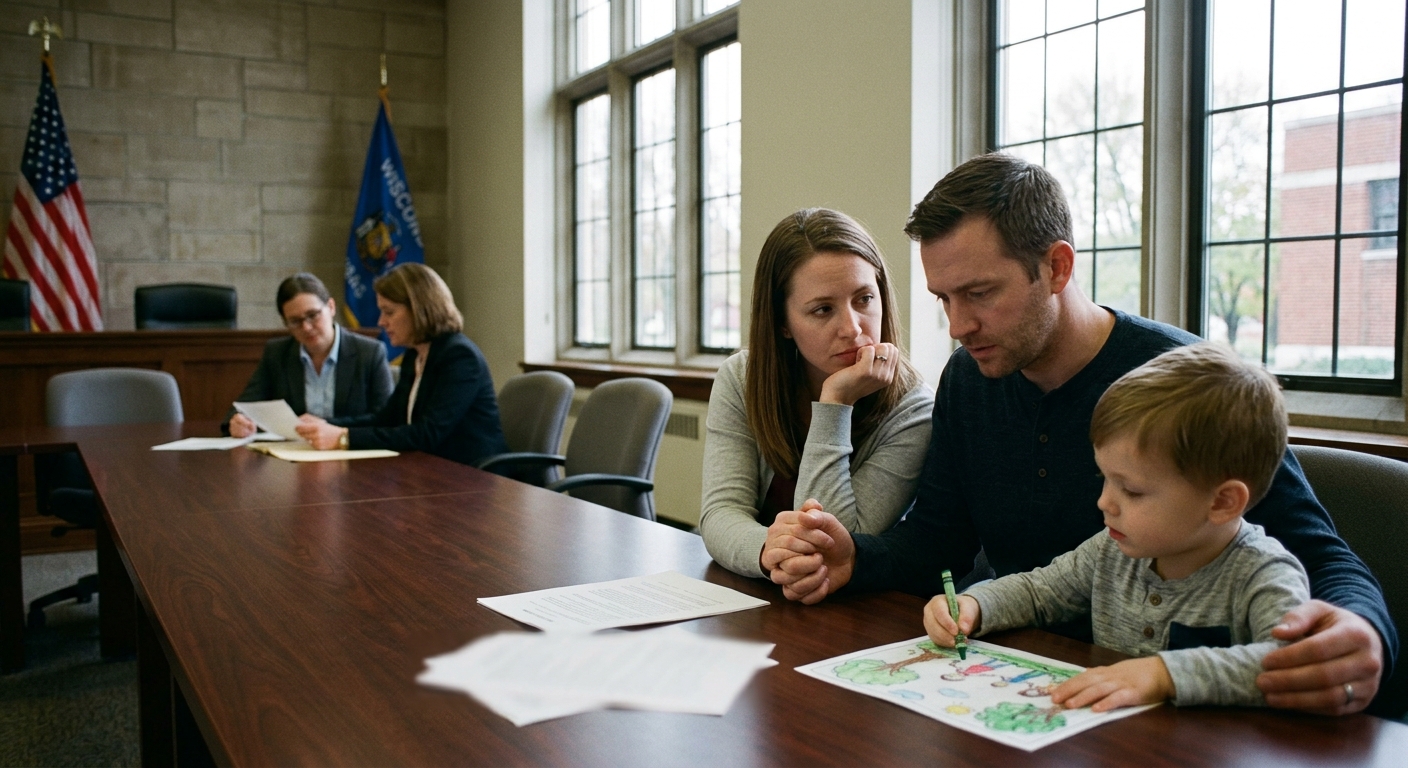
The Intersection of Justice and Family Preservation
The bond between a parent and a child is widely considered one of the most fundamental human relationships, protected by both deep societal norms and constitutional law. However, when a parent becomes entangled in the criminal justice system, this bond is often subjected to severe strain and, in some cases, complete dissolution. Recently, the state of Wisconsin has become the epicenter of a highly contentious debate regarding the intersection of child welfare and the penal system. State lawmakers have proposed legislation that would make it significantly easier for family courts to permanently sever the legal ties between incarcerated individuals and their children. This move has sparked intense backlash from a broad coalition of civil rights organizations, legal scholars, and child welfare advocates who argue that the proposed changes are not only unconstitutional but profoundly harmful to the very children the state claims to protect.
At the heart of the controversy is the legal process known as the Termination of Parental Rights (TPR). In family law, TPR is widely recognized as the most extreme measure a state can take against a family. It permanently and irrevocably dissolves the legal relationship between a biological parent and their child, cutting off all rights to custody, visitation, and input into the child’s upbringing. Because of the sheer finality of this action, the legal threshold for granting a TPR is traditionally very high. Yet, the newly introduced legislation in Wisconsin seeks to lower this threshold specifically for individuals serving prison sentences, framing incarceration itself as a primary justification for dissolving the family unit. To fully grasp the magnitude of these legislative proposals, it is essential to explore the mechanics of the bills, the historical legal precedents, and the disproportionate impact these policies have on marginalized communities.
Decoding the Proposed Legislative Overhaul
The legislative package introduced by Wisconsin lawmakers is ostensibly designed to expedite the process of finding permanent homes for children in the foster care system. Proponents of the bills argue that when a parent is sentenced to a lengthy prison term, the child is often left to languish in the uncertainty of state care. By establishing new, accelerated grounds for TPR based on the length or nature of a parent’s incarceration, legislators claim they are prioritizing the child’s need for stability and permanency.
However, an analysis of the proposed statutory changes reveals a deeply punitive framework. Under current laws, while incarceration can be a factor in a child welfare case, it is generally not sufficient on its own to warrant a termination of rights. The state must prove unfitness through a broader context, such as severe abuse, chronic neglect, or a complete failure to assume parental responsibilities . The proposed bills seek to bypass these comprehensive evaluations. In some iterations, the legislation would allow courts to initiate TPR proceedings if a parent is sentenced to a specific number of years in prison, or if a judge speculates that the parent will be incarcerated for a substantial portion of the child’s minority.
This proposed shift effectively translates a criminal sentence into a family court mandate, removing the individualized assessment that is crucial in child welfare proceedings. Opponents argue that this blanket approach fails to consider the parent-child relationship prior to incarceration, the parent’s efforts to maintain contact while imprisoned, or the availability of family members who could temporarily care for the child without the need to permanently sever parental rights.
Comparing the Legal Approaches
To better understand the radical shift proposed by these bills, it is helpful to compare the current child welfare standards with the new legislative framework:
| Legal Aspect | Current Wisconsin Law Standards | Proposed Legislative Framework |
|---|---|---|
| Incarceration as a Factor | Considered as one of many factors in evaluating parental fitness and child welfare. | Can serve as a primary or sole justification for terminating parental rights. |
| Reunification Efforts | State must generally make reasonable efforts to reunify the family, providing resources and plans. | Allows the state to fast-track permanency and bypass standard reunification efforts for incarcerated individuals. |
| Assessment of Fitness | Requires a holistic review of the parent’s past behavior, current relationship with the child, and future capabilities. | Relies heavily on the mathematical length of a prison sentence or speculation regarding future recidivism. |
| Alternative Placements | Encourages placement with relatives (kinship care) while maintaining the legal rights of the biological parent. | Focuses heavily on freeing the child for permanent adoption by non-relatives, irrevocably cutting legal ties. |
The “Civil Death Penalty” and Historical Precedent
In legal circles, the Termination of Parental Rights is frequently referred to as the “civil death penalty.” This grim moniker reflects the absolute and irreversible nature of the judgment. Once a TPR is finalized, the biological parent becomes a legal stranger to their child. There is no possibility for parole, no reduction of the sentence, and no reinstatement of rights if the parent rehabilitates themselves after their release from prison.
Advocates deeply oppose the Wisconsin legislation because it essentially inflicts a secondary, unmandated punishment on incarcerated individuals. The criminal justice system imposes a loss of liberty as the penalty for a crime; it does not, and should not, impose the permanent destruction of an individual’s family. By utilizing the civil court system to compound the penalties of a criminal conviction, the state crosses a dangerous ethical boundary.
Furthermore, this legislative push seems directly at odds with established judicial precedent in Wisconsin. In the landmark 2006 case, Kenosha County Department of Human Services v. Jodie W., the Wisconsin Supreme Court delivered a critical ruling on the rights of incarcerated parents . The court determined that a mother’s parental rights could not be terminated solely because her incarceration rendered her physically unable to meet the court-ordered conditions for the return of her child. The ruling emphasized that the state must evaluate an incarcerated parent’s fitness based on factors beyond the mere fact of their confinement. Critics of the current bills argue that lawmakers are actively attempting to legislate their way around the protections established by Jodie W., aiming to create a legal loophole that fast-tracks family separation.
The Burden on Marginalized and Vulnerable Communities
Any discussion of policies targeting incarcerated individuals must acknowledge the deeply entrenched systemic inequities within the criminal justice system. Incarceration does not impact all demographics equally. In Wisconsin, as in the rest of the United States, individuals from Black, Indigenous, and low-income communities are disproportionately arrested, convicted, and sentenced to longer prison terms .
Consequently, legislation that penalizes parents for being incarcerated will inevitably function as a targeted attack on minority and impoverished families. When the state removes a child from a low-income household and terminates the parents’ rights due to a prison sentence—which may stem from issues related to untreated substance abuse, mental health crises, or systemic poverty—it perpetuates a vicious cycle of generational trauma. The child is thrust into the foster care system, stripped of their cultural heritage and biological connections, while the parent is stripped of their primary motivation for rehabilitation and successful reentry into society.
The impact on Native American families is particularly alarming. For decades, Indigenous children have been removed from their homes at disproportionately high rates, leading to the passage of federal protections aimed at preserving tribal sovereignty and keeping Native families intact. Broad, aggressive TPR legislation threatens to undermine these protections, facilitating the removal of Indigenous children from their communities and further eroding the cultural foundations of tribal nations.
Constitutional Violations and Due Process Concerns
Beyond the moral and social implications, the proposed Wisconsin legislation faces severe constitutional scrutiny. The Fourteenth Amendment of the United States Constitution protects the fundamental right of parents to make decisions concerning the care, custody, and control of their children. Because this right is considered a fundamental liberty interest, any state action seeking to infringe upon it must survive strict legal scrutiny, meaning the law must be narrowly tailored to serve a compelling state interest.
Legal experts argue that the Wisconsin bills fail this constitutional test. By allowing courts to terminate rights based on the length of a sentence, the legislation is overly broad. It assumes that physical absence equates to emotional abandonment or fundamental unfitness, a correlation that psychological and sociological research vehemently disputes. Many incarcerated parents remain deeply involved in their children’s lives through phone calls, letters, and visitation, providing crucial emotional support and guidance.
Additionally, some iterations of the bills require judges to speculate on whether a parent is “likely” to re-offend or remain incarcerated for a significant portion of the child’s youth. This speculative legal standard introduces massive due process violations. A parent’s fundamental constitutional rights cannot be stripped away based on a judge’s subjective prediction of future criminality. The Department of Children and Families, along with various legal aid organizations, have explicitly warned that these provisions are unconstitutionally vague and will inevitably lead to a chaotic wave of complex, expensive, and prolonged litigation.
Rethinking the “Best Interests of the Child”
The primary defense offered by the proponents of the legislation is that fast-tracking TPR serves the “best interests of the child” by providing swift permanency. However, this argument relies on a flawed and outdated understanding of child psychology and trauma. Modern child welfare research indicates that severing a child’s legal and emotional ties to their biological parents is one of the most traumatic events a child can experience. This trauma often manifests in long-term behavioral issues, severe anxiety, depression, and a loss of identity.
While stability is undoubtedly essential for a child’s development, stability does not necessitate the permanent destruction of the biological family. The federal government recognized this reality with the passage of the Adoption and Safe Families Act (ASFA) in 1997, which, while initially accelerating TPRs, has faced decades of intense criticism for devastating families, prompting modern legislative shifts toward family preservation . Today, evidence-based practices emphasize that maintaining a connection with an incarcerated parent—when safe and appropriate—yields vastly superior psychological outcomes for the child compared to forced permanent separation.
Instead of investing legislative energy into mechanisms that break families apart, advocacy groups urge Wisconsin lawmakers to focus on supportive, rehabilitative frameworks. True child welfare reform would involve funding comprehensive visitation programs in correctional facilities, allowing children to maintain a bond with their parents in a safe environment. It would require the implementation of robust parenting classes within the prison system and the creation of transitional housing and employment programs to support parents upon their release. Furthermore, the state could heavily utilize guardianship arrangements, which provide legal stability and care for the child during the parent’s sentence without resorting to the irreversible extreme of terminating parental rights.
Conclusion
The debate surrounding Wisconsin’s proposed legislation is a stark reflection of a broader national conflict between punitive criminal justice policies and the principles of family preservation. Terminating the parental rights of incarcerated individuals does not solve the complex social issues of crime, poverty, and addiction; it merely transfers the trauma onto the next generation. By treating incarceration as synonymous with unfitness, the state ignores the profound, resilient bond between parent and child, and disregards the constitutional protections afforded to all families, regardless of their circumstances. True justice and genuine child welfare demand policies that support rehabilitation and family unity, rather than wielding the family court system as a secondary instrument of punishment.
Frequently Asked Questions (FAQ)
- What does Termination of Parental Rights (TPR) mean?
TPR is a legal process that completely and permanently severs the legal relationship between a parent and a child. Once rights are terminated, the parent loses all rights to custody, visitation, and decision-making, and the child is legally free to be adopted by someone else. - How does current Wisconsin law handle incarcerated parents in child welfare cases?
Currently, while incarceration can be a factor in determining child placement and parental fitness, Wisconsin Supreme Court precedent (such as the Jodie W. case) dictates that a parent’s rights cannot be terminated solely because their incarceration prevents them from meeting certain court-ordered conditions. A broader assessment of unfitness is required. - Why are advocacy groups opposing the new Wisconsin bills?
Advocates oppose the bills because they lower the legal threshold for TPR, essentially punishing parents twice by taking away their children because of a criminal sentence. They argue it disproportionately targets low-income and minority communities, violates constitutional due process rights, and inflicts severe psychological trauma on children by unnecessarily destroying their families. - Are there alternatives to terminating an incarcerated parent’s rights?
Yes. Alternatives include placing the child in temporary guardianship with a family member (kinship care) while the parent serves their sentence. This provides the child with a stable, permanent-feeling home while maintaining their legal and emotional connection to their biological parent, allowing for potential reunification upon the parent’s successful release and rehabilitation.
References
- Kenosha County Department of Human Services v. Jodie W. — Wisconsin Supreme Court. 2006-07-11. https://www.wicourts.gov/sc/opinion/DisplayDocument.pdf?content=pdf&seqNo=26210
- Grounds for Involuntary Termination of Parental Rights — Child Welfare Information Gateway, U.S. Department of Health & Human Services. 2021-01-01. https://www.childwelfare.gov/topics/systemwide/laws-policies/statutes/groundtermin/
- Incarceration and CPS Involvement — Institute for Research on Poverty, University of Wisconsin-Madison. 2016-08-01. https://www.irp.wisc.edu/publications/fastfocus/pdfs/FF24-2016.pdf
- The Adoption and Safe Families Act (ASFA) — U.S. Congress. 1997-11-19. https://www.congress.gov/bill/105th-congress/house-bill/867
Similar Articles








Read full bio of Sneha Tete


