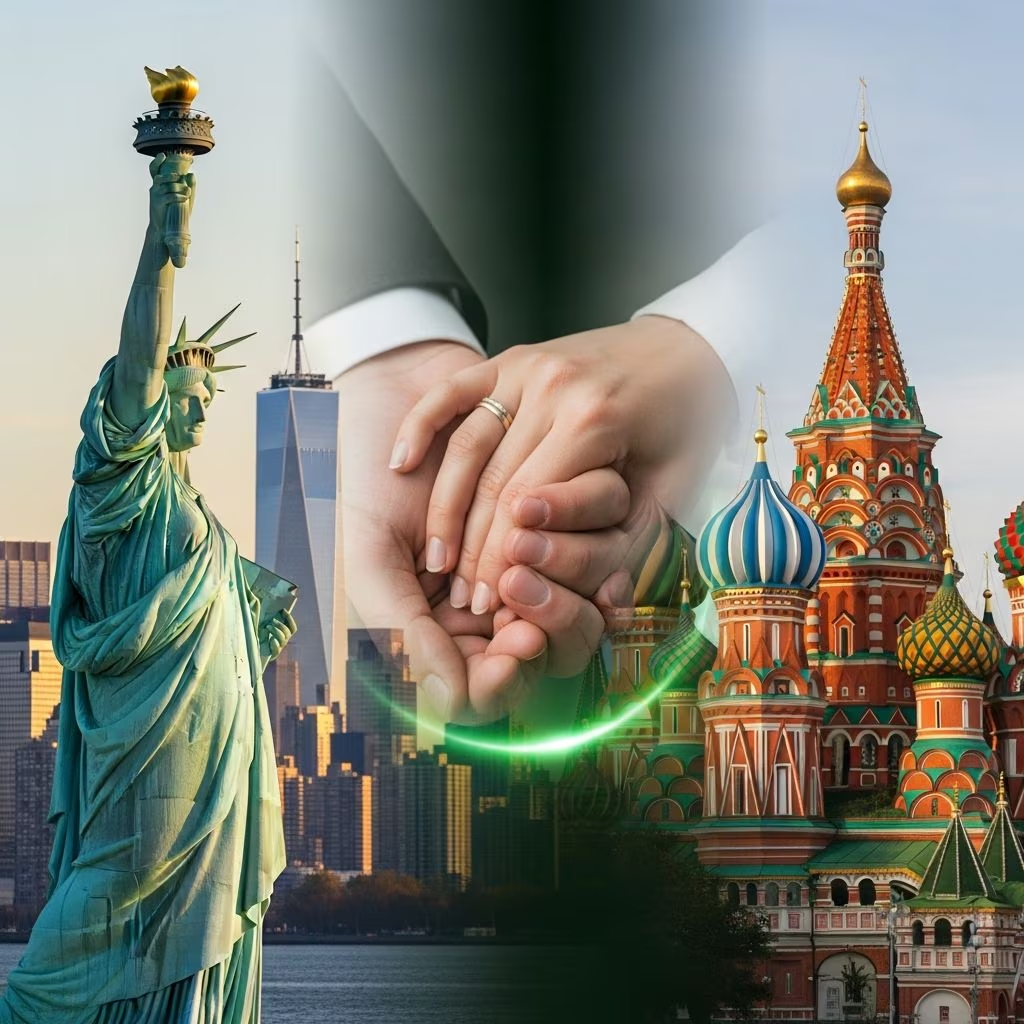
Marrying a Russian citizen opens pathways to U.S. permanent residency, but the process demands careful navigation of immigration rules. This guide outlines options for U.S. citizens and lawful permanent residents (LPRs), emphasizing procedural differences, required documentation, and potential hurdles specific to Russian nationals.
Eligibility Basics for Sponsoring a Russian Spouse
U.S. citizens hold a distinct advantage in sponsoring spouses for green cards, classified as ‘immediate relatives’ with no annual visa caps, allowing applications anytime. In contrast, LPRs face wait times due to limited family preference visas for spouses. Key prerequisites include proof of a genuine marital relationship and the sponsor’s financial ability to support the immigrant spouse.
- U.S. Citizen Sponsors: Immediate green card eligibility post-marriage verification.
- LPR Sponsors: Must await visa availability; cannot use fiancé visas.
- Financial Requirement: Submit Form I-864 Affidavit of Support showing income at 125% of federal poverty guidelines.
Relationships must demonstrate authenticity through shared photos, communications, joint finances, and affidavits from witnesses to counter fraud suspicions.
Pre-Marriage Option: Bringing Your Fiancé on a K-1 Visa
For unmarried couples, the K-1 fiancé visa permits entry to the U.S. for marriage within 90 days. U.S. citizens file Form I-129F with USCIS, proving in-person meetings within two years and intent to wed. Processing spans 12-18 months, followed by a U.S. embassy interview in Russia or Warsaw (due to limited Moscow operations).
| Step | Action | Timeline |
|---|---|---|
| 1. File I-129F | Submit petition to USCIS | 10-13 months approval |
| 2. NVC Processing | Document review | 1-2 months |
| 3. Embassy Interview | Medical exam, visa issuance | 1-3 months |
| 4. Enter U.S. & Marry | Wedding within 90 days | Immediate post-entry |
Post-marriage, apply for adjustment of status using Form I-485, leading to conditional green card after biometrics and interview.
Post-Marriage Pathways for Spouses in Russia
If already wed, consular processing applies: Start with Form I-130 petition filed by the U.S. sponsor. USCIS approval routes the case to the National Visa Center (NVC), where Form DS-260 and financial/support documents are submitted online via CEAC.
- Complete NVC requirements, including fees and civil documents.
- Schedule consular interview at U.S. embassy (typically Warsaw for Russians).
- Attend with evidence of bona fide marriage; spouse receives immigrant visa for U.S. entry.
- Green card mailed within weeks of arrival.
Russian marriages require registration with local authorities and apostille for U.S. validity; U.S. citizens marrying in Russia must register visas via FMS and obtain notarized passport translations.
Adjusting Status: When Your Spouse Enters the U.S. First
Spouses entering legally on nonimmigrant visas (e.g., B-2 tourist, excluding preconceived intent fraud) may adjust status domestically via I-130 and I-485 concurrently. This skips consular processing but risks denial if entry violated visa terms.
Process includes medical exams (Form I-693), work/travel permits (I-765/I-131), and a USCIS interview assessing relationship legitimacy.
Navigating Russian-Specific Marriage Formalities
Marriages in Russia demand U.S. citizens present a ‘marriage letter’ affidavit, visa registration by host, and certified passport translations. Post-ceremony, secure an apostilled certificate from the issuing ZAGS office, verified via State Department’s reciprocity list.
- Apostille from Russian Ministry of Justice.
- English translation by certified notary.
- Proof of termination of prior marriages.
U.S. couples marrying abroad must ensure compliance to avoid U.S. recognition issues during green card applications.
Conditional Residency and Path to Permanence
Marriages under two years at green card approval grant conditional status (CR-1 visa). Within 90 days before expiration, file joint Form I-751 to remove conditions, proving ongoing bona fide marriage via updated evidence.
Waivers available for divorce, abuse, or death; success rates hinge on compelling documentation.
Financial Sponsorship Demands
Sponsors prove income via tax returns, W-2s, and employer letters; household members may co-sponsor. Public charge inadmissibility grounds apply—immigrants must not rely on certain benefits.
Potential Delays and Common Pitfalls
Processing times vary: I-130 approvals average 12 months; backlogs affect LPR spouses. Pitfalls include insufficient relationship proof, prior immigration violations, or INA 212(a) inadmissibility (e.g., unlawful presence).
- Administrative Processing: Post-interview security checks, often 60-180 days.
- RFEs: Respond promptly to evidence requests.
- Fraud Red Flags: Large age gaps, quick marriages, or prior denials trigger scrutiny.
Role of Legal Assistance
Immigration attorneys aid in form accuracy, interview prep, and waivers; while DIY possible for straightforward cases, complexities like overstays benefit from expertise.
Frequently Asked Questions
Can permanent residents sponsor Russian fiancés?
No, LPRs must marry first abroad and pursue spousal visas; no K-1 option.
What if we marry in Russia—does the certificate work for USCIS?
Yes, if apostilled and from authorized ZAGS; check State Department reciprocity.
Is consular processing faster than K-1 adjustment?
Often comparable, but K-1 allows U.S. marriage; current waits ~12-24 months.
Can children accompany the spouse?
Follow-to-join derivatives possible via I-130; must qualify as stepchildren under 21.
What happens if the marriage ends before removing conditions?
File I-751 waiver with divorce decree and hardship proof.
How to prove a bona fide marriage?
Joint accounts, leases, photos, travel records, affidavits.
This guide provides an overview; immigration laws evolve—verify latest USCIS guidance.
References
- Marrying a Citizen of Russia? How to Get a Green Card for Your New Spouse — Nolo. 2023. https://www.nolo.com/legal-encyclopedia/marrying-citizen-russia-how-get-green-card-your-new-spouse.html
- Green Card for Russian Nationals in the U.S.: Your Legal Path — Cabrera Law. 2024. https://pcabreralaw.com/green-card-russian-nationals-usa/
- How to Marry a Non-U.S. Citizen — Boundless Immigration. 2025. https://www.boundless.com/immigration-resources/marry-non-u-s-citizen
- Visa to Russia: Private Visas — U.S. Embassy Moscow (MID). 2024-01-17. https://washington.mid.ru/en/consular-services/citizens-usa/visa-to-russia/private-visa/
- Rights and Protections for Foreign-Citizen Fiancé(e)s and Spouses — U.S. Department of State. 2025. https://travel.state.gov/content/travel/en/us-visas/visa-information-resources/imbra.html
- How to get a Green Card from outside the U.S. — USAGov (U.S. General Services Administration). 2025-10-01. https://www.usa.gov/green-card-consular-process