
Pathways to U.S. Permanent Residency Through Marriage to a Vietnamese Partner
Navigate the complete immigration process for Vietnamese spouses seeking U.S. green cards.
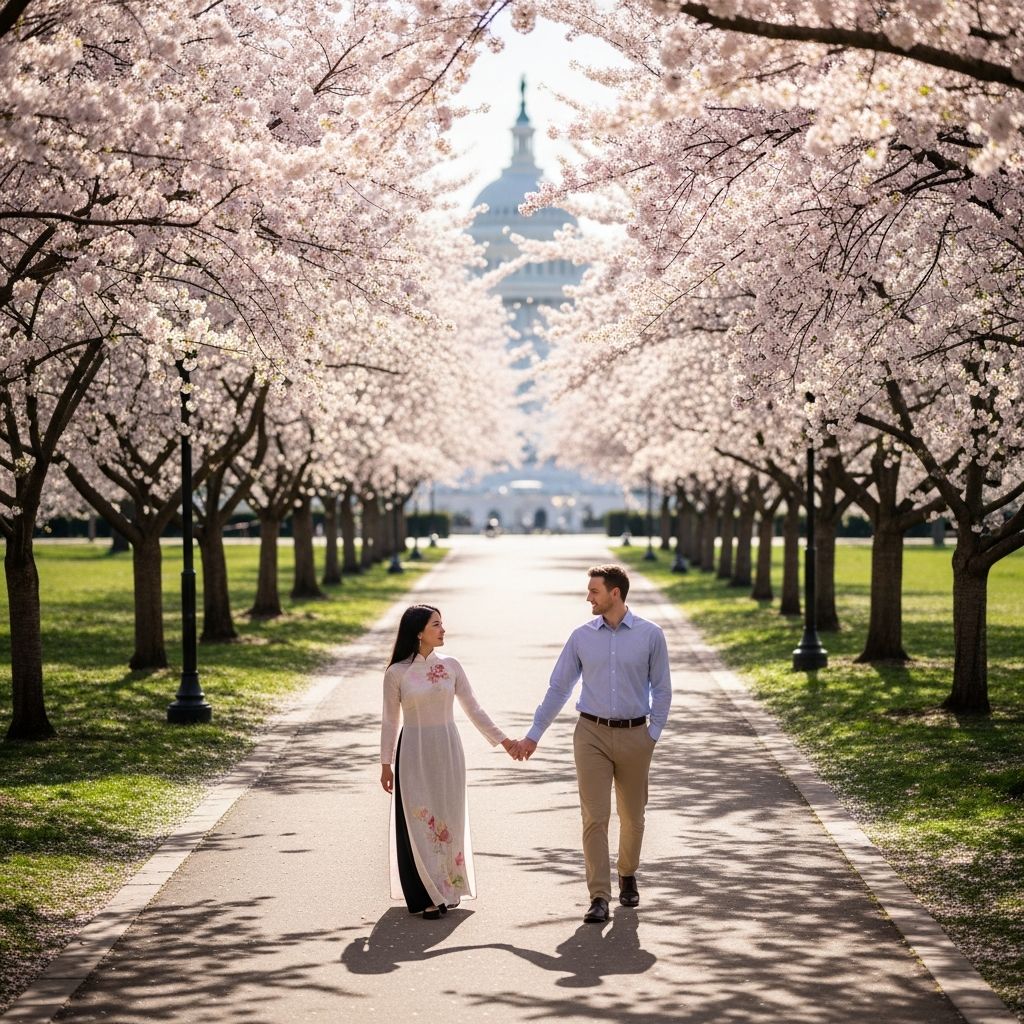
Understanding Immigration Pathways for Vietnamese Spouses
When a U.S. citizen or permanent resident enters into a relationship with someone from Vietnam, the immigration process becomes a critical consideration for building a life together in the United States. The journey toward permanent residency involves navigating complex legal requirements, submitting extensive documentation, and participating in official interviews designed to verify the authenticity of the relationship and ensure compliance with U.S. immigration law. The pathways available depend significantly on your current marital status and your immigration status as the sponsoring partner.
Two primary scenarios determine which route you will follow: couples who are not yet married and those who have already formalized their union. Each pathway has distinct requirements, timelines, and procedural steps that must be carefully followed to achieve success. Understanding these distinctions from the outset helps couples plan their immigration strategy effectively and avoid costly delays or complications.
The Fiancé Visa Route for Unmarried Couples
If you are a U.S. citizen with a Vietnamese fiancé or fiancée who remains in Vietnam, the K-1 fiancé visa presents an opportunity to bring your partner to the United States specifically for the purpose of marriage. This temporary visa status permits your intended spouse to enter the country for a 90-day period during which the marriage must be solemnized. This option is exclusively available to U.S. citizens; permanent residents cannot petition for fiancés under current immigration law.
Initial Petition and USCIS Approval
The K-1 fiancé visa process begins with the U.S. citizen petitioner filing Form I-129F with United States Citizenship and Immigration Services. This form must be accompanied by supporting documentation and the required filing fee. The purpose of the I-129F petition is to establish that the relationship is genuine, that both parties intend to marry, and that the petitioner meets financial requirements necessary to support the fiancé.
Once USCIS approves the I-129F petition, your case is forwarded to the U.S. consulate in Ho Chi Minh City, Vietnam. This marks the transition from the initial petition phase to the consular phase of the process, where your fiancé will directly engage with U.S. embassy personnel to complete visa formalities.
Key Requirements for K-1 Eligibility
Several essential criteria must be satisfied before submitting an I-129F petition:
- The petitioner must hold U.S. citizenship status
- The relationship must be demonstrably bona fide, meaning genuine and not fraudulent
- Both parties must have physically met in person within the previous two years
- There must be a clear intention to marry within 90 days of your fiancé’s arrival in the United States
- Both individuals must be legally free to marry, with no pending divorces or unresolved marital impediments
- The petitioner must demonstrate stable income that meets or exceeds federal poverty level guidelines established by USCIS
The financial requirement protects against situations where the U.S. government might later become responsible for the immigrant’s public benefits. The petitioner essentially signs an Affidavit of Support (Form I-864) committing to financial responsibility for the fiancé.
The Visa Interview and Consular Processing
After USCIS approval, your fiancé applies for the K-1 visa through the U.S. consulate in Ho Chi Minh City. This application requires completing the DS-160 online form, gathering required documents, paying visa fees, and attending a personal interview with a consular officer. During the interview, consular staff will ask questions to confirm that the relationship is genuine and to verify that both parties meet all eligibility requirements.
Although you as the U.S. petitioner may attend this interview, your presence is not mandatory. Many couples find it helpful for the petitioner to be present to demonstrate the relationship, answer questions collaboratively, and show the consular officer the strength of the partnership.
Marriage and Green Card Adjustment Following K-1 Entry
Upon arrival in the United States on the K-1 fiancé visa, your Vietnamese partner has exactly 90 days to marry you. This deadline is strictly enforced, and failure to marry within this window can result in the fiancé being required to depart the country.
After the marriage is solemnized, your new spouse may apply to USCIS for permanent residency through a process called adjustment of status. This involves filing Form I-485 along with supporting documents and fees. The adjustment of status application allows your spouse to apply for a green card without returning to Vietnam for consular processing. You and your spouse will both attend a green card interview at a USCIS office near your U.S. residence, where immigration officers will verify the documents you have submitted and conduct final interviews to confirm the marriage is bona fide.
Direct Marriage-Based Green Card Applications
If you and your Vietnamese partner are already married, or if you prefer to marry before bringing your spouse to the United States, the marriage-based green card pathway bypasses the K-1 visa entirely. This route applies whether you are a U.S. citizen or permanent resident, though the specific procedures differ between these two categories.
Applications by U.S. Citizen Sponsors
When a U.S. citizen has already married a Vietnamese citizen, the sponsorship process begins by filing Form I-130 (Petition for Alien Relative) with USCIS. This form serves multiple critical purposes: it establishes that the marriage is legally valid and bona fide, verifies that the petitioner is indeed a U.S. citizen, and initiates the official green card sponsorship process.
Following USCIS approval of the I-130, your spouse’s case proceeds to the National Visa Center (NVC). The NVC manages the next phases of processing and coordinates with the U.S. consulate in Ho Chi Minh City to schedule interviews and collect additional documentation. Your spouse must submit additional paperwork through the Consular Electronic Application Center (CEAC) and then appear in person at the U.S. consulate for an immigrant visa interview.
At this consular interview, your spouse will answer questions confirming the authenticity of your marriage and establishing eligibility for permanent residency. Upon approval, the immigrant visa is issued, allowing your spouse to enter the United States and immediately obtain permanent resident status.
Sponsorship by U.S. Permanent Residents
Permanent residents can sponsor spouses for green cards by filing Form I-130, but the process includes an important additional complication: the immigrant visa preference system. Unlike U.S. citizens, whose spouses are immediately available for green cards, permanent residents’ spouses must wait for an immigrant visa number to become available in the family preference category. This waiting period, sometimes called the “visa bulletin wait,” can extend several months or longer depending on visa availability. Couples must monitor the monthly visa bulletin published by the Department of State to determine when their application can proceed to consular processing and interview stages.
Essential Documentation for Marriage-Based Immigration
Regardless of which visa pathway you select, substantial documentation is required to prove the legitimacy of your relationship and your eligibility to sponsor an immigrant. The U.S. consulate in Ho Chi Minh City specifies particular documents necessary when involving Vietnamese marriages.
Documentation Required for Vietnamese Marriages
- Official marriage registration certificate from the appropriate Vietnamese government office
- Certified translations of all U.S. documents into Vietnamese, prepared by the Vietnamese embassy in the United States or a certified Vietnamese notary public
- Passport photos meeting specifications (3×4 cm) of both partners
- Notarized copy of the U.S. citizen’s passport, obtainable through a Vietnamese public notary
- Affidavit of eligibility to marry, signed within six months of the marriage certificate application
- Proof of address for the U.S. citizen, which may be satisfied through a police attestation if residing in Vietnam
- Authenticated documents for previously married individuals establishing the termination of prior marriages
- Birth certificates and other vital records for both parties
Timeline for Vietnamese Marriage Registration
If you plan to marry in Vietnam, the marriage registration process has defined timelines. The District Justice Office must complete marriage registration within 15 days of receiving your complete application. If police verification is required as part of the background check process, an additional ten days may be needed. Understanding these timelines helps you plan your documentation collection and subsequent immigration application filing dates.
Marriage Ceremony Considerations and Legal Requirements
Marrying in Vietnam
Vietnamese law governs marriage registration when couples choose to marry in Vietnam. The marriage must be officially registered with the appropriate government authority; religious or ceremonial celebrations alone do not constitute a legally recognized marriage for immigration purposes. You must follow Vietnamese procedures meticulously to ensure your marriage is documented in a manner that U.S. immigration authorities will recognize and accept.
Marrying in the United States
If you choose to marry in the United States, state law controls the marriage process. You must obtain a valid marriage certificate from the appropriate local government office in the state where you marry. Religious certificates or ceremony documentation, while meaningful to the couple, do not satisfy immigration requirements for official marriage proof. Ensure you secure the state-issued marriage certificate promptly after your ceremony, as you will need the original or certified copy for immigration applications.
Protecting Against Immigration Fraud Concerns
U.S. immigration law contains safeguards to prevent misuse of the immigration system for fraudulent purposes. One significant concern involves individuals entering the United States on temporary nonimmigrant visas (such as tourist or business visas) with the undisclosed intention of adjusting status to permanent residency through a subsequent marriage. Immigration authorities refer to this as visa fraud.
If your Vietnamese partner previously entered the United States on a tourist visa or other temporary status and then married you intending to apply for a green card, this situation may raise fraud concerns with immigration officials. While marriage-based green card applications can sometimes proceed despite prior tourist entry, the circumstances require careful attention and documentation of the relationship’s legitimacy. Many immigration attorneys recommend being transparent about any such situations and providing evidence that the relationship developed after entry rather than before it.
The Role of Immigration Legal Counsel
While hiring an immigration attorney is not a legal requirement, even for straightforward cases, professional guidance can substantially ease the immigration process. The paperwork involved in visa petitions, green card applications, and supporting documentation is extensive and contains numerous requirements that, if overlooked, can result in denial or significant delays.
For couples facing complications—such as prior visa history concerns, criminal records, or previous immigration violations—consultation with an immigration attorney becomes far more important. An attorney can help you assess your specific situation, determine the best strategic approach, prepare comprehensive documentation, and represent you during government interviews and proceedings. The investment in legal counsel often prevents costly mistakes that could jeopardize your immigration case or result in denial.
Frequently Asked Questions
Q: Can a U.S. permanent resident petition for a Vietnamese fiancé on a K-1 visa?
A: No. The K-1 fiancé visa is exclusively available to U.S. citizens. Permanent residents must marry first and then file Form I-130 for their spouse, though they will face immigration visa number waiting periods.
Q: How long can a K-1 fiancé visa holder remain in the United States?
A: The K-1 fiancé visa allows a 90-day stay in the United States, during which the marriage must occur. After marriage, the spouse can apply for green card adjustment of status.
Q: What happens if we do not marry within the 90-day K-1 period?
A: If marriage does not occur within 90 days, the K-1 visa expires. Your fiancé would need to depart the United States and cannot remain on the expired visa status.
Q: How long does the entire marriage-based green card process typically take?
A: The timeline varies considerably depending on the visa pathway, current visa availability, and case complexity. K-1 to green card adjustment typically requires 6-12 months, while consular processing may take 8-14 months.
Q: Must I be present at my spouse’s visa interview in Ho Chi Minh City?
A: Your attendance at the consular interview is optional but not required. Many petitioners choose to attend to demonstrate the relationship, but the decision is yours.
Q: What financial requirements must I meet to sponsor a Vietnamese spouse?
A: You must have stable income that meets or exceeds the federal poverty level guidelines published annually by USCIS. Income limits vary based on household size.
Q: Can my Vietnamese spouse apply for a green card if they entered as a tourist?
A: It is possible but carries fraud risk concerns. If the relationship developed after tourist entry and is demonstrated to be genuine, applications may proceed, but legal consultation is strongly recommended.
References
- Marrying a U.S. Citizen: Your Options — U.S. Citizenship and Immigration Services. https://www.uscis.gov/i-129f
- Marriage Requirements and Processing in Vietnam — U.S. Embassy & Consulate in Vietnam. https://vn.usembassy.gov/marriage/
- Form I-130, Petition for Alien Relative: Instructions — U.S. Citizenship and Immigration Services. https://www.uscis.gov/i-130
- Adjustment of Status Eligibility — U.S. Citizenship and Immigration Services. https://www.uscis.gov/green-card/adjustment-of-status
- Affidavit of Support (Form I-864) Requirements and Guidelines — U.S. Citizenship and Immigration Services. https://www.uscis.gov/i-864
Similar Articles








Read full bio of medha deb


