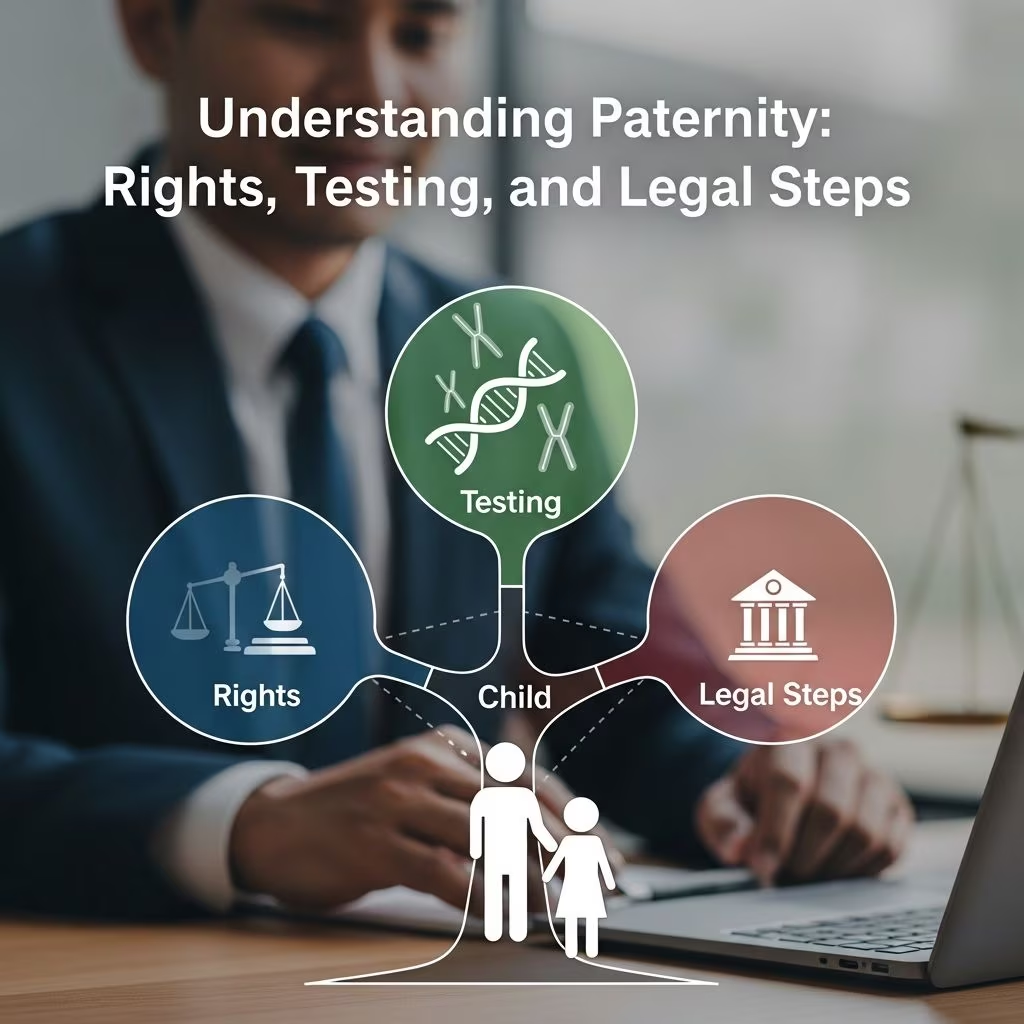
Paternity is the legal recognition of a man as a child’s father. It affects child support, custody, inheritance, medical information, and many other aspects of family life. Once paternity is legally established, both the child and the parents gain enforceable rights and responsibilities, regardless of whether the parents live together or were ever married.
What Does Paternity Mean in Legal Terms?
In everyday language, paternity simply refers to fatherhood. In law, however, it has a specific and powerful meaning: it identifies who the child’s legal father is, which may or may not be the same person as the biological father.
Key points about legal paternity include:
- Once established, the legal father can be ordered to pay child support and may seek custody or visitation.
- The child can receive financial support, health insurance coverage (if available), and inheritance rights from the legal father.
- Legal paternity can be established by marriage, voluntary acknowledgment, or a court order, depending on state law.
Why Establishing Paternity Matters
Determining paternity is often emotionally complex, but from a legal and practical standpoint it provides clarity and protection for everyone involved.
Benefits for the Child
- Financial support: The child can receive ongoing child support as well as potential benefits such as Social Security, veterans’ benefits, or pensions tied to the father’s work history.
- Health and medical information: Having a legal father on record can help doctors understand genetic risks and family medical history.
- Identity and family ties: Many courts recognize the psychological benefit to a child of knowing their parentage and having a sense of family identity.
- Inheritance rights: In many jurisdictions, paternity must be established for a child to inherit from the father’s estate in the absence of a will.
Benefits and Consequences for Parents
- For mothers:
- May obtain a support order to help cover everyday expenses, childcare, and medical costs.
- Gain a clear legal framework for sharing decision-making and parenting time with the father.
- For fathers:
- Secure rights to seek custody and visitation; without legal paternity, these rights are limited or unavailable in many states.
- Gain legal recognition as a parent, which can be important for involvement in schooling, healthcare, and major life decisions for the child.
Common Legal Paths to Establishing Paternity
Although details vary by state, most U.S. jurisdictions rely on three main methods to determine legal paternity.
| Method | When It Applies | Typical Process |
|---|---|---|
| Marital presumption | Parents are married when the child is born (or around the time of birth) | Law automatically treats the husband as the legal father; usually no court case is needed. |
| Voluntary acknowledgment | Parents are not married but agree who the father is | Both parents sign a voluntary acknowledgment of paternity/parentage form and file it with the designated state agency. |
| Court order | Parents disagree, or one parent will not sign voluntarily | Either parent or a government agency asks the court to decide; the court may order genetic testing and then issue a judgment establishing paternity. |
1. The Marital Presumption
In most states, a man married to the child’s mother at the time of birth is presumed to be the legal father. Some states also extend this presumption to births that occur within a certain number of days after the marriage ends. This is often the simplest route to legal paternity, because:
- The father’s name is typically placed directly on the birth certificate.
- No separate paternity case is necessary unless someone challenges the presumption in court.
2. Voluntary Acknowledgment of Paternity
Unmarried parents who agree on the father’s identity can sign a voluntary acknowledgment of paternity or voluntary declaration of parentage form (terminology varies by state).
General features of this process include:
- Forms are often available at hospitals, birthing centers, local child support agencies, or vital records offices.
- Both parents must sign, usually in front of a witness or notary.
- Once filed with the correct state agency, the acknowledgment has the same legal effect as a court order establishing paternity.
- Some states allow a short period during which a parent may rescind (cancel) the acknowledgment before it becomes final.
3. Court-Ordered Paternity
When there is disagreement or uncertainty, paternity can be decided by a judge. A paternity or parentage case may be started by:
- The child’s mother, often through a local child support agency seeking to secure financial support.
- The alleged father, seeking to confirm his legal rights to custody or visitation.
- A government child support agency, when public benefits have been provided for the child and the state seeks to identify a legally responsible parent.
The court can then order the mother, alleged father, and child to undergo genetic testing and will issue a final judgment once the evidence is reviewed.
How Genetic (DNA) Testing Works in Paternity Cases
Modern paternity testing uses DNA from the child and the alleged father (often also the mother) to determine whether there is a biological relationship. These tests are highly accurate and widely used in court proceedings.
Types of Paternity Testing
- Postnatal testing: The most common method uses a cheek swab from the child and alleged father, collected under a controlled chain-of-custody procedure when tests are used for court.
- Prenatal testing: In some circumstances, DNA testing may occur during pregnancy using procedures such as chorionic villus sampling or amniocentesis, but these tests carry medical risks and are typically arranged through healthcare providers rather than courts.
Accuracy and Legal Requirements
- Accredited labs can usually determine whether a man is the biological father with a probability of 99% or higher when he is the father.
- Court-ordered tests must follow strict identification and chain-of-custody rules so results can be admitted as evidence.
- If an alleged father refuses to comply with a testing order, some courts may treat the refusal as evidence and may determine that he is the legal father by default.
Rights and Responsibilities After Paternity Is Established
Once paternity is legally confirmed, the court can address a wider range of family law issues. These typically include child support, custody, visitation, and sometimes name changes or other orders.
Child Support Obligations
Courts generally follow state child support guidelines that consider parent income, parenting time, and the child’s needs. After paternity is established:
- The legal father can be ordered to pay ongoing child support, including contributions to health insurance and uncovered medical expenses.
- Support orders may be enforced by wage withholding, tax refund intercepts, or other enforcement tools if payments are not made.
- In some states, support can be ordered retroactively for a period before the paternity case, subject to statutory limits.
Custody and Visitation Rights
Legal paternity gives the father standing to ask for custody (decision-making) and parenting time (visitation or shared physical custody).
- Court orders must focus on the best interests of the child, considering safety, stability, and the child’s relationship with each parent.
- In many jurisdictions, paternity cases are where the court first issues formal custody and visitation orders if the parents are not married.
- If there are concerns about safety, the court can limit or supervise contact, regardless of paternity.
Other Legal Effects
- Birth certificate updates: Once paternity is established, the father’s name can be added or corrected on the child’s birth certificate through the appropriate state office.
- Name changes: Some paternity judgments include a request to change the child’s last name, which the court may grant if it serves the child’s best interests.
- Inheritance and benefits: Paternity can support claims to inheritance or benefits tied to the father’s status, sometimes even after the father’s death.
Disputing or Challenging Paternity
There are situations where a man who is presumed or listed as a father later disputes paternity, or another person claims to be the biological father.
Challenges typically arise in cases involving:
- A presumed father under the marital presumption who believes he is not the biological father.
- A man who signed a voluntary acknowledgment but later questions its accuracy.
- Competing claims between biological and non-biological father figures.
State laws control the time limits and procedures for contesting paternity. Some jurisdictions set strict deadlines for rescinding a voluntary acknowledgment or challenging a marital presumption, particularly after a court has already issued a final judgment.
Practical Tips for Parents Facing Paternity Questions
- Act early: Establishing paternity soon after birth helps avoid confusion about rights and responsibilities and can simplify later legal issues.
- Use official channels: For voluntary acknowledgments, make sure to use the correct form and file it with the right state office so that it has full legal effect.
- Seek legal advice: Because paternity decisions have long-term consequences for custody, support, and inheritance, many parents find it helpful to speak with a family law attorney or legal aid office.
- Be cautious about informal testing: At-home DNA kits may help answer personal questions, but courts often require tests performed under controlled procedures by accredited labs.
- Consider the child’s well-being: Beyond legal outcomes, maintaining as much emotional stability and respectful communication as possible can benefit the child.
Frequently Asked Questions About Paternity
Q1: Do I need a lawyer to establish paternity?
You are not always required to have a lawyer, especially if both parents agree and are using a voluntary acknowledgment. However, if there is a dispute about who the father is, or if custody and support issues are complex, legal advice can help protect your rights and ensure you follow state procedures correctly.
Q2: Can paternity be established if the father lives in another state?
Yes. Courts and child support agencies can coordinate across state lines to order genetic testing and serve legal papers. Interstate cooperation is common in paternity and child support cases, though it can add time and complexity to the process.
Q3: What happens if the alleged father refuses DNA testing?
If a court has ordered the test, refusal can lead to serious consequences. In some states, the court may enter a default judgment declaring him the legal father based on other evidence, or may treat the refusal as unfavorable evidence against him.
Q4: Can paternity be established after the father has died?
In some situations, yes. Courts may consider DNA evidence from the father’s relatives, documents, or other evidence to determine parentage for inheritance or benefit purposes. These cases are often handled in probate or family court and can be legally complex.
Q5: Once paternity is established, can it ever be undone?
Changing a legal finding of paternity can be difficult and is tightly controlled by state law. There may be short time limits for challenging a voluntary acknowledgment, and courts weigh the child’s best interests, particularly if a father–child relationship has already been established.
References
- Paternity Laws & Procedures — Justia. 2024-01-10. https://www.justia.com/family/child-custody-and-support/child-support/paternity/
- Paternity — DivorceNet / Nolo. 2023-06-15. https://www.divorcenet.com/topics/paternity
- California Paternity Laws: Establish Paternity in 2025 — Temecula Divorce. 2025-02-01. https://temeculadivorce.com/paternity-in-california/
- Paternity — Superior Court of California, County of Orange. 2022-09-30. https://www.occourts.org/divisions/family-law/paternity
- Establishing Legal Parentage — California Department of Child Support Services. 2023-11-20. https://parentage.dcss.ca.gov/establishing-legal-parentage/
- Establishing Paternity — Los Angeles County Child Support Services. 2023-05-03. https://cssd.lacounty.gov/establishing-paternity-2/