
Understanding DOMA: Legacy of Marriage Law
Explore the Defense of Marriage Act's history, impact on rights, court battles, and its lasting effects on U.S. marriage equality.
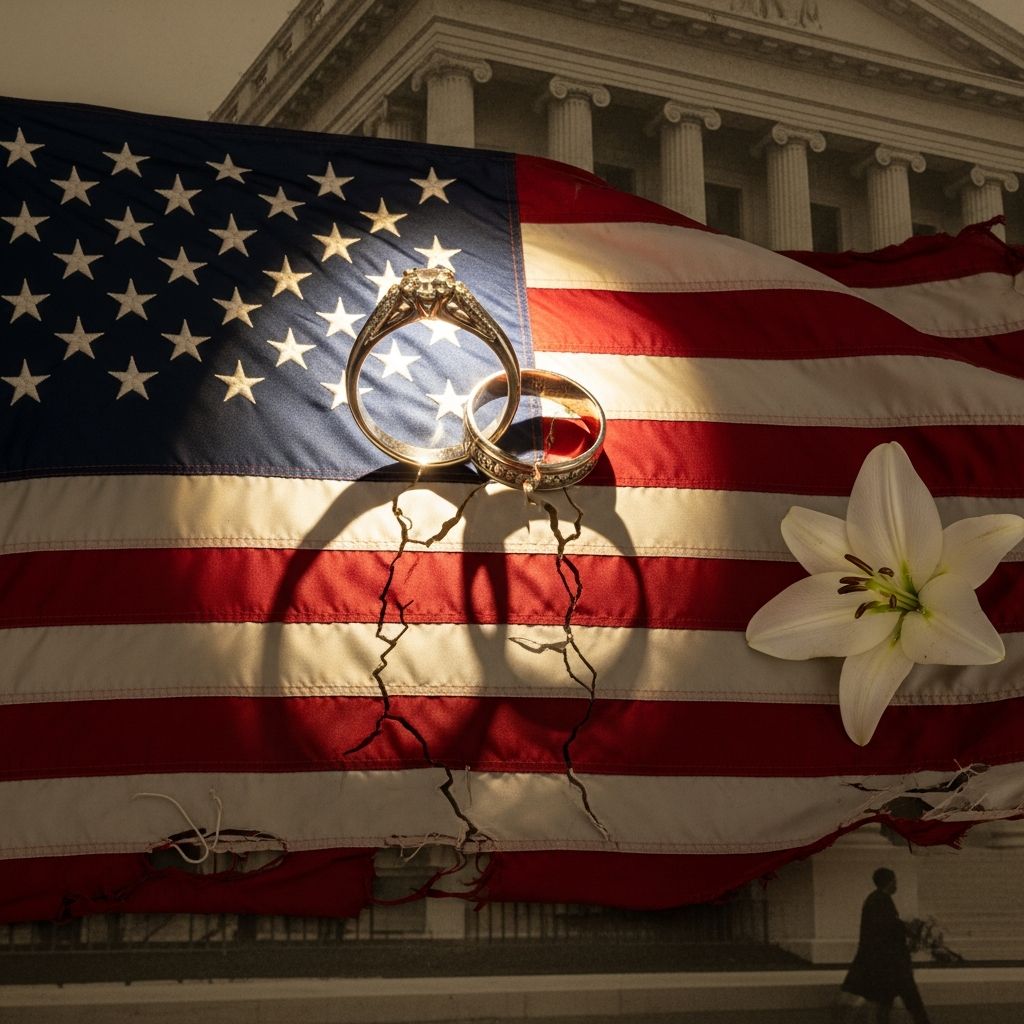
The Defense of Marriage Act, commonly known as DOMA, marked a pivotal moment in American legal history by attempting to codify a specific definition of marriage at the federal level. Enacted amid rising debates over same-sex unions, it sought to shield traditional marriage definitions from evolving state laws. This legislation influenced federal benefits, state recognitions, and ignited decades of litigation that reshaped equality under the law.
Historical Context and Enactment
In the mid-1990s, the U.S. faced growing discussions on marriage rights following a Hawaii state court case, Baehr v. Lewin, which suggested same-sex marriage might soon be legalized there. Fearing a domino effect via the Full Faith and Credit Clause, Congress acted swiftly. Introduced by Rep. Bob Barr and Sen. Don Nickles in May 1996, DOMA passed with overwhelming bipartisan support—large veto-proof majorities in both chambers—and was signed by President Bill Clinton on September 21, 1996.
Clinton later called it ‘divisive,’ yet approved it to preempt judicial overreach. The House Judiciary Committee justified it by citing needs to preserve traditional marriage, morality, state sovereignty, and government resources. At the time, about 40 states followed with their own bans on same-sex marriage.
Core Provisions Explained
DOMA comprised two main sections. Section 2 permitted states to ignore same-sex marriages valid in other states, protecting local policies. Section 3, the more contentious part, defined marriage federally as ‘only a legal union between one man and one woman as husband and wife’ and ‘spouse’ as opposite-sex only. This applied to all federal laws, rulings, and agency interpretations.
- Federal Benefits Denial: Same-sex couples lost access to over 1,000 benefits like Social Security survivor benefits, joint tax filing, and federal health insurance.
- Immigration Barriers: U.S. citizens couldn’t sponsor same-sex spouses for visas or green cards.
- Estate and Tax Issues: Surviving partners faced taxes on inheritances that opposite-sex spouses avoided.
These rules treated legally married same-sex couples as strangers federally, creating a patchwork of rights.
Real-World Impacts on Families
DOMA’s effects rippled through daily lives. Consider estate taxes: A widow like Edith Windsor paid $363,000 on her late wife’s estate because the IRS rejected their marriage, despite New York recognition. Military families saw spouses denied benefits, and binational couples faced deportations.
| Area Affected | Impact Under DOMA | Example |
|---|---|---|
| Federal Taxes | No joint filing; higher rates | Couples taxed as singles |
| Social Security | No survivor benefits | Loss of income for widows |
| Immigration | No spousal petitions | Family separations |
| Health Benefits | No FMLA or federal coverage | Caregiving burdens |
| Pensions/ERISA | No spousal inheritance | Disputes like Cozen O’Connor v. Tobits |
Such disparities fueled arguments that DOMA demeaned same-sex relationships, signaling second-class status.
Rising Legal Challenges
Challenges mounted post-enactment. By 2011, eight federal courts, including appellate levels, deemed Section 3 unconstitutional in contexts like bankruptcy, benefits, taxes, and immigration. The Obama DOJ ceased defense in 2011, deeming it violative of equal protection under the Fifth Amendment, though enforcement continued. House Republicans stepped in.
Key cases included Pedersen v. Office of Personnel Management (benefits) and Golinski v. U.S. Office of Personnel Management (ERISA). Immigration suits like DeLeon v. Rodriguez advanced as class actions.
Supreme Court Showdown: United States v. Windsor
The landmark came in United States v. Windsor (2013). Windsor, challenging her tax bill after Thea Spyer’s death, won at district and appellate courts. The Supreme Court, 5-4, struck Section 3 on June 26, 2013. Justice Kennedy’s majority opinion held it a Fifth Amendment violation, disparaging state-recognized marriages and denying equal liberty.
‘The federal statute is invalid, for no legitimate purpose overcomes the purpose and effect to disparage and injure those whom the State… sought to protect in personhood and dignity.’
This invalidated federal non-recognition, granting same-sex couples benefits where states allowed marriage. Section 2 survived, leaving interstate issues.
Beyond Windsor: Obergefell v. Hodges
Windsor paved the way for Obergefell v. Hodges (2015), where the Court, 5-4, mandated nationwide same-sex marriage rights under the Fourteenth Amendment. This effectively nullified Section 2 by requiring full faith and credit for all marriages. Today, DOMA is defunct, symbolizing a shift to equality.
Long-Term Societal and Legal Shifts
DOMA’s demise boosted LGBTQ+ rights, equalizing benefits and fostering acceptance. It highlighted tensions between federal and state powers, influencing future cases on equality. Critics once praised it for moral preservation; proponents of change saw it as discriminatory.
Post-2015, debates evolved to religious freedoms and transgender rights, but DOMA’s core fight ended in inclusion.
Current Status and Reflections
DOMA is repealed in practice. Federal agencies recognize all marriages. States must honor valid unions nationwide. Its legacy warns against federal overreach into personal liberties.
Frequently Asked Questions (FAQs)
What was the main goal of DOMA?
DOMA aimed to define marriage federally as one man and one woman, preventing same-sex couples from federal benefits and allowing states to ignore other states’ same-sex marriages.
Why did President Clinton sign DOMA?
Facing a veto-proof majority and fears of Hawaii legalizing same-sex marriage forcing nationwide recognition, Clinton signed it despite calling it unnecessary.
How did Windsor challenge DOMA?
Edith Windsor paid estate taxes on her wife’s inheritance due to federal non-recognition; the Supreme Court ruled this unconstitutional under equal protection.
Is any part of DOMA still law?
No; Section 3 was struck in 2013, and Section 2 effectively ended with Obergefell in 2015 mandating marriage equality.
What benefits did same-sex couples gain post-Windsor?
Access to Social Security, taxes, immigration, and more—over 1,000 federal perks where states recognize their marriage.
References
- What is DOMA? – Carr | Woodall — Carr Woodall. Accessed 2026. https://www.carrwoodall.com/blog/what-is-doma/
- Legal Alert: Supreme Court Strikes Portion of DOMA — FordHarrison. 2013-06-26. https://www.fordharrison.com/legal-alert-supreme-court-strikes-portion-of-doma
- Defense of Marriage Act — Wikipedia. Accessed 2026. https://en.wikipedia.org/wiki/Defense_of_Marriage_Act
- Defense of Marriage Act (DOMA) — Cornell Law School Legal Information Institute. Accessed 2026. https://www.law.cornell.edu/wex/defense_of_marriage_act_(doma)
- Top 10 Things You Should Know About DOMA and SCOTUS — Lambda Legal. Accessed 2026. https://lambdalegal.org/publication/top-10-things-you-should-know-about-doma-and-scotus/
- Defense of Marriage Act — GovInfo (Public Law 104-199). 1996-09-21. https://www.govinfo.gov/content/pkg/PLAW-104publ199/html/PLAW-104publ199.htm
Similar Articles








Read full bio of medha deb


