
Transforming Foster Care: How Civil Rights Litigation Drives Reform
How class-action civil rights lawsuits drive state child welfare reforms.
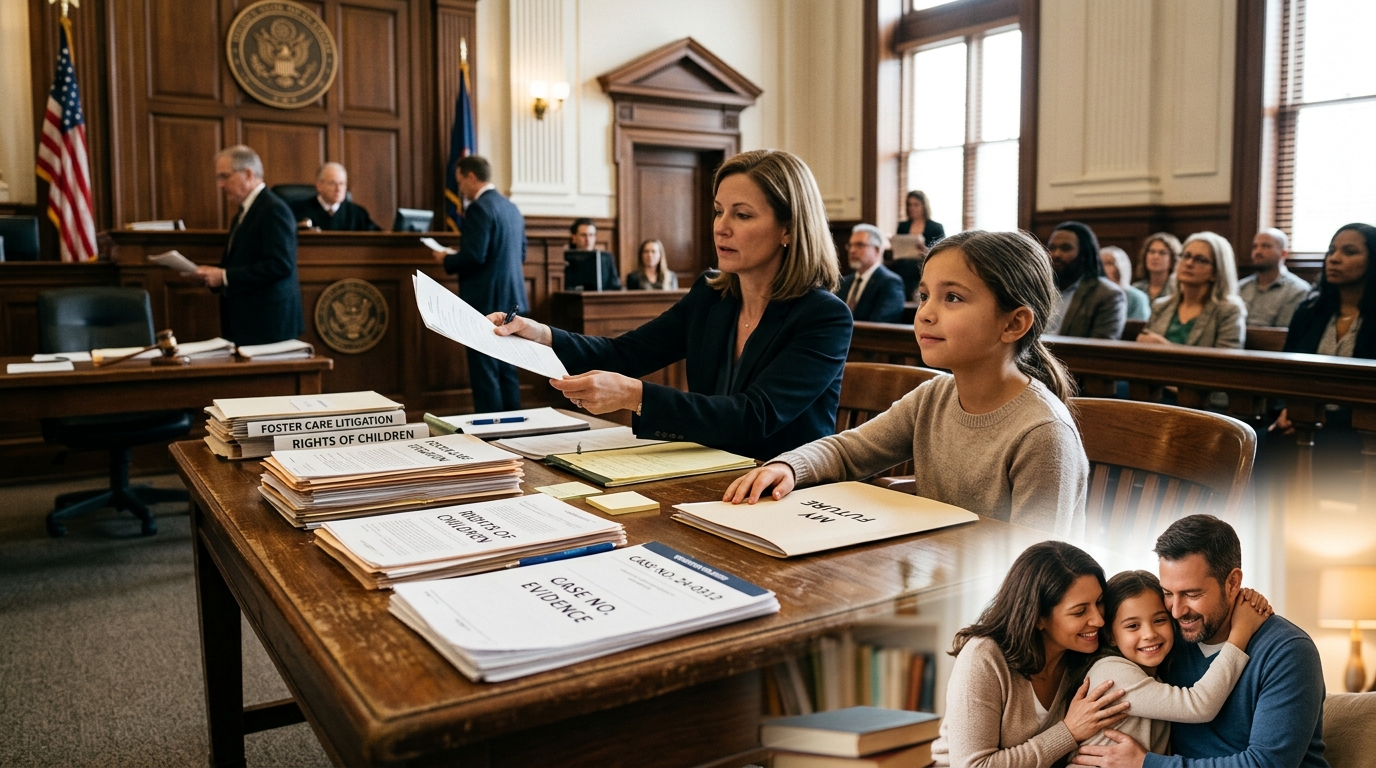
The Critical Role of Public Accountability in Child Protection
Public child welfare systems are designed to serve as the ultimate safety net for vulnerable children. Unfortunately, a pattern of systemic failures across various states has repeatedly demonstrated that these agencies can sometimes inadvertently become environments of further harm. When state departments of human services struggle with chronic underfunding, staggering caseworker turnover, and a severe lack of placement options, the results can be catastrophic. Recognizing these systemic breaches of constitutional rights, legal advocacy groups have utilized class-action civil rights lawsuits to shine a glaring spotlight on these crises. This aggressive legal approach forces public accountability, stripping away bureaucratic anonymity and fundamentally altering the operational trajectory of child welfare.
Litigation is rarely the first step. Typically, it follows years of investigative journalism, internal audits, and ignored legislative pleas. However, when child advocacy organizations bring these matters to federal court, they leverage the judicial system to impose legally binding mandates. The ensuing intense public attention acts as a catalyst, compelling state leaders to acknowledge the depth of the crisis and commit the necessary financial and structural resources required to overhaul an actively failing system.
The Root of the Crisis: Understanding Child Welfare Failures
Before legal intervention occurs, struggling child welfare agencies often display universally recognized warning signs. One of the most prominent indicators is the excessive reliance on institutional settings. Instead of being placed in nurturing family environments, children often linger in overcrowded emergency shelters. Furthermore, frontline social workers frequently carry caseloads that double or triple national safety standards, making meaningful intervention and consistent family contact mathematically impossible. Annual data and outcome reports from the U.S. Department of Health and Human Services point to the immense scale of the child welfare challenge nationwide, highlighting the sheer volume of children interacting with state systems and the struggle to achieve timely permanency.
When an agency’s infrastructure collapses under this immense weight, youth in state custody experience chronic placement instability. A child might be shuffled between multiple temporary homes in a single year, destroying any sense of security or academic continuity. In the most severe and tragic instances, children suffer abuse or neglect while in the custody of the state—the very entity legally mandated to protect them. These egregious conditions create the legal standing for civil rights organizations to intervene, asserting that the state is actively violating the fundamental, constitutional rights of the youth in its care by subjecting them to an unreasonable risk of harm.
Class-Action Litigation as a Catalyst for Systemic Change
When legislative advocacy and internal agency reforms prove insufficient, class-action litigation becomes the most potent weapon for child advocates. By filing lawsuits on behalf of thousands of foster children, civil rights organizations shift the battleground to the federal courts. A comprehensive review of child welfare litigation indicates that class-action lawsuits are a critical mechanism for holding state governments accountable when they fail to meet statutory obligations.
The initial phase of these lawsuits is deliberately public and highly adversarial. Discovery processes unearth internal emails, suppressed staffing reports, and tragic case files that are subsequently laid bare before the court of public opinion. This hyper-visibility serves a distinct purpose: it prevents state administrators from minimizing the problem. Faced with overwhelming evidence and the threat of severe judicial sanctions, state leaders—governors, lawmakers, and agency directors—are frequently forced to the negotiating table, realizing that a protracted legal defense is both morally indefensible and financially disastrous.
Crafting a Blueprint for Change: Settlement Agreements and Baselines
Rather than enduring decades-long trials, these legal battles frequently culminate in comprehensive settlement agreements or consent decrees. These legally binding documents serve as the foundational blueprint for systemic overhaul. A prime historical example is the Compromise and Settlement Agreement resulting from federal litigation against Oklahoma’s Department of Human Services, which birthed a comprehensive reform strategy known as the “Pinnacle Plan”. Under such frameworks, states commit to a multi-year roadmap featuring dozens of specific, measurable performance targets.
These agreements move beyond vague promises of improvement by establishing strict numerical baselines. Key mandated improvements typically include:
- Caseload Reductions: Imposing strict caps on the number of investigations or foster cases a single social worker can manage simultaneously.
- Foster Home Recruitment: Mandating a net increase in licensed family foster homes, particularly therapeutic foster homes equipped to handle severe trauma.
- Visitation Compliance: Requiring strict adherence to scheduled, face-to-face visits between caseworkers and children to accurately assess their ongoing safety.
- Shelter Reduction: Practically eliminating the use of temporary youth shelters for children under a certain age (often under six or twelve years old).
- Maltreatment Metrics: Setting aggressive targets to reduce the rate of abuse and neglect that occurs while children are in out-of-home care.
The Role of Independent Monitors in Court-Mandated Oversight
A defining feature of court-mandated child welfare reform is the appointment of independent monitors, frequently referred to in legal terms as “co-neutrals.” Because the state has historically demonstrated an inability to self-correct, federal judges grant oversight authority to external, highly specialized child welfare experts. These monitors continuously evaluate the state’s progress, publishing exhaustive reports at regular intervals.
The duties of co-neutrals extend far beyond reviewing spreadsheets. They conduct rigorous on-site field investigations, interview foster parents and biological families, and audit a random sampling of state case files. If a state agency attempts to artificially inflate its progress—for instance, by double-counting newly recruited foster homes while ignoring the number of homes that closed, or failing to accurately report caseworker turnover—the monitors publicly flag these discrepancies. This continuous, objective assessment ensures that the state cannot quietly abandon its financial and operational commitments once the initial media frenzy surrounding the lawsuit subsides.
Operational Challenges: Funding, Recruitment, and Retention
Drafting a settlement agreement is significantly easier than executing one. Implementing a comprehensive reform plan is a monumental operational undertaking that requires unprecedented inter-branch cooperation within state government. One of the most intractable challenges is workforce stabilization. Child welfare work is inherently traumatic, dangerous, and high-stress. Without competitive compensation and manageable caseloads, burnout and rapid turnover are inevitable.
To achieve the strict caseload limits mandated by federal courts, states must secure massive, recurring budget increases from their legislatures. These funds are required to hire, train, and retain hundreds of new frontline staff members. Simultaneously, agencies must revolutionize their approach to foster parent recruitment. Moving children out of institutional shelters requires a robust, geographically diverse network of traditional and therapeutic foster families. States must partner with community organizations, faith-based groups, and specialized non-profits to build this capacity—a painstaking process that demands continuous investment and community engagement.
The Power of Data and Transparency
Prior to civil rights litigation, struggling agencies frequently suffer from opaque, outdated, and disconnected data systems. Administrators often lack a real-time understanding of where children are placed or how many cases are severely overdue for investigation. Consequently, a core pillar of modern child welfare reform is the establishment of transparent, real-time data reporting.
Agencies are compelled to overhaul their Comprehensive Child Welfare Information Systems (CCWIS). This modernization allows both internal administrators and external federal monitors to track performance metrics with precision. Monthly and semi-annual public reports become standard practice, detailing everything from placement stability metrics to the demographic disparities of children entering care. This rigorous, data-driven approach shifts the organizational culture from one of defensive crisis management to one of proactive, continuous quality improvement.
Comparing the Pre-Litigation and Post-Reform Landscape
The operational contrasts between a struggling agency and a reformed system are stark. The table below outlines common operational shifts driven by federal oversight.
| Operational Area | Pre-Litigation Vulnerabilities | Post-Reform Mandates |
|---|---|---|
| Caseloads | Uncapped; frequently exceeding 30-40 families per worker. | Strictly capped; averaging 12-15 cases per worker. |
| Placement | Heavy reliance on institutional shelters and group homes. | Prioritization of kinship care and family foster homes. |
| Transparency | Internal data hoarding; reactive public communication. | Mandatory public reporting; real-time performance dashboards. |
| Funding | Stagnant budgets; frequent hiring freezes. | Legislative commitments to robust, recurring financial investments. |
The Journey to System Autonomy: When Oversight Ends
The ultimate goal of any civil rights lawsuit in the child welfare sector is not perpetual federal oversight, but the creation of a healthy, self-sustaining state agency. As a state gradually meets and sustains its strict performance targets over several consecutive reporting periods, the federal court begins to relinquish its jurisdiction. Reaching the end of a settlement agreement is a monumental, hard-won milestone. For example, after more than a decade of intensive reforms under the Pinnacle Plan, Oklahoma’s child welfare system successfully met its benchmarks, leading a federal judge to lift the consent decree and end external monitoring.
However, child welfare experts routinely caution that exiting court oversight is not the finish line. States must remain intensely vigilant to prevent backsliding. Executive leadership and state legislatures must ensure that funding remains robust and that the cultural shifts toward accountability are deeply and permanently ingrained in the agency’s DNA. Without ongoing commitment, a system can easily regress into the very conditions that triggered the initial lawsuit.
Shifting the Paradigm: From Reactive Care to Proactive Prevention
In recent years, the painful insights gained from intense civil rights litigation have driven a broader philosophical evolution within child welfare policy. While early settlement agreements historically focused heavily on improving the conditions of out-of-home foster care, modern reform strategies increasingly prioritize keeping children safely with their biological families whenever possible. By thoroughly analyzing the data mandated by court oversight, officials have recognized that chronic poverty and systemic resource deprivation are frequently conflated with malicious abuse.
As a result, agencies emerging from federal oversight are actively redirecting significant resources toward front-end preventative services. This includes providing at-risk families with immediate substance abuse treatment, mental health counseling, housing assistance, and direct economic support. By proactively addressing the root causes of family instability, states can safely reduce the overall number of children entering the foster care system. This not only keeps families intact but also eases the immense burden on state caseworkers, allowing them to focus their specialized attention and resources on the most severe and dangerous cases of maltreatment.
Frequently Asked Questions
What triggers a civil rights lawsuit against a state child welfare agency?
Lawsuits are typically triggered by widespread, documented failures that result in severe harm or death to children in state custody. When an agency consistently fails to place children in safe environments, ignores overwhelming caseloads, and violates constitutional rights to safety, advocacy groups intervene legally.
What is a “consent decree” in the context of child welfare?
A consent decree is a legally binding agreement approved by a federal judge. It outlines specific, measurable operational reforms the state must implement to resolve the lawsuit. The state agrees to adhere to these benchmarks to avoid proceeding to a full trial.
How long does court-mandated reform usually take?
Systemic child welfare reform is not a quick fix. Successfully implementing the terms of a settlement agreement, achieving the necessary cultural shifts, and stabilizing the workforce generally takes anywhere from a decade to fifteen years of sustained, monitored effort.
Who pays for these mandated system improvements?
The financial burden falls on the state government. State legislatures are legally compelled to appropriate sufficient funding to meet the requirements of the federal court order, which often means significantly increasing the budget of the Department of Human Services.
References
- Child Welfare Outcomes 2021: Report to Congress — U.S. Department of Health & Human Services, Administration for Children and Families. 2025-06-04. https://www.acf.hhs.gov/cb/report/child-welfare-outcomes-2021-report-congress
- Accountability in the Courtroom: Review of Child Welfare Litigation and Required Reforms — Bipartisan Policy Center. 2025-12-11. https://bipartisanpolicy.org/explainer/child-welfare-litigation/
- Oklahoma Pinnacle Plan Home — Oklahoma Department of Human Services. 2025-09-09. https://oklahoma.gov/okdhs/services/foster/pinnacleplan.html
- Pinnacle Plan — Oklahoma Policy Institute. 2020-02-21. https://okpolicy.org/pinnacle-plan/
- Oklahoma Human Services released from Pinnacle Plan, remains committed to transparency and excellence — Oklahoma Department of Human Services. 2025-03-13. https://oklahoma.gov/okdhs/newsroom/2025/oklahoma-human-services-released-from-pinnacle-plan.html
Similar Articles








Read full bio of medha deb


