Introduction: A System on Trial
When a child is removed from their home due to abuse or neglect, the state assumes the ancient legal role of parens patriae—the ultimate parent and protector. In theory, this drastic intervention is designed to shield vulnerable youth from further harm and provide a stabilizing, nurturing environment. In reality, large-scale child welfare systems often buckle under the weight of bureaucratic inefficiency, chronic underfunding, and staggering caseloads. Nowhere has this breakdown been more visibly contested than in the state of Texas, where a sprawling legal battle has redefined the boundaries of federal oversight and state accountability.
For well over a decade, the Texas Department of Family and Protective Services (DFPS) has found itself under the intense microscope of the federal judiciary. Driven by an unrelenting class-action lawsuit, the state’s foster care apparatus has been exposed as fundamentally flawed, sparking a massive, ongoing campaign to force systemic rehabilitation. This legal marathon has not merely been a dispute over administrative procedures; it is a profound reckoning concerning the constitutional rights of children to be free from unreasonable risks of harm while in government custody. The sweeping implications of this oversight have forced lawmakers and welfare professionals alike to reevaluate how society cares for its most vulnerable populations.
The Genesis of M.D. v. Abbott
The origins of this transformative legal saga trace back to March 2011, when child advocacy organizations filed a federal class-action lawsuit on behalf of children in Texas’s permanent managing conservatorship, commonly known as long-term foster care. Named M.D. v. Abbott, the complaint leveled a devastating critique against state officials, alleging that the deeply entrenched failures of the foster care system violated the plaintiffs’ Fourteenth Amendment substantive due process rights.
At the core of the plaintiffs’ argument was a chilling reality: children were being removed from dangerous domestic situations only to be placed into a state-run system that was equally, if not more, perilous. The lawsuit argued that Texas operated a child welfare infrastructure characterized by severe caseworker shortages, a drastic deficit of safe placement options, and a glaring lack of adequate medical and mental health oversight. By accepting custody of these children, the state had fundamentally failed its constitutional obligation to keep them safe, creating an environment where systemic negligence functioned as a form of state-sanctioned harm.
Unveiling Systemic Vulnerabilities
As the litigation progressed, the discovery phase and subsequent trials unearthed a trove of disturbing evidence regarding the day-to-day operations of the Texas foster care system. The court findings painted a grim picture of an infrastructure stretched far beyond its breaking point, characterized by several key systemic vulnerabilities:
- Caseload Crises: DFPS caseworkers were burdened with unmanageable caseloads, often carrying double the recommended limit under recognized national standards. This crushing volume of work made it virtually impossible to conduct meaningful check-ins, investigate emerging signs of abuse in foster homes, or provide the tailored support that traumatized youth desperately require.
- The CWOP Epidemic: One of the most glaring failures highlighted by the proceedings was the phenomenon of “Children Without Placement” (CWOP). Due to a severe shortage of licensed foster beds and residential treatment facilities, hundreds of children were forced to sleep in CPS offices, budget hotels, or unlicensed rental properties. These makeshift arrangements were typically supervised by exhausted, untrained staff, leaving children highly vulnerable to further trauma and exploitation.
- Psychotropic Overmedication: The court examined alarming trends regarding the medical treatment of foster youth. Instead of receiving comprehensive therapeutic interventions, many children were prescribed heavy regimens of psychotropic medications as a primary method of behavioral control, lacking adequate oversight by qualified psychiatric professionals.
- Institutional Abuse: Children placed in large-scale General Residential Operations (GROs) and Residential Treatment Centers (RTCs) frequently reported incidents of physical and sexual abuse, often perpetrated by peers or inadequately vetted staff members.
The Judiciary Takes the Helm: An Unprecedented Oversight Role
The monumental turning point in the litigation arrived in December 2015, when U.S. District Judge Janis Graham Jack issued a sweeping, 255-page ruling declaring the Texas long-term foster care system unconstitutional. Her opinion was blistering and unequivocal, concluding that children consistently emerged from state custody more damaged than when they entered.
Rather than issuing a mere reprimand, the federal court took aggressive steps to enforce compliance. Judge Jack ordered the implementation of broad reforms and appointed independent court monitors—often referred to as special masters—to investigate facilities, track data, and hold state agencies accountable to a strict set of remedial orders. These monitors essentially became the eyes and ears of the court, producing regular reports that cataloged the state’s ongoing struggles to rectify decades of dysfunction.
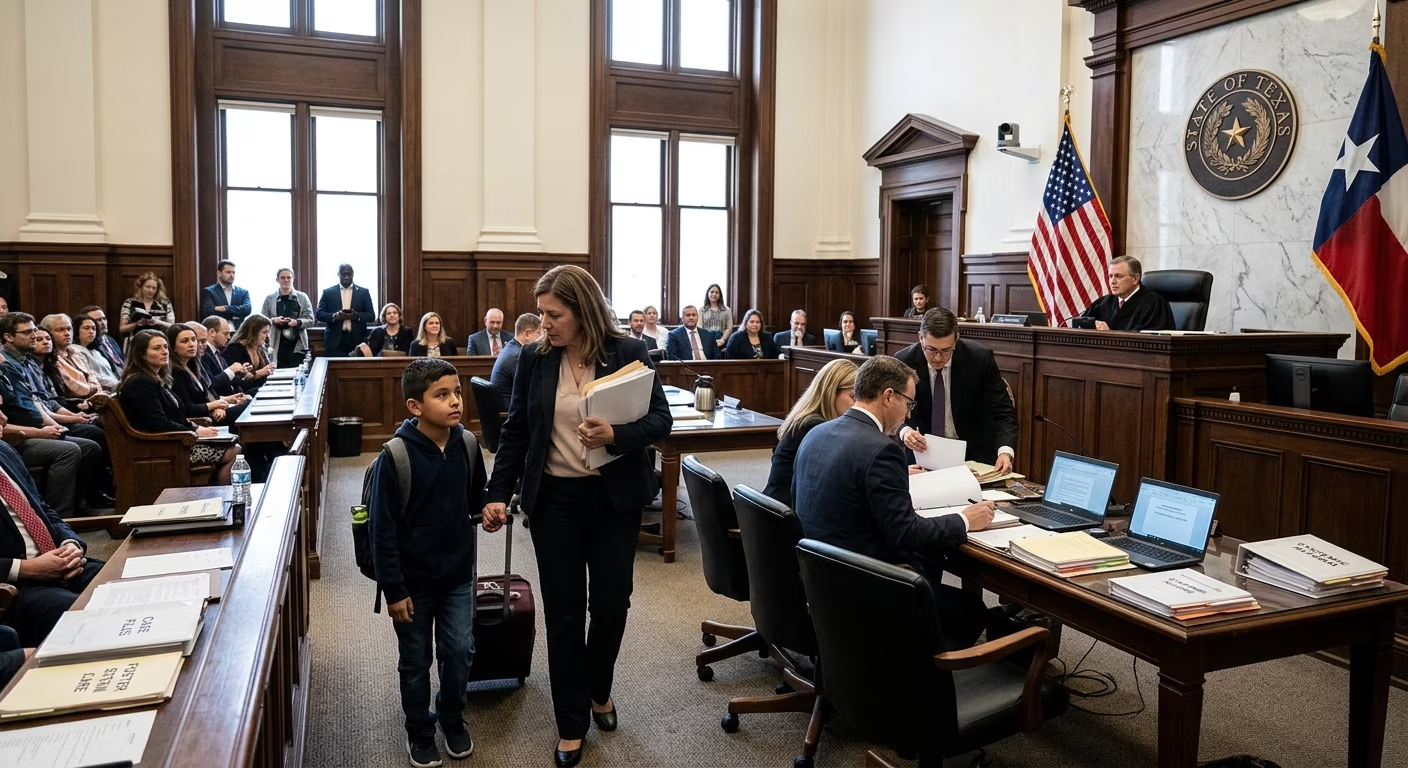
This aggressive federal intervention was met with fierce resistance. State leaders and agencies have continually appealed portions of the court’s orders to the U.S. Fifth Circuit Court of Appeals, arguing that the expansive mandates overstep federal judicial authority and infringe upon state sovereignty. Despite these legal maneuvers, the federal court has largely maintained its grip, consistently demanding transparency and tangible progress. The struggle for compliance has resulted in dramatic courtroom showdowns. On multiple occasions, the state of Texas has been found in contempt of court for failing to properly investigate abuse allegations or fix the pervasive placement shortages. These contempt rulings have carried the threat of massive financial penalties—sometimes floating fines of up to $100,000 per day—serving as a stark warning that bureaucratic sluggishness will not be tolerated.
The Human Cost: Stories Behind the Statistics
While legal filings and court mandates are laden with clinical terminology and statistical data, the true weight of this litigation is borne by the children themselves. The term “class members” fails to capture the deeply personal tragedies that necessitate such sweeping systemic reform.
These are children who have endured the compounding trauma of profound instability. Many have been shuffled through dozens of placements—from emergency shelters to disparate foster homes, to psychiatric wards—never experiencing the fundamental security of a permanent, loving environment. The instability disrupts their education, severs vital peer relationships, and severely impairs their ability to form healthy emotional attachments. For a young mind attempting to navigate the complexities of development, the lack of a reliable adult figure creates a vacuum often filled by anxiety and mistrust. Furthermore, without a stable environment, these youths become prime targets for human traffickers and other predatory elements that prey upon the displaced and disenfranchised.
For youth aging out of this broken system, the consequences are severe. A lack of comprehensive transition planning often results in high rates of homelessness, early involvement in the criminal justice system, and pervasive mental health struggles. The lawsuit underscored that the state’s failure to nurture these children essentially condemns a significant portion of them to a life of perpetual vulnerability, shifting the burden of their care to other underfunded social safety nets.
Legislative and Administrative Ripple Effects
The unrelenting pressure from the federal bench has forced the Texas Legislature and state agencies to fundamentally rethink their approach to child welfare. Facing the constant threat of contempt citations and public embarrassment, lawmakers have appropriated billions of dollars in emergency funding to address critical shortfalls.
These funds have been directed toward increasing caseworker salaries to improve retention rates, expanding the capacity of localized mental health services, and building out new placement beds for high-needs youth. The rapid turnover of DFPS staff was long identified as a crippling bottleneck; higher compensation aims to stabilize the workforce and foster institutional knowledge. Furthermore, the state has aggressively accelerated its transition to Community-Based Care (CBC). This decentralized model shifts the responsibility of case management and foster home procurement from the monolithic state agency to regional private contractors, with the theoretical goal of keeping children closer to their home communities and increasing localized accountability. Proponents of CBC argue that regional organizations are better equipped to leverage local resources and adapt to specific community needs than a centralized bureaucracy in Austin.
However, money and privatization alone have not proven to be a panacea. The sheer scale of the crisis requires a cultural shift within the regulatory agencies themselves. Court monitors continue to uncover gaps in the state’s newly established safety protocols, indicating that while legislative investments are crucial, administrative execution remains a persistent hurdle. Bridging the gap between legislative intent and on-the-ground reality continues to be the most challenging aspect of the reform effort.
A Blueprint for Nationwide Reform?
The ripple effects of the Texas litigation extend far beyond the state’s borders. The aggressive posture of the federal court in overseeing state-run welfare systems has sent a clear message to child protection agencies nationwide: constitutional violations rooted in systemic negligence will face unyielding judicial scrutiny.
Class-action lawsuits utilizing similar frameworks have been leveraged in states across the country, as advocates increasingly turn to the federal judiciary when legislative bodies fail to enact meaningful change. The Texas case serves as a masterclass in the complexities of institutional reform litigation. It demonstrates both the immense power of the courts to compel immediate safety measures and the inherent limitations of attempting to micromanage complex state bureaucracies from the bench. Ultimately, the goal of such litigation is not permanent federal receivership, but rather the creation of a self-sustaining system that inherently prioritizes child safety and well-being above all other considerations.
Frequently Asked Questions (FAQs)
- What exactly is the M.D. v. Abbott lawsuit?
- Filed in 2011, it is a federal class-action lawsuit brought against the state of Texas on behalf of children in its long-term foster care system. The suit successfully argued that systemic failures violated the children’s constitutional rights to safety and well-being.
- Who is managing the oversight of the Texas foster care system?
- While the Texas Department of Family and Protective Services (DFPS) runs the day-to-day operations of the system, it is currently under the strict oversight of U.S. District Court Judge Janis Graham Jack. She relies on court-appointed independent monitors to assess the state’s compliance with mandated reforms and remedial orders.
- What does the term “CWOP” refer to in child welfare?
- CWOP stands for “Children Without Placement.” This administrative term refers to foster youth who cannot be placed in a licensed foster home or treatment facility due to capacity shortages. These children often end up sleeping in unregulated environments like state office buildings, rented properties, or hotels.
- Why has the state of Texas faced contempt of court charges?
- The state has been held in contempt multiple times for failing to implement the court’s remedial orders. Examples of these failures include not establishing a reliable system to investigate abuse allegations in a timely manner and failing to adequately track children placed in out-of-state residential facilities.
- What is Community-Based Care (CBC)?
- CBC is a decentralized foster care model adopted by Texas in response to systemic failures. Instead of a single state agency managing all cases directly, the state contracts with local, private nonprofits to coordinate care, manage foster homes, and provide therapeutic services within designated geographic regions.
Conclusion: The Long Road to Healing
Rehabilitating a deeply fractured foster care system is a monumental task that cannot be accomplished overnight, nor can it be achieved solely through judicial decrees. The decade-long battle over the Texas child welfare system illuminates the tragic consequences of governmental neglect, while simultaneously highlighting the vital role of persistent legal advocacy.
The legacy of this exhaustive litigation will not just be measured in court filings, judicial fines, or the implementation of new bureaucratic models. Its ultimate success will be judged by the day-to-day realities of the children it aims to protect. Every child who enters state custody deserves a foundation of safety, stability, and compassionate care. As Texas continues its fraught journey toward compliance, the eyes of the nation remain fixed on the ongoing effort to transform a constitutional crisis into a system that truly honors its profound obligation to the most vulnerable members of society.
References
- Constitutional Catch-22: The Unvindicated Rights of Foster Children — Stanford Journal of Civil Rights & Civil Liberties. 2025-05-03. https://law.stanford.edu
- Appeals court blocks $100K daily fine for Texas foster care — The Texas Tribune. 2024-04-15. https://www.texastribune.org
- DFPS Report on Court Monitor Fees – August 2024 — Texas Department of Family and Protective Services. 2024-08-03. https://www.dfps.texas.gov
- Case: MD v. Abbott — Civil Rights Litigation Clearinghouse. 2026-04-09. https://clearinghouse.net