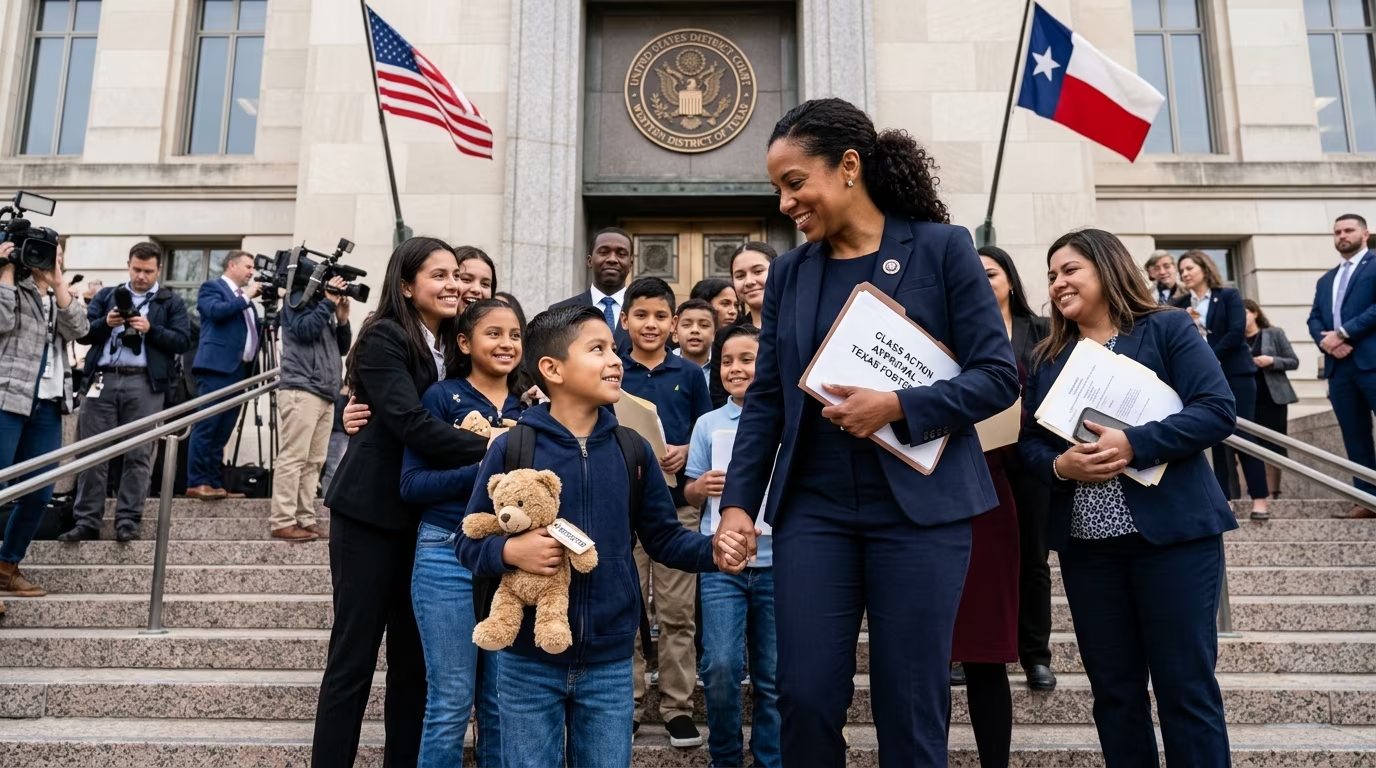
The Gravity of Systemic Child Welfare Litigation
When a state removes a child from their home due to abuse or neglect, it assumes a profound moral and legal responsibility: to provide a safe, stable, and nurturing environment. However, when government agencies fail to meet this basic obligation, the judicial system often becomes the final line of defense for the vulnerable. A monumental federal court ruling has authorized a comprehensive class-action lawsuit to proceed against the State of Texas, representing thousands of children relegated to long-term foster care.
This milestone underscores a growing consensus that state child welfare systems must be held constitutionally accountable for systemic failures. Rather than relying on piecemeal litigation where victims seek damages after the fact, class-action lawsuits demand holistic, preventative reforms. The Texas case targets the plight of children trapped in a legal status known as Permanent Managing Conservatorship (PMC). This judicial authorization sends a powerful, unyielding message to child welfare departments nationwide: taking custody of a youth brings an absolute, undeniable constitutional duty to protect them from further trauma and harm.
Understanding Permanent Managing Conservatorship (PMC)
To fully grasp the magnitude of this federal lawsuit, it is essential to comprehend the complex mechanics of the child protection system. Under typical state laws, when a youth enters government custody, the regional Department of Family and Protective Services is generally granted an initial statutory window—often 12 to 18 months—to achieve a permanent resolution. The primary, preferred goal is reunification with the biological family, provided the original safety threats have been mitigated. If reunification is deemed unsafe or impossible, the secondary objective is to secure a permanent adoptive home or guardianship.
When these strict timelines expire without a permanent outcome, a child is thrust into Permanent Managing Conservatorship. In this perilous phase, the state effectively becomes the permanent legal parent, and the child’s prospects for finding a stable forever family drastically diminish. According to data collected by the U.S. Administration for Children and Families (ACF), long-term foster care is deeply associated with worsened outcomes across multiple developmental metrics. Nationally, children who exit the foster system without achieving permanency spend an average of nearly two years navigating administrative limbo, with tens of thousands languishing for well over three years.
In Texas, entering PMC frequently translates to a childhood characterized by transient living situations, disrupted educational pathways, and severely severed social ties. The class-action certification allows legal advocates to represent this entire subset of vulnerable youth collectively, arguing that the structural flaws inherent in this long-term care model violate their fundamental civil liberties.
Stages of Foster Care Custody
| Phase of Care | Typical Duration | Primary Legal Goal | Common Living Arrangement |
|---|---|---|---|
| Temporary Custody | 12 to 18 Months | Family Reunification | Temporary Foster Homes / Relative Placements |
| Permanent Conservatorship (PMC) | Until Age 18+ | Adoption / Legal Guardianship | Congregate Care / Institutional Group Homes |
| Aging Out | Post-18 Years Old | Independent Living | Transition to Adulthood (High Risk of Instability) |
Constitutional Claims: The Right to Safety in State Custody
The bedrock of this monumental legal challenge relies heavily on the Fourteenth Amendment of the United States Constitution, which guarantees substantive due process rights to all citizens. In the specific context of child welfare jurisprudence, federal courts have firmly established that once a state government takes a person into custody—thereby stripping them of their liberty and alternative support systems—it simultaneously assumes an affirmative, legally binding duty to ensure their basic safety and well-being.
The legal advocates spearheading this case argue that the current infrastructure of the state’s foster system exposes long-term wards to an unreasonable risk of harm. By certifying the class of plaintiffs, the federal judge validated the premise that the injuries suffered by these children are not merely isolated incidents resulting from a few negligent bad actors. Instead, the courts are examining whether these harms are the predictable, inevitable outcomes of a thoroughly broken administrative framework.
During the proceedings, advocates presented extensive, alarming evidence indicating that state authorities consistently failed to protect youths from physical and psychological trauma. Allegations surfaced that children were routinely placed in under-regulated facilities where abuse was tragically common, were frequently overmedicated with psychotropic drugs to manage behavioral issues stemming from systemic trauma, and were unnecessarily separated from their biological siblings. The core legal argument remains resolute: the government’s failure to provide adequate resources, rigorous oversight, and qualified personnel constitutes a direct violation of the constitutional mandate to keep state wards reasonably safe from harm.
Systemic Failures Exposed by the Litigation
The federal court’s willingness to allow this complex litigation to proceed on behalf of thousands of children in long-term care sheds a glaring light on specific, entrenched administrative failures. The plaintiffs’ comprehensive legal complaint details a cascade of operational breakdowns that essentially turn state protection into state-sponsored instability. Some of the most critical systemic deficiencies highlighted in the lawsuit include:
- Unmanageable Caseloads and High Worker Turnover: At the very heart of the child welfare crisis is a severe shortage of qualified caseworkers. Evidence submitted during the legal proceedings indicated that many social workers were burdened with active caseloads that were more than double the recognized national professional standards. This crushing daily workload makes it virtually impossible for workers to conduct meaningful visits, closely supervise foster placements, or advocate effectively for the medical and educational needs of their clients. Consequently, the child welfare system suffers from an astronomically high employee turnover rate, leaving vulnerable children without consistent, knowledgeable adult advocates.
- Severe Placement Shortages and Restrictive Congregate Care: The state suffers from a chronic, dangerous deficit of therapeutic, family-like foster homes. Due to this severe bed shortage, agencies are often forced into a corner, placing children in non-therapeutic, large-scale group homes or institutional centers. These congregate care environments are notoriously restrictive and have historically been identified by advocates as hotbeds for bullying, physical altercations, and emotional neglect, far removed from the nurturing environment a family home provides.
- Geographic Displacement and the Separation of Siblings: Because of the sheer lack of available, appropriate foster beds within local jurisdictions, children in long-term care are frequently transported hundreds of miles away from their home counties. This harsh geographical displacement immediately cuts them off from their original schools, extended family members, and familiar community support networks. Furthermore, large sibling groups—often the only remaining family connection a child has—are routinely split up and sent to different facilities across the state, inflicting compounding emotional trauma on youths who have already lost so much.
The Judicial Turning Point and Mandated Reforms
The federal district court’s commentary throughout the initial litigation process was nothing short of a historic indictment of state-run child welfare. Judicial opinions noted the tragic reality that children often leave the state’s custody significantly more damaged than when they first entered it. By acknowledging that the system effectively normalized instability, overmedication, and unacceptable risks of abuse, the court signaled that the status quo could no longer be legally tolerated.
Allowing this class action to move forward permanently dictates that the state government cannot simply settle a handful of individual claims with financial payouts in order to make the public relations problem disappear. Instead, it sets the definitive stage for a federally mandated, top-to-bottom overhaul of the state’s Department of Family and Protective Services. Potential legal remedies could include strict, court-enforced caps on caseworker caseloads to ensure adequate supervision, mandatory round-the-clock awake staff in all congregate care facilities, and the immediate implementation of a modernized, centralized data system to track and respond to abuse allegations in real-time.
Furthermore, the progression of this lawsuit strongly necessitates the appointment of independent legal monitors to closely oversee the state’s ongoing compliance with constitutional standards. This critical shift from internal agency self-regulation to rigorous external federal oversight acts as a necessary mechanism for dismantling decades of bureaucratic inertia. It effectively forces legislative bodies to appropriate the massive funding required to build a robust, community-based care network that strictly prioritizes the dignity, health, and absolute safety of every child in custody.
A Blueprint for National Child Welfare Advocacy
The profound reverberations of this federal court decision extend far beyond the geographical borders of Texas. Nationwide, civil rights attorneys and child advocacy organizations are meticulously observing this legal battle as a highly effective blueprint for holding other state governments accountable. Official statistical data published by the Administration for Children and Families firmly reveals that the systemic issues plaguing the Texas foster system—such as youths aging out without achieving permanency and a massive over-reliance on institutional group care—are truly national epidemics that require immediate intervention.
In recent years, landmark federal legislation such as the Family First Prevention Services Act has proactively attempted to pivot the nationwide system away from institutional group homes and toward proactive family preservation and kinship care. However, federal statutory changes alone often lack the aggressive, localized enforcement mechanisms required to compel stubborn state agencies into immediate compliance. Broad class-action litigation successfully bridges this enforcement gap, powerfully transforming aspirational legislative policy goals into strict, legally binding court mandates.
Ultimately, this crucial judicial ruling powerfully reinforces the concept that administering child welfare is not merely a charitable public service provided at the state’s discretion, but rather a strict, unyielding constitutional obligation. For the thousands of vulnerable children sleeping in temporary emergency shelters or institutional dormitories tonight, this ongoing legal progression offers a vital glimmer of hope. It promises a rapidly approaching future where the government is legally forced to act not just as a temporary custodian, but as a deeply responsible, protective guardian committed to their long-term well-being and developmental success.
Frequently Asked Questions (FAQs)
What does the term Permanent Managing Conservatorship (PMC) mean?
Permanent Managing Conservatorship (PMC) is a specific legal status utilized when a state government takes permanent legal custody of a youth. This typically occurs after a child has remained in temporary foster care for a designated statutory period (often 12 to 18 months), and the presiding family courts officially determine that safe reunification with the biological parents is not achievable, but a permanent adoptive family has not yet been secured.
Why is this specific lawsuit classified as a “class action”?
A class-action lawsuit is a legal maneuver that allows a small group of named plaintiffs to sue a defendant on behalf of a much larger group (the “class”) who are actively experiencing the exact same systemic harms. In this particular instance, the certified class encompasses all children currently languishing in long-term foster care within the state. This means that any sweeping reforms or protections ordered by the federal judge will universally benefit the entire population of long-term foster children, rather than just the individual youths who originally filed the legal complaint.
What foundational constitutional rights do foster children possess?
Under the Fourteenth Amendment to the United States Constitution, individuals placed in state custody are guaranteed substantive due process rights. For youth in the foster care system, federal courts have interpreted this to mean that the state government possesses an affirmative, non-negotiable duty to provide for their fundamental daily needs and vigorously protect them from any unreasonable risk of harm, abuse, or neglect while under government supervision.
References
- M.D. v. Abbott, No. 18-40057 (5th Cir. 2019) — Justia Law. 2019-07-08. https://law.justia.com/cases/federal/appellate-courts/ca5/18-40057/18-40057-2019-07-08.html
- Data and Statistics: AFCARS — U.S. Administration for Children and Families (HHS). 2025-05-01. https://www.acf.hhs.gov/cb/data-research/adoption-foster-care
- Child Welfare Outcomes Report Data Site — U.S. Department of Health & Human Services. 2024-01-01. https://cwoutcomes.acf.hhs.gov/cwodatasite/
- Constitutional Catch-22: The Unvindicated Rights of Foster Children — Stanford Journal of Civil Rights & Civil Liberties. 2025-05-03. https://law.stanford.edu/publications/constitutional-catch-22-the-unvindicated-rights-of-foster-children/