
Systemic Vulnerabilities in Congregate Care Facilities
Exposing the hidden public health risks facing foster youth in group homes.
Systemic Vulnerabilities: The Hidden Crisis Facing Youth in Congregate Care Facilities
When a child is removed from their home due to allegations of severe abuse or neglect, the state assumes the profound legal and moral responsibility of becoming their guardian. The child welfare system is ostensibly designed to provide a sanctuary of safety, stability, and healing for those who have experienced unimaginable early adversity. However, for the tens of thousands of foster youth placed in congregate care facilities—commonly known as group homes, residential treatment centers, or institutional care—the reality often contradicts this protective mandate.
While originally conceptualized as specialized, short-term therapeutic environments, these institutional settings harbor systemic vulnerabilities that place children at significant risk. These hazards are not merely theoretical anomalies; they become tragically apparent during public health emergencies, where the very architecture of institutional care magnifies the threat to both physical and emotional well-being. Examining the structural flaws of congregate care reveals a hidden crisis, prompting child welfare advocates, legal scholars, and policymakers to ask a critical, unsettling question: when a state-run system designed to protect vulnerable children becomes a catalyst for further harm, who is genuinely looking out for them? The answer requires a deep dive into the mechanics of institutional care and a fundamental rethinking of how society supports its most marginalized youth.
The Anatomy of Congregate Care: A System Stretched Thin
Congregate care encompasses a broad and varied spectrum of out-of-home placement facilities, ranging from emergency diagnostic shelters to long-term group homes and secure residential treatment centers. Unlike traditional family foster care, where a child is integrated into a private household with dedicated, consistent caregivers, congregate settings rely almost entirely on a shift-based workforce. This structural difference fundamentally alters the dynamic of caregiving. Instead of organic familial bonds, children must navigate complex relationships with a rotating cast of staff members who clock in and out every eight hours. This results in a transient emotional environment that struggles to provide the relational permanency essential for healthy child development.
Furthermore, the operational reality of many group homes is defined by chronic resource scarcity. Facilities frequently grapple with notoriously high staff turnover rates, driven by stagnant wages, inadequate specialized training, emotional burnout, and the immense daily stress of managing youth with severe trauma histories. When staffing levels inevitably drop, the sophisticated therapeutic models these facilities are supposed to employ often degrade into a purely custodial, crowd-control approach. Supervision becomes generalized rather than individualized, and rigid behavioral management systems replace empathetic engagement. In these stretched environments, the nuanced psychological needs of traumatized adolescents can easily be overlooked, creating an atmosphere where systemic neglect can take root despite the best intentions of frontline workers.
Contagion and Confinement: Public Health Risks in Institutional Settings
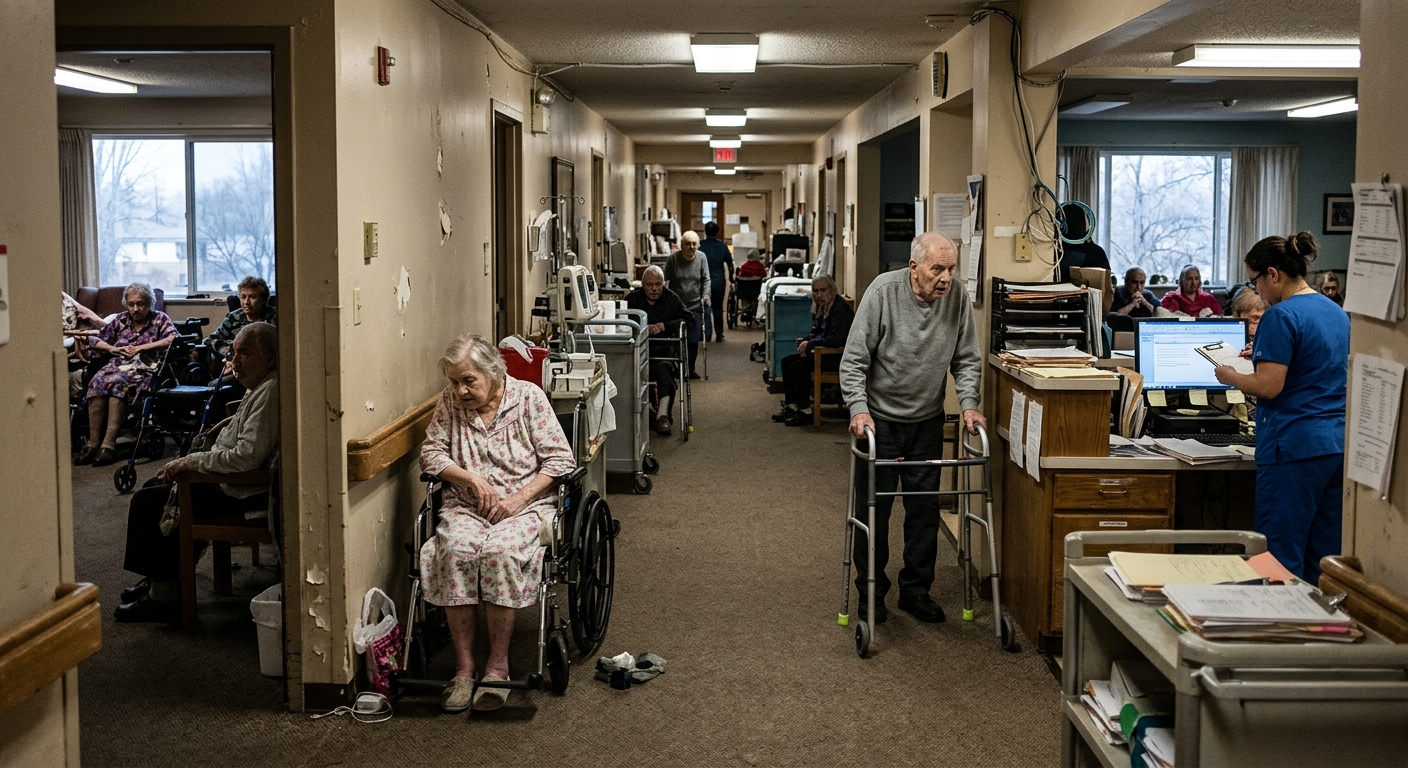
The structural design of congregate care inherently compromises physical safety, a reality that becomes apparent during infectious disease outbreaks. Whether facing localized outbreaks of seasonal influenza, norovirus, or pandemics like COVID-19, institutional settings function as epidemiological pressure cookers. Group homes typically feature shared, dormitory-style bedrooms, communal dining cafeterias, and centralized bathrooms. In such densely populated spaces, implementing standard, effective public health protocols—such as isolation, quarantine, and physical distancing—is logistically impossible.
Public health organizations, including the Centers for Disease Control and Prevention (CDC), have long recognized that individuals residing in congregate care settings face a heightened risk of rapid infection and severe medical outcomes during viral outbreaks. The child welfare system’s institutional footprint shares many of the same dangerous infrastructural vulnerabilities as adult nursing homes, homeless shelters, or correctional facilities. When a contagious pathogen enters a group home—often unwittingly carried by a rotating staff member or a visitor—it can spread through the facility with devastating speed. For foster youth, many of whom already suffer from underlying chronic health conditions, asthma, or weakened immune systems due to prior neglect or lack of consistent medical care, exposure to rapid contagion poses an acute threat to their physical survival.
The Ripple Effect of Staffing Shortages on Crisis Management
The dangerous intersection of a public health crisis and existing staffing vulnerabilities creates a catastrophic ripple effect within group homes. When an outbreak occurs within a residential facility, staff members inevitably fall ill, require quarantine, or resign due to unsafe working conditions. This sudden, unpredictable depletion of the workforce leaves the facility critically understaffed at the exact moment when intensive supervision, medical monitoring, and crisis intervention are most desperately required.
In these acute crisis scenarios, the basic operational integrity of the group home begins to rapidly fracture. The ratio of adults to children plummets below mandated safety standards, directly compromising the physical security of the residents. Beyond the immediate risk of unmanaged physical illness, the severe lack of supervision can lead to increased interpersonal violence among youth, a heightened risk of self-harm, and the complete suspension of vital therapeutic and educational services. External school programming is halted, psychological counseling sessions are paused, and the environment devolves into a grim mode of basic survival. The youth are effectively trapped in a quarantined, highly restrictive environment with dwindling adult support, amplifying their pre-existing feelings of abandonment and anxiety.
The Psychological Toll of Prolonged Institutionalization
The detriments of congregate care extend far beyond acute physical health risks; the long-term psychological toll of institutionalization on adolescents is profound and enduring. Decades of rigorous child development and neurobiological research underscore a universal truth: children thrive in safe, family-based settings where they can form secure, lasting attachments to a primary caregiver. Congregate care inherently disrupts this biological and developmental imperative. The clinical, highly regimented nature of group homes deprives youth of essential normalcy—they cannot easily participate in after-school extracurricular activities, invite friends over for dinner, hold part-time jobs, or experience the unstructured, nurturing environment of a typical family home.
Furthermore, placing large groups of youth with severe behavioral, emotional, and psychiatric challenges together in a confined environment can yield highly counterproductive outcomes. Peer-reviewed research indicates that youth in congregate care are highly susceptible to “deviant peer contagion,” a phenomenon where aggressive, antisocial, or risky behaviors are normalized and reinforced by the peer group. Instead of rehabilitating traumatized youth, the group home environment can inadvertently escalate behavioral issues and introduce youth to new maladaptive coping mechanisms. Studies consistently demonstrate that, compared to their peers in family-based foster care or kinship care, youth aging out of group homes experience drastically poorer educational attainment, higher rates of juvenile justice involvement, increased susceptibility to homelessness, and significantly lower rates of achieving legal permanency, such as reunification with biological parents or adoption.
Oversight Deficits: The Illusion of Accountability
A systemic factor contributing to the vulnerability of youth in group homes is the chronic deficit in regulatory oversight. The American child welfare system is highly decentralized, with state, county, and local agencies often contracting out congregate care services to a massive network of private, for-profit, or non-profit corporate entities. This privatization creates a complex, fragmented landscape where legal and ethical accountability can easily be obscured behind layers of bureaucracy.
While residential facilities are technically subject to state licensing requirements and periodic inspections, the metrics evaluated during these audits often focus heavily on superficial compliance—such as building fire codes, square footage, and paperwork completion—rather than the subjective quality of clinical care and the actual psychological well-being of the residents. When severe disease outbreaks, instances of physical or sexual abuse, or tragic, preventable fatalities occur within these walls, post-mortem investigations frequently reveal a chaotic labyrinth of miscommunication between child protective services, public health departments, law enforcement, and private facility administrators. The lack of a centralized, transparent reporting mechanism means that systemic failures are often only addressed retroactively, long after a child has suffered harm. The illusion of a robust safety net persists in the public consciousness, but the grim reality is a patchwork of underfunded, disjointed agencies struggling to enforce meaningful standards of care.
A Legislative Shift: Prioritizing Families Over Facilities
Recognizing the deep-seated structural flaws and consistently poor developmental outcomes associated with institutional care, there has been a monumental paradigm shift in federal child welfare policy in recent years. The Family First Prevention Services Act (FFPSA), enacted in 2018, represents the most significant overhaul of federal child welfare financing in over two decades. Historically, federal Title IV-E funding inadvertently incentivized the use of out-of-home placements, including expensive congregate care facilities, by providing states with open-ended financial reimbursement for foster care room and board maintenance.
The FFPSA radically restructures these financial incentives to align with developmental science. It places strict limitations on the amount of federal funding available for group care placements, explicitly mandating that states pivot their operational focus toward family-based kinship and foster placements. Under the parameters of the new law, congregate care is only eligible for federal reimbursement if the facility meets the rigorous, newly defined standards of a Qualified Residential Treatment Program (QRTP). A certified QRTP must utilize an evidence-based, trauma-informed treatment model, employ accessible registered nursing and clinical staff, and actively facilitate family participation in the child’s ongoing treatment process. Importantly, a child’s placement in a QRTP must be rigorously assessed and approved by an independent qualified professional and is legally intended to be strictly short-term and clinically necessary, permanently ending the practice of using group homes as a default housing solution.
Simultaneously, the FFPSA redirects billions of federal dollars toward proactive prevention services—such as intensive mental health counseling, maternal substance abuse treatment, and in-home parenting skills training—specifically designed to keep children safely with their biological families and prevent their traumatic entry into the foster care system altogether. This monumental legislative pivot underscores a growing, bipartisan national consensus: congregate care is not, and can never be, an adequate substitute for a family, and its utilization must be aggressively minimized and heavily regulated.
Conclusion
The intersection of structural instability, severe public health vulnerability, and profound psychological trauma makes congregate care one of the most precarious environments for dependent youth in the modern welfare system. While landmark legislative reforms like the Family First Prevention Services Act provide a vital, evidence-based roadmap toward a more humane, family-centric child welfare framework, the transition requires relentless public vigilance and robust, sustained financial investment in community-based resources. The state cannot simply warehouse its most deeply traumatized and vulnerable children in institutional settings and reasonably expect them to heal. True protection demands a commitment to dismantling our historical reliance on institutional care, ensuring rigorous, unannounced oversight of all remaining residential facilities, and fundamentally recognizing that every single child’s absolute baseline requirement for growth is a safe, stable, and deeply loving family.
Frequently Asked Questions (FAQs)
- What is congregate care in the child welfare system?
Congregate care refers to out-of-home placement settings for youth in the foster care system that involve group living arrangements rather than family homes. This includes emergency shelters, group homes, and specialized residential treatment facilities. These settings are characterized by shift-based staff and shared living spaces. - Why are youth in group homes at higher risk during disease outbreaks?
Due to the communal nature of group homes—which typically feature shared bedrooms, bathrooms, and dining areas—it is exceptionally difficult to implement physical distancing or isolation protocols. Combined with rotating staff who come and go from the broader community, infectious diseases like influenza or COVID-19 can spread rapidly through these densely populated facilities. - What is the Family First Prevention Services Act (FFPSA)?
Passed in 2018, the FFPSA is a landmark piece of federal legislation that reformed child welfare financing. It allows states to use federal Title IV-E funds for prevention services (like mental health and substance abuse treatment) to keep children with their families. It also places strict limits on federal funding for congregate care, incentivizing family-based foster care and kinship placements instead. - Are all foster care group homes being permanently shut down?
No. While the goal is to significantly reduce reliance on institutional care, specialized facilities are still utilized for youth who require acute clinical interventions. However, under new federal guidelines, these facilities must operate as Qualified Residential Treatment Programs (QRTPs), ensuring they provide high-quality, trauma-informed, and strictly time-limited treatment rather than long-term housing. - How does institutional care affect a child’s mental health?
Research consistently shows that prolonged stays in congregate care can negatively impact a child’s psychological development. The lack of a consistent parental figure can disrupt attachment, while the highly regimented environment reduces normalcy. Furthermore, youth in group settings often experience “deviant peer contagion,” which can exacerbate behavioral issues rather than resolve them.
References
- Public Health Emergency Preparedness and Response Capabilities — Centers for Disease Control and Prevention (CDC). 2022-01-01. https://www.cdc.gov/cpr/readiness/00_docs/CDC_PreparednesResponseCapabilities_October2018_Final_508.pdf
- Title IV-E Prevention Program — The Administration for Children and Families (ACF), U.S. Department of Health & Human Services. 2024-04-29. https://www.acf.hhs.gov/cb/title-iv-e-prevention-program
- The Family First Prevention Services Act: A New Era of Child Welfare Reform — American Journal of Public Health (PMC). 2020-03-01. https://www.ncbi.nlm.nih.gov/pmc/articles/PMC7011218/
- Using Congregate Care — The Annie E. Casey Foundation. 2021-09-29. https://www.aecf.org/resources/using-congregate-care
Similar Articles








Read full bio of Sneha Tete


