
Beyond the Gavel: Analyzing the Supreme Court’s Fulton v. Philadelphia Decision
A deep dive into the landmark Supreme Court decision on religious exemptions and equal rights in foster care.
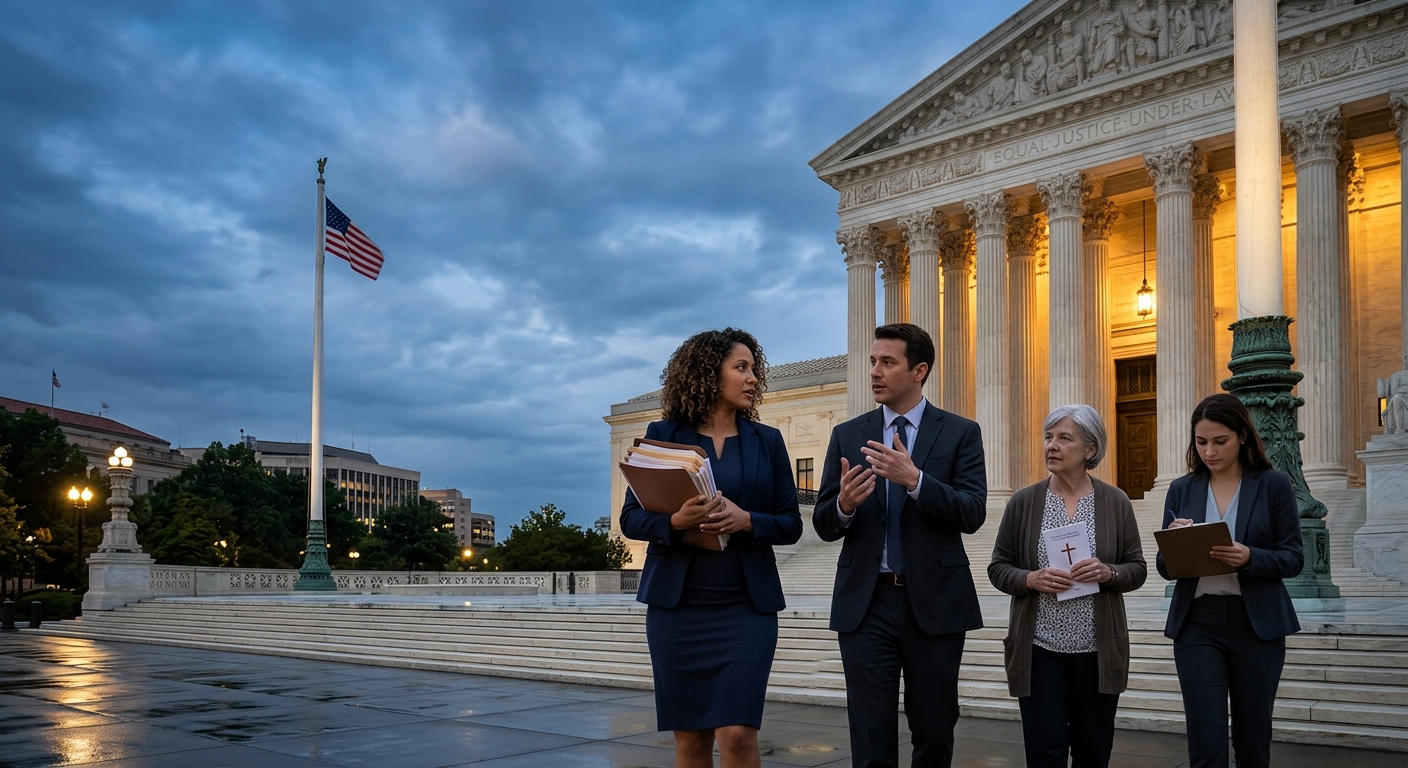
The Intersection of Faith, Law, and Foster Care
The United States child welfare system operates through a complex, interdependent partnership between public government agencies and private organizations. For decades, this ecosystem has relied heavily on faith-based institutions to help place vulnerable children into supportive, loving homes. However, a profound legal and ethical tension arises when the religious convictions of private, taxpayer-funded agencies conflict with municipal non-discrimination laws designed to protect marginalized communities. This exact conflict reached the pinnacle of the American judicial system in the landmark case of Fulton v. City of Philadelphia.
In June 2021, the United States Supreme Court delivered a unanimous 9-0 ruling that determined Philadelphia had violated the First Amendment’s Free Exercise Clause by terminating its foster care contract with Catholic Social Services (CSS). The agency had explicitly refused to screen or certify same-sex couples as potential foster parents, citing its religious beliefs. While the decision was a definitive victory for the agency involved, the Court’s remarkably narrow legal reasoning sent ripples through the civil rights and child welfare advocacy communities. Instead of establishing a sweeping precedent that would grant religious organizations a blanket license to discriminate, the Court focused on specific municipal contract language, leaving the broader debate over religious liberty and equal protection fundamentally unresolved.
Understanding the Foster Care Ecosystem
To grasp the magnitude of this judicial dispute, one must first understand the fragile nature of the foster care landscape. Across the nation, hundreds of thousands of youth reside in the child welfare system at any given time, waiting for temporary foster placements or permanent adoptive families. Public child welfare departments frequently lack the manpower to recruit, vet, and support prospective foster parents on their own. Consequently, they contract with third-party agencies, compensating them with taxpayer funds to perform these critical placement duties.
These third-party organizations often include religiously affiliated charities, which have historically played a major role in social services. Conflicts arise, however, as societal norms and legal definitions of family evolve. Municipalities like Philadelphia have implemented robust anti-discrimination ordinances—such as the city’s Fair Practices Ordinance—to ensure that public funds are not used to deny services to individuals based on race, religion, gender identity, or sexual orientation. When an agency’s religious doctrine dictates that marriage is strictly between a man and a woman, it places the organization squarely at odds with modern non-discrimination mandates, setting the stage for a high-stakes constitutional showdown.
The Roots of the Constitutional Dispute
The controversy began in earnest in 2018 when an investigative journalism report revealed that Catholic Social Services, an agency that had worked with Philadelphia for decades, would not certify same-sex couples for foster care. Upon learning of this policy, the city informed CSS that such exclusionary practices violated the non-discrimination provisions embedded within the standard municipal foster care contract, as well as the city’s broader Fair Practices Ordinance.
Philadelphia presented a firm ultimatum: CSS must agree to evaluate all legally married couples, regardless of sexual orientation, or risk losing its foster care intake contract. When CSS refused to alter its faith-based policy, the city halted all new child referrals to the agency. In response, CSS and several of its affiliated foster parents filed a federal lawsuit. They argued that Philadelphia’s actions constituted open hostility toward their religious beliefs, thereby violating their First Amendment rights to the free exercise of religion.
The legal battle initially favored the city. A federal district court denied the agency’s request for a preliminary injunction, ruling that Philadelphia’s contract requirements were neutral and generally applicable to all contractors. The Third Circuit Court of Appeals subsequently upheld this decision, determining that the city was well within its rights to enforce non-discrimination policies across all its government partners. Undeterred, the agency appealed to the highest court in the land, and the U.S. Supreme Court granted review in early 2020.
Timeline of the Legal Battle
| Year | Event in the Judicial Process |
|---|---|
| 2018 | Philadelphia learns of the agency’s exclusionary policy and halts foster care referrals. A federal lawsuit is subsequently filed. |
| 2018 (July) | A U.S. District Court denies the request for a preliminary injunction, ruling in favor of the city’s contract enforcement. |
| 2019 | The Third Circuit Court of Appeals affirms the lower court’s ruling, supporting Philadelphia’s non-discrimination mandate. |
| 2020 (Feb) | The U.S. Supreme Court grants certiorari, agreeing to hear arguments on the balance of religious liberty and equal protection. |
| 2021 (June) | The Supreme Court rules unanimously (9-0) that Philadelphia violated the First Amendment due to specific discretionary clauses in its contract. |
The Supreme Court’s Legal Reasoning: A Narrow Defeat for the City
Leading up to the decision, legal scholars and civil rights advocates braced for the possibility that the Supreme Court might use Fulton v. City of Philadelphia to overturn Employment Division v. Smith, a pivotal 1990 precedent. The Smith ruling established that the government is not required to grant religious exemptions from laws that are “neutral” and “generally applicable.” However, Chief Justice John Roberts, writing for the unanimous Court, took a significantly narrower path that bypassed the need to dismantle the long-standing Smith framework entirely.
The Court’s ruling hinged on a close, textual examination of the specific contract language Philadelphia used with its foster care agencies. Chief Justice Roberts pointed out that the city’s standard contract contained a provision allowing the Commissioner of the Department of Human Services to grant individualized exemptions to the non-discrimination requirement at their sole discretion. Because the city had created a formal mechanism for granting exceptions—even if it had never actually utilized that mechanism to exempt an agency from the anti-discrimination clause—the Court ruled that the contract was fundamentally not a “generally applicable” policy.
In the eyes of the Court, a law or policy cannot be considered generally applicable if it invites the government to consider the specific reasons for a person’s or organization’s conduct. Because Philadelphia’s contract gave a government official the discretionary power to waive the rules, the city could not legally refuse to extend that waiver to Catholic Social Services for religious reasons without proving a compelling state interest. The Court concluded that while maximizing the number of foster homes and ensuring equal treatment were undeniably important goals, they did not justify the refusal to grant a religious exemption under a contract that already legally allowed for arbitrary exceptions.
Concurring opinions from the Court’s conservative wing expressed immense frustration with the narrow scope of the ruling. Some justices argued that the Court should have definitively overturned the Smith precedent and established a more robust standard for protecting religious liberty against modern non-discrimination laws. Nevertheless, the majority’s reliance on contract technicalities meant that the broader constitutional balance between equal protection and religious freedom remained intact.
The Impact on Vulnerable Youth and Prospective Parents
For child welfare advocates, the primary concern surrounding this judicial dispute was the potential harm inflicted upon the youth at the center of the system. The American foster care system faces a chronic, ongoing shortage of qualified, loving homes. Research consistently demonstrates that LGBTQ+ adults are significantly more likely to foster and adopt children than their non-LGBTQ+ peers. Turning away qualified same-sex couples artificially restricts the pool of available families, leaving more children languishing in institutional care or unstable group homes for extended periods.
Moreover, the child welfare system contains a disproportionately high number of LGBTQ+ youth, many of whom have unfortunately been rejected by their families of origin. Advocates forcefully argue that allowing taxpayer-funded agencies to discriminate against same-sex couples sends a deeply harmful, institutional message to these vulnerable young people, reinforcing the systemic stigmatization they have already endured in their personal lives.
While the Supreme Court’s decision was a loss for the city of Philadelphia, child welfare organizations found a significant silver lining in its limitations. Because the ruling did not create a constitutional right for government contractors to discriminate, local and state governments can theoretically continue to enforce non-discrimination protections, provided they do so consistently and without discretionary loopholes. By simply removing the exemption clauses from their standard municipal contracts, local governments can legally compel all taxpayer-funded agencies to abide by universal anti-discrimination policies without violating the First Amendment framework laid out by the Court.
Responses from Child Welfare and Civil Rights Advocates
The immediate aftermath of the ruling saw mixed reactions across the legal, political, and social spectrum. Faith-based organizations and religious liberty advocates celebrated the decision as a vital reaffirmation of the First Amendment, asserting that the ruling ensures religious charities are not forced to abandon their core theological tenets in order to participate in public service initiatives.
Conversely, civil rights organizations and child advocacy groups voiced strong disappointment, emphasizing the indignity suffered by the prospective same-sex parents who were turned away simply because of who they love. However, many prominent advocates quickly pivoted to highlight the structural boundaries of the decision. Statements from leading civil rights attorneys and policy experts emphasized that the ruling essentially serves as a strict drafting roadmap for municipalities: to protect marginalized couples, governments must ensure their non-discrimination laws are ironclad, universally applied, and entirely free of arbitrary waiver provisions. The narrow victory for the religious agency did not grant a broad license to bypass civil rights protections across all public accommodations.
Legislative Horizons: The Push for Federal Action
Recognizing that judicial interpretations can be unpredictable and subject to shifting court compositions, civil rights advocates have intensified their push for comprehensive federal legislation. The current piecemeal nature of state and local non-discrimination ordinances means that a family’s rights in the child welfare system are heavily dependent on their geographic location. This geographical lottery creates unacceptable vulnerabilities for prospective parents and youth alike.
To secure uniform protections, advocates are urging lawmakers to pass legislation that explicitly prohibits discrimination on the basis of sex, sexual orientation, and gender identity in all federally funded programs. Proposed bills aim to ensure that child welfare agencies prioritizing the best interests of the child cannot simultaneously disqualify capable, loving parents based on arbitrary, discriminatory criteria. By cementing equal protection into statutory law, the legislative branch could effectively close the bureaucratic loopholes left open by the Supreme Court’s highly specific ruling.
Frequently Asked Questions (FAQs)
What was the core issue in Fulton v. City of Philadelphia?
The case centered on whether the City of Philadelphia could legally require a religiously affiliated foster care agency to comply with a non-discrimination mandate that prohibited rejecting same-sex couples, as an explicit condition of receiving taxpayer-funded city contracts.
Did the Supreme Court create a universal right for religious agencies to discriminate?
No. The Supreme Court’s unanimous 9-0 ruling was notably narrow in its application. It did not create a broad license to discriminate for religious entities. Instead, the Court ruled against Philadelphia specifically because the municipal contract contained a clause allowing the city official to grant individualized exemptions, meaning the non-discrimination policy was not legally “generally applicable.”
How can municipalities continue to enforce non-discrimination laws after this ruling?
Local and state governments can continue to enforce anti-discrimination laws provided the rules are strictly neutral and generally applicable. By eliminating discretionary waivers, subjective loopholes, or exemption clauses from their standard contracts, governments can ensure all taxpayer-funded agencies comply with equality mandates.
How does this decision impact LGBTQ+ youth in the foster care system?
While the legal ruling itself dealt directly with prospective foster parents, advocates warn that permitting any form of discrimination reduces the number of available foster homes. Because LGBTQ+ adults are statistically more likely to foster, restricting them exacerbates the widespread shortage of homes and sends a stigmatizing message to LGBTQ+ youth already struggling in the system.
References
- Fulton v. City of Philadelphia, 593 U.S. 522 — Supreme Court of the United States. 2021-06-17. https://www.supremecourt.gov/opinions/20pdf/19-123_g3bi.pdf
- Fulton v. City of Philadelphia — Oyez, Chicago-Kent College of Law. 2021-06-17. https://www.oyez.org/cases/2020/19-123
- Fulton v. City of Philadelphia: Amicus Brief — Williams Institute, UCLA School of Law. 2020-08-15. https://williamsinstitute.law.ucla.edu/publications/amicus-fulton-v-philadelphia/
Similar Articles








Read full bio of medha deb


