
The Vanguard of Youth Justice: How Strategic Litigation is Transforming Child Welfare
Discover how elite legal advocacy and impact litigation are holding state governments accountable and driving systemic reforms to protect vulnerable youth.
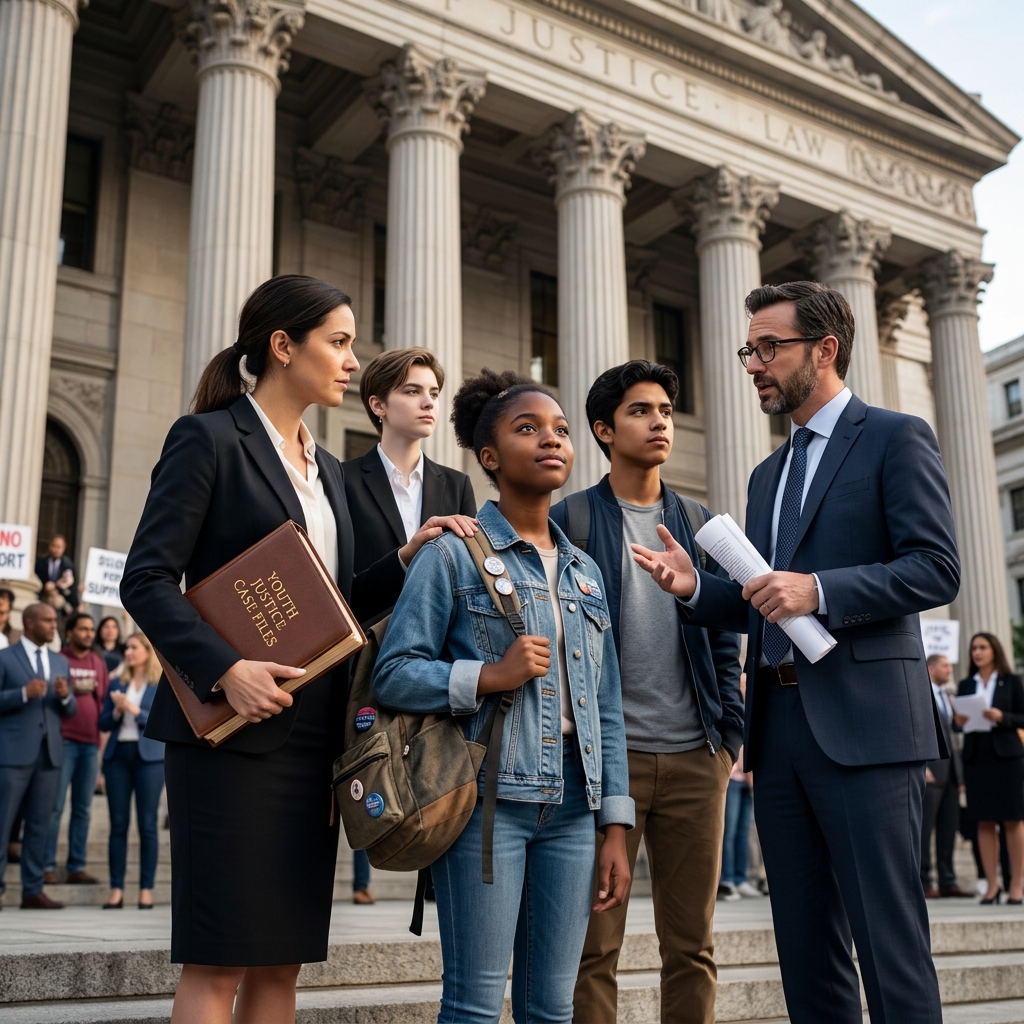
For decades, the American child welfare and juvenile justice systems have struggled to fulfill their foundational mandates: protecting the vulnerable and rehabilitating the wayward. Despite countless legislative efforts, task forces, and billions of dollars in federal funding, state agencies frequently fall short, leaving thousands of children exposed to systemic neglect, unsafe living conditions, and enduring trauma. When traditional policy mechanisms fail to generate meaningful change, a different mechanism must be employed to force the hand of state bureaucracies. This is where strategic legal intervention, specifically impact litigation, emerges as the ultimate catalyst for reform.
Impact litigation—the practice of bringing class-action lawsuits to effect broad, systemic change rather than seeking remedies for a single individual—has become the cornerstone of modern child advocacy. By relying on rigorous constitutional frameworks, top-tier legal advocates take state governments to federal court, demanding enforceable remedies that protect the substantive due process rights of foster children. The evolution of this legal battlefield highlights a crucial shift: reforming child welfare is no longer just a legislative aspiration, but a constitutionally mandated imperative driven by the nation’s most formidable public interest litigators.
The Persistent Crisis in the Child Welfare System
To understand the necessity of class-action lawsuits in this sector, one must first recognize the depth of the crisis plaguing state-run youth systems. Established over a century ago with the creation of the Children’s Bureau, the federal framework for child welfare was initially rooted in social justice. However, modern child welfare infrastructures have evolved into massive bureaucratic networks that frequently lose sight of the individual child. Research indicates that the current approach to foster care has largely failed, plagued by a persistent lack of funding, chronic understaffing, and a lack of localized accountability.
Children entering state custody hold specific constitutional rights, notably under the 14th Amendment, which guarantees substantive due process and the right to be free from an unreasonable risk of harm. When a state removes a child from their biological parents, it assumes the responsibility for that child’s basic needs and safety. Yet, state agencies regularly violate these rights. Caseworkers are often burdened with unmanageable caseloads—sometimes exceeding three times the recommended professional standards—which makes thorough oversight impossible. As a result, children are placed in overcrowded, unlicensed, or abusive homes. Furthermore, many youth end up languishing in institutions and psychiatric residential treatment facilities without a clear pathway to a permanent family.
The institutional failure is compounded when analyzing the intersection of the foster care system and juvenile justice. Advocacy groups often refer to this as the “foster-care-to-prison pipeline.” Youth who experience instability in the foster system are statistically far more likely to face arrests and detention. Recent data trends underscore a troubling resurgence in arrests and pretrial detentions for juveniles, often for minor misdemeanor offenses, which only deepens the trauma and instability these children face.
The Mechanics of Impact Litigation
When systemic failures are deeply entrenched, pleading with state legislatures for incremental budget increases is rarely sufficient. Impact litigation leverages the power of the federal judiciary to compel immediate and lasting change. Advocacy organizations typically file suits under 42 U.S.C. § 1983, a federal statute that allows individuals to sue state actors for civil rights violations. By certifying the lawsuit as a class action on behalf of all children currently in (or at risk of entering) a state’s foster care system, attorneys can target the root causes of the dysfunction.
The goal of these massive lawsuits is rarely to secure financial payouts for the plaintiffs. Instead, litigators seek a federal consent decree or a court-ordered settlement agreement. A consent decree is a binding legal agreement in which the state commits to achieving specific, measurable benchmarks over a set period. These benchmarks might include capping social worker caseloads, eliminating the use of unmonitored psychotropic medications, decreasing the time it takes to finalize adoptions, and closing dangerous emergency shelters.
Once a settlement is reached, the federal court typically appoints independent monitors—experts in child welfare and public administration—to track the state’s progress. This phase of litigation can last for decades. For example, a landmark class-action lawsuit filed against the State of Tennessee in 2000 resulted in nearly two decades of federal oversight. The sustained legal pressure successfully orchestrated a transformational shift in the state’s policies, programs, and outcomes, finally allowing the state to exit federal supervision after proving durable, systemic improvements.
Key Battlegrounds for Legal Advocates
The landscape of youth justice litigation encompasses several distinct battlegrounds, each requiring tailored legal strategies and extensive expert testimonies.
Combating Unnecessary Institutionalization
A primary objective for many advocacy groups is to drastically reduce the number of foster youth placed in congregate care or large institutional facilities. Evidence overwhelmingly shows that children thrive in family-based settings, yet thousands remain housed in group homes due to a shortage of licensed foster families. Litigators challenge the constitutionality of holding children in restrictive environments merely because the state has failed to adequately recruit and retain foster parents.
Protecting Youth from Overmedication
Another critical area of intervention is the medical rights of children in state custody. Investigations have repeatedly uncovered alarming trends regarding the administration of psychotropic medications to foster youth. In many jurisdictions, children are prescribed heavy psychiatric drugs without informed consent, proper medical oversight, or regular review. Legal advocates have successfully achieved court settlements that force states to implement rigorous informed-consent protocols and continuous medical monitoring, ensuring that pharmacological interventions are used safely and only when absolutely medically necessary.
Disrupting the Foster-Care-to-Prison Pipeline
The crossover between the child welfare and juvenile justice systems demands urgent legal attention. Multidisciplinary legal teams increasingly focus on decriminalizing trauma behaviors that stem from foster care instability. By fighting against the arbitrary use of physical custody and advocating for diversion programs, litigators aim to stop the state from criminalizing the very children it has already failed to protect.
The Importance of Elite Legal Talent in Nonprofits
Executing impact litigation against state governments is an enormously complex endeavor. State agencies are defended by attorney generals with virtually unlimited public resources, making these cases David-and-Goliath battles. To level the playing field, public interest law firms and national child advocacy nonprofits must build a vanguard of top-tier legal minds.
The success of these organizations relies heavily on attracting elite litigators who bring years of experience from high-stakes private practice or prominent civil rights divisions. When senior litigators transition into the nonprofit sector, they bring an unparalleled level of strategic rigor. They understand how to navigate grueling discovery processes, depose uncooperative state officials, and dismantle the defenses of bureaucratic negligence using airtight evidentiary records. The migration of top legal talent into youth advocacy signals a maturation of the field; protecting children is recognized not just as social work, but as a premier discipline of constitutional law.
These seasoned attorneys also recognize that legal victories are only the beginning. They collaborate intricately with neuroscientists, trauma-informed care specialists, and policy analysts to ensure that the remedies ordered by the court are grounded in modern scientific consensus regarding adolescent brain development and behavioral health.
Measuring Real-World Outcomes
The tangible impact of federal oversight on state systems can be profoundly transformative. While court battles may be adversarial, the resulting collaboration between court monitors and state agencies often leads to historic turnarounds.
| Systemic Issue | Pre-Litigation Reality | Post-Litigation Reform (Under Consent Decree) |
|---|---|---|
| Caseload Management | Social workers handling 40+ cases simultaneously, preventing meaningful oversight. | Strict, court-enforced caps (e.g., 12-15 cases per worker) ensuring consistent child visits. |
| Medical & Mental Health | Unmonitored prescription of psychotropics; massive delays in mental health assessments. | Mandatory 30-day health evaluations and strict medical review boards for psychiatric prescriptions. |
| Placement Stability | Overreliance on unlicensed relative homes, emergency shelters, and group institutions. | Increased state funding for foster parent recruitment; prioritization of community and family-based care. |
| Juvenile Justice Crossover | High rates of detention for minor offenses stemming from trauma and instability. | Implementation of community-based diversion programs; reliance on summons rather than physical arrests. |
Looking Ahead: Prevention over Punishment
The future of child welfare and juvenile justice relies heavily on shifting the paradigm from punitive reaction to proactive prevention. As impact litigation continues to redefine the minimum constitutional standards of state care, the focus is expanding to include upstream interventions. This involves keeping families intact by providing robust community-based services, thereby minimizing the trauma of family separation entirely.
Current trends in justice reform emphasize multidisciplinary partnerships and a reliance on developmental neuroscience. A developmentally appropriate, equitable juvenile justice system recognizes that justice-involved youth require healing and support rather than surveillance and handcuffing. Through the relentless efforts of dedicated legal advocates, the American legal system is slowly being forced to recognize that the justice of today must be born out of proactive care, not reactive punishment.
Frequently Asked Questions
What is impact litigation in the context of child welfare?
Impact litigation involves filing class-action lawsuits designed to challenge and change systemic, widespread issues within a government system. Instead of representing one child’s grievance, attorneys represent all children in a state’s foster care system to force broad policy and structural reforms.
What is a consent decree?
A consent decree is a legally binding agreement approved by a federal judge that resolves a dispute between parties without admission of guilt. In child welfare lawsuits, it outlines specific, measurable reforms that the state agency must achieve, subject to ongoing monitoring by the court.
How long does it take to reform a state’s foster care system through litigation?
Systemic reform is a lengthy process. While initial settlements or judgments may occur within a few years of filing, the implementation and monitoring phase under a consent decree can take a decade or more to ensure changes are durable and sustainable.
Why are class-action lawsuits necessary?
Class-action lawsuits are often a last resort after years of legislative inaction and administrative failure. When states continuously fail to meet basic constitutional safety requirements for children in their custody, federal court intervention becomes necessary to compel compliance and secure funding for essential services.
How does the juvenile justice system intersect with child welfare?
Many children involved in the juvenile justice system are also involved in the foster care system, often referred to as “crossover youth.” Instability, lack of mental health resources, and trauma experienced in foster care can lead to behaviors that result in arrests, creating a direct pipeline between systemic neglect and the criminal legal system.
References
- Class Action Lawsuit Results in Transformational Change to Tennessee’s Child Welfare System — Center for the Study of Social Policy. 2019-02-21. https://cssp.org/resource/class-action-lawsuit-results-in-transformational-change-to-tennessees-child-welfare-system/
- Rethinking Foster Care: Why Our Current Approach to Child Welfare Has Failed — SMU Law Review. 2020-04-22. https://scholar.smu.edu/smulr/vol73/iss1/3/
- Juvenile Justice Policy and Data Board Report Highlights Rising Arrests and Detentions, Calls for Greater Use of Diversion — Mass.gov. 2025-03-25. https://www.mass.gov/news/juvenile-justice-policy-and-data-board-report-highlights-rising-arrests-and-detentions-calls-for-greater-use-of-diversion
- Envisioning the Future of Youth Justice: A focus Group Study With Youth, Family, Frontline Staff, and Subject Experts — National Center for Biotechnology Information (PMC). 2026-01-06. https://www.ncbi.nlm.nih.gov/pmc/articles/PMC10769352/
Similar Articles








Read full bio of Sneha Tete


