
Surviving a Stokes Interview: A Complete Marriage Fraud Probe Guide
Learn how Stokes interviews work, why they happen, and how bona fide couples can prepare, respond, and protect their rights.
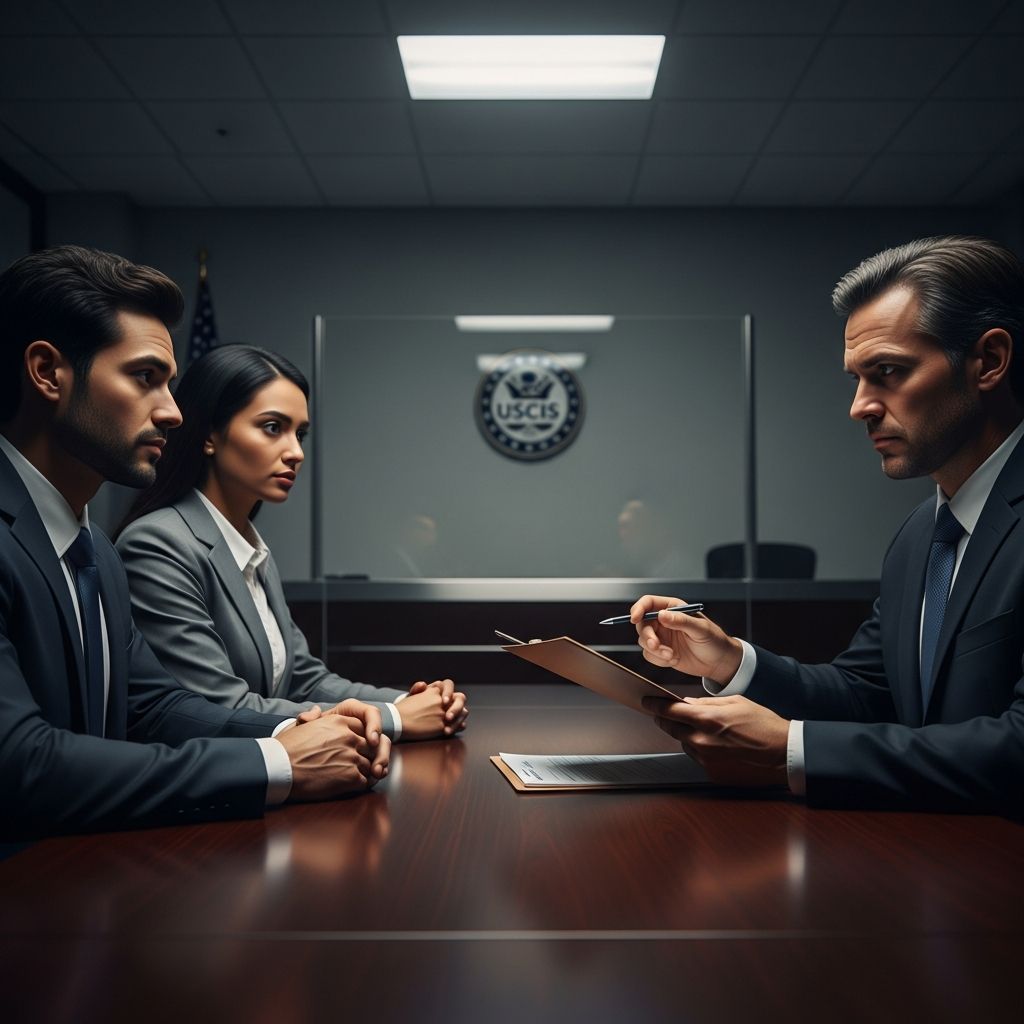
When a marriage-based green card case raises concerns for immigration officers, the couple may be called in for a Stokes interview — an intense, second-level interview designed to test whether the marriage is real or only for immigration benefits. Understanding the process is critical for protecting your case and your rights.
What Is a Stokes Interview?
A Stokes interview is a follow-up marriage fraud investigation interview conducted when an officer doubts the legitimacy of a marriage used to support a green card application.
It is named after a federal court case that set procedural protections and requirements for this type of interview, including notice and the opportunity to present evidence. These interviews are most common in marriage-based adjustment of status cases handled by U.S. Citizenship and Immigration Services (USCIS), though similar techniques may be used in consular marriage interviews abroad.
- Purpose: To decide whether your marriage is bona fide (entered into in good faith) or primarily to obtain immigration benefits.
- Format: Spouses are questioned together briefly, then separated and interviewed individually, often for an extended period.
- Outcome: Answers are compared; major inconsistencies can lead to denial and potential fraud findings.
Why a Case Gets Sent to a Stokes Interview
Not every marriage case is sent to a Stokes interview. Officers use their discretion and may request one when they see warning signs in the file or during the first interview.
Common Triggers and Red Flags
Each case is unique, but some factors frequently lead to closer scrutiny:
- Spouses living at different addresses without a convincing explanation.
- Severe age differences combined with minimal shared history.
- Lack of joint financial documents (no shared bank accounts, leases, insurance, or bills).
- Inconsistent or contradictory answers during the initial marriage interview.
- Very short dating period before marriage, especially if followed by a quick filing.
- Prior marriage-based filings by either spouse, especially denials for fraud or suspicion.
- Evidence that the spouses spend little time together or do not know basic everyday details.
Any one of these may not be decisive, but several combined often trigger a Stokes interview as a deeper investigation step.
How a Stokes Interview Differs from a Regular Marriage Interview
Stokes interviews are more adversarial and detailed than ordinary USCIS marriage interviews. The structure, tone, and expectations are different.
| Regular Marriage Interview | Stokes Interview |
|---|---|
| Usually one appointment, spouses together most of the time. | Often a second appointment; spouses separated and questioned individually. |
| Questions focus on relationship history and basic eligibility. | Questions are detailed, repetitive, and sometimes confrontational. |
| Interview typically shorter (15–30 minutes, sometimes longer). | Each spouse may be questioned for 1–2 hours or more. |
| Officer usually reviews documents briefly. | Officer closely examines evidence, may look for inconsistencies. |
| Less formal warnings about fraud consequences. | Officer usually emphasizes penalties for misrepresentation. |
How the Stokes Interview Process Usually Unfolds
While procedures can vary by USCIS field office, couples can generally expect the following steps.
1. Getting the Notice
Couples typically receive a written notice scheduling the Stokes interview. The notice may:
- State that additional questioning is needed about the marriage.
- List the documents to bring (e.g., updated joint financial records, leases, bills, photos).
- Inform the couple of their right to bring an attorney.
2. Check-In and Document Review
On the day of the interview:
- You check in at the USCIS field office with your appointment notice and identification.
- You pass through security (similar to entering a federal building or courthouse).
- An officer calls your names and escorts you to an interview room.
3. Initial Joint Interview
Often, the officer will first speak briefly with both spouses together to:
- Verify identities and review basic information on the forms.
- Administer an oath to tell the truth under penalty of perjury.
- Explain that the interview will be divided and that answers will be compared.
4. Separate Questioning
Next, one spouse is asked to leave the room while the officer questions the other spouse in detail. After finishing the first spouse, the officer repeats the same or similar questions with the second spouse.
During this phase, the officer may:
- Ask very specific questions about daily routines, personal habits, and shared experiences.
- Repeat questions in different ways to test consistency.
- Take detailed notes or record answers in writing.
5. Comparison and Confrontation
After both spouses have been interviewed:
- The officer reviews answers side by side.
- If there are major contradictions, the officer may call one or both spouses back into the room.
- You may be given a chance to explain discrepancies or offer additional evidence.
6. Post-Interview Outcomes
You may not receive an immediate decision. Instead, USCIS may:
- Approve the green card if satisfied the marriage is genuine.
- Issue a Request for Evidence (RFE) for more documents.
- Deny the application, possibly issuing a Notice of Intent to Deny (NOID) first.
- Refer the case for potential fraud investigation or removal proceedings in serious cases.
Typical Questions Asked at a Stokes Interview
Officers use personal and logistical questions to see whether both spouses independently describe the same life. The topics can feel surprisingly intrusive, but they are aimed at measuring shared knowledge that genuine couples usually have.
Common Question Themes
- Relationship history: how you met, first dates, engagement, wedding details.
- Living arrangements: layout of your home, who sleeps where, furniture and décor.
- Daily routines: who wakes up first, commute times, chores, typical evenings.
- Finances: how you share expenses, bank accounts, insurance, major purchases.
- Family and friends: who attended the wedding, important relatives, holidays.
- Personal details: favorite foods, allergies, hobbies, birthdays, habits.
Examples of Detailed Questions
The actual questions will vary, but they often drill down into practical details like:
- What color is your spouse’s toothbrush and where is it kept?
- Which side of the bed does each of you sleep on?
- Who pays which bills, and how do you pay them (online, check, automatic draft)?
- How did you celebrate your most recent birthday or anniversary?
- What did you both do last weekend, from morning to night?
Officers are not looking for perfection; minor differences are normal. But severe or repeated contradictions on important points (like where you live, where you slept the night before, or how you met) raise red flags.
Evidence That Helps Prove a Real Marriage
Strong, organized documentation can counter officer doubts and support your testimony. U.S. consular and USCIS guidance emphasize the importance of submitting original or certified civil documents and evidence of ongoing relationships.
Key Categories of Evidence
- Joint residence
- Leases or mortgages in both names.
- Utility bills, internet, or phone bills listing both spouses.
- Mail addressed to each spouse at the same address.
- Financial integration
- Joint bank account statements and credit cards.
- Shared insurance policies (health, auto, life, renter’s, homeowner’s).
- Tax returns filed jointly where allowed.
- Family and social ties
- Photos over time with family and friends, not just staged pictures.
- Travel itineraries and tickets for trips taken together.
- Messages, emails, or call logs showing ongoing communication (especially for time spent apart).
- Life commitments
- Birth certificates of children in common.
- Wills or beneficiary designations naming each other.
- Evidence of major joint decisions, like car purchases or relocations.
Bringing updated evidence — not just what was originally filed — helps demonstrate that the relationship continues and has grown since filing.
How to Prepare Effectively for a Stokes Interview
Thorough preparation can reduce stress and help you present your genuine relationship clearly. Many of the same principles recommended for consular and immigrant visa interviews apply here: organization, honesty, and familiarity with your case.
Review Your History Together
- Go over your relationship timeline — how and when you met, major milestones, moves, and family events.
- Talk through your daily routines so you remember details you may take for granted.
- Review prior interview notes (if any), your forms, and the evidence you already submitted.
Organize Evidence Logically
- Use folders or binders with clear labels (housing, finances, photos, communications, children, etc.).
- Place originals and certified copies where you can quickly access them when requested.
- Bring extra photocopies in case the officer wants to keep something.
Practice Answering Questions Calmly
- Practice with each other, asking detailed questions out loud.
- Focus on being accurate, not memorized — rehearsed but natural answers are best.
- Prepare mentally for potentially awkward or highly personal questions.
Consider Legal Representation
- Consulting an experienced immigration attorney can be especially valuable if there are past immigration violations, criminal history, prior filings, or complicated facts.
- An attorney can attend the interview with you, take notes, and help address legal issues that arise.
Common Mistakes That Can Harm Your Case
Even real couples can undermine their case unintentionally. Avoid these common errors:
- Guessing instead of admitting you do not remember
Making things up can create contradictions; it is better to say, “I am not sure,” when you genuinely do not know. - Arguing with your spouse during or after the interview
Visible conflict can make officers doubt the stability or genuineness of the relationship. - Withholding negative facts
If you previously lived apart or had relationship difficulties, hiding that fact can look worse than being transparent with a reasonable explanation. - Bringing incomplete or disorganized documents
Forgetting key records or fumbling for them can contribute to the impression that the couple does not share a real life together. - Allowing someone else to answer for you
Each spouse must speak for themselves; relying on your partner to fill in answers can raise doubts.
Your Rights and Possible Consequences
Stokes interviews are serious because finding that a marriage is fraudulent can lead to lasting immigration consequences, including ineligibility for future benefits. At the same time, couples do have important procedural rights.
Key Protections You Generally Have
- The right to bring an attorney to the interview.
- The right to an interpreter if you do not feel comfortable in English, subject to USCIS rules.
- The right to refuse to sign a statement if you believe it is inaccurate or incomplete.
- The right to ask for clarification if you do not understand a question.
Potential Negative Outcomes
- Denial of the green card application based on marriage fraud or lack of evidence.
- Fraud or misrepresentation findings that can make future immigration filings much harder or impossible without a waiver.
- Referral to enforcement agencies in extreme cases involving clear false documents or coaching.
Because of these risks, it is essential for couples to be truthful, prepared, and, when appropriate, represented by counsel.
Frequently Asked Questions (FAQs)
How long does a Stokes interview usually last?
The total time can vary widely, but many Stokes interviews last one to three hours, with each spouse questioned separately for a significant portion of that time.
Can I reschedule my Stokes interview?
Rescheduling is sometimes possible for good cause, but you must follow the instructions on your notice or the USCIS website. Missing the interview without proper notice can lead to denial.
Will my attorney be allowed in the room?
In most USCIS marriage interviews, including Stokes interviews, attorneys are permitted to attend and remain in the room, though they cannot answer questions for you.
What if my spouse and I genuinely remember something differently?
Minor differences are normal, especially about dates or small details. You should explain honestly why your memories differ. Major contradictions about key facts are more serious and may require additional explanation or evidence.
Does a Stokes interview mean my case will be denied?
No. Many bona fide couples are approved after a Stokes interview. The interview simply means the officer wants more information before making a decision.
References
- Step 11: Applicant Interview — U.S. Department of State, Bureau of Consular Affairs. 2023-08-10. https://travel.state.gov/content/travel/en/us-visas/immigrate/the-immigrant-visa-process/step-10-prepare-for-the-interview/step-11-applicant-interview.html
- Step 10: Prepare for the Interview — U.S. Department of State, Bureau of Consular Affairs. 2023-08-10. https://travel.state.gov/content/travel/en/us-visas/immigrate/the-immigrant-visa-process/step-10-prepare-for-the-interview.html
- Visa Application: Step-by-Step Instructions — U.S. Embassy in Papua New Guinea, U.S. Department of State. 2025-04-07. https://pg.usembassy.gov/visa-application-step-by-step-instructions/
- U.S. Visa Interviews, Explained — Boundless Immigration. 2023-06-01. https://www.boundless.com/immigration-resources/us-visa-interviews-explained
- How to Prepare for an Immigration Visa Interview — JML Law, Texas. 2023-02-15. https://www.jmleelaw.com/blog/how-to-prepare-for-an-immigration-visa-interview
- How Can I Prepare for My Immigrant Visa Interview? — Law Offices of Cheryl David. 2022-11-03. https://www.cheryldavidlaw.com/how-can-i-prepare-for-my-immigrant-visa-interview/
Similar Articles








Read full bio of Sneha Tete


