
State-Level Protections for Native Child Welfare
Exploring the vital state-level movement to protect Indigenous families.
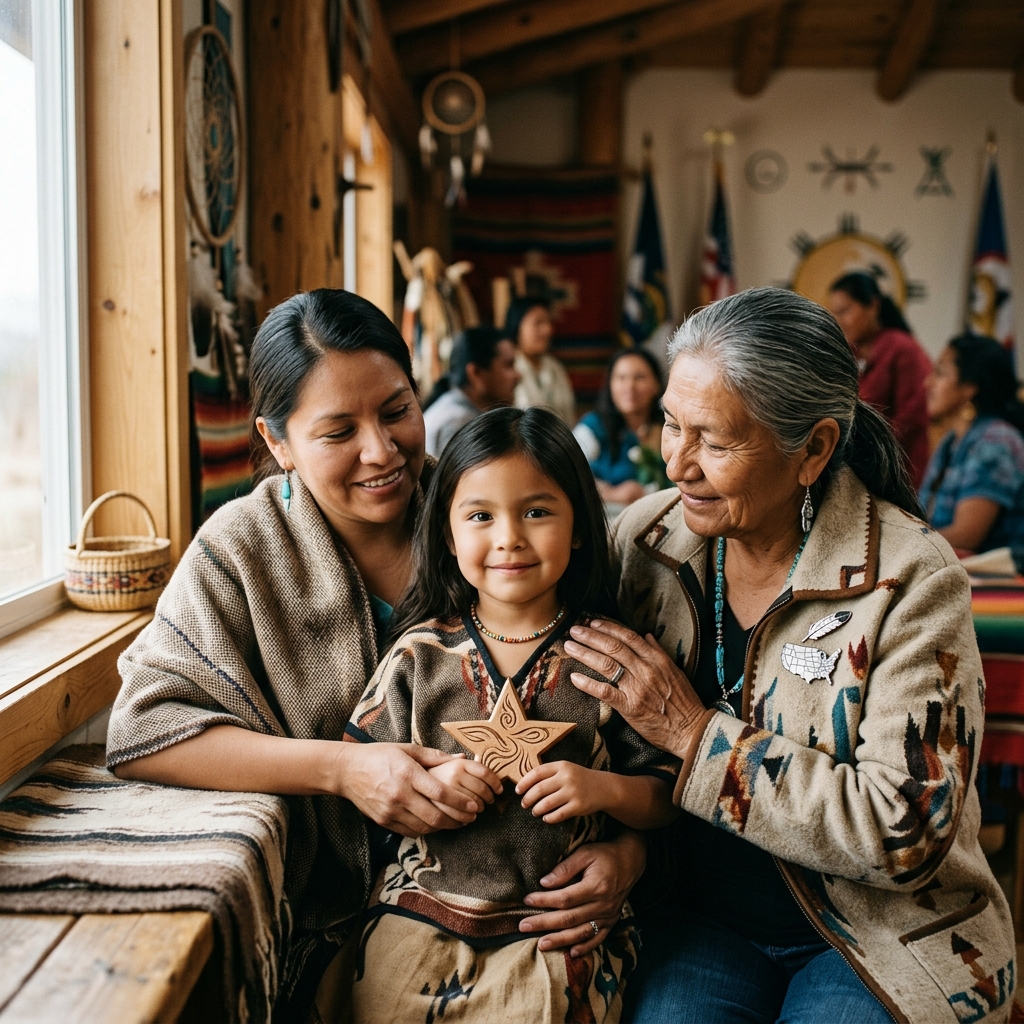
The landscape of family law and child protection in the United States is deeply complex, but few areas are as historically fraught and legally intricate as the policies governing Native American families. For generations, Indigenous communities have fought against systemic practices that fractured their families and threatened their cultural survival. At the center of this ongoing struggle is the effort to maintain tribal sovereignty and ensure that Native children remain connected to their heritage. While federal legislation has provided a critical shield for decades, recent constitutional challenges have catalyzed a powerful new movement: the push for state-level protections. This proactive legislative approach seeks to embed the core principles of Indigenous family preservation directly into state statutes, insulating these vulnerable populations from the unpredictable pendulum of federal jurisprudence.
The Historical Context: An Era of Forced Assimilation
To truly comprehend the urgent necessity of specialized legal frameworks for Indigenous youth, one must first confront the stark realities of the assimilation policies that dominated the nineteenth and twentieth centuries. Beginning in the late 1800s, the federal government initiated a sweeping, aggressive campaign designed to eradicate Indigenous cultures. Under the guise of education and integration, hundreds of thousands of Native children were forcibly removed from their homes and sent to government-run or church-operated boarding schools.
The explicit philosophy driving these institutions, famously articulated by boarding school advocates of the era, was to fundamentally erase Indigenous identity to forcefully assimilate children into Western culture. Children were strictly forbidden from speaking their native languages, practicing their spiritual traditions, or maintaining meaningful contact with their families. This century-long practice resulted in profound psychological scars, a devastating loss of cultural continuity, and widespread intergenerational trauma that continues to impact tribal nations today.
When the boarding school era slowly drew to a close in the mid-twentieth century, the mechanism of family separation did not end; it merely evolved. Assimilationist objectives seamlessly transitioned into the state child welfare system. State social workers, often lacking any cultural competency or understanding of traditional Indigenous child-rearing practices, routinely deemed Native homes as inadequate. Extended family caregiving—a resilient and vital cornerstone of Indigenous community life—was frequently misinterpreted as neglect by outside observers. Consequently, by the 1970s, the statistics were devastating. Congressional investigations revealed that up to one-third of all Native American children had been separated from their parents. Of those removed, nearly 90 percent were placed in non-Native foster homes or adoptive families, systematically stripping them of their tribal identity and depriving tribal nations of their future generations.
The 1978 Federal Intervention: A Shift Toward Preservation
Facing an existential crisis that threatened the very survival and political integrity of tribal nations, Indigenous leaders and civil rights advocates heavily lobbied Congress for a decisive legislative remedy. The result was the enactment of the Indian Child Welfare Act (ICWA) in 1978. Acknowledging that the United States had a unique trust responsibility to protect the integrity of Indigenous tribes, Congress established stringent federal standards for the removal and placement of Native children. The law explicitly recognized that there is no resource more vital to the continued existence of a tribe than its children. It represented a monumental legal shift from forced assimilation to self-determination, serving as a critical mechanism to halt the unwarranted fracturing of Native families.
The 1978 legislation fundamentally altered state court proceedings involving Indigenous youth by introducing three primary pillars of legal protection:
- Tribal Jurisdiction: The law affirmed tribal authority, granting tribal courts exclusive jurisdiction over child custody proceedings involving children residing on reservations, and providing tribes a legal pathway to intervene in state court proceedings.
- Active Efforts Requirement: It mandated that state welfare agencies employ “active efforts” to prevent the breakup of the Native family. This represents a significantly higher, more rigorous legal threshold than the standard “reasonable efforts” required in non-Native foster care cases, compelling agencies to actively assist families in overcoming barriers to reunification.
- Strict Placement Preferences: If a child must be temporarily or permanently removed from their home, the law dictates a specific hierarchy of placement. Preference must be given first to the child’s extended family members, then to other members of the child’s respective tribe, and finally to other Native families, ensuring that the child’s cultural and political ties remain intact whenever safely possible.
The Legal Threat: Analyzing the Supreme Court Battle
Despite being widely celebrated by major child welfare organizations as the “gold standard” of family preservation policy, the federal statute has faced intense, well-funded legal resistance. Opponents have repeatedly challenged the law, culminating in the highly publicized Supreme Court case, Haaland v. Brackeen, decided in the summer of 2023. The plaintiffs in this landmark litigation—comprising several non-Native prospective adoptive families and a coalition of states including Texas, Indiana, and Louisiana—sought to completely dismantle the 1978 protections.
The challengers advanced two primary constitutional arguments. First, they alleged that the statute violated the Tenth Amendment’s anti-commandeering doctrine by improperly forcing state administrative agencies to enforce federal mandates. Second, they argued that the law violated the Equal Protection Clause by creating distinct adoption and foster placement rules based on race, characterizing the protections as unlawful discrimination against non-Native adoptive parents.
Tribal advocates and constitutional scholars countered that the law is not based on a racial classification, but rather a political one. Native American tribes are sovereign political entities with distinct, established government-to-government relationships with the United States. In June 2023, the Supreme Court delivered a decisive 7-2 victory for tribal sovereignty. The Court firmly rejected the Tenth Amendment challenges, reaffirming Congress’s broad, plenary power to legislate on Indian affairs under the Constitution. Furthermore, the Court determined that the plaintiffs lacked the legal standing to bring the equal protection claims regarding placement preferences. While the decision successfully preserved the federal statute, the narrow procedural grounds regarding the equal protection claim left a lingering sense of vulnerability among Indigenous advocates, highlighting the precarious nature of relying solely on the shifting interpretations of federal courts.
The Strategic Push for State-Level Protections
The protracted anxiety leading up to the Supreme Court’s ruling catalyzed a strategic evolution in Indigenous advocacy: the rapid expansion and codification of state-level child welfare legislation. Recognizing that a future legal challenge could potentially succeed where previous ones failed, tribal leaders and allied lawmakers began aggressively pushing state legislatures to weave federal protections directly into state family codes.
By passing state-level acts, states can independently ensure that the core tenets of Indigenous family preservation remain binding law within their borders, completely independent of federal statutory rollbacks or adverse judicial rulings. This proactive approach prevents the sudden creation of a legal vacuum should federal protections ever be weakened. State-level codification goes beyond mere replication; in many instances, it significantly strengthens and clarifies the existing federal framework.
States that have adopted their own customized versions of these protections often include explicit provisions that mandate specific cultural competency training for state social workers, social service administrators, and family court judges. Furthermore, state statutes can effectively close bureaucratic loopholes that have historically been exploited in local family courts, ensuring stricter compliance with notification requirements. When a state agency takes custody of an Indigenous child, localized laws demand immediate, formalized, and transparent communication with the respective tribal government, ensuring that the tribe has ample time and resources to intervene and assist in securing a culturally appropriate placement.
Comparing Traditional and Indigenous Child Welfare Standards
The implementation of specialized state and federal safeguards creates a distinct procedural pathway that differs markedly from standard state family court guidelines. Understanding these fundamental differences is crucial for grasping why specialized legislation is necessary. The table below outlines the primary distinctions between standard child welfare procedures and those governed by enhanced Indigenous protection acts.
| Child Welfare Feature | Standard State Guidelines | Indigenous Child Welfare Protections |
|---|---|---|
| Preventive Services | Agencies must demonstrate “reasonable efforts” to safely reunite the family before pursuing termination of parental rights. | Agencies must demonstrate “active efforts,” requiring thorough, timely, and culturally appropriate interventions to keep the family intact. |
| Jurisdiction & Intervention | State family courts retain exclusive jurisdiction. Extended community members have limited legal standing to intervene. | Tribal courts may have exclusive jurisdiction or the legal right to intervene and transfer the case out of state court entirely. |
| Placement Priorities | Placement is determined by a broad “best interests of the child” standard, which does not require a cultural match. | Strict hierarchy mandates placement with extended family, followed by tribal members, ensuring cultural continuity. |
| Burden of Proof | Typically requires a “clear and convincing evidence” standard for the termination of parental rights. | Requires evidence “beyond a reasonable doubt,” supported by testimony from a qualified expert witness regarding tribal culture. |
The Societal and Psychological Imperative of Family Preservation
Beyond the complex legal maneuvering and constitutional debates, the push for robust state and federal protections is fundamentally a profound human rights issue. The societal imperative of keeping Indigenous families intact cannot be overstated. Decades of sociological research and psychological studies have consistently demonstrated that youth who remain deeply connected to their cultural heritage exhibit significantly higher levels of self-esteem, better long-term academic outcomes, and far greater resilience against mental health challenges.
Conversely, the historical trauma inflicted by centuries of family separation has directly contributed to enduring cycles of poverty, substance abuse, and community destabilization within marginalized populations. By prioritizing extended family placements and mandatory tribal engagement, state-level legislation actively helps heal the intergenerational wounds inflicted by past assimilation policies. It ensures that Native youth do not grow up alienated from their ancestry, their native language, and their community’s rich, sustaining traditions.
The vital movement to enshrine these protections at the local and state levels reflects a maturing societal recognition of tribal sovereignty and a profound commitment to restorative justice. As an increasing number of states boldly adopt these localized frameworks, they collectively build an impenetrable legal wall of protection around Indigenous families, guaranteeing that the devastating policy mistakes of the past are never repeated, and that tribal nations can securely foster a thriving, culturally vibrant future for their most precious resource: their children.
Frequently Asked Questions (FAQ)
- What is the primary purpose of the Indian Child Welfare Act?
Enacted in 1978, the law was designed to protect the best interests of Indigenous children and promote the stability of Native tribes by establishing minimum federal standards for the removal and placement of Native children. - Why was the law challenged in the Supreme Court?
In Haaland v. Brackeen, plaintiffs argued the law violated the Constitution by forcing state agencies to carry out federal mandates (anti-commandeering) and by allegedly discriminating against non-Native adoptive parents based on race (equal protection). The Supreme Court upheld the law in 2023. - How does a state-level child welfare act differ from federal law?
State-level laws embed the federal protections directly into state family codes, ensuring they remain in effect even if federal laws change. They often include stronger mandates for cultural competency training, tighter notification deadlines, and clearer local enforcement mechanisms. - What is the difference between “reasonable efforts” and “active efforts”?
“Reasonable efforts” typically involve providing referrals to standard services. “Active efforts” require social workers to take a proactive, hands-on role in helping Indigenous parents access culturally appropriate services to overcome barriers to family reunification.
References
- HAALAND, SECRETARY OF THE INTERIOR, et al. v. BRACKEEN et al. — Supreme Court of the United States. 2023-06-15. https://www.supremecourt.gov/opinions/22pdf/21-376_7l48.pdf
- 40 years ago we stopped the practice of separating American Indian families. Let’s not reverse course. — Brookings Institution. 2018-10-11. https://www.brookings.edu/articles/40-years-ago-we-stopped-the-practice-of-separating-american-indian-families-lets-not-reverse-course/
- 40 Years of ICWA — Library of Congress. 2018-11-13. https://blogs.loc.gov/law/2018/11/40-years-of-icwa/
Similar Articles








Read full bio of Sneha Tete


