
South Dakota 2006 Abortion Ban Defeat: A Blueprint
How South Dakota voters laid the groundwork for modern reproductive rights.
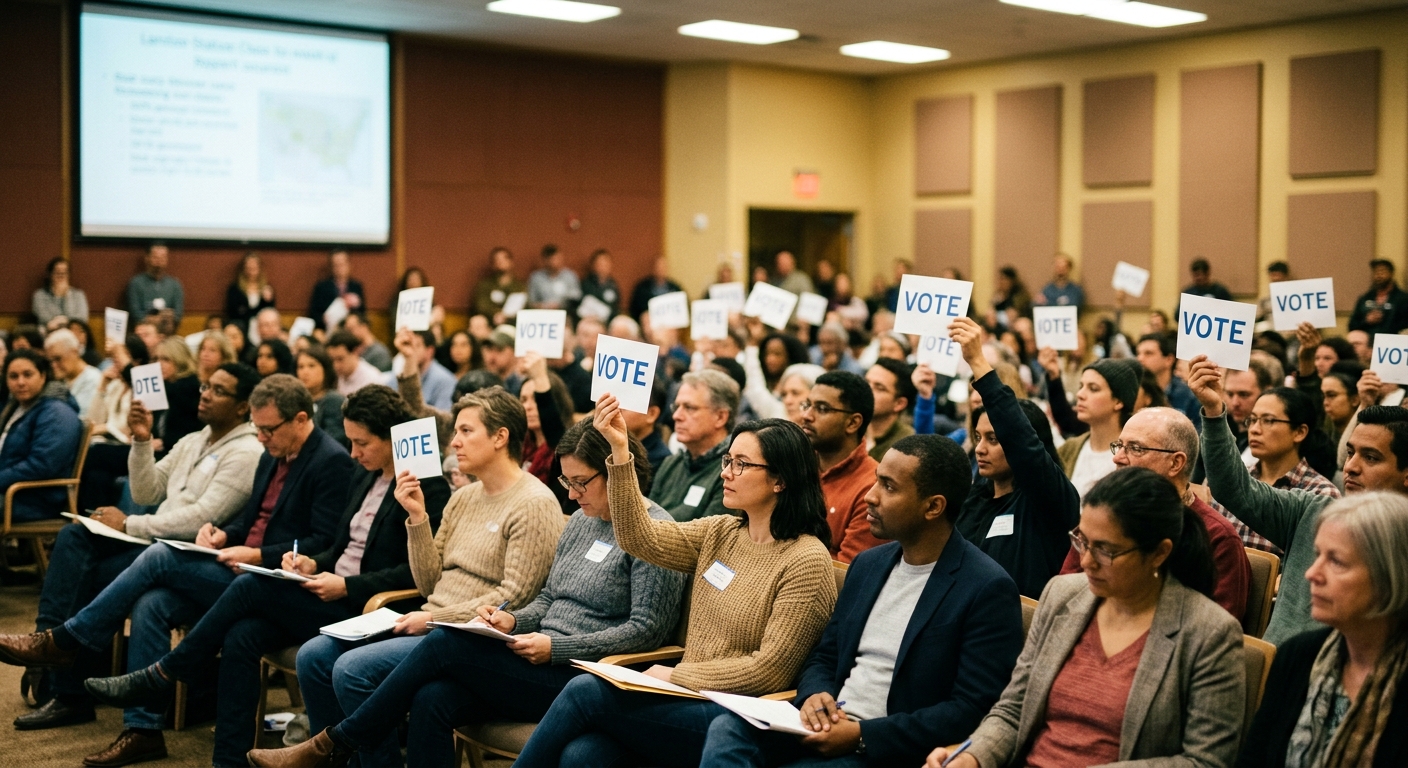
The Intersection of Legislation and Direct Democracy
In the expansive timeline of American civil liberties, few moments capture the sheer power of direct democracy quite like the November 2006 election in South Dakota. That year, the heavily conservative state became the unlikely focal point in the national battle over reproductive freedom. Voters were handed a stark and unprecedented choice: accept a near-total legislative ban on abortion or reject it entirely through a citizen-driven ballot referendum. The ultimate defeat of this ban not only secured a momentary victory for bodily autonomy but also established a strategic blueprint that civil rights advocates continue to rely on today.
To fully grasp the magnitude of this historical event, one must analyze the political climate of the mid-2000s. Long before the Supreme Court formally dismantled federal abortion protections, state legislatures were actively probing the boundaries of constitutional law. South Dakota lawmakers, emboldened by shifting judicial appointments, sought to force a legal showdown. What they did not anticipate was the formidable resistance of their own constituents, who utilized the mechanics of the state constitution to pull the emergency brake on legislative overreach.
The Legislative Catalyst: House Bill 1215
The genesis of this historic referendum was the South Dakota Legislature’s passage of the Women’s Health and Human Life Protection Act, formally known as House Bill 1215. Introduced in early 2006, this legislation was not designed to regulate medical procedures but to eliminate them entirely. Its proponents made no secret of their ultimate objective: to trigger a direct legal challenge that would ascend to the United States Supreme Court and provide the conservative-leaning bench an opportunity to overturn the landmark 1973 Roe v. Wade decision.
House Bill 1215 was exceptionally severe. It sought to criminalize all abortions within the state’s borders, stripping away established exceptions for pregnancies resulting from rape or incest. The only provision allowed was a narrow exception for procedures deemed strictly necessary to save the life of the pregnant woman. Medical professionals who violated the proposed law faced felony charges, severe financial penalties, and extensive prison sentences. By March 2006, the state’s governor signed the sweeping measure into law, setting it on a trajectory for implementation by the summer.
The legislative calculus relied heavily on the assumption that a predominantly conservative, rural electorate would naturally align with the anti-abortion mandate. However, this assumption severely misjudged the electorate’s threshold for government interference. By eliminating standard exceptions and threatening medical providers with criminal prosecution, the legislature inadvertently alienated a significant portion of moderate and libertarian-leaning voters who viewed the law as a draconian invasion of medical privacy.
The Grassroots Rebellion: Taking the Fight to the Ballot Box
Rather than relying solely on the judicial system to block the impending law—a process that could take years and carry immense constitutional risks—advocates turned to a powerful civic tool: the veto referendum. South Dakota’s constitution allows citizens to pause the implementation of a new law and put it to a popular vote, provided they gather a sufficient number of signatures within a strict 90-day window following the legislative session.
What followed was an extraordinary mobilization of grassroots energy. To qualify for the ballot, organizers needed just over 16,000 valid signatures. Operating under the banner of the South Dakota Campaign for Healthy Families, volunteers and civil liberty advocates fanned out across the state. They braved unpredictable weather and challenging political terrain to collect more than 36,000 signatures, more than double the required threshold. This monumental effort successfully halted House Bill 1215 and placed it on the November 2006 ballot as Referred Law 6.
Mobilizing the Electorate
The subsequent campaign to defeat Referred Law 6 was a masterclass in coalition building. National civil rights organizations collaborated closely with local activists, ensuring the messaging resonated with South Dakotans’ specific values. The campaign strategically avoided polarizing partisan rhetoric. Instead, organizers anchored their arguments in universally understood concepts of personal liberty, medical privacy, and government overreach. Key strategies included:
- Emphasizing Medical Privacy: Highlighting the danger of allowing politicians to insert themselves into complex, often tragic, medical emergencies that should remain between a patient and their doctor.
- Broad Coalition Building: Engaging unlikely allies, including moderate conservatives, medical professionals, and clergy members who felt the ban lacked necessary compassion and nuance.
- Extensive Voter Outreach: Executing a massive ground-game that included door-to-door canvassing, targeted phone banking, and rural community town halls to educate voters on the extreme nature of the law.
National Implications and the Election Night Triumph
As the November 2006 midterms approached, the entire nation turned its eyes to South Dakota. The state had effectively become a laboratory for the anti-abortion movement’s most aggressive tactics. If a total ban could survive a popular vote in a conservative stronghold, it would embolden dozens of other states to pass identical legislation. Conversely, a defeat would serve as a chilling warning to lawmakers prioritizing ideological purity over constituent consensus.
On November 7, 2006, South Dakota voters delivered a decisive verdict. Referred Law 6 was rejected by a significant margin of 56% to 44%. The results sent shockwaves through the political establishment. The electorate had firmly communicated that while they might hold nuanced or even conservative personal views on reproductive issues, they drew a hard line against aggressive state mandates that threatened women’s health and criminalized medical care.
This triumph in the Midwest did not occur in isolation. That same night, voters on the West Coast delivered parallel victories for reproductive autonomy. California voters rejected a constitutional amendment aimed at restricting teenagers’ access to reproductive healthcare, and Oregon voters defeated a similar parental notification initiative. Together, these outcomes demonstrated a robust, cross-regional defense of civil liberties.
| State | Measure | Core Issue | Election Result |
|---|---|---|---|
| South Dakota | Referred Law 6 | Near-total legislative abortion ban | Rejected (56% No – 44% Yes) |
| California | Proposition 85 | Parental notification for minors | Rejected (54% No – 46% Yes) |
| Oregon | Measure 43 | Parental notification for minors | Rejected (55% No – 45% Yes) |
The 2008 Sequel: Voters Hold the Line
Despite the clarity of the 2006 mandate, proponents of the abortion ban refused to concede the underlying ideological battle. Analyzing the post-election data, anti-abortion strategists concluded that Referred Law 6 failed primarily because it lacked exceptions for rape and incest. Testing this theory, they returned two years later with a revised proposal, placing Initiated Measure 11 on the 2008 general election ballot.
Initiated Measure 11 was another attempt to ban abortion, but this iteration included narrow exceptions for victims of sexual assault and to preserve the pregnant woman’s health. Ban proponents confidently predicted that these concessions would be enough to win over the moderate voters who had defected in 2006. Once again, civil liberties advocates mobilized, pointing out that the revised law was still dangerously vague, medically unsound, and fundamentally invasive.
When the ballots were tallied in 2008, the results were practically identical to the vote two years prior. South Dakotans rejected Initiated Measure 11 by a margin of 55% to 45%. This consecutive defeat was profoundly revealing. It proved that the electorate was not merely splitting hairs over legislative exceptions; rather, they were issuing a wholesale rejection of the premise that the government belongs in the examination room. The double defeat effectively neutralized legislative attempts to ban abortion in the state for over a decade, proving the enduring power of the voter veto.
The Modern Legacy: A Blueprint for the Post-Roe Era
The historical significance of the 2006 and 2008 South Dakota referendums cannot be overstated, especially when viewed through the lens of modern American politics. In 2022, the U.S. Supreme Court’s decision in Dobbs v. Jackson Women’s Health Organization stripped away federal constitutional protections for abortion, returning the authority to regulate reproductive healthcare entirely to individual states. Almost immediately, trigger laws and legislative bans—many modeled after the original South Dakota legislation—went into effect across the country.
In response, civil liberties advocates and reproductive rights defenders dusted off the playbook written in South Dakota back in 2006. Recognizing that heavily gerrymandered legislatures often fail to reflect the will of the populace, organizers have increasingly turned to direct democracy. In the years following the Dobbs decision, state-level ballot initiatives have emerged as the most potent mechanism for defending bodily autonomy.
States like Michigan, Ohio, Kansas, and Vermont have all utilized citizen-led ballot measures to enshrine reproductive rights into their state constitutions. The campaign strategies deployed in these modern fights heavily echo the lessons learned in South Dakota: focus the narrative on individual freedom, warn against the dangers of government overreach, and build expansive, non-partisan coalitions that include healthcare providers and everyday citizens. The 2006 defeat of Referred Law 6 was not merely a localized political anomaly; it was the prototype for the modern reproductive rights resistance.
Conclusion
The defeat of South Dakota’s abortion ban in 2006 stands as a monumental testament to the efficacy of civic engagement. When faced with a legislature determined to strip away fundamental rights, the citizens of a deeply conservative state utilized the tools of direct democracy to assert their autonomy. By decisively rejecting Referred Law 6, and subsequently Initiated Measure 11, South Dakotans sent a resonant message that transcends partisan lines: deeply personal medical decisions must remain free from government coercion. Today, as the legal landscape of reproductive healthcare remains highly fragmented and fiercely contested, the strategic blueprint forged in that 2006 campaign continues to guide and inspire defenders of civil liberties nationwide.
Frequently Asked Questions (FAQ)
What was Referred Law 6 in South Dakota?
Referred Law 6 was a 2006 ballot measure in South Dakota that allowed citizens to vote on whether to uphold or repeal House Bill 1215, a state law passed earlier that year. The law was designed to ban nearly all abortions in the state, making it a felony for medical professionals to perform the procedure unless it was strictly necessary to save the pregnant woman’s life. Voters rejected the law by a margin of 56% to 44%.
Why did the original 2006 South Dakota abortion ban exclude exceptions for rape and incest?
The legislators who drafted and passed House Bill 1215 intentionally omitted exceptions for rape and incest because their primary goal was to create a direct legal challenge to Roe v. Wade. They believed that passing an uncompromising, near-total ban was the most effective way to force the U.S. Supreme Court to re-evaluate the constitutionality of abortion rights at a fundamental level.
How did the 2006 South Dakota vote influence modern reproductive rights strategies?
The successful campaign to defeat the South Dakota abortion ban demonstrated that voters, even in traditionally conservative states, often oppose extreme government interference in private healthcare decisions. Following the overturning of Roe v. Wade in 2022, advocates adopted the South Dakota model—utilizing ballot initiatives, building broad coalitions, and framing the issue around medical privacy and government overreach—to successfully protect reproductive rights in states like Ohio, Kansas, and Michigan.
References
- 2006 House Bill 1215 — South Dakota Legislature. 2006-03-06. https://sdlegislature.gov/Session/Bill/7751/31804
- 2006 South Dakota Ballot Question Attorney General Explanations — Election Resources: South Dakota Secretary of State. 2006-11-07. https://sdsos.gov/elections-voting/assets/2006BQExplanations.pdf
- Election Results 2006: Ballotwatch — Initiative & Referendum Institute, University of Southern California. 2007-02-05. http://www.iandrinstitute.org/docs/BW%202006-5%20(Election%20results-update).pdf
- History of abortion ballot measures — Ballotpedia. 2024-11-15. https://ballotpedia.org/History_of_abortion_ballot_measures
Similar Articles








Read full bio of medha deb


