
Can a Rush-Signed Prenup Hold Up in Court?
Uncover the legal pitfalls of hastily signed prenuptial agreements and essential steps to ensure enforceability across U.S. jurisdictions.
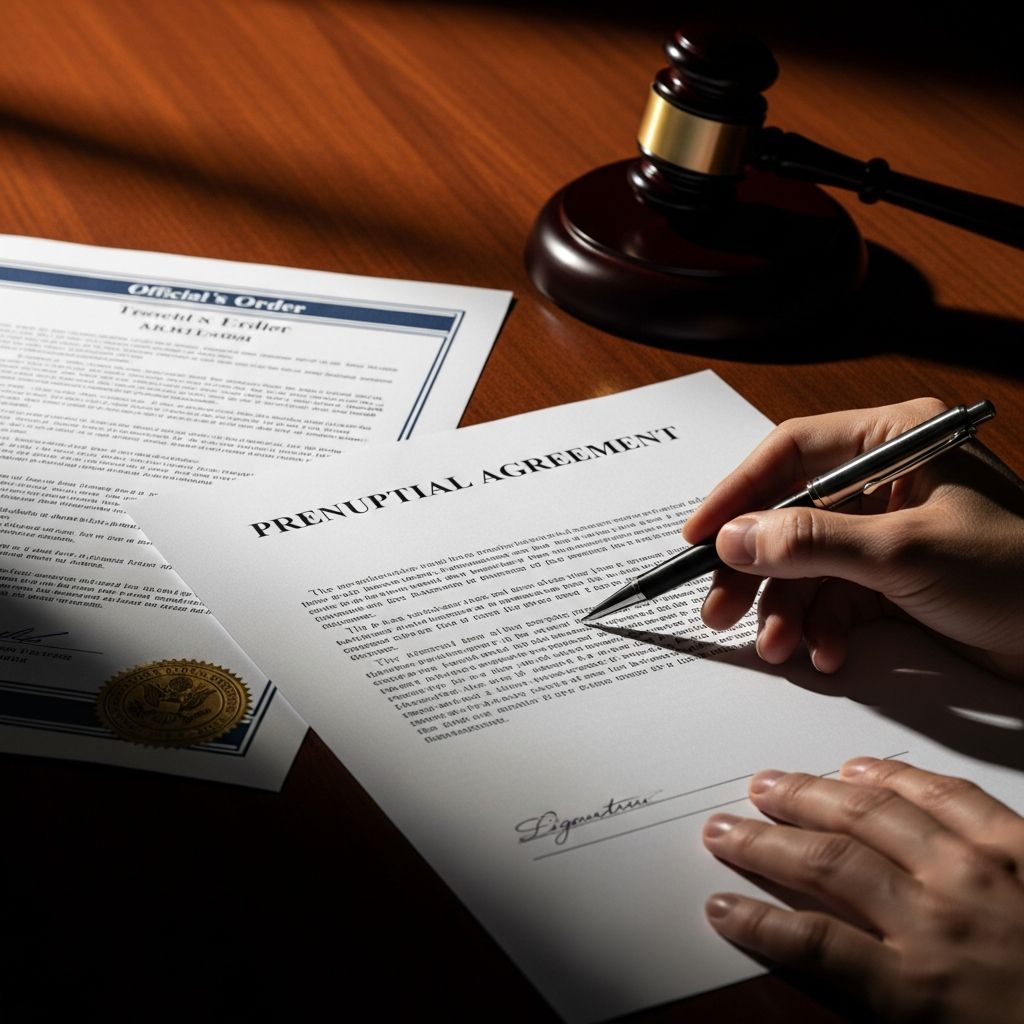
Prenuptial agreements, often called prenups, serve as vital tools for couples to outline financial arrangements before marriage. However, when signed under time pressure—such as mere hours before the wedding—their enforceability comes into serious question. Courts scrutinize these contracts closely to ensure they meet strict legal standards, prioritizing fairness and voluntary consent. A prenup executed in haste may be invalidated if it lacks proper review time, full financial transparency, or independent legal advice.
Core Elements of a Legally Binding Prenup
For any prenuptial agreement to stand in court, it must satisfy fundamental criteria recognized across most U.S. states. These include being documented in writing, executed voluntarily without coercion, supported by complete asset and debt disclosures, and containing equitable terms that do not leave one party destitute.
- Written Form: Oral promises hold no weight; the agreement must be a formal, signed document, often notarized for added credibility.
- Voluntary Execution: Both parties need sufficient opportunity to evaluate terms without external pressures like impending nuptials.
- Financial Transparency: Each spouse must reveal all assets, liabilities, and income sources to enable informed decisions.
- Fairness Standard: Terms cannot be grossly lopsided or unconscionable, especially if they impoverish one partner post-divorce.
Failure in any area invites judicial intervention, potentially voiding the entire contract or specific clauses.
The Perils of Signing Under Time Constraints
Timing emerges as a pivotal factor in prenup validity, particularly in states with mandated waiting periods. In California, for agreements post-January 1, 2020, parties require at least seven days from receiving the final draft to sign, allowing time for review and counsel. A document thrust upon a partner hours before vows risks dismissal as involuntary, evoking duress claims.
Courts assess the context: Was one party blindsided? Did they waive attorney consultation under duress? Such scenarios echo broader principles where rushed decisions undermine consent. Even absent statutory minima, judges may deem ultra-short timelines evidence of coercion, especially amid wedding excitement or family expectations.
| State Example | Minimum Review Period | Key Consequence of Violation |
|---|---|---|
| California | 7 days | Presumed unenforceable |
| Missouri | No fixed period, but ample time required | Invalid if unfair or coerced |
| General U.S. | Varies; voluntary standard applies | Subject to unconscionability review |
Duress and Coercion: Common Grounds for Challenge
Duress invalidates prenups when one party feels compelled to sign against their will. Wedding-day pressure exemplifies this, as emotional stakes amplify perceived threats like cancellation. Courts probe for manipulation, such as withholding the document until the last minute or linking signature to ceremony proceeds.
Beyond timing, duress includes overt threats or subtle influences like familial involvement. Evidence like emails, witness testimonies, or the absence of separate counsel bolsters challenges. In one framework, agreements falter if the disadvantaged party lacked meaningful negotiation input.
Financial Disclosure: The Transparency Imperative
Honest revelation of finances forms the bedrock of valid prenups. Concealment of assets, undervaluation of properties, or omission of debts constitutes fraud, a swift path to nullification. Both sides must attach detailed schedules listing real estate, investments, retirement accounts, loans, and tax liens.
Incomplete disclosures erode trust and informed consent. Courts demand specificity; vague summaries suffice not. Post-signature discoveries of hidden wealth often trigger invalidation, as they reveal unequal bargaining power.
Unconscionability and Public Policy Limits
Even meticulously drafted prenups falter if terms shock the conscience. Unconscionability arises when provisions leave one spouse in poverty while enriching the other disproportionately. Factors include negotiation disparity, education levels, and agreement timing.
Certain clauses breach public policy: those dictating child custody, support, or incentivizing divorce. Personal conduct mandates, like fidelity oaths, face skepticism unless narrowly tailored. Sunset provisions, expiring after milestones like child birth or debt repayment, offer flexibility but require careful wording.
State Variations in Enforcement Standards
Prenups enjoy nationwide recognition under the Uniform Premarital Agreement Act (UPAA), adopted variably. Yet, execution in one state may falter elsewhere if formalities lapse, such as missing notarization or witnesses.
Some jurisdictions scrutinize at signing; others at enforcement, accounting for changed circumstances. Interstate moves complicate matters—revisit agreements if relocating. Missouri exemplifies fairness focus, voiding one-sided deals. California mandates attorney advice, heightening procedural rigor.
Strengthening Your Prenup Against Challenges
To fortify enforceability:
- Engage independent attorneys early for each party.
- Initiate discussions months pre-wedding, providing drafts well ahead.
- Compile exhaustive financial affidavits, verified under penalty of perjury.
- Incorporate waivers acknowledging rights relinquished per state law.
- Notarize and witness signatures for evidentiary weight.
Postnuptial agreements offer remedies for flawed prenups, though they invite heightened scrutiny due to marital dynamics.
Frequently Asked Questions
Is a prenup signed two hours before the wedding automatically invalid?
Not automatically, but highly vulnerable. Courts evaluate duress, review time, and counsel access; states like California presume invalidity under seven-day rule.
Can prenups address child-related matters?
No. Custody and support remain judicial domains, determined by child best interests at divorce time.
What if we move to another state after signing?
Generally enforceable if valid where executed, but new state’s policies may limit provisions.
Do both parties need lawyers?
Strongly advised; many states require or presume access to independent counsel for validity.
How long does a prenup last?
Indefinitely unless sunset clause specifies expiration, like after 10 years or events.
Practical Steps Before Your Big Day
Approach prenups proactively: Start financial dialogues early, list goals transparently, and prioritize equity. View them not as distrust signals but pragmatic safeguards. Professional guidance ensures compliance, minimizing divorce disputes.
Ultimately, robust prenups foster confidence, clarifying asset division and alimony to streamline potential separations. Invest time upfront to avert costly litigation later.
References
- Is My Prenuptial Agreement Valid? — Genesis Family Law. 2023. https://genesisfamilylaw.com/is-my-prenuptial-agreement-valid/
- Is a Prenuptial Agreement Enforceable in Every State? — Fisher Law KC. 2024-05-15. https://fisherlawkc.com/blog/is-a-prenuptial-agreement-enforceable-in-every-state/
- What You Need to Know About Prenuptial Agreements — Nationwide. 2023-11-01. https://www.nationwide.com/lc/resources/personal-finance/articles/prenuptial-agreement-basics
- Legal Requirements For Prenuptial Agreements — GordenLaw, LLC. 2024. https://www.gordenlaw.com/legal-requirements-for-prenuptial-agreements/
- How Courts Determine The Validity Of Prenuptial Agreements — LegalNature. 2023. https://www.legalnature.com/guides/how-courts-determine-the-validity-of-prenuptial-agreements
- How Long Does a Prenup Last? — O’Mara Law Group. 2024-02-20. https://www.omaralawgroup.com/blog/how-long-does-a-prenup-last/
- How Do Prenups Work in California? When Are They Not Valid? — Minella Law Group. 2024. https://minellalawgroup.com/blog/how-do-prenuptial-agreements-work-in-california-when-are-they-not-valid/
Similar Articles








Read full bio of Sneha Tete


