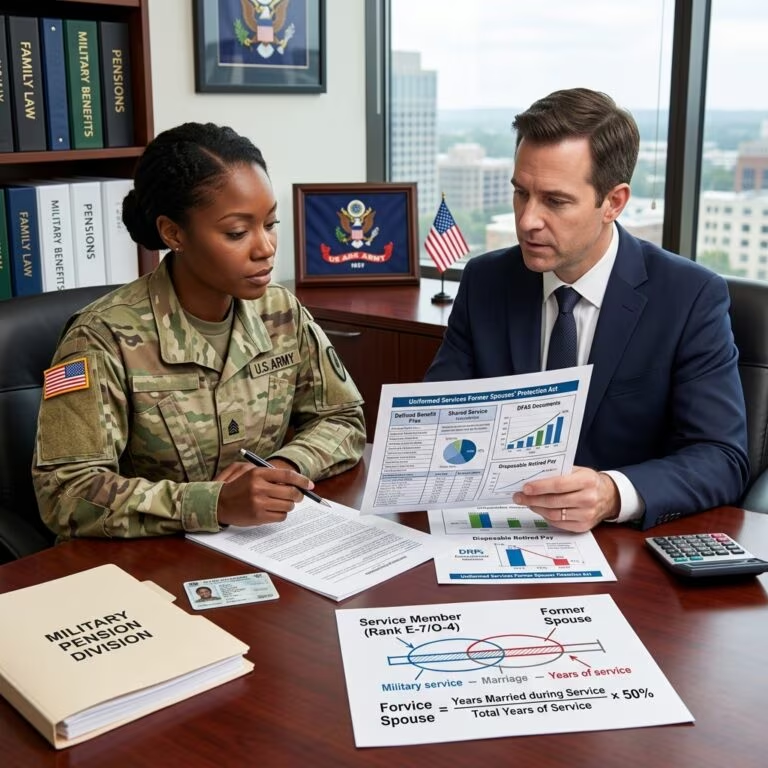
Understanding Your Position in the Divorce Process
When divorce proceedings have been initiated, your ability to halt the process depends significantly on your role in the case and how far the process has advanced. Understanding these distinctions is crucial before taking any action. The fundamental principle underlying divorce law in most jurisdictions is that no court will compel someone to remain married against their will. However, this does not mean that stopping the process is impossible—it simply means that your options vary based on specific circumstances.
If you are the person who initiated the divorce filing, you generally have more flexibility in stopping the proceedings, particularly in the early stages. Conversely, if your spouse filed the papers and served you, your ability to unilaterally halt the process is significantly more limited. The stage at which you seek to stop the divorce also matters considerably, as courts recognize different legal mechanisms depending on how far the case has progressed through the system.
Halting Proceedings in the Initial Stages
The easiest time to stop a divorce is immediately after filing but before certain procedural requirements are completed. Many petitioners who file for divorce later experience a change of heart, whether due to reconciliation efforts, emotional reflection, or a realization that filing was a hasty decision made during a moment of crisis.
Before Formal Service of Papers
State law typically requires that once you file your divorce petition, it must be formally served on your spouse. This service requirement, known as due process, ensures that your spouse is properly notified of the legal action. However, if you have reconsidered your decision before this service occurs, you have a straightforward path forward. By simply choosing not to serve your spouse with the petition, you can allow the case to remain inactive. Courts will eventually dismiss the case automatically if no further action is taken. This requires minimal effort and typically involves no formal filing beyond your initial petition.
After Service but Before Response
Once your spouse has been served with divorce papers but has not yet responded or filed a counterpetition, you still retain significant control over the process. If neither you nor your spouse takes action to advance the case, most courts will dismiss the matter after a designated period of inactivity. However, it is important to note that once your spouse receives the papers, they have the right to proceed with the divorce even if you change your mind. Your spouse can file a response or counterpetition, which would make it impossible for you to unilaterally stop the process.
Formal Withdrawal of Divorce Petitions
If you wish to actively stop your divorce rather than waiting for the court to dismiss it due to inactivity, you can file a formal withdrawal or dismissal document. This approach is preferable when you want to definitively end the proceedings and create clear documentation of your decision.
Obtaining the Necessary Dismissal Form
The first step in formally withdrawing your divorce petition is to contact the courthouse where you originally filed your petition. The court clerk’s office maintains all the necessary forms required for your jurisdiction. The clerk can provide you with the appropriate dismissal or withdrawal form, which is typically a straightforward one-page document. You do not need to provide the court with any explanation for why you are withdrawing the petition—courts generally do not require justification for a filer’s decision to dismiss their own case.
Completing and Filing the Dismissal Form
Once you obtain the form from the courthouse, you must complete it with your case information and sign it before a notary if required by your jurisdiction. The completed form is then filed with the court, and the clerk will provide you with copies for your records and, if applicable, for service on your spouse. This process is generally simple and does not require attorney assistance, though consulting with a family law attorney is always advisable to ensure compliance with your specific state’s requirements.
Serving Your Spouse with the Dismissal
Depending on your jurisdiction, you may be required to serve your spouse with a copy of the dismissal form. Some courts will handle this service by mail, while others may require you to personally deliver the document to your spouse, use a professional process server, or send it via certified mail. The court clerk will inform you of the specific requirements in your jurisdiction and may even facilitate service on your behalf.
Navigating Cases After Spouse Response
The situation becomes more complicated once your spouse has filed a response or counterpetition to your original divorce petition. At this point, you cannot unilaterally stop the process without your spouse’s cooperation and consent.
The Impact of Counterpetitions
When your spouse responds to your divorce filing by filing their own counterpetition, they become an active participant in the legal action. This transforms the case from a unilateral proceeding initiated by you into a bilateral dispute involving both parties. Once a counterpetition has been filed, you cannot simply withdraw your case without your spouse’s agreement. Both parties must jointly file a stipulation for dismissal or settlement agreement for the case to be terminated at this stage.
Requiring Mutual Agreement
If your spouse has filed a counterpetition and you wish to stop the divorce, you will need to communicate with your spouse about your desire to reconcile or halt proceedings. This communication may take many forms—direct conversation, mediation, or negotiation through your respective attorneys. Many couples find that discussing their desire to stop the process openly can lead to a joint filing that terminates the case efficiently. If both parties are willing to stop the proceedings, drafting and filing a joint dismissal agreement is relatively straightforward.
When You Received the Divorce Papers
If your spouse filed the divorce petition and you were served with the papers, your options for stopping the process are substantially more limited. You cannot unilaterally halt divorce proceedings initiated by your spouse, as doing so would effectively allow one party to force another to remain married—a principle that family law specifically rejects.
Communicating with Your Spouse
Your primary option when you are the respondent in a divorce case is to communicate with your spouse about your desire to reconcile or pause proceedings. This communication is most effective early in the process, before substantial legal costs have been incurred and before emotions have become further entrenched. Many couples find that discussing their concerns openly can lead to a mutually agreeable decision to stop the proceedings.
Legal Representation and Defense
If your spouse will not agree to stop the proceedings, your best strategy is to hire a divorce attorney who can help you protect your interests throughout the process. Your attorney can help ensure that any settlement, division of property, or custody arrangement is fair to you. While this does not stop the divorce, it ensures that your rights are protected as the process moves forward.
Alternative Options: Pausing Rather Than Dismissing
In some jurisdictions, you have the option to pause or place a divorce case on inactive status rather than completely dismissing it. This approach can be valuable when you want to preserve your legal position while taking time to reconsider your decision.
Understanding Inactive Status
Several states allow divorcing parties to place their case on inactive status, which essentially freezes the legal timeline and prevents the case from proceeding. In jurisdictions offering this option, a case on inactive status can typically remain paused for up to one year. If no action is taken within this period, the court will automatically close the file. This mechanism provides a middle ground between proceeding with the divorce and completely dismissing it.
Benefits of Placing a Case on Inactive Status
- Reconciliation opportunity: You gain dedicated time to pursue marriage counseling, trial separations, or other reconciliation efforts without the pressure of ongoing litigation.
- Financial efficiency: If you later decide to proceed with the divorce, you avoid paying new filing fees and can continue from where you left off.
- Legal protection: Your case remains on file, preserving your legal position should you need to resume proceedings.
- Emotional space: The pause provides psychological breathing room to make decisions from a place of clarity rather than crisis.
Important Considerations for Your Decision
Before taking action to stop your divorce, consider several important factors that may affect your decision and its long-term consequences.
Timing and Urgency
The earlier you act to stop the proceedings, the simpler the process becomes and the lower your legal costs will be. If you have had a change of heart, addressing this promptly is advantageous. Waiting until significant legal work has been completed, discovery has occurred, or trial preparation has begun makes the dismissal process more complicated and expensive.
Reassessing Your Motivation
Before dismissing your divorce case, honestly evaluate whether you are stopping the proceedings because you genuinely want to preserve the marriage, or whether you are doing so out of fear, guilt, or other temporary emotions. Dismissing a divorce only to refile months later creates additional expense and emotional turmoil for everyone involved. Consider whether reconciliation through therapy or counseling would be beneficial before making your final decision.
Documentation and Future Protection
If you decide to stop the divorce, you may want to work with your spouse on a written reconciliation agreement that outlines expectations for the relationship moving forward. This document can help both parties understand what changes or commitments led to the decision to stop the proceedings.
Consulting with a Family Law Professional
While stopping a divorce in its early stages is relatively straightforward, the specific procedures and options available vary significantly by jurisdiction. Consulting with a family law attorney, even for a brief consultation, can provide clarity about your options and requirements. An attorney can review your specific situation, explain your jurisdiction’s particular procedures, and ensure that you follow all necessary steps to properly halt proceedings.
Many attorneys offer flat-fee consultations that provide substantial value without significant cost. This minimal investment can prevent costly mistakes or oversights that might later prevent you from stopping the proceedings as you intended.
Frequently Asked Questions About Stopping Divorce Proceedings
Q: Can I stop a divorce after my spouse files a counterpetition?
A: No, you cannot unilaterally stop the divorce if your spouse has filed a counterpetition. Both parties must agree to a joint dismissal. Your spouse has the right to proceed with the divorce even if you change your mind after they file a counterpetition.
Q: What happens if I file for divorce but never serve my spouse with the papers?
A: If you do not serve your spouse and take no further action, the court will eventually dismiss your case due to inactivity. This is the simplest way to stop proceedings if you have not yet served your spouse.
Q: If I dismiss my divorce case, can I refile later?
A: Yes, you can refile for divorce at any point in the future. However, you will need to start the process from the beginning, which means paying new filing fees and going through all procedural requirements again. For this reason, some people prefer to place their case on inactive status rather than dismiss it completely.
Q: What is the difference between dismissing and pausing a divorce case?
A: Dismissing means ending the case entirely, requiring you to refile if you later decide to proceed. Pausing (placing on inactive status) freezes the timeline for up to one year while keeping your case on file, allowing you to resume without refiling if you decide to proceed with the divorce.
Q: Do I need my spouse’s permission to dismiss a divorce I filed?
A: It depends on the stage of proceedings. If your spouse has not yet responded, you can typically dismiss unilaterally. If your spouse has filed a response or counterpetition, you generally need their consent or must obtain a court order.
Q: Should I try to stop the divorce without a lawyer?
A: While stopping proceedings early is relatively simple and may not require an attorney, consulting with one, even briefly, is recommended. An attorney can ensure you follow your jurisdiction’s specific procedures and avoid any mistakes that could complicate future proceedings.
References
- How to Stop a Divorce After Papers Are Filed — LegalZoom. 2024. https://www.legalzoom.com/articles/how-to-stop-divorce-after-papers-have-been-filed
- Can You Pause a Divorce After It Has Started? — SSDPA. 2024. https://www.ssdpa.com/blog/can-you-pause-a-divorce-after-filing
- What If I Want to Stop the Divorce After Filing Papers — NYC Divorce Lawyers. 2024. https://www.nycdivorcelawyers.com/what-if-i-want-to-stop-the-divorce-after-filing-papers/
- Divorce Information & Frequently Asked Questions — New York Courts (NYCourts.gov). 2024. https://ww2.nycourts.gov/divorce/info_faqs.shtml