
The American Exception: Rethinking Juvenile Life Without Parole
Exploring the human rights and legal battles of juvenile life sentences.
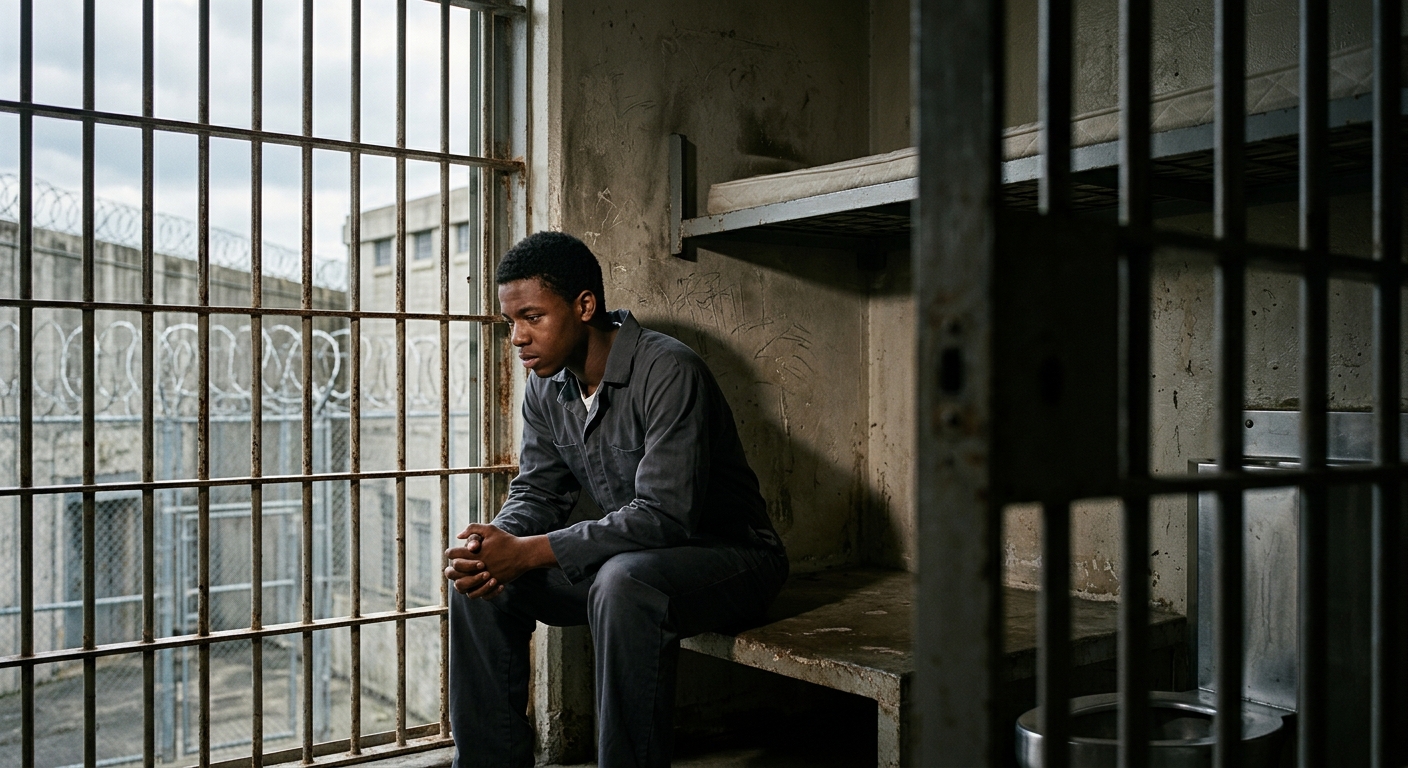
The American Exception: An Introduction to Juvenile Sentencing
The United States justice system is built on a complex foundation of accountability, deterrence, and rehabilitation. Yet, when it comes to the treatment of young offenders, the nation stands entirely alone on the global stage. The practice of sentencing minors to life in prison without the possibility of parole (JLWOP) remains one of the most intensely debated intersections of criminal law and human rights. While the fundamental premise of juvenile justice was originally designed to reflect the profound differences between children and adults, the “tough on crime” era of the late twentieth century ushered in an unprecedented wave of severe punitive measures for youth.
Today, the United States is the only country in the world that permits children to be condemned to die in prison. This reality has sparked profound questions about the nature of justice, the capacity for human change, and the moral obligations of a society toward its most vulnerable and malleable members. For decades, legal scholars, human rights advocates, and medical professionals have urged lawmakers to reexamine these permanent sentences. They argue that categorically locking away a teenager for the remainder of their natural life not only ignores the fundamental realities of adolescent development but also constitutes a glaring stain on the nation’s human rights record.
To understand the depth of this issue, one must explore the international human rights framework, the evolving neuroscience regarding the adolescent brain, and the complex web of Supreme Court rulings that have slowly begun to dismantle the most draconian elements of youth sentencing. As the dialogue shifts from purely retributive justice toward a more rehabilitative and restorative model, the movement to abolish juvenile life without parole is gaining unprecedented momentum across the nation.
A Global Outlier: International Human Rights and the U.S. Stance
The practice of sentencing children to permanent incarceration is universally condemned under international law. The United Nations Convention on the Rights of the Child (CRC), a landmark international treaty established to protect the fundamental rights of minors across the globe, explicitly forbids the imposition of capital punishment and life imprisonment without possibility of release for offenses committed by persons below eighteen years of age. Remarkably, the United States remains the sole member state of the United Nations that has signed but not ratified this crucial convention.
This isolation on the global stage highlights a stark philosophical divide. In virtually every other nation, the prevailing legal consensus is that children possess an innate capacity for reform and that the state has an obligation to provide them with the opportunity for rehabilitation. By contrast, the American legal framework has historically allowed states to treat juvenile offenders as “miniature adults,” subjecting them to the exact same punitive extremes as older, fully developed individuals. Human rights organizations continually point to this discrepancy, arguing that a sentence of life without parole inherently denies a young person’s humanity by declaring them permanently incorrigible before they have even reached adulthood.
Furthermore, international bodies such as the Committee on the Elimination of Racial Discrimination and the Committee Against Torture have expressed grave concerns over the United States’ continued reliance on extreme sentences for youth. These organizations argue that condemning a child to a life behind bars without any future assessment of their growth or rehabilitation equates to cruel, inhuman, and degrading treatment. For a nation that frequently positions itself as a global leader in human rights, this exceptionalism in youth sentencing serves as a persistent and highly visible contradiction.
The Neuroscience of Youth: Why Children Are Constitutionally Different
One of the most compelling arguments against juvenile life without parole emerges not from the courtroom, but from the laboratory. Over the past two decades, monumental advancements in neurobiology and developmental psychology have provided empirical evidence that the adolescent brain is fundamentally different from the adult brain. These scientific revelations have fundamentally shifted the narrative surrounding juvenile culpability and have played a pivotal role in shaping modern legal precedents.
Research clearly demonstrates that the prefrontal cortex—the area of the brain responsible for impulse control, strategic planning, risk assessment, and long-term decision-making—does not fully mature until an individual is well into their twenties. Consequently, adolescents are biologically predisposed to engage in reckless behavior, act on impulse without considering future consequences, and succumb to intense peer pressure. Their emotional regulation systems are highly volatile, making them distinctly vulnerable to external influences and traumatic environments.
Crucially, this same developmental immaturity that makes teenagers prone to poor judgment also makes them remarkably capable of change. Because their brains are still developing, their personalities and moral compasses are not yet fixed. This concept, known as “transient immaturity,” suggests that the vast majority of youth who commit serious crimes will naturally age out of criminal behavior as their neurological development stabilizes. To sentence a child to life without parole is to make a definitive, scientifically unfounded prediction that they will remain a danger to society for the rest of their lives, ignoring the biological reality that their character is still largely unformed.
Landmark Rulings: How the Supreme Court Reshaped Youth Sentencing
The intersection of evolving neuroscience and shifting societal standards of decency eventually reached the highest court in the United States, prompting a slow but significant constitutional reevaluation of youth sentencing under the Eighth Amendment’s protection against cruel and unusual punishment. Through a series of landmark decisions spanning over fifteen years, the U.S. Supreme Court established the legal doctrine that “children are constitutionally different from adults.”
- Roper v. Simmons (2005): In this watershed case, the Court abolished the death penalty for crimes committed by juveniles. The majority opinion relied heavily on developmental science, noting that the diminished culpability of youth means that the extreme penalty of death cannot be constitutionally applied to them.
- Graham v. Florida (2010): Building on the logic of Roper, the Court ruled that sentencing a juvenile to life without parole for non-homicide offenses violates the Eighth Amendment. The Court mandated that states must provide youth with a “meaningful opportunity to obtain release based on demonstrated maturity and rehabilitation.”
- Miller v. Alabama (2012): This decision struck down mandatory sentences of life without parole for juveniles convicted of homicide. The Court ruled that judges must be allowed to consider the unique characteristics of youth—such as age, family environment, and peer influence—before imposing the harshest possible penalty.
- Montgomery v. Louisiana (2016): The Court clarified that the Miller decision represented a substantive rule of constitutional law, making it retroactive. This landmark ruling provided hope to thousands of individuals who had been condemned to die in prison decades earlier, mandating that they receive resentencing hearings or immediate parole eligibility.
- Jones v. Mississippi (2021): In a noticeable pivot, a reshaped Court ruled that while judges must consider a defendant’s youth, the Eighth Amendment does not require a separate, explicit factual finding of “permanent incorrigibility” before imposing a discretionary life without parole sentence. This ruling somewhat tempered the momentum of previous decisions, leaving significant discretion to state judiciaries.
Despite the slight retreat in Jones, this overarching body of jurisprudence firmly established that youth matters in sentencing. It placed a formidable burden on the justice system to justify the permanent exclusion of a human being from society based on actions taken during adolescence.
The Demographics of Extreme Sentencing: Racial Disparities and Systemic Flaws
An honest examination of juvenile life without parole in the United States requires confronting the deep-seated racial disparities that plague the system. The application of extreme sentencing has never been colorblind. Data consistently reveals that youth of color—particularly Black and Hispanic youth—are disproportionately transferred to the adult criminal justice system and are significantly more likely to receive sentences of life without parole compared to their white peers who commit similar offenses.
This demographic skew is heavily rooted in the “superpredator” myth popularized in the 1990s. During a period of rising violent crime, certain academics and politicians pushed a narrative that warned of a coming generation of irredeemable, remorseless youth criminals. Though this theory was eventually debunked by the very researchers who proposed it, the ensuing panic triggered a legislative frenzy. States aggressively lowered the age at which children could be tried as adults and enacted harsh mandatory minimums. The media and political framing of the “superpredator” disproportionately targeted Black and Brown adolescents, embedding implicit biases into the mechanisms of the justice system.
Beyond race, youth sentenced to life without parole share overwhelmingly similar socio-economic backgrounds. Studies indicate that a vast majority of juvenile lifers have experienced severe childhood trauma, systemic poverty, physical or sexual abuse, and significant failures by the very child welfare and educational systems designed to protect them. The imposition of a permanent sentence on individuals from marginalized backgrounds highlights a systemic failure to provide intervention and care, opting instead for permanent exclusion.
Legislative Momentum: States Taking the Lead and Congressional Action
While the federal judiciary has set the constitutional floor for juvenile sentencing, state legislatures are actively raising the ceiling. A profound shift is occurring at the state level, driven by grassroots advocacy, bipartisan coalitions, and a growing recognition of the fiscal and moral costs of permanent youth incarceration. To date, over twenty-eight states and the District of Columbia have formally banned life without parole for individuals under the age of eighteen, and several others have no one currently serving such a sentence despite lacking a formal ban.
These state-level victories often involve creating “second look” legislation, which allows individuals sentenced for crimes committed as youths to petition for a parole hearing after serving a substantial baseline period, typically 15 to 25 years. This approach balances the need for accountability with the understanding that an individual in their forties is fundamentally different from the teenager who committed the offense.
At the federal level, Congress has periodically examined the issue of youth justice, though sweeping reform has been slower. The reauthorization and amending of the Juvenile Justice and Delinquency Prevention Act (JJDPA) demonstrate an ongoing, albeit cautious, federal commitment to improving the conditions and legal standards for youth offenders. Federal lawmakers continue to hold hearings exploring the human rights implications of JLWOP, and there is persistent pressure from civil liberties organizations to introduce federal legislation that would categorically ban the practice nationwide, bringing the United States in line with the rest of the world.
The Path Forward: Restorative Justice vs. Retributive Punishment
The debate over juvenile life without parole is emblematic of a broader struggle over the purpose of the American criminal justice system. A purely retributive model demands permanent vengeance for serious harm, regardless of the offender’s age or capacity for change. However, as the failures of mass incarceration become glaringly evident, there is a growing appetite for restorative justice—a model that emphasizes accountability, rehabilitation, and the eventual reintegration of the offender into the community.
The economic arguments for reform are also compelling. Incarcerating an individual for their entire natural life costs taxpayers millions of dollars per person, diverting crucial funds away from community interventions, mental health resources, and early childhood education—investments that actively prevent crime before it occurs. Furthermore, data collected from states that have abolished JLWOP and released former “juvenile lifers” demonstrates incredibly low recidivism rates. Many of these individuals return to society to become productive citizens, mentors, and advocates for community violence prevention, proving that the human capacity for redemption is vast.
Ultimately, the movement to rethink juvenile life without parole asks a fundamental question: Should a person be defined forever by the worst thing they did when they were a child? As science, international consensus, and legal precedent increasingly converge to say “no,” the eventual eradication of this practice seems less a matter of if, but when.
Frequently Asked Questions (FAQs)
What is juvenile life without parole (JLWOP)?
Juvenile life without parole is a criminal sentence issued to individuals who committed an offense prior to their 18th birthday, condemning them to remain in prison for the rest of their natural lives without any opportunity to present a case for parole or release to a board.
Why is the United States unique regarding this sentencing practice?
The U.S. is currently the only nation in the world that allows children to be sentenced to life without parole. Every other country abides by international human rights standards, such as the UN Convention on the Rights of the Child, which prohibit permanent imprisonment for individuals under the age of 18.
What did the Supreme Court decide in Miller v. Alabama?
In the 2012 case Miller v. Alabama, the Supreme Court ruled that mandatory life without parole sentences for juveniles violated the Eighth Amendment’s ban on cruel and unusual punishment. The Court determined that judges must have the discretion to consider a youth’s age, maturity, and circumstances before handing down a permanent sentence.
Does banning JLWOP mean violent juvenile offenders will go unpunished?
No. Banning life without parole for youth does not guarantee release, nor does it eliminate severe punishment. It simply guarantees that a juvenile offender will have a “meaningful opportunity” to be reviewed by a parole board after serving a significant number of years (often 15 to 25 years) to determine if they have been rehabilitated and can safely reenter society.
Why is adolescent brain development relevant to youth sentencing?
Neuroscience indicates that the adolescent brain, particularly the prefrontal cortex which manages impulse control and long-term planning, is not fully developed until a person’s mid-twenties. This biological immaturity makes youth more prone to reckless behavior and peer pressure, but it also means their personalities are highly adaptable, giving them a much greater capacity for rehabilitation than adult offenders.
References
- Juvenile Life Without Parole: An Overview — The Sentencing Project. 2023-04-07. https://www.sentencingproject.org/publications/juvenile-life-without-parole/
- Developmental Neuroscience and the Courts: How Science Is Influencing the Disposition of Juvenile Offenders — National Institutes of Health (PMC). 2012-04-01. https://www.ncbi.nlm.nih.gov/pmc/articles/PMC5560129/
- US: End Life Without Parole for Juvenile Offenders — Human Rights Watch. 2012-01-26. https://www.hrw.org/news/2012/01/26/us-end-life-without-parole-juvenile-offenders
- Legislation – Juvenile Justice and Delinquency Prevention Act — Office of Juvenile Justice and Delinquency Prevention. 2018-12-01. https://ojjdp.ojp.gov/about/legislation
Similar Articles








Read full bio of medha deb


