
Reproductive Rights Post-2022: New State Legal Frontiers
Exploring state constitutional battles and federal mandates in a post-Roe America.
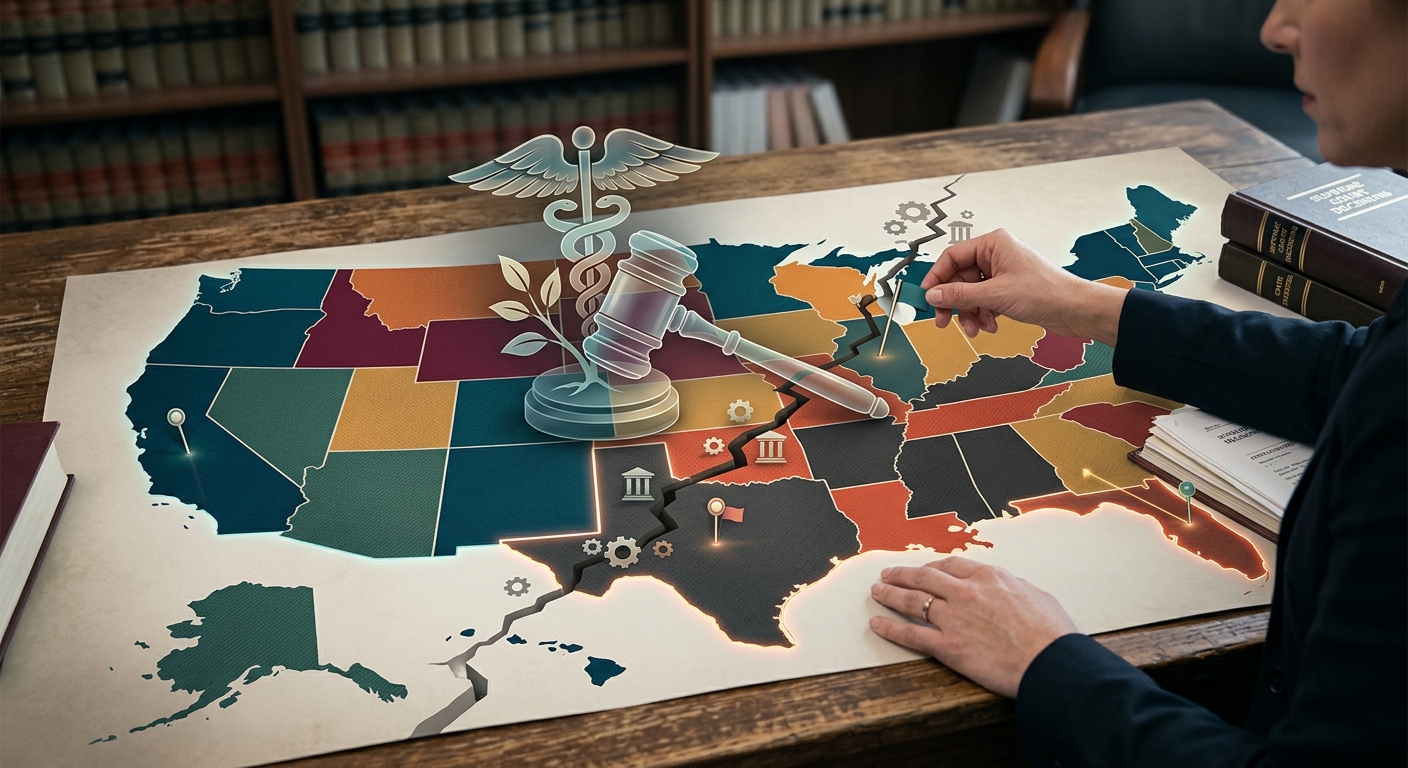
The year 2022 marked a profound and irreversible turning point in American jurisprudence. For nearly five decades, the constitutional right to bodily autonomy regarding pregnancy termination was securely anchored by established federal precedent. However, that long-standing legal paradigm was decisively shattered with the U.S. Supreme Court’s landmark ruling in Dobbs v. Jackson Women’s Health Organization. In this historic decision, the Court declared unequivocally that the United States Constitution does not confer a right to abortion, thereby returning the authority to regulate or prohibit the procedure entirely to individual states . This monumental erasure of federal protections forced an unprecedented decentralization of civil liberties, thrusting the battle for reproductive rights out of the federal courts and into the chaotic, highly polarized arenas of state legislatures, regional judicial systems, and direct-democracy ballot initiatives.
The immediate aftermath of this ruling has not only fractured the nation’s healthcare access across rigid geographic lines but has also ignited an array of novel legal conflicts. Today, legal advocates, healthcare providers, and patients are navigating complex new frontiers involving emergency medical mandates, the scope of digital data privacy, and the fundamental right to interstate travel. This shifting landscape demands a rigorous examination of how legal rights are now secured, defended, and heavily contested on a state-by-state basis.
The Immediate Aftermath: Trigger Laws and the Fracturing of Healthcare Access
Upon the official release of the Dobbs decision, a devastating cascade of “trigger laws” took immediate effect across a wide swath of the country. These restrictive statutes, explicitly pre-written and designed to activate the precise moment federal protections fell, instantly criminalized abortion care. Most of these laws were drafted with exceedingly narrow, vaguely defined exceptions for the life of the pregnant patient, leaving immense room for restrictive legal interpretation and instilling deep, paralyzing fear among medical professionals.
The resulting legal environment has created a disjointed patchwork of medical access, where a person’s fundamental healthcare rights are dictated entirely by their geographical zip code. Healthcare providers have found themselves trapped in a perilous intersection of medical ethics, public health guidelines, and stringent penal codes. The World Health Organization clearly delineates comprehensive abortion care as an essential health service and a critical component of global public health, emphasizing that access to safe reproductive care unequivocally saves lives . However, in legally restrictive U.S. states, physicians face the devastating threat of felony charges, exorbitant fines, and the permanent loss of their medical licenses for providing care that perfectly aligns with these established international medical standards.
This profound chilling effect has led to severe, heavily documented delays in medical interventions for highly dangerous conditions such as ectopic pregnancies, premature rupture of membranes, and incomplete miscarriages. Medical professionals, constrained by the looming threat of criminal prosecution, are frequently forced to wait until a patient’s condition deteriorates to the point of imminent death before legally intervening. This dynamic has fundamentally altered the standard of obstetric care in restrictive states, creating an environment where legal compliance directly contradicts the Hippocratic Oath to do no harm.
Shifting the Legal Battlefield: State Constitutions and Direct Democracy
Recognizing the overwhelming hostility of the current federal judiciary toward reproductive freedoms, civil rights advocates swiftly and strategically pivoted to state-level protections. State constitutions represent a unique legal battleground; they often contain explicit privacy, equal protection, and liberty clauses that can be interpreted much more broadly than the provisions found in the federal Constitution. Consequently, state supreme courts have become pivotal arbiters of civil liberties.
The 2022 midterm elections proved to be a critical, transformative testing ground for this decentralized legal strategy. Across the political spectrum, voters demonstrated a strong preference for safeguarding reproductive autonomy when given the rare opportunity to vote directly on the matter. In states such as California, Michigan, and Vermont, voters decisively approved citizen-initiated constitutional amendments that explicitly enshrined reproductive freedom into their respective state charters, effectively rendering arbitrary legislative bans unconstitutional .
Conversely, in traditionally conservative stronghold states like Kentucky and Montana, voters actively rejected legislative attempts to amend their state constitutions to declare that they did not protect abortion rights . These defensive victories were particularly striking, underscoring the formidable power of direct democracy in an era of intense political polarization.
Ballot initiatives have emerged as an extraordinarily potent tool for citizens to bypass ideologically entrenched or heavily gerrymandered legislatures. By utilizing the ballot box to directly mandate the protection of fundamental rights, reproductive justice advocates have proven that widespread public consensus often diverges significantly from the stringent legislative bans passed by state assemblies.
| State | 2022 Ballot Measure Focus | Electoral Outcome | Legal Implication |
|---|---|---|---|
| Michigan | Proposal 3: Enshrine reproductive freedom | Passed | Invalidated a dormant 1931 total ban; guaranteed explicit constitutional protection. |
| California | Proposition 1: Right to reproductive freedom | Passed | Solidified existing statutory protections into the state’s highest constitutional framework. |
| Vermont | Article 22: Personal reproductive autonomy | Passed | Created an explicit, unalienable constitutional right to comprehensive abortion care. |
| Kentucky | Amendment 2: No constitutional right to abortion | Failed | Maintained an avenue for ongoing state-level legal challenges against newly enacted bans. |
The Federal Preemption Clash: EMTALA and Emergency Medical Care
As state-level criminal bans rapidly proliferated, a profound constitutional conflict arose between draconian state penal codes and long-standing federal healthcare mandates. The primary focal point of this ongoing jurisdictional clash has been the Emergency Medical Treatment and Labor Act (EMTALA). Enacted decades ago, EMTALA is a robust federal statute requiring any Medicare-participating hospital to provide necessary stabilizing treatment to patients presenting with emergency medical conditions.
In July 2022, seeking to mitigate the urgent public health crisis triggered by the Dobbs decision, the Department of Health and Human Services (HHS) issued explicit, forceful guidance to the medical community. The HHS reminded healthcare providers that their legal and ethical duty under EMTALA to provide stabilizing care—which, in cases of severe pregnancy complications, may necessitate an abortion—unquestionably preempts any state laws prohibiting such procedures .
This federal directive immediately triggered aggressive, high-stakes litigation from states enforcing near-total bans, such as Texas and Idaho. These state governments argued vehemently that the federal government was drastically overstepping its statutory authority and attempting to create an unauthorized federal abortion mandate. The resulting legal limbo has left emergency room physicians in an utterly untenable position. Doctors are now routinely forced to weigh life-saving, time-sensitive medical protocols mandated by federal law against the imminent threat of state prosecution and imprisonment, further destabilizing an already fragile emergency healthcare infrastructure.
The New Medical Frontier: Medication Abortion and Interstate Legal Battles
Beyond surgical procedures, the intricate legal war over reproductive rights has heavily focused on medication abortion. The highly effective two-drug regimen of mifepristone and misoprostol currently accounts for more than half of all pregnancy terminations in the United States. Because these medications can be safely prescribed via telehealth consultations and delivered directly through the postal service, they represent a significant challenge to the physical enforcement mechanisms of strict state-level bans.
In response to the rapid proliferation of restrictive state laws, medical providers residing in legally protective “shield states” have increasingly relied on telehealth networks to mail medication to patients residing in states with total bans. Shield laws are strategically designed to protect these prescribing physicians from out-of-state subpoenas, extradition requests, and retaliatory civil litigation.
Simultaneously, conservative legal advocacy groups have launched unprecedented judicial challenges aimed directly at the Food and Drug Administration (FDA), aggressively seeking to revoke the federal approval of mifepristone entirely. These complex legal maneuvers attempt to impose a nationwide, blanket ban on the medication, completely regardless of individual state laws protecting reproductive rights. This ongoing litigation boldly underscores the stark reality that protective state constitutions alone cannot entirely insulate patients and providers from persistent, targeted federal judicial challenges.
Navigating the Digital Privacy Vulnerabilities
The swift criminalization of reproductive healthcare has catalyzed urgent, unprecedented concerns regarding digital surveillance, commercial data privacy, and the weaponization of personal information. In a legal landscape where the simple act of seeking medical care can be a heavily prosecuted offense, a patient’s digital footprint instantly transforms into a massive potential liability.
Law enforcement agencies, newly emboldened by strict penal codes, now possess the capability to utilize search engine query histories, cellular geolocation data tracking visits to out-of-state medical clinics, and self-reported health data housed within menstrual tracking applications to build criminal cases. Commercial data brokers frequently aggregate and sell this highly sensitive information, completely circumventing traditional legal requirements for search warrants.
In response to these threats, legal advocacy organizations and progressive lawmakers have rapidly expanded their focus to address these profound modern vulnerabilities. There is a fierce legislative push for robust digital shield laws explicitly designed to protect private patient data from hostile out-of-state investigations. Furthermore, privacy advocates are fiercely demanding comprehensive federal regulatory action to fortify the Health Insurance Portability and Accountability Act (HIPAA). The ultimate goal is to ensure that medical records, telehealth communications, and digital health data cannot be legally exploited to prosecute vulnerable individuals attempting to navigate the complexities of accessing necessary reproductive care.
Systemic Inequities: The Disproportionate Burden of Healthcare Restrictions
It is profoundly vital to recognize that the fracturing of reproductive access does not impact all demographics equally; rather, it exponentially exacerbates existing, deeply entrenched systemic inequities. For individuals living in states with total abortion bans, the primary recourse is to travel across state lines to access legal, operational clinics. This geographic reality imposes overwhelming, often insurmountable logistical and financial burdens.
The severe barriers to access include:
- Exorbitant Travel Costs: The sudden financial requirement to purchase airline tickets, secure hotel lodging, and pay for inflated fuel costs over hundreds of miles.
- Loss of Essential Income: The absolute necessity of taking unpaid time off work to accommodate long-distance travel and navigating mandatory, medically unnecessary waiting periods.
- Complex Childcare Logistics: The overwhelming majority of people seeking abortions are already parents, making extended, reliable childcare a critical, expensive hurdle.
- Pervasive Legal Anxieties: The paralyzing fear of crossing state borders and facing potential legal retaliation, criminalization, or harassment upon returning home.
Consequently, the severe, life-altering consequences of abortion bans fall heavily and disproportionately on low-income individuals, women of color, and those living in rural “healthcare deserts.” These specific, vulnerable populations already experience dramatically higher rates of maternal mortality and severe birth-related morbidity. By systematically severing access to comprehensive, life-saving reproductive care, restrictive state laws actively compound these overlapping public health crises, effectively reinforcing generational cycles of poverty, disenfranchisement, and systemic marginalization.
Looking Forward: The Long-Term Trajectory of Reproductive Justice
The contemporary fight for reproductive autonomy is not a fleeting political dispute; it is rapidly settling into a protracted, complex, multi-front legal and social war. The grim legal landscape firmly established in 2022 guarantees that safeguarding bodily autonomy will require constant, unwavering civic vigilance.
Aggressive litigation will relentlessly continue in state supreme courts, specifically challenging the unconstitutional vagueness of medical exceptions and defending the fundamental right of citizens to engage in interstate travel. Grassroots organizers, civil rights groups, and public health advocates are already mobilizing heavily for future election cycles, meticulously drafting new, airtight constitutional amendments for states where the mechanisms of direct democracy remain legally viable. The post-Roe legal reality dictates that reproductive rights are no longer guaranteed by an overarching federal precedent. Instead, these rights must be actively, aggressively, and continuously defended block by block, state by state, and election by election.
Frequently Asked Questions (FAQs)
What was the core outcome of the Dobbs v. Jackson decision?
The Supreme Court’s landmark decision in Dobbs v. Jackson Women’s Health Organization decisively overturned Roe v. Wade, stripping away the federal constitutional protection for abortion rights. This historical ruling fundamentally shifted the power to regulate, restrict, or outright ban abortion entirely to individual state governments, resulting in immediate criminalization and healthcare disruption in numerous jurisdictions across the South and Midwest.
How have state ballot measures influenced reproductive rights since 2022?
State ballot measures have become a highly effective, democratic mechanism for citizens to bypass restrictive legislative bodies. In 2022, voters in several states, including Michigan, California, and Vermont, successfully passed constitutional amendments that explicitly protect the right to reproductive freedom. Concurrently, voters in conservative states like Kentucky rejected legislative measures aiming to permanently eliminate those rights from their state charters.
What is EMTALA, and why is it central to current abortion litigation?
The Emergency Medical Treatment and Labor Act (EMTALA) is a foundational federal law mandating that Medicare-participating hospitals provide stabilizing care for severe medical emergencies. The federal government argues that this legal requirement includes providing abortions when a pregnant patient’s health is in imminent, severe danger, leading to intense constitutional clashes with states that enforce total abortion bans without broad, clearly defined health exceptions.
Why has digital privacy become a major concern in the post-Roe landscape?
With the rapid criminalization of abortion in many states, digital footprints—such as online search histories for abortion pills, cellular geolocation tracking data near out-of-state clinics, and inputted data from period-tracking apps—can potentially be subpoenaed or purchased by law enforcement. Authorities can utilize this data to prosecute patients and providers, prompting urgent national calls for enhanced digital privacy shield laws.
How do state-level abortion bans uniquely affect marginalized communities?
State-level abortion bans disproportionately and severely impact low-income individuals, people of color, and rural residents. These demographic groups often lack the necessary financial resources, paid time off, and vital logistical support required to travel hundreds of miles out of state to access legal reproductive healthcare. Consequently, they are often forced to carry unwanted or dangerous pregnancies to term, drastically exacerbating existing maternal mortality rates.
References
- 19-1392 Dobbs v. Jackson Women’s Health Organization (06/24/2022) — Supreme Court of the United States. 2022-06-24. https://www.supremecourt.gov/opinions/21pdf/19-1392_6j37.pdf
- 2022 State Ballot Initiatives on Abortion Rights — KFF. 2022-11-14. https://www.kff.org/womens-health-policy/issue-brief/2022-state-ballot-initiatives-on-abortion-rights/
- HHS Secretary Letter to Health Care Providers About Emergency Medical Care — U.S. Department of Health and Human Services. 2022-07-11. https://www.hhs.gov/sites/default/files/emergency-medical-care-letter-to-health-care-providers.pdf
- Abortion care guideline — World Health Organization (WHO). 2022-03-08. https://www.who.int/publications/i/item/9789240039483
Similar Articles








Read full bio of medha deb


