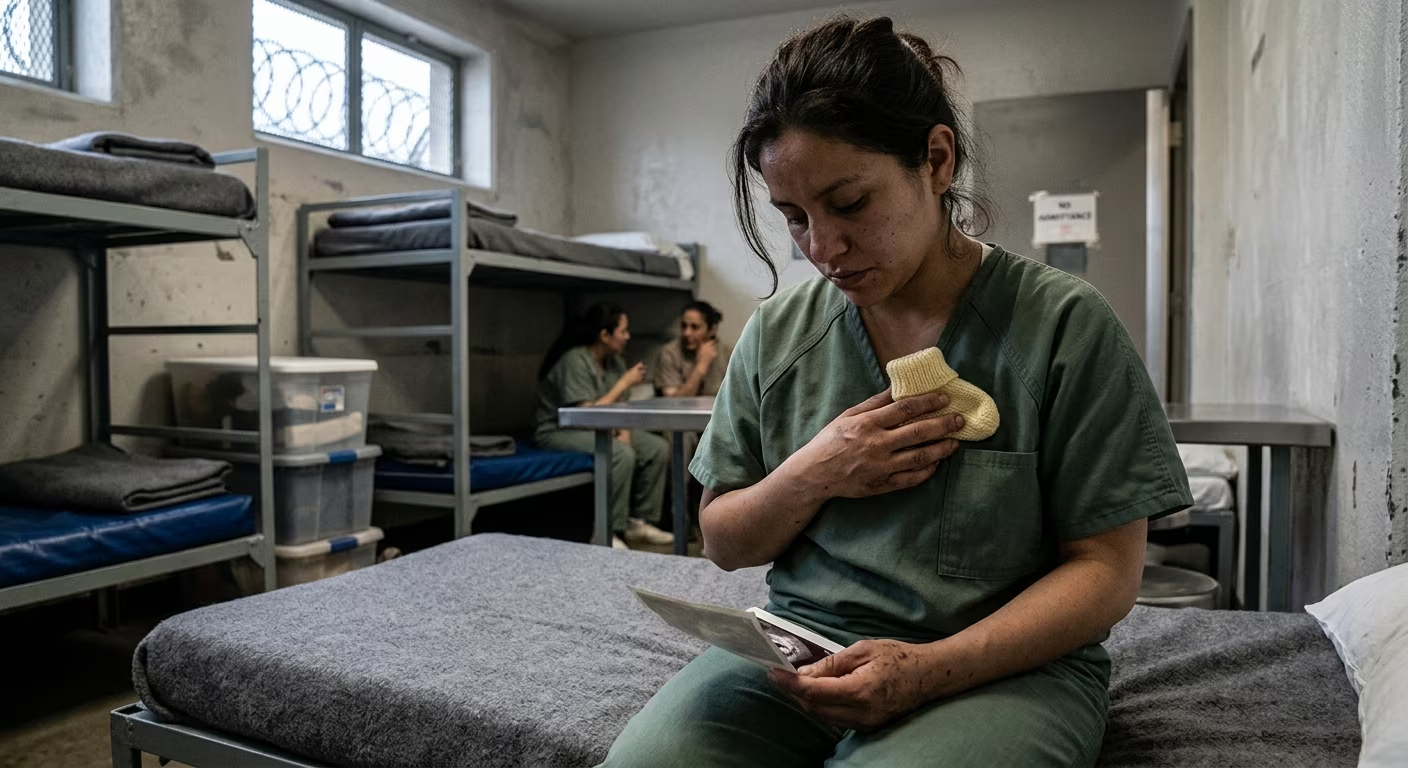
The Hidden Crisis: Reproductive Healthcare Failures in Civil Confinement
Civil confinement within the United States immigration system is ostensibly designed as an administrative holding pattern. Yet, for many detained individuals, it has morphed into a site of profound medical neglect and reproductive rights violations. The systemic failure to provide adequate, consensual, and specialized reproductive healthcare exposes a harrowing chasm between human rights frameworks and the operational realities of detention. The unfolding crisis of reproductive healthcare underscores a fundamental disregard for bodily autonomy. As legal advocates and government watchdogs continue to uncover disturbing patterns of abuse, understanding the depth of this hidden crisis is imperative for exacting meaningful reform. When the state assumes custody of an individual, it absolutely assumes responsibility for their well-being. Failure to meet this obligation constitutes a severe breach of domestic and international law. This issue transcends partisan politics, cutting to the core of how a nation treats individuals stripped of their liberty and heavily reliant on state-provided care systems for survival.
Understanding the Scope of the Problem
The Breakdown of Essential Medical Services
Healthcare within the U.S. Immigration and Customs Enforcement (ICE) network is a fragmented, heavily privatized apparatus. Rather than functioning as a unified medical system with strict oversight, it operates across a patchwork of federal, local, and private entities. For pregnant, postpartum, and nursing individuals, this fragmentation routinely results in dangerous delays or outright denial of essential medical care. Basic health necessities, such as prenatal vitamins, obstetric consultations, or sanitary products, are frequently inaccessible.
Reports highlight how pregnant individuals endure harsh conditions that exacerbate the vulnerabilities of gestation. Ignoring distress calls, providing inadequate nutrition, and subjecting pregnant individuals to solitary confinement demonstrate a breakdown in basic humanity. The Office of Inspector General (OIG) has flagged chronic care management as inadequate across multiple centers. These deficiencies reflect a culture that prioritizes logistics and cost-cutting over the medical well-being of the confined population.
The Psychological Toll on Vulnerable Populations
The psychological ramifications of reproductive negligence are profound. Experiencing a medical emergency while detained is inherently traumatic. When compounded by severe language barriers, an aggressive custodial environment, and the persistent threat of deportation, the emotional distress becomes staggering. Detained individuals report experiencing anxiety, depression, and post-traumatic stress disorder directly linked to their inability to access competent medical care.
The constant fear that their reproductive health is being compromised—or that their unborn children are at risk—leaves enduring psychological scars. For nursing mothers, the arbitrary confiscation of breast pumps and the forced cessation of lactation add a layer of physiological pain. This trauma outlasts their confinement, affecting their integration into communities once released.
Case Studies in Negligence: Coercion and Lack of Consent
Perhaps the most egregious manifestations of reproductive abuse in immigration detention involve non-consensual medical procedures. High-profile whistleblower complaints and congressional investigations have brought to light alarming practices, most notably at the Irwin County Detention Center (ICDC) in Georgia. A bipartisan investigation led by the U.S. Senate Committee on Homeland Security unveiled a horrific pattern of excessive, unnecessary gynecological procedures performed on detained women by an off-site contracted physician.
The cornerstone of modern medical ethics—informed consent—was systematically shattered. Detained women, many lacking English fluency, reported being subjected to life-altering surgeries, including hysterectomies, without their full comprehension or consent. The stark lack of culturally competent translation services meant patients were forced to rely on other detainees or bilingual security guards to translate complex medical information.
This coercive environment effectively stripped these women of their agency, forcing them to undergo irreversible reproductive procedures under state custody. Such practices eerily echo historical periods of forced sterilization targeting minority communities in the United States, proving that bodily autonomy remains profoundly vulnerable in highly securitized environments.
The Role of Privatization and Lack of Oversight
The architecture of the modern immigration detention system relies heavily on for-profit prison corporations. A vast majority of the daily detention population is held in facilities operated by private contractors through Intergovernmental Service Agreements. This privatization introduces a conflicting financial incentive: maximizing corporate profit margins by minimizing operational costs. In practice, this often translates directly to understaffed medical units, rationed basic care, and delayed specialty referrals.
In privately run facilities, medical requests can take weeks to process. Even when a detainee secures a medical consultation, securing off-site specialist care is often viewed as a burdensome expense. Facility personnel must navigate convoluted approval processes for specialty care, during which critical medical windows rapidly close. The Department of Homeland Security’s OIG has repeatedly identified chronic understaffing and inadequate medical care continuity as systemic failures, yet enforcing financial penalties or terminating contracts for non-compliant private operators remains rare.
Regulatory Frameworks Versus Lived Realities
On paper, immigration enforcement agencies operate under guidelines designed to safeguard detainee health. The Performance-Based National Detention Standards and the National Detention Standards outline acceptable conditions for civil confinement, including provisions for medical and mental health care. Facilities are explicitly required to ensure timely access to appropriate healthcare services, catering to women’s health needs.
However, a dangerous disparity exists between written standards and lived realities.
| Aspect of Care | Official Policy | On-the-Ground Reality |
|---|---|---|
| Prenatal Care | Facilities must provide routine prenatal checkups. | Detainees experience severe delays and ignored distress calls. |
| Informed Consent | Procedures require documented informed consent. | Reliance on informal translators; procedures done without comprehension. |
| Specialty Referrals | Access to off-site specialists as medically required. | Approvals are frequently delayed or denied to cut operational costs. |
The standards are frequently criticized by human rights organizations for being intentionally vague and full of loopholes. Oversight mechanisms are often toothless; facility inspections are routinely pre-announced, affording private operators ample time to artificially inflate their compliance metrics. When audits reveal severe deficiencies, corrective action plans are rarely monitored long-term, allowing substandard care to resume once inspectors leave.
The Intersection of Bodily Autonomy and Immigration Policy
Reproductive justice advocates argue that detaining pregnant, postpartum, and nursing individuals is incompatible with the right to bodily autonomy. Global advocacy groups, including Human Rights Watch, have documented how the restrictive nature of immigration confinement undermines an individual’s right to safely make independent medical choices.
Despite internal agency directives suggesting pregnant individuals should generally not be detained, empirical data reveals that the government continues to hold and deport hundreds of pregnant and nursing women annually. This contradiction highlights the punitive edge of current immigration policy, where enforcement metrics frequently override maternal safety. Denying access to abortion services, interfering with necessary lactation, and shackling pregnant women during transport are undeniable examples of how immigration enforcement policies actively weaponize reproductive vulnerability. Moreover, the trauma inflicted on these families ripples outward, affecting infant health outcomes and long-term maternal mental health long after the physical detention period ends. True reproductive justice demands that marginalized women, regardless of their immigration status, have unfettered access to comprehensive health services free from state coercion.
Pathways Forward: Urgent Reforms and Accountability
Addressing the reproductive healthcare crisis in civil confinement requires an immediate overhaul of policy and practice. Incremental adjustments are insufficient; comprehensive, structural reforms must be enacted to protect bodily autonomy.
Policy Recommendations for Immediate Implementation
- Codifying Protections: Congress must pass federal legislation prohibiting the detention of pregnant, postpartum, and nursing individuals, mandating their release to community-based alternatives where they can access safe healthcare.
- Enforcing Strict Consent: Facilities must be required by law to provide independent, medically trained interpreters. Any irreversible reproductive procedure must require multi-tiered medical approval and documented informed consent in the patient’s native language.
- Ending Privatization: Phasing out lucrative contracts with for-profit prison operators will directly remove the financial incentive to limit necessary medical care.
Enhancing Independent Medical Review
Internal oversight cannot be left to the agencies committing the infractions. Establishing an independent, civilian-led medical oversight board with unannounced access to detention facilities is critical. This board must have the authority to review gynecological records, mandate immediate corrective actions, and refer cases of suspected medical abuse to the Department of Justice.
Frequently Asked Questions (FAQ)
What are the ICE National Detention Standards?
These are federal guidelines dictating the conditions of confinement, including medical care and living conditions in U.S. immigration detention facilities. However, independent critics consistently argue these standards are poorly enforced.
Why is informed consent a major issue?
Language barriers, fear of retaliation, and the inherently coercive environment make it exceedingly difficult for patients to provide true, uncoerced informed consent. Documented non-consensual procedures highlight systemic failures in ensuring detainees understand their treatments.
Are pregnant individuals legally allowed to be detained?
While internal policies suggest pregnant and nursing individuals should not be detained unless they pose a significant flight risk, official records show hundreds are still held annually, raising ongoing human rights concerns.
How does privatization affect medical care?
Private facilities are financially incentivized to minimize operational costs to maximize profits. This operational model frequently leads to understaffed medical units, delayed specialist referrals, and an overall degradation of healthcare quality.
What role do independent watchdogs play in detention oversight?
Independent watchdogs, such as the Department of Homeland Security’s Office of Inspector General, human rights organizations, and whistleblower networks, are vital in uncovering abuses. They conduct audits, publish investigative reports, and raise public awareness to pressure lawmakers into enforcing accountability and reforming detention conditions.
Conclusion: Upholding Dignity in Civil Confinement
The systemic medical neglect and widespread reproductive abuse prevalent within the immigration detention system represent a profound moral and ethical failure. Bodily autonomy is never a conditional right tethered to citizenship or immigration status; it is a fundamental human right. As the verified evidence of forced surgical procedures, deliberate medical negligence, and resulting trauma continues to mount, it is clear that current oversight frameworks are inadequate.
A just society cannot legitimately claim to uphold human rights while turning a blind eye to the subjugation of the most vulnerable populations in its custody. Dismantling the opaque structures that allow reproductive abuse in civil confinement is not merely a matter of administrative reform—it is an urgent imperative for basic human dignity.
References
- Medical Mistreatment of Women in ICE Detention — Senate Committee on Homeland Security and Governmental Affairs. 2020-08-20. https://www.hsgac.senate.gov/
- 2019 National Detention Standards for Non-Dedicated Facilities — U.S. Immigration and Customs Enforcement (ICE). 2026-03-23. https://www.ice.gov/detain/detention-management/2019
- Immigrant Women in ICE Detention Deserve Protection — Human Rights Watch. 2026-03-06. https://www.hrw.org/news/2026/03/06/immigrant-women-ice-detention-deserve-protection
- Reproductive healthcare in immigration detention: The imperative of informed consent — National Institutes of Health (PMC). 2022-01-03. https://www.ncbi.nlm.nih.gov/pmc/articles/PMC8900742/
- Medical Processes and Communication Protocols Need Improvement at Irwin County Detention Center (OIG-22-14) — Department of Homeland Security Office of Inspector General. 2022-01-03. https://www.oig.dhs.gov/