
Redefining Child Welfare: Empowering Youth to Speak Truth
Empowering youth to challenge and transform the family policing system.
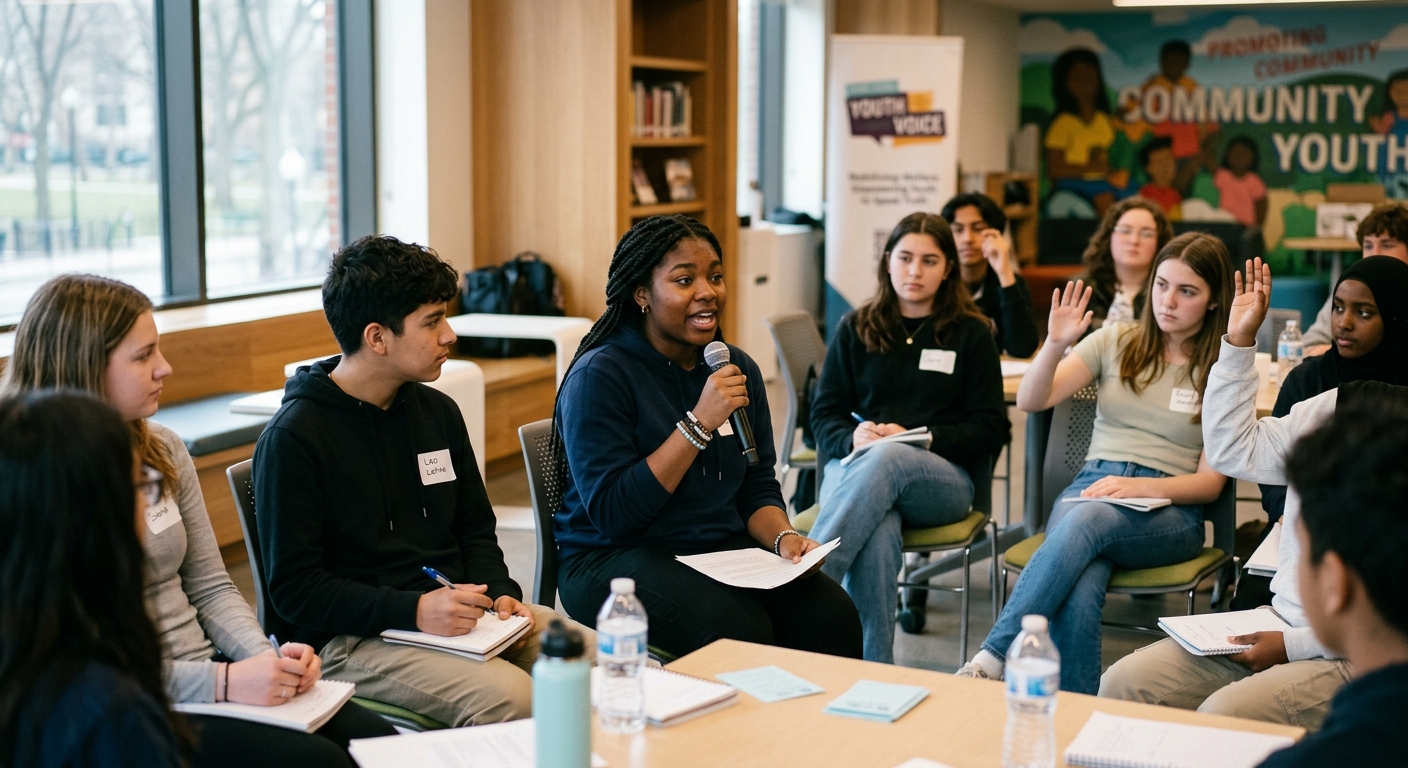
Introduction: The Urgent Need to Listen to Youth
The conventional narrative surrounding the United States’ child protection services has long been one of benevolence—a state-run, federally funded mechanism designed primarily to rescue vulnerable children from abusive and perilous homes. For generations, society has accepted this framework without question, trusting that government agencies are acting strictly in the best interests of the youth. However, a powerful and growing movement driven by impacted youth, parents, and social justice advocates is boldly challenging this deeply ingrained perspective. They argue that what is commonly referred to as “child welfare” functions much more accurately as a “family policing system.” By centering the voices of those who have survived the foster care apparatus, this emerging consensus demands a radical reevaluation of how the government interacts with marginalized families.
Young advocates are actively “speaking truth to power,” exposing the grim realities of state-sponsored family separation and relentless surveillance. Their lived experiences reveal a system less concerned with providing essential community support and more focused on regulating the behaviors of poor families and communities of color. The need for systemic overhaul is not merely a progressive academic theory; it is an urgent human and civil rights imperative. Recent data indicates that over 30% of children in the United States will be subjected to a child welfare investigation by the time they reach age 18. Such staggering statistics force the public and policymakers alike to ask whether the current framework is genuinely protecting youth or merely expanding an invasive net of state control over the most vulnerable populations. Empowering youth to lead this conversation is the critical first step toward dismantling an inherently punitive structure and replacing it with one rooted in genuine care, economic support, and community resilience.
Deconstructing the “Family Policing” System
Language dramatically shapes societal perception. The intentional shift from using the euphemistic term “child welfare” to the more accurate “family policing” is a deliberate move by organizers to describe the lived experiences of millions of families across the country. The system relies heavily on surveillance, coercive, unannounced investigations, and the ultimate, devastating threat of child removal—tactics that closely mirror criminal law enforcement. In these child protection investigations, parents are often assumed guilty until proven innocent. They are frequently subjected to highly intrusive searches of their private homes and pressured to comply with arbitrary agency mandates without the basic constitutional and legal protections afforded to individuals facing criminal charges.
This policing mechanism is deeply entangled with institutional racism, classism, and systemic bias. Poverty is frequently and unjustly conflated with neglect, leading to families being punished for lacking financial resources rather than lacking love or caregiving capability. The racial disparities embedded in this system are glaring and undeniable. Across the country, Black, Indigenous, and Latinx children are disproportionately targeted for investigations, removed from their homes, and placed in foster care compared to their white counterparts. For instance, according to data highlighted by the UCLA Pritzker Center for Strengthening Children and Families, in Los Angeles County alone, Black children made up nearly one-fourth of the foster youth population in 2023, despite accounting for only 7% of the county’s overall child demographic. Indigenous children similarly faced double the representation in the foster system compared to their broader presence in the population. These disparities are not an accident; they are the foreseeable result of subjective neglect laws and deeply ingrained biases that heavily penalize marginalized groups. Acknowledging and actively fighting this institutional racism is paramount to understanding why youth advocates are demanding total systemic transformation rather than mere procedural tweaks.
The Intersection of Domestic Struggle and Global Human Rights
The United States’ family policing practices are not just a domestic policy failure; they represent a severe and ongoing violation of international human rights standards. Globally, human rights frameworks recognize the fundamental right to family integrity and insist that children should only be separated from their parents as an absolute last resort, and never solely due to conditions of extreme poverty. The international community, long critical of American mass incarceration, has now begun to scrutinize the U.S. heavily on its child welfare policies.
In August 2022, the United Nations Committee on the Elimination of Racial Discrimination (CERD) issued a striking critique of the United States. Following comprehensive testimony from human rights advocates, civil rights organizations, and system-impacted youth, CERD expressed profound concern regarding the disproportionate number of racial and ethnic minority children removed from their families. The UN Committee specifically called on the U.S. government to take all appropriate measures to eliminate racial discrimination within its child welfare system, explicitly urging the amendment or repeal of prominent laws and policies that disproportionately impact families of color. This global spotlight validates the persistent arguments of youth advocates: the routine fracturing of marginalized families is an ongoing, state-sponsored human rights crisis. When youth speak truth to power, they are joining a global chorus demanding that the U.S. adhere to basic human rights principles, ceasing its historical reliance on forced family separation as a default response to deep societal inequities.
The Foster Care to Juvenile Justice Pipeline
One of the most devastating and long-lasting consequences of the family policing system is its direct link to the criminal justice system—a trajectory often referred to as the “foster care-to-juvenile justice pipeline.” When children are removed from their homes, they are frequently placed in environments that are ill-equipped to handle the complex trauma of parental separation. Group homes and institutional placements, in particular, often rely on local law enforcement to manage routine behavioral issues that stem directly from the trauma of displacement. Consequently, youth in foster care are subjected to an environment where normal adolescent behavior or expressions of grief are swiftly criminalized.
Statistics paint a relentlessly grim picture of this pipeline. Research consistently shows that youth with a history of foster care involvement are disproportionately represented in both the juvenile justice and adult prison systems. Some reports and legal analyses estimate that up to 1 in 5 individuals detained in state prisons spent time in the foster system during their youth. The crossover between child welfare and criminal justice highlights a catastrophic systemic failure to support and heal traumatized youth. Instead of offering intensive therapeutic interventions, educational support, and family stabilization resources, the state apparatus frequently funnels young people into secure detention facilities. This further severs their ties to their communities and severely dims their prospects for the future. Youth rights advocates are fighting fiercely to dismantle this pipeline by advocating for the elimination of congregate care settings entirely, demanding instead that resources be redirected toward family preservation, mental health services, and community-based restorative justice programs.
Empowering Lived Experience: Youth as Architects of Reform
The most powerful tool for reforming the family policing system is the lived expertise of those who have survived it. For decades, child welfare policies have been designed by bureaucrats, academics, and politicians with little to no firsthand knowledge of the trauma inflicted by state interventions. Today, a robust movement of impacted youth and parents is refusing to be silenced. They are taking a seat at the table—and when a seat is not offered, they are building their own platforms to ensure their experiences dictate the terms of reform.
Youth advocates are organizing grassroots coalitions, leading public protests, and testifying before legislative bodies across the nation. They are systematically dismantling the “savior narrative” of foster care by sharing their authentic stories of resilience and systemic betrayal. Peer support groups and community defense hubs are emerging as vital spaces where impacted individuals can share resources, learn about their legal rights, and strategize for collective liberation. These advocates understand implicitly that genuine child protection cannot be achieved through state coercion; it requires safe, stable, and well-resourced communities. By speaking truth to power, youth leaders are shifting the discourse from one of charity to one of fundamental civil rights. They are demanding that their experiences dictate the terms of reform, ensuring that future generations do not have to endure the same traumatic separations.
Redefining “Safety” Through Community Investment
Before policy changes can truly take root, society must confront its foundational definition of “safety.” For decades, safety has been measured by the number of children removed from supposedly “unfit” environments and the number of state-funded investigations conducted. This metric assumes that the government is the best arbiter of well-being. However, youth organizers argue that true safety is never found in a sterile institution, a temporary foster placement with strangers, or a juvenile detention cell. Safety, as defined by those who have lived without it, means having a secure roof over one’s head, a refrigerator full of food, access to mental health professionals who do not double as state informants, and a community that holds families together during times of crisis.
By systematically starving marginalized communities of these fundamental resources, the state manufactures the very crises it then uses to justify family separation. Advocates are pioneering a transformative justice model where the billions of dollars currently funneled into the family policing apparatus are redirected into neighborhood-based defense hubs. These hubs provide no-strings-attached financial assistance, peer-led parenting support, and conflict resolution without the threat of a hotline call. When youth say they want to end the family policing system, they are not advocating for the abandonment of children in danger; rather, they are demanding the creation of an infrastructure that guarantees families have the tools they need to thrive independently. This paradigm shift—from a mindset of punitive rescue to one of structural empowerment—represents the core ethos of the youth rights movement today.
Policy Changes and the Path Forward
Listening to youth voices requires translating their demands into actionable, sweeping policy changes. Tinkering at the edges of the family policing system is insufficient; a fundamental transformation is necessary. Key legislative and systemic reforms advocated by youth leaders include:
- Implementing Miranda-Style Warnings: Parents and families must be afforded robust legal protections at the very onset of a child welfare investigation. Families must be informed of their rights—including the right to counsel and the right to refuse unwarranted searches—before an investigator crosses their threshold.
- Repealing Punitive Legislation: Federal and state governments must abolish laws that accelerate the termination of parental rights, most notably the Adoption and Safe Families Act (ASFA), which imposes arbitrary timelines on family reunification.
- Divesting from Surveillance, Investing in Support: Public funds should be redirected away from foster care and surveillance machinery and invested directly into the social safety net. Expanding programs like universal basic income, affordable housing subsidies, accessible healthcare, and affordable childcare are the true mechanisms of child welfare.
- Eliminating Congregate Care: Ending the reliance on group homes and institutional settings that criminalize youth behavior and actively feed the juvenile justice pipeline.
If the root cause of most child welfare involvement is poverty, the solution is economic support, not family separation. By divesting from the multi-billion-dollar foster care industry and investing directly in communities, policymakers can honor the demands of youth advocates and create an environment where families can thrive together.
Conclusion: Amplifying Youth Voices
The movement to transform child welfare into a system of genuine community support is gaining unprecedented momentum, fueled by the unwavering courage of young people and impacted families. These advocates are pulling back the curtain on the family policing system, exposing its deep roots in institutional racism, class oppression, and social control. By elevating the dialogue to the level of international human rights and fiercely advocating for legislative overhaul, they are carving a path toward a more just future. The call to action is clear: society must stop punishing families for their vulnerabilities and start investing in their inherent strengths. It is time to listen to the youth, dismantle the oppressive architectures of the past, and build communities that prioritize family integrity, justice, and holistic well-being.
Frequently Asked Questions (FAQs)
What is the family policing system?
The term “family policing system” is used by advocates and scholars to describe the current child welfare system. It highlights how child protective services function similarly to law enforcement by relying on surveillance, investigation, and the punitive removal of children, disproportionately impacting poor families and communities of color.
Why is it important for youth to lead child welfare reform?
Youth who have experienced the foster care system possess lived expertise that is critical for understanding the real-world impacts of child welfare policies. Their firsthand knowledge exposes the flaws, traumas, and systemic failures that data alone often misses, ensuring that proposed reforms address actual needs rather than relying on bureaucratic assumptions.
How does systemic racism affect child welfare?
Systemic racism is evident in the disproportionate reporting, investigation, and removal rates of Black, Indigenous, and Latinx children. Subjective definitions of “neglect” often conflate poverty with bad parenting, leading to marginalized families being unfairly targeted and separated at much higher rates than white, affluent families.
What is the foster care-to-juvenile justice pipeline?
This refers to the alarming trajectory where youth involved in the child welfare system, particularly those placed in group homes or institutional settings, end up entering the juvenile or adult criminal justice systems. The trauma of family separation, coupled with environments that rely on law enforcement for behavioral management, significantly increases a child’s risk of incarceration.
What changes are youth advocates proposing?
Advocates are calling for immediate legal protections for parents during investigations (such as Miranda-style warnings), the repeal of laws that fast-track the termination of parental rights, the elimination of congregate care settings, and the redirection of foster care funding toward direct community support, including affordable housing, universal basic income, and comprehensive healthcare.
References
- UCLA Pritzker Center works to reform racial inequities in L.A. County foster care — UCLA. 2024-10-25. https://newsroom.ucla.edu/stories/ucla-pritzker-center-works-to-reform-racial-inequities-in-l-a-county-foster-care
- Racial Discrimination in Child Welfare Is a Human Rights Violation—Let’s Talk About It That Way — American Bar Association. 2022-08-30. https://www.americanbar.org/groups/public_interest/child_law/resources/child_law_practiceonline/january-december-2022/racial-discrimination-in-child-welfare-is-a-human-right-violati/
- “The predatory system” – overhauling the USA’s child welfare system — Humanium. 2023-03-07. https://www.humanium.org/en/the-predatory-system-overhauling-the-usas-child-welfare-system/
- UN Calls for US Action to Address Racial Injustice in Child Welfare System — Children’s Rights. 2022-08-30. https://www.childrensrights.org/news-voices/un-calls-for-us-action-to-address-racial-injustice-in-child-welfare-system/
- Force multipliers: How the criminal legal and child welfare systems cooperate to punish families — Prison Policy Initiative. 2024-01-08. https://www.prisonpolicy.org/blog/2024/01/08/child_welfare/
Similar Articles








Read full bio of medha deb


