
Public Health Crises and Reproductive Autonomy
How public health crises expose vulnerabilities in reproductive care.
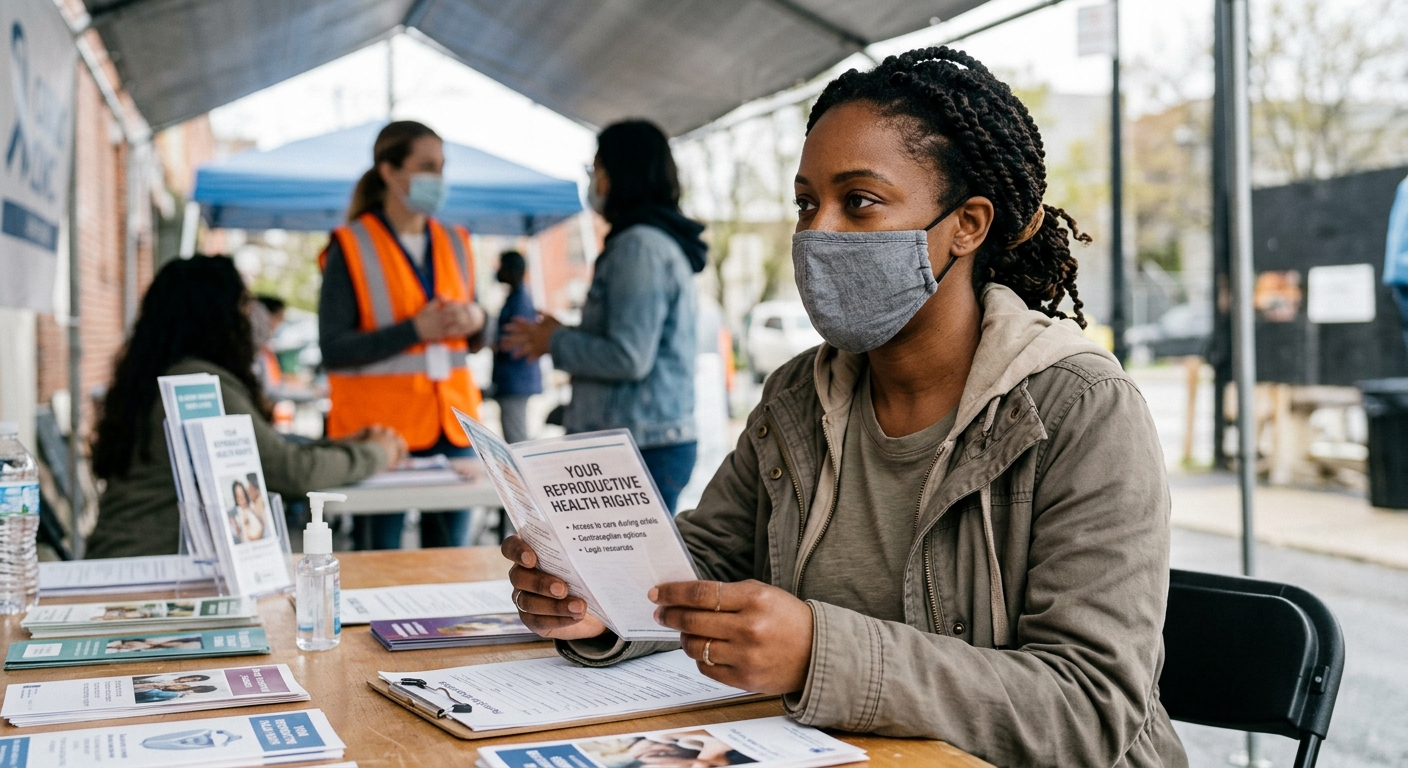
The sudden onset of a global public health emergency serves as the ultimate stress test for modern infrastructure, exposing the fragile fault lines within our societal and medical systems. While governments and healthcare networks scramble to allocate resources, secure personal protective equipment, and expand intensive care capacities, a parallel and often quieter crisis emerges in the realm of specialized healthcare. One of the most acutely affected domains is reproductive medicine.
History has shown that during times of widespread societal disruption—most notably during the early phases of global pandemics—essential reproductive rights can become collateral damage, suspended or restricted under the broad umbrella of emergency executive powers. This phenomenon is not merely an unintended consequence of triage protocols; it frequently represents the deliberate exploitation of public health declarations to achieve long-standing political objectives. When state authorities suddenly categorize essential reproductive treatments as non-essential, patients are thrust into a bewildering maze of medical delays, astronomical travel costs, and complex legal uncertainties. The intersection of public health crises and bodily autonomy reveals a stark reality: fundamental rights are dangerously precarious when subjected to emergency mandates.
The Weaponization of the “Elective” Classification
Central to the restriction of reproductive care during a crisis is the semantic manipulation of medical terminology—specifically, the term “elective.” In clinical nomenclature, an elective procedure is simply one that can be scheduled in advance, distinguishing it from an emergency trauma surgery that must be performed immediately to save a patient’s life within minutes. Elective does not equate to optional, cosmetic, or unnecessary. Procedures like joint replacements, hernia repairs, and tumor excisions are routinely classified as elective, yet they are unequivocally vital for long-term health, mobility, and survival.
During broad public health crises, executive orders are often issued to halt elective surgeries in an effort to conserve hospital beds, ventilators, and personal protective equipment (PPE). However, the application of these orders to reproductive healthcare reveals a significant disconnect between epidemiological necessity and ideological policy. Most reproductive care, particularly abortion, is performed in outpatient clinics, utilizes minimal protective equipment, and rarely requires hospital admission or ventilators.
Leading medical bodies have consistently and forcefully reiterated that reproductive healthcare is an essential, time-sensitive medical intervention. Delaying this care by weeks or even days exponentially increases the medical risks, the complexity of the intervention, and the emotional distress inflicted upon the patient. When authorities ignore these clinical realities, they weaponize public health mandates, transforming emergency resource conservation into a tool for systemic healthcare denial.
Understanding Medical Classifications
| Classification | Medical Definition | Impact of Emergency Bans |
|---|---|---|
| Emergency Surgery | Immediate, life-saving intervention (e.g., severe trauma, ruptured appendix). | Always permitted; exempt from public health pauses. |
| Essential / Time-Sensitive | Conditions that worsen rapidly if delayed (e.g., cancer resections, abortion). | Frequently and improperly paused by state politicians despite medical consensus. |
| Elective (Standard) | Necessary for quality of life, but can be safely delayed (e.g., joint replacement). | Routinely paused to conserve hospital resources and PPE. |
The Logistical Nightmare: Crossing Borders for Basic Care
When local clinics are abruptly forced to shutter their doors due to sweeping executive mandates, the biological clock of a pregnancy does not pause. Patients who require immediate reproductive care are suddenly left with no choice but to cross state lines to access fundamental medical services. This forced migration creates a profound logistical nightmare, placing an unconscionable burden on the individual.
Navigating out-of-state healthcare during a widespread emergency involves far more than simply mapping a driving route. It requires individuals to arrange sudden, unplanned travel—frequently spanning hundreds or thousands of miles—while simultaneously navigating fluctuating public health protocols, potential border checkpoints, and mandatory quarantine periods. The sheer volume of logistical hurdles transforms a standard, safe outpatient procedure into a grueling odyssey.
The financial implications are equally staggering. Beyond the base cost of the medical procedure itself, patients must rapidly secure funds for gasoline or airline tickets, pay for short-term lodging, and finance emergency childcare. Furthermore, because these trips often consume multiple days, individuals are forced to take unpaid time off from work, risking their employment during periods of profound economic instability. Recent public health research demonstrates that when local bans are implemented, the average travel time for patients seeking reproductive care multiplies dramatically, alongside a sharp increase in the necessity for overnight stays. For a person already grappling with the anxiety of a health crisis, the added trauma of financing and executing a clandestine, cross-border medical journey is overwhelming.
A Magnifying Glass on Systemic Inequalities
Crises act as powerful magnifying glasses, bringing pre-existing systemic inequalities into sharp, inescapable focus. The burden of sudden healthcare restrictions is never distributed evenly across a population; rather, it disproportionately crushes those who are already marginalized by economic, racial, and geographic disparities. A ban on a medical procedure functions very differently depending on a person’s ZIP code and tax bracket.
The ability to quickly pivot and travel to another jurisdiction for medical care is inextricably linked to socioeconomic privilege. Individuals with salaried positions, paid sick leave, robust savings accounts, and reliable private transportation can often overcome arbitrary legal barriers. They possess the capital—both financial and social—to bypass localized restrictions, absorbing the costs as an inconvenience rather than an insurmountable wall.
Conversely, for low-income populations, essential workers, and people of color, these barriers often represent a total denial of care. A worker living paycheck to paycheck cannot easily absorb the sudden loss of wages required to travel multiple states away. Rural residents, who already reside in medical deserts with scarce local healthcare infrastructure, find their geographic isolation compounded dramatically. Furthermore, undocumented individuals face an entirely different tier of risk; for them, traveling through regions with heavy law enforcement or border patrol presence to access healthcare is a perilous gamble that carries the severe threat of deportation. Consequently, emergency health mandates effectively create a dual-tiered healthcare system where bodily autonomy is conditionally granted.
The Legal Battlefield and the Suspension of Rights
When political maneuvering intersects with healthcare delivery, the inevitable result is a chaotic judicial battlefield. As state governments enact emergency bans, reproductive rights organizations and medical providers are forced to file immediate lawsuits to keep clinic doors open and protect patients. This rapid-fire litigation results in a dizzying legal whiplash that plays out in real-time, often changing the law on a daily basis.
Temporary restraining orders are granted, appealed, stayed, and reversed within the span of hours. For the patient on the ground, this means extreme uncertainty. A patient might embark on a long journey to a clinic with a confirmed appointment, only to arrive and discover that an appellate court ruled late the previous night to reinstate the ban, forcing the clinic to lock its doors. This environment transforms medical planning into a game of chance.
This constant legal oscillation inflicts immense psychological distress, transforming a standard medical appointment into a high-stakes gamble. More broadly, it raises alarming constitutional questions regarding the boundaries of governmental power during declared emergencies. Courts are continually asked to balance the state’s inherent police power—its authority to enact sweeping mandates to protect public health and safety—against the individual’s fundamental right to bodily autonomy and medical care. When the judiciary allows temporary health decrees to override established medical rights, it sets a dangerous legal precedent that can be leveraged in future crises to suppress civil liberties under the guise of public safety.
Safeguarding Healthcare Access for Future Emergencies
The lessons extracted from these turbulent periods must serve as a blueprint for fortifying healthcare infrastructure against future exploitation. To prevent the arbitrary suspension of fundamental rights during subsequent emergencies, robust, preemptive policy measures must be instituted at both the state and federal levels.
First and foremost, legislative frameworks must explicitly and permanently classify comprehensive reproductive healthcare—including abortion, prenatal care, and contraception—as life-sustaining, essential medical services. By hardcoding this definition into law, policymakers can legally shield these vital services from being improperly categorized as “elective” and subsequently paused by executive fiat during a broader resource shortage.
Additionally, the healthcare system must embrace and protect the expansion of telehealth services. During recent crises, telemedicine proved to be an incredibly safe, effective, and vital lifeline for distributing essential medications and providing remote consultations. Permanently removing arbitrary geographical and in-person dispensing restrictions on these remote services would drastically reduce the reliance on physical clinics, rendering care far more resilient against local shutdowns. Finally, robust legal protections must be enacted to safeguard interstate medical travel, shielding both the patients who cross borders for care and the out-of-state providers who treat them from retaliatory legal action.
Frequently Asked Questions (FAQs)
- What exactly makes a medical procedure “elective”?
- In the medical field, an “elective” procedure simply means that the surgery can be scheduled in advance, rather than needing to be performed instantly in an emergency room to prevent immediate death. It does not mean the procedure is optional, cosmetic, or unnecessary for the patient’s overall health.
- Why is reproductive care considered time-sensitive?
- Reproductive healthcare, particularly abortion, is highly time-sensitive because physiological changes occur rapidly during pregnancy. Delaying care by even a few weeks can significantly increase the medical complexity of the procedure, elevate health risks, and push patients past strict legal gestational limits.
- How did emergency declarations affect marginalized communities differently?
- Emergency bans forced patients to travel out-of-state for care. Low-income individuals, people of color, and rural residents often lack the disposable income, paid time off, and reliable transportation required for sudden interstate travel, effectively denying them care while wealthier individuals could afford to bypass the restrictions.
- What role does telehealth play in securing access during a crisis?
- Telehealth allows patients to consult with healthcare providers remotely and receive necessary medications by mail. This technology bypasses the need for physical clinic visits, making it a critical tool for maintaining healthcare access when local facilities are forced to close due to emergency mandates or political bans.
Conclusion
The intersection of sudden public health emergencies and reproductive healthcare access reveals deep-seated vulnerabilities in the protection of bodily autonomy. When executive powers are misused to restrict essential medical procedures, the resulting logistical barriers and legal chaos inflict profound trauma on patients, particularly those residing in marginalized communities. The historical precedent set during recent global crises must act as a stark warning to lawmakers and public health officials alike. True public health policy requires safeguarding all essential medical services from ideological interference. Moving forward, securing reproductive rights demands proactive legislative protections, the permanent expansion of telemedicine, and the unwavering recognition that comprehensive healthcare is a fundamental human right that must not be suspended when society faces its greatest challenges.
References
- Joint Statement on Abortion Access During the COVID-19 Outbreak — American College of Obstetricians and Gynecologists (ACOG). 2020-03-18. https://www.acog.org/news/news-releases/2020/03/joint-statement-on-abortion-access-during-the-covid-19-outbreak
- Early Impacts of the COVID-19 Pandemic: Findings from the 2020 Guttmacher Survey of Reproductive Health Experiences — Guttmacher Institute. 2020-06-24. https://www.guttmacher.org/report/early-impacts-covid-19-pandemic-findings-2020-guttmacher-survey-reproductive-health
- Changes in Abortion Access, Travel, and Costs Since the Implementation of State Abortion Bans, 2022-2024 — Berglas NF, Barnes JT, et al. American Journal of Public Health. 2025-06-26. https://doi.org/10.2105/AJPH.2025.308191
Similar Articles








Read full bio of Sneha Tete


