
Public Charge Policies and Child Welfare
How restrictive public charge immigration rules endanger vulnerable children.
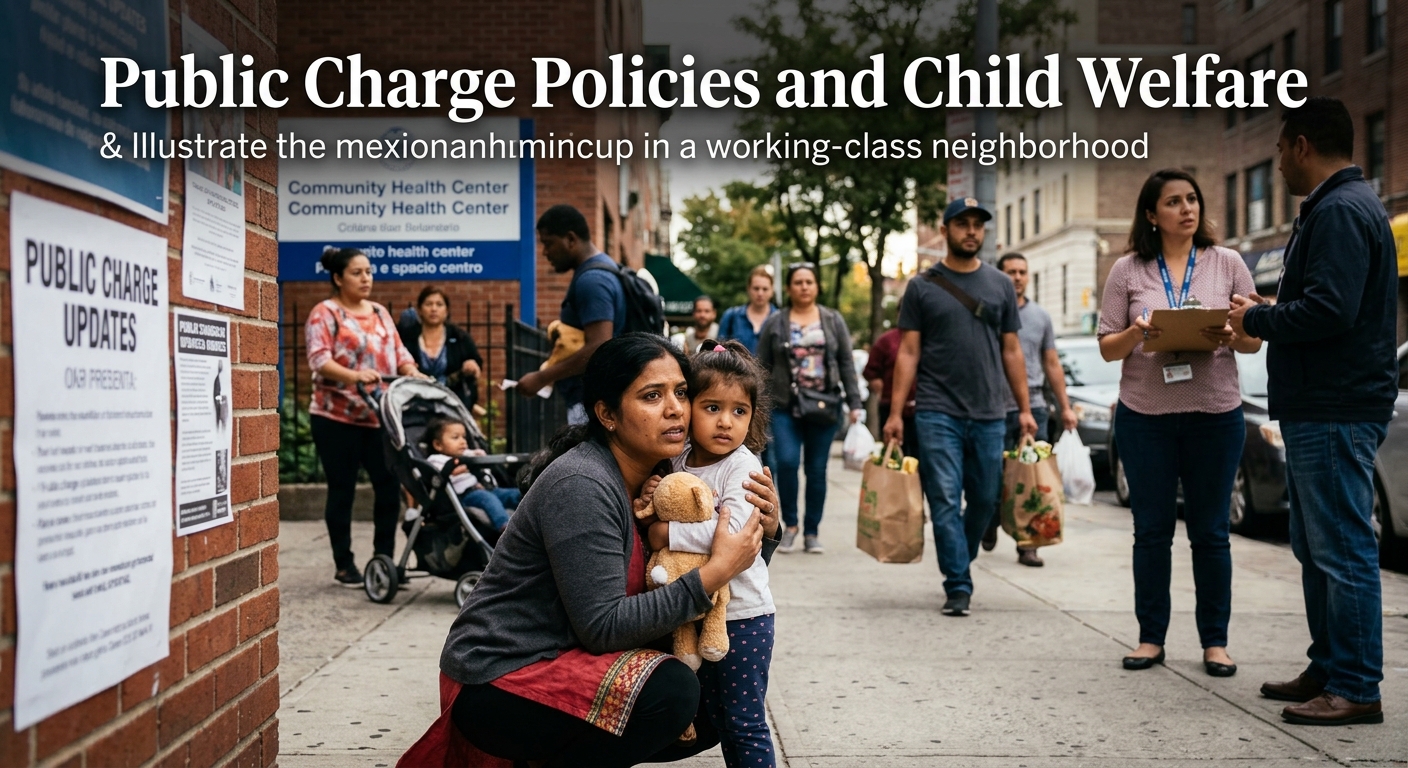
The intersection of immigration policy and child welfare represents one of the most fraught and consequential arenas of public administration in the United States. At the center of this ongoing debate is the concept of the “public charge” rule—a mechanism historically designed to identify immigrants who might become primarily dependent on the government for subsistence. While immigration regulations are often framed around national security, border control, or economic management, the most profound casualties of these policies are frequently the most vulnerable: children. When federal proposals seek to expand the definition of a public charge to include non-cash social safety nets, the resulting bureaucratic shift operates as an invisible barrier. It forces families into a terrifying dilemma, pitting their legal immigration status against their basic survival. Analyzing how restrictive benefit policies destabilize households reveals a cascading crisis that jeopardizes pediatric health, artificially inflates child poverty, and ultimately threatens to overwhelm the domestic foster care system.
Decoding the Public Charge Doctrine: Past and Present
To fully understand the gravity of restrictive immigration proposals, one must trace the historical origins of the public charge doctrine. First codified in the Immigration Act of 1882, the rule was initially intended to prevent the admission of individuals who were unable to care for themselves without state institutionalization. For over a century, the interpretation remained relatively narrow. Federal guidelines primarily limited the definition to individuals who relied on direct cash assistance—such as Temporary Assistance for Needy Families (TANF) or Supplemental Security Income (SSI)—or those who required long-term institutionalization at the government’s expense.
However, modern policy shifts have periodically sought to dramatically widen this net. By proposing the inclusion of essential non-cash benefits like the Supplemental Nutrition Assistance Program (SNAP), Medicaid, and federal housing vouchers, immigration authorities effectively redefine poverty as a penalizable offense. This expanded interpretation transforms fundamental social safety nets into traps, wherein the act of feeding or housing a child could theoretically trigger visa denials or derail pathways to lawful permanent residency.
The Architecture of Fear: Understanding the “Chilling Effect”
The most immediate and pervasive consequence of tying immigration status to public assistance is the creation of a “chilling effect.” This phenomenon occurs when an atmosphere of fear, confusion, and misinformation discourages families from utilizing services for which they are legally eligible. The chilling effect does not solely impact undocumented individuals; its reach extends deep into mixed-status households, where children are often native-born United States citizens.
When punitive public charge rules are proposed or enacted, the resulting panic prompts mass disenrollment from critical welfare programs. Immigrant parents, terrified that accepting government help will lead to family separation, deportation, or the rejection of a green card application, systematically withdraw from social supports. Think tanks and researchers have thoroughly documented this withdrawal. For instance, data from the Urban Institute indicated that even years after restrictive proposals were reversed, up to one in four adults in mixed-status families continued to avoid safety net programs due to lingering green card concerns. This self-imposed exile from the welfare system leaves legally entitled citizen children suffering in the shadows, entirely disconnected from the resources designed to ensure their healthy development.
Nutritional and Medical Crises in Pediatric Populations
The downstream effects of this chilling phenomenon manifest most aggressively in pediatric health and developmental outcomes. Nutrition is the bedrock of early childhood development, directly influencing cognitive function, immune system resilience, and long-term academic success. When immigrant families abandon food assistance programs like SNAP or the Special Supplemental Nutrition Program for Women, Infants, and Children (WIC), children are plunged into food insecurity. Chronic malnutrition during critical developmental windows can lead to irreversible deficits, stunting physical growth and delaying neurological milestones.
Equally devastating is the avoidance of the medical safety net. Driven by the fear that Medicaid or Children’s Health Insurance Program (CHIP) enrollment will count against them, parents delay or forego essential healthcare for their children. The American Academy of Pediatrics has repeatedly warned that such restrictive policies force an impossible choice upon families, leading to a drastic drop in well-child visits. These routine appointments are vital for tracking growth, identifying early signs of developmental delays, and administering life-saving immunizations. Furthermore, children with chronic conditions, such as asthma or diabetes, are left without maintenance medications, leading to severe exacerbations that are entirely preventable. The resulting toxic stress from living in a state of constant health and housing insecurity fundamentally alters a child’s physiological well-being.
Systemic Overload: The Pathway from Poverty to Foster Care
Perhaps the most alarming and least discussed ramification of restrictive public charge policies is their direct pipeline to the child welfare and foster care systems. Child protective services (CPS) across the nation are mandated to intervene when a child’s living conditions pose a threat to their safety. However, a deeply ingrained flaw within many state welfare frameworks is the systemic conflation of poverty with neglect.
When families are frightened away from housing subsidies and nutritional aid, they are often pushed into extreme economic destitution. A lack of adequate food in the pantry, the inability to afford winter utilities, or eviction leading to sudden homelessness are frequently categorized by investigators as parental neglect, rather than recognized as the unavoidable symptoms of systemic exclusion. Consequently, loving and capable parents who have been barred from survival resources by intimidating immigration rules find themselves under state investigation.
This dynamic triggers an influx of child removals based strictly on economic hardship. Children are stripped from their homes and placed into an already overburdened, underfunded foster care system. Family separation inflicts profound psychological trauma, severing the primary attachment bonds that are crucial for emotional regulation. Instead of utilizing federal funds to proactively support the family unit through preventative aid, the government ends up spending exponentially more to temporarily house the child in state custody, perpetuating a tragic cycle of trauma and systemic inefficiency.
The Ripple Effects of Benefit Avoidance
| Benefit Program | Primary Purpose | Pediatric Impacts of Disenrollment |
|---|---|---|
| Medicaid / CHIP | Provides comprehensive health coverage, including preventative care, developmental screenings, and treatments. | Increased emergency room visits, missed developmental milestones, lack of management for chronic diseases like asthma, and plummeting childhood vaccination rates. |
| SNAP / WIC | Supplies nutritional assistance and grocery funding to ensure adequate caloric intake and dietary diversity. | Severe food insecurity, malnourishment, stunted physical growth, impaired cognitive development, and increased susceptibility to infectious illnesses. |
| Housing Choice Vouchers (Section 8) | Offers rental assistance to prevent homelessness and stabilize living environments for low-income households. | Forced evictions, transient living situations, exposure to environmental hazards in substandard housing, and increased risk of child welfare investigations. |
Socioeconomic Repercussions and Public Health Vulnerabilities
The implications of weaponizing public benefits extend far beyond individual families, posing severe threats to macroeconomic stability and general public health. By effectively locking a demographic out of preventative medical care, the burden is predictably shifted to the most expensive node of the healthcare system: the emergency room. Uninsured and under-treated children eventually suffer acute medical crises that require emergency intervention, driving up hospital costs that are ultimately absorbed by taxpayers and local governments.
From a public health perspective, creating barriers to healthcare access is exceptionally dangerous. When large segments of the population avoid doctors out of fear of immigration reprisals, the risk of unmonitored infectious disease outbreaks rises exponentially. Herd immunity relies on widespread vaccination access, which is directly undermined when marginalized communities are driven underground. Furthermore, the long-term socioeconomic costs are staggering. Denying children adequate nutrition and healthcare guarantees a future workforce that is less healthy, less educated, and more prone to chronic illness, thereby suppressing overall economic productivity for decades to come.
The Advocacy Mandate: Protecting the Most Vulnerable
In the face of these severe consequences, civil rights organizations, pediatricians, and legal advocates have consistently rallied against the expansion of public charge doctrines. Their opposition is rooted in a fundamental moral and legal mandate: the protection of child well-being must supersede restrictive administrative immigration agendas.
Advocates argue that penalizing families for accessing statutory entitlements violates the core intent of domestic welfare programs. Legislation establishing Medicaid, CHIP, and SNAP was enacted specifically to eradicate child poverty and promote a baseline of health for the nation’s youth, regardless of their parents’ national origin. When federal agencies attempt to use these same benefits as immigration enforcement mechanisms, they engage in regulatory overreach that subverts congressional intent. Consequently, advocacy campaigns frequently demand that the Department of Homeland Security and other federal bodies permanently shield non-cash benefits from immigration scrutiny, ensuring that no family is forced to choose between feeding their children and maintaining their pathway to stability.
Conclusion
Ultimately, the debate surrounding the public charge rule is not merely a dispute over legal definitions; it is a profound test of societal values. Policies that deliberately manufacture fear to deter the use of essential safety nets inflict collateral damage that disproportionately strikes children. By pushing families into the shadows, exacerbating food and medical insecurity, and funneling economically distressed children into the foster care system, restrictive benefit rules create the very public crises they ostensibly seek to prevent. Reversing and permanently withdrawing such proposals is not just an administrative necessity, but a moral imperative. Safeguarding the health, unity, and stability of immigrant families is intrinsically linked to the overall health and prosperity of the nation.
Frequently Asked Questions
What exactly does the term “public charge” mean in immigration law?
A “public charge” refers to an individual who is deemed likely to become primarily dependent on the government for their subsistence. Immigration officers evaluate an applicant’s age, health, financial status, and history of utilizing specific public benefits when determining their eligibility for visas or lawful permanent residency.
How do expanded public charge rules affect U.S. citizen children?
Even if children are U.S. citizens and legally entitled to benefits, their non-citizen parents may fear that applying for assistance on the child’s behalf will jeopardize the parent’s immigration status. This fear causes parents to disenroll their children from critical health and nutrition programs, severely impacting the child’s well-being and development.
What is the “chilling effect” in the context of immigration policy?
The chilling effect describes the widespread phenomenon where fear, confusion, and misinformation deter immigrant communities from accessing public services. Families will avoid food pantries, health clinics, and housing assistance—even programs exempt from the public charge rule—simply to avoid drawing attention from immigration enforcement authorities.
How does immigration policy affect the foster care system?
When restrictive immigration policies block families from accessing housing and nutritional safety nets, the resulting extreme poverty is frequently mistaken for parental neglect by child protective services. This conflation of economic hardship with child endangerment leads to unnecessary state interventions, family separations, and increased placements into the foster care system, compounding the trauma experienced by vulnerable children.
References
- Public Charge Ground of Inadmissibility — Federal Register / Department of Homeland Security. 2022-09-09. https://www.federalregister.gov/documents/2022/09/09/2022-18867/public-charge-ground-of-inadmissibility
- Public Charge Rule and Its Impact on Child Health: A Call to Action — Pediatrics (American Academy of Pediatrics). 2020-12-01. https://publications.aap.org/pediatrics/article/146/6/e2020027201/34559/Public-Charge-Rule-and-Its-Impact-on-Child-Health
- One in Six Adults in Immigrant Families with Children Avoided Public Programs in 2022 Because of Green Card Concerns — Urban Institute. 2023-11-30. https://www.urban.org/research/publication/one-six-adults-immigrant-families-children-avoided-public-programs-2022
- Department of Homeland Security Finalizes “Public Charge” Immigration Rule — Administration for Community Living. 2022-09-08. https://acl.gov/news-and-events/announcements/department-homeland-security-finalizes-public-charge-immigration
Similar Articles








Read full bio of medha deb


