
Protecting Native Families: The Battle Over ICWA
Understanding ICWA's role in protecting Native American child welfare.
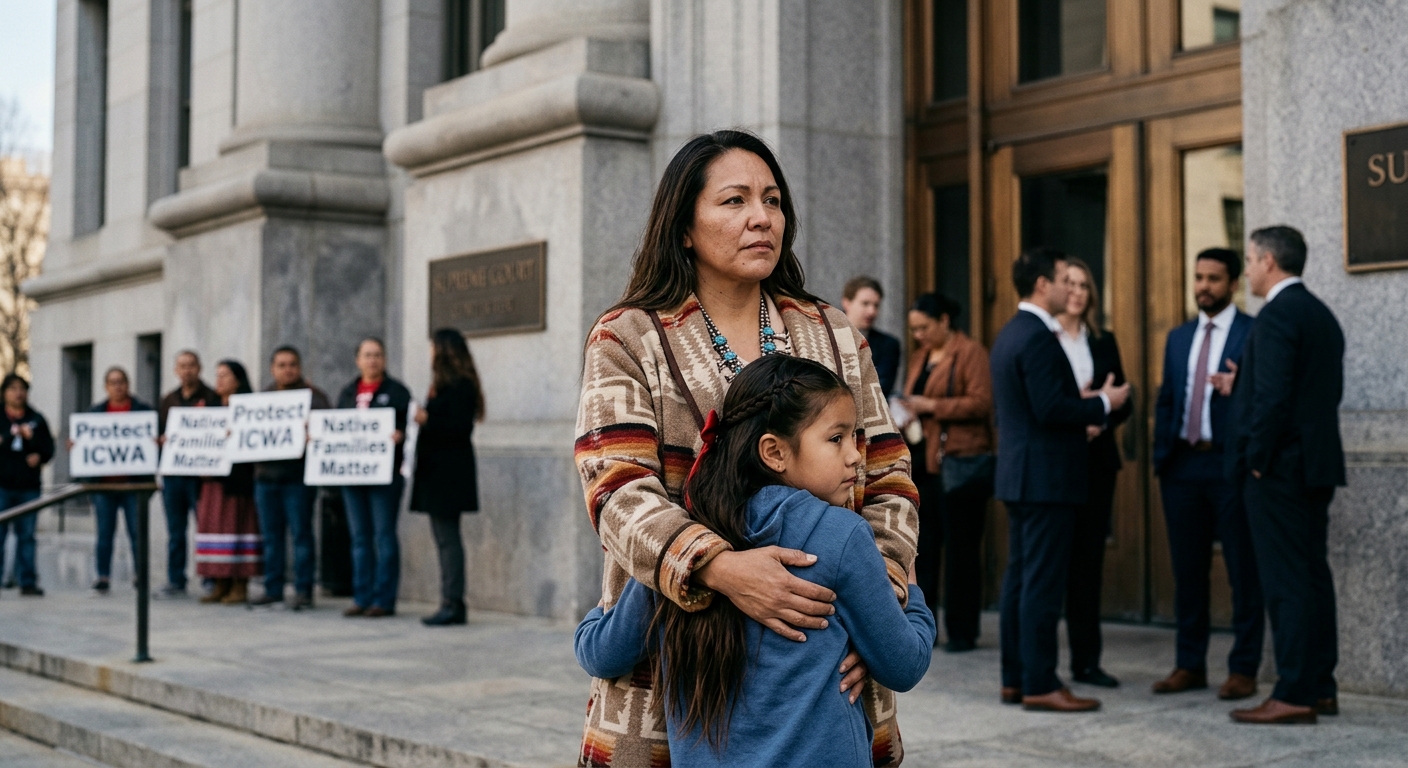
The landscape of family law and child protection is continually evolving, but few legislative milestones have proven as transformative—or as hotly contested—as the Indian Child Welfare Act of 1978 (ICWA). Enacted to halt the devastating removal of Indigenous children from their communities, the law establishes stringent federal standards for state child custody proceedings involving Native youth. Recently, the structural integrity of this law was tested at the highest judicial level in the United States Supreme Court case Haaland v. Brackeen. The legal showdown prompted an unprecedented outpouring of support from the child welfare community, with dozens of prominent advocacy organizations uniting to file amicus curiae briefs defending the statute. They argued that ICWA is not merely an obscure legal provision, but rather the cornerstone of modern child protection.
Family law is fundamentally a reflection of societal values. By prioritizing family preservation, community integration, and cultural continuity, ICWA embodies principles that developmental psychological research now recognizes as absolute necessities for healthy child development. This comprehensive analysis delves into the historical context that necessitated ICWA, the core mechanisms of the law, the profound science behind kinship care, the monumental Supreme Court battle that secured its future, and what lies ahead for Indigenous families navigating the justice system.
A Legacy of Separation: The Dark History Preceding ICWA
To comprehend the fierce advocacy surrounding the Indian Child Welfare Act, one must first confront the systemic historical injustices that prompted its creation. Before the late 1970s, the United States witnessed a child welfare crisis of catastrophic proportions affecting Native American communities. According to historical records and congressional testimony compiled by the Bureau of Indian Affairs (BIA), an estimated 25 to 35 percent of all Indigenous children were being systematically removed from their biological families and tribal communities.
These removals were rarely driven by severe physical abuse or imminent danger. Instead, state child welfare agencies and private adoption entities frequently cited “neglect” based on profound misunderstandings of traditional Native parenting practices, widespread poverty, or overt cultural biases. Consequently, the vast majority of these separated children—upwards of 85 percent—were placed in non-Native foster homes, adoptive families, or institutionalized boarding schools designed to strip them of their cultural heritage.
The federal government’s historical boarding school policies, which operated under the explicit goal of assimilation, worked in tandem with aggressive state adoption practices to sever the ties between Native youth and their ancestral roots. The psychological toll on the children was immense, resulting in deep-seated trauma, a profound loss of identity, and an epidemic of mental health struggles that cascaded across generations. For the tribes, the mass exodus of their youth represented an existential threat to their sovereignty and cultural survival. ICWA was born out of a desperate, federally recognized need to halt this state-sponsored assimilation and establish a robust legal firewall protecting the rights of Indigenous families.
Core Mechanisms: Understanding How ICWA Protects Families
At its core, the Indian Child Welfare Act overrides general state family law by imposing specialized federal requirements when an “Indian child” is involved in a custody, foster care, or adoption proceeding. An Indian child is legally defined as an unmarried individual under age eighteen who is either a member of a federally recognized tribe or eligible for membership and the biological child of a member.
When ICWA is triggered, the law shifts the operational paradigm of child welfare agencies. Standard child protective cases typically require “reasonable efforts” to reunite a fractured family. ICWA, however, demands “active efforts.” This heightened legal standard requires caseworkers to engage in comprehensive, proactive, and culturally appropriate interventions to keep the family intact before any removal can be legally justified. If removal is absolutely necessary for the child’s safety, the statute establishes a strict hierarchy of placement preferences:
- Extended Family: The absolute first priority is placing the child with members of their extended family. This applies regardless of whether those family members reside on a reservation or are legally enrolled tribal members.
- Tribal Members: If no extended family is available or willing to take the child, the next preference is placement within a foster home licensed, approved, or specified by the child’s specific tribe.
- Other Native Families: The third tier prioritizes placement with other Indigenous families before the state can legally consider non-Native placements.
Crucially, ICWA also affirms tribal jurisdiction. It mandates that state courts notify the child’s tribe of the proceedings, allowing tribal courts to intervene in or entirely take over state child custody cases. This ensures that monumental life decisions are made by entities that inherently understand the child’s cultural background.
Comparing Child Welfare Standards
To fully grasp the protective power of ICWA, it is helpful to compare its mandates against standard state child welfare procedures:
| Legal Feature | Standard State Law | ICWA Mandate |
|---|---|---|
| Family Reunion Efforts | Reasonable efforts (often passive referrals to services). | Active efforts (proactive, culturally tailored support). |
| Legal Jurisdiction | State family courts retain exclusive authority. | Tribal courts have the right to intervene or assume jurisdiction. |
| Placement Priority | General “best interest of the child” (highly subjective). | Strict hierarchy prioritizing extended family and Native households. |
| Burden of Proof for Removal | Preponderance of the evidence or clear and convincing evidence. | Clear and convincing evidence supported by qualified expert witness testimony. |
The “Gold Standard” of Child Welfare: The Science of Kinship Care
When massive coalitions of child rights organizations mobilize en masse to support a law, their advocacy is driven by rigorous empirical evidence. Today, social workers, legal scholars, and developmental psychologists universally refer to ICWA as the “gold standard” of child welfare policy. This designation is deeply rooted in the proven clinical benefits of kinship care—a practice ICWA legally prioritized decades before it became a mainstream objective in broader, non-Native social services.
Kinship care refers to the placement of children with relatives, extended family members, or close community friends when biological parents are temporarily or permanently unable to provide a safe environment. The Administration for Children and Families (ACF), operating under the U.S. Department of Health and Human Services (HHS), has heavily documented the overwhelming advantages of this approach. According to decades of longitudinal data, children placed in kinship care experience significantly fewer behavioral and mental health issues compared to those placed in traditional, non-relative foster care systems. They are significantly less likely to experience the trauma of multiple disruptive placements, they perform better in academic settings, and they maintain a much stronger, healthier sense of self-worth and belonging.
For Indigenous children, kinship care offers the added, irreplaceable benefit of cultural continuity. Trauma experts emphasize that sudden separation from one’s biological family and familiar community inflicts complex, lasting psychological wounds. By mandating that state and federal child welfare agencies exhaust all available options to keep Native children within their familial and tribal networks, ICWA directly mitigates the trauma of state intervention. The advocacy groups supporting ICWA during recent federal litigation consistently highlighted these clinical realities. They argued that striking down the law would not only infringe upon the legal doctrine of tribal sovereignty but would force a devastating regression to outdated, harmful child welfare practices that prioritize the rapid severance of biological ties over restorative family support.
The Legal Battle: Unpacking Haaland v. Brackeen
Despite its proven efficacy and widespread support among psychological professionals, ICWA has faced intense legal scrutiny, culminating in the landmark Supreme Court case Haaland v. Brackeen. The litigation was initiated by the state of Texas alongside several non-Native adoptive parents who sought to overturn the law entirely. The plaintiffs launched a complex, multi-pronged constitutional attack that fundamentally challenged the sovereign relationship between the federal government and Native American tribes.
The plaintiffs’ primary legal arguments rested on the Equal Protection Clause of the Fourteenth Amendment and the anti-commandeering doctrine of the Tenth Amendment. The plaintiffs argued that ICWA’s stringent placement preferences were inherently race-based, thereby violating the equal protection rights of non-Native adoptive parents who wished to foster or adopt Indigenous children. They claimed that the law unfairly disadvantaged non-Native families based solely on racial classifications. Furthermore, they contended that the federal government was unconstitutionally “commandeering” state agencies. By forcing state-level child welfare workers and state family court judges to enforce federal ICWA mandates, the plaintiffs argued that Congress had overstepped its constitutional boundaries and infringed upon states’ rights.
Defenders of the law—which included the federal government, hundreds of federally recognized Native tribes, and massive coalitions of child rights organizations—countered that the legal classification of Native Americans is fundamentally political, not racial. Because tribes are recognized as sovereign nations under the U.S. Constitution, federal laws regulating relations with them are based on political citizenship and government-to-government relationships. Therefore, the equal protection challenge was fundamentally flawed.
In June 2023, the Supreme Court delivered a decisive 7-2 victory for ICWA’s proponents. The Court firmly rejected the anti-commandeering arguments, affirming that Congress holds the plenary power to legislate on Indian affairs, including matters of child welfare, and that state courts are constitutionally bound to apply federal standards under the Supremacy Clause. While the Court left the door slightly open for future equal protection challenges on procedural grounds, the ruling cemented ICWA’s foundational legality and secured the immediate future of Native child welfare protections.
The Power of Collective Advocacy in Family Law
The preservation of ICWA in the Supreme Court was not solely a victory of brilliant constitutional maneuvering; it was a resounding triumph of collective, organized advocacy. Throughout the appellate process, amicus curiae, or “friend of the court,” briefs played an incredibly instrumental role in shaping the justices’ understanding of the law’s real-world impact. While constitutional lawyers debated the esoteric nuances of the Tenth Amendment and federalist theory, coalitions of children’s rights organizations utilized their amicus briefs to center the legal narrative squarely on the well-being of the youth.
These collaborative briefs meticulously compiled decades of sociological data, psychological evaluations, and frontline child welfare experiences. They demonstrated vividly that stripping away ICWA’s protections would inflict immediate, tangible harm on vulnerable children currently navigating the system. This unified front of advocates effectively translated abstract clinical data into a compelling moral and legal imperative, reminding the judicial system that the ultimate objective of any family law must be the holistic protection of the child, rather than the facilitation of adoption for adults.
Looking Forward: The Future of Indigenous Child Welfare
While the Supreme Court’s definitive ruling in Haaland v. Brackeen secured the foundational legality of the Indian Child Welfare Act, the exhaustive work of safeguarding Indigenous families is far from complete. Child welfare advocates continue to push for much stronger state-level compliance, recognizing that federal law is ultimately only as effective as its local enforcement. Consequently, many states across the country are now taking proactive legislative measures to codify ICWA’s standards directly into their own state-level family codes, providing an added layer of protection against any future federal judicial challenges.
Ultimately, the ongoing defense of ICWA serves as a powerful, enduring reminder that child protection systems must always respect the profound, unbreakable bonds of family, culture, and community. The victory in the Supreme Court is a testament to the resilience of Native American tribes and the dedication of advocates who refuse to let the traumatic history of family separation repeat itself.
Frequently Asked Questions (FAQs)
What is the main purpose of the Indian Child Welfare Act?
Enacted in 1978, ICWA aims to protect the best interests of Native American children and promote the stability of Native tribes and families. It establishes minimum federal standards for the removal of Indian children and sets strict preferences for their placement in foster or adoptive homes, prioritizing extended family and tribal members.
How does ICWA differ from standard child welfare laws?
Standard child welfare laws generally operate under a subjective “best interest of the child” standard and require “reasonable efforts” to reunite families. ICWA mandates “active efforts” to prevent the breakup of Native families and provides specific legal avenues for tribal courts to assume jurisdiction over cases involving their youth.
Why is the Haaland v. Brackeen case so important?
Haaland v. Brackeen was a landmark Supreme Court case that threatened to overturn ICWA. Plaintiffs argued the law was unconstitutional on the grounds of states’ rights and equal protection. The Supreme Court’s 7-2 decision in 2023 upheld the law, affirming Congress’s authority to protect Native American child welfare and honoring tribal sovereignty.
What does “kinship care” mean and why is it preferred?
Kinship care is the full-time care, nurturing, and protection of children by relatives or non-related individuals who have a strong bond with the family. It is the preferred method in child welfare because clinical research demonstrates it minimizes trauma, preserves familial and cultural ties, and leads to significantly better mental health outcomes for the child.
References
- Indian Child Welfare Act Proceedings — US Department of the Interior, Bureau of Indian Affairs. 2016-12-30. https://www.federalregister.gov/documents/2016/06/14/2016-13686/indian-child-welfare-act-proceedings
- Haaland v. Brackeen (06/15/2023) — Supreme Court of the United States. 2023-06-15. https://www.supremecourt.gov/opinions/22pdf/21-376_7l48.pdf
- Foster Kinship Navigator Program — Title IV-E Prevention Services Clearinghouse, US Department of Health and Human Services (HHS). 2023-04-15. https://preventionservices.acf.hhs.gov/programs/354/show
Similar Articles








Read full bio of medha deb


