
The Power of Legal Coalitions: Amicus Briefs and Youth
Amicus briefs empower non-profits fighting systemic legal injustices for youth.
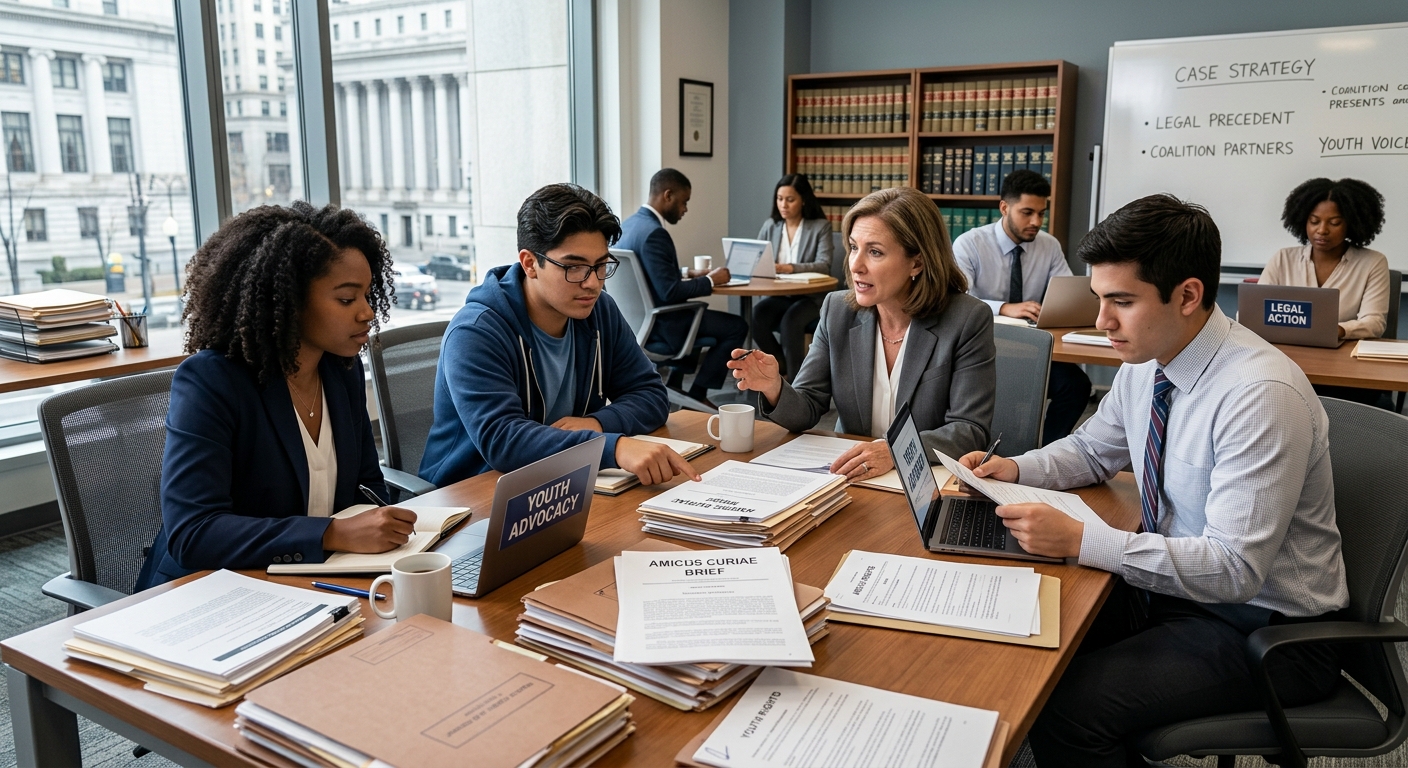
The Silent Engine of the Justice System
The American legal system is often depicted through the dramatic, highly individualized lens of singular courtroom battles—a solitary lawyer standing before a judge to defend the rights of the marginalized. However, the reality of modern civil rights litigation, particularly when defending vulnerable populations like children, is far more collaborative and structurally complex. When an appellate court issues a ruling that alters the lives of thousands of families, that decision is rarely the product of a single, isolated legal argument. Systemic change is achieved through the synchronized efforts of frontline legal aid attorneys and the strategic intervention of national civil rights organizations.
One of the most powerful tools in this collaborative legal arsenal is the ‘amicus curiae’ or ‘friend of the court’ brief. By examining how these specialized legal filings elevate lawsuits brought by non-profit legal services providers, we can uncover the intricate machinery that drives structural reform in the United States. This unseen network of legal advocacy ensures that the voices of the voiceless are amplified, transforming individual tragedies into undeniable catalysts for sweeping institutional change.
The Frontline Defenders: Non-Profit Legal Services
Non-profit legal service providers operate at the very base of the justice system, serving as the critical first line of defense for individuals who cannot afford private legal representation. These dedicated attorneys handle an overwhelming volume of cases involving fundamental human needs: eviction proceedings, domestic violence protections, disability benefits appeals, and child welfare interventions. These professionals must understand the nuances of housing policy, federal disability regulations, and the deeply traumatic realities of family separation.
Unlike corporate law firms, legal aid organizations are perpetually navigating a landscape of scarce resources and towering caseloads. Because the demand for free legal services vastly outstrips the supply, these attorneys are forced to perform difficult triage, identifying cases where a victory might set a precedent that protects thousands of others simultaneously. Their mandate is not merely to offer legal advice, but to actively intercede when bureaucratic machinery threatens to crush the most vulnerable members of society. In communities across the nation, these providers bear witness to the systemic failures of state and federal programs.
When front-line attorneys identify a severe pattern of rights violations—such as a state foster care system routinely failing to provide adequate medical care to its youth—they often pivot from individual defense to impact litigation. Impact litigation involves filing large-scale, often class-action lawsuits aimed at forcing a government agency or massive institution to change its harmful practices. Yet, bringing a systemic lawsuit against a well-funded, deeply entrenched state apparatus is a massive endeavor that requires immense external support.
Quantifying the Justice Gap in America
To truly understand the absolute necessity of these legal coalitions, one must confront the staggering reality of the ‘justice gap’ in America. The justice gap refers to the vast, persistent chasm between the civil legal needs of low-income individuals and the actual resources available to meet those needs. According to the Legal Services Corporation’s comprehensive 2022 Justice Gap report, an alarming 74% of low-income households experienced at least one civil legal problem in the preceding year. Even more distressing is the finding that 92% of the substantial civil legal problems faced by these individuals received inadequate or absolutely no legal help .
This deficit is not merely a statistical anomaly; it represents families unjustly evicted into homelessness, veterans denied essential medical benefits, and children trapped in abusive environments because no one was available to file the necessary protective orders. The economic and societal consequences of this gap are profound. When an individual cannot secure a lawyer to fight an unlawful eviction, the ensuing homelessness places a heavier financial burden on emergency medical services and temporary shelter systems.
Non-profit legal service providers are tasked with bridging this impossible divide. Because they are forced to turn away thousands of eligible clients annually due to a lack of funding and personnel, their strategy must continuously evolve. When they launch systemic lawsuits to fix the root causes of these recurring legal emergencies, they desperately require the backing of the broader legal community to legitimize their claims and provide supplementary firepower in court.
The Strategic Arsenal: What is an Amicus Curiae Brief?
Enter the amicus curiae brief. Translated from Latin, amicus curiae means ‘friend of the court.’ It refers to a person or organization that is not a direct party to a lawsuit but possesses a strong, vested interest in the subject matter. These entities petition the court for permission to file a brief that provides additional context, specialized expertise, or broader policy arguments that the direct litigants may not have the space, time, or resources to articulate.
In the context of the American judicial system, appellate judges are not simply looking to resolve an isolated dispute between two parties; they are tasked with establishing legal precedents that will govern future conduct across their entire jurisdiction. Amicus briefs assist judges in this monumental task by illuminating the potential ripple effects of their decisions. Historically, amicus briefs were somewhat rare, reserved for highly unusual circumstances. Today, they are a fundamental cornerstone of appellate and civil rights litigation. Research from Columbia Law School highlights that submissions of amicus briefs at the U.S. Supreme Court have surged by an astonishing 800 percent since 1954, illustrating their critical role in shaping modern jurisprudence .
When a non-profit legal services provider files a major civil rights lawsuit, the introduction of an amicus brief from a recognized national advocacy group serves multiple strategic purposes. It immediately signals to the presiding judge that the case has national implications extending far beyond the immediate plaintiffs. Furthermore, it allows civil rights organizations to introduce macro-level data, such as historical trends, psychological studies, or comparative state laws, without violating the strict evidentiary constraints placed on the primary parties.
Amplifying Impact: Why Civil Rights Groups Intervene
The synergy between direct legal service providers and amicus participants creates a formidable, multi-layered advocacy model. Consider a hypothetical scenario where a regional non-profit legal aid group sues a state’s child welfare agency for systemic negligence. The local attorneys are intimately familiar with the specific, harrowing facts: the names of the neglected children, the exact dates of missed social worker visits, and the squalid conditions of specific group homes. Their primary job is to establish the factual record and prove the immediate constitutional or statutory violation.
Meanwhile, a national organization dedicated to children’s rights steps in as an amicus curiae. This national group does not rehash the specific facts of the plaintiffs’ daily lives. Instead, they present a meticulously researched brief detailing how the state’s failure violates established constitutional precedents nationwide, referencing similar failed systems in other jurisdictions, and outlining the long-term economic and psychological costs of foster care negligence. By dividing the labor, the legal coalition provides the court with a comprehensive, panoramic view of the crisis. The local attorneys provide the undeniable human tragedy, while the amicus brief provides the overarching legal and societal framework required to justify a sweeping court-ordered injunction.
The High Stakes of Child Welfare Litigation
Nowhere is this collaborative approach more critical than in the realm of child welfare and foster care litigation. Children are uniquely disadvantaged within the legal system; they cannot hire attorneys, advocate for their own rights, or easily articulate the abuses they suffer to authorities. Consequently, their fates are entirely dependent on the quality of the legal representation appointed to them and the broader legislative systems governing their care. The psychological toll of system-induced instability cannot be overstated. Children who spend years bouncing between temporary placements are at a drastically higher risk for negative life outcomes, including disrupted education, involvement in the juvenile justice system, and long-term mental health struggles.
High-quality, systemic legal advocacy literally alters the trajectory of a child’s life. A 2023 study from researchers at MIT examining a specialized legal aid program for children in foster care found that enhanced, well-supported legal advocacy allowed children to exit the foster system and achieve permanency 30% faster than those with standard representation . Similarly, research evaluating interdisciplinary legal representation models—where attorneys work seamlessly alongside social workers and parent advocates—reveals that such comprehensive approaches can reduce a child’s time in foster care by an average of 118 days .
When prominent civil rights groups sign onto amicus briefs supporting non-profit providers in these arenas, they are fighting for the structural funding and policy shifts necessary to replicate these successful representation models nationwide. They are arguing, forcefully and publicly, that robust legal aid is not an optional luxury, but a fundamental constitutional necessity to prevent state-sponsored harm to marginalized youth.
Delineating Roles: Direct Representation vs. Amicus Support
To clearly differentiate the functional roles within these powerful legal alliances, the following table outlines the distinct responsibilities of direct legal representation versus amicus curiae support.
| Feature | Direct Legal Representation | Amicus Curiae Support |
|---|---|---|
| Role in Litigation | Primary counsel representing the specific plaintiffs or defendants in the lawsuit. | Non-party ‘friend of the court’ offering independent expertise and perspective. |
| Resource Intensity | High (requires extensive fact-finding, witness interviews, discovery, and trial preparation). | Moderate (focused predominantly on specialized legal drafting and academic research). |
| Primary Objective | Winning the immediate case and securing direct, tangible relief for the clients. | Shaping the court’s broader policy interpretation and influencing future legal precedents. |
| Scope of Argument | Strictly bound by the specific facts, circumstances, and evidence of the individual case. | Broadly focused; can introduce national statistics, historical context, and academic studies. |
A Collaborative Blueprint for the Future
Looking ahead, the alliance between front-line non-profit legal services and national civil rights organizations will only become more vital to the health of the American republic. As government budgets face continuous scrutiny and funding for civil legal aid remains precariously low, local providers simply cannot combat systemic injustices alone. They require the academic prowess, national visibility, and specialized appellate expertise that amicus coalitions consistently provide.
By strategically pooling their resources, these legal advocates ensure that the justice system remains a viable avenue for genuine societal reform, rather than a cold mechanism that merely processes the disenfranchised. For vulnerable youth trapped in failing, underfunded systems, this collaborative legal blueprint represents the most promising and powerful path toward safety, equity, and a dignified future.
Frequently Asked Questions
- What does ‘amicus curiae’ actually mean?
Translated from Latin, it means ‘friend of the court.’ It refers to a person or organization that is not a direct party to a lawsuit but files a brief to provide the presiding judge with additional information, subject-matter expertise, or a unique perspective on the broader implications of the case. - What is the ‘justice gap’?
The justice gap is the measurable difference between the civil legal needs of low-income individuals and the actual resources available to help them. Current studies show that the vast majority of low-income Americans do not receive adequate legal assistance for significant, life-altering civil legal problems. - Why do non-profit legal providers need support from national organizations?
Non-profit legal providers operate on the front lines and are often overwhelmed with high caseloads and severely limited budgets. National organizations provide critical support by filing amicus briefs, which introduce broader policy arguments, specialized academic research, and national context that strengthen the local provider’s impact lawsuit. - How does legal representation directly impact youth in foster care?
High-quality, systemic legal representation significantly improves life outcomes for youth in foster care. Extensive research has proven that well-supported, interdisciplinary legal advocacy helps children safely exit the foster system and find permanent, stable homes at a much faster rate, significantly reducing the trauma of prolonged state custody.
References
- The Justice Gap: The Unmet Civil Legal Needs of Low-income Americans — Legal Services Corporation. 2022-04-01. https://www.lsc.gov/initiatives/justice-gap-research
- Professors’ Amicus Curiae Briefs Shape the Law — Columbia Law School. 2019-01-15. https://www.law.columbia.edu/news/archive/professors-amicus-curiae-briefs-shape-law
- Study finds better services dramatically help children in foster care — MIT News. 2023-07-02. https://news.mit.edu/2023/study-finds-better-services-dramatically-help-children-foster-care
- Effects of an Interdisciplinary Approach to Parental Representation in Child Welfare — New York State Unified Court System. 2019-06-01. https://ww2.nycourts.gov/sites/default/files/document/files/2019-06/Effects%20of%20Interdisciplinary%20Approach.pdf
Similar Articles








Read full bio of Sneha Tete


